Skip to content
TACTICALOEM / ODM TACTICAL APPAREL
ENEnglish

Products / Field / BDU Shirts

Custom Field & BDU Shirt Manufacturer

A field shirt is a conservative garment on purpose. It is button-front, it has chest pockets, it is worn tucked or untucked over a base layer, and it has to survive frequent laundering while still looking like a uniform on the wearer. That conservatism is exactly where buyers get caught: the failures on a field shirt are rarely dramatic, they are the placket gapping, a button pulling out of a reinforced flap, a collar that loses its shape after repeated washing, or elbows that wear through before the rest of the shirt does. These are pattern, interlining, stitch and fabric decisions, and they are settled before bulk. This page covers what a B2B buyer actually has to decide on a BDU-style programme: body fabric and weight, placket and button specification, collar construction, chest pocket layout, sleeve and elbow reinforcement, cuff type, epaulette and insignia provision, size development, private label, sampling and bulk production.

custom field shirtsBDU shirt OEMwholesale BDU shirtstactical field shirt supplier
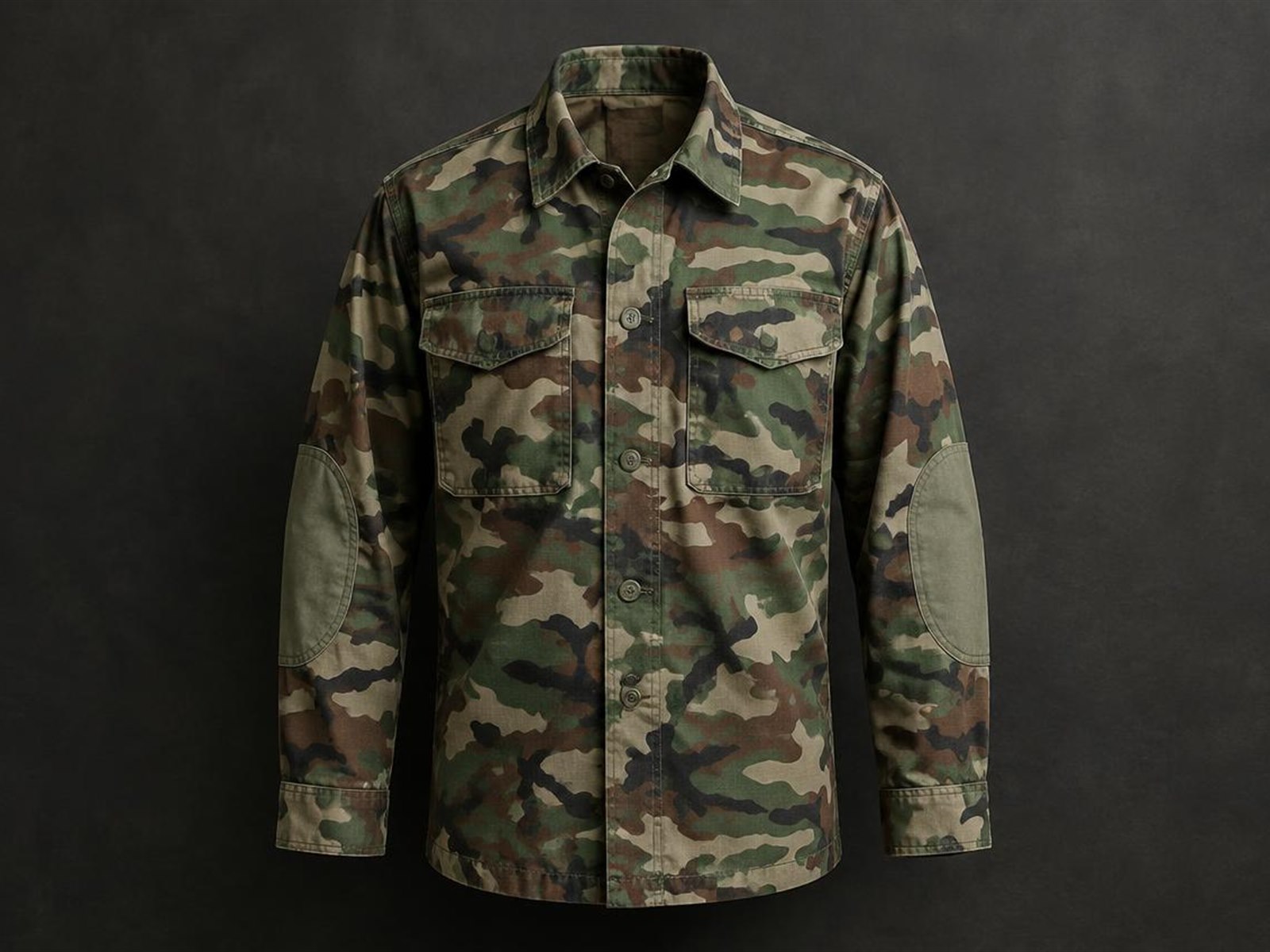
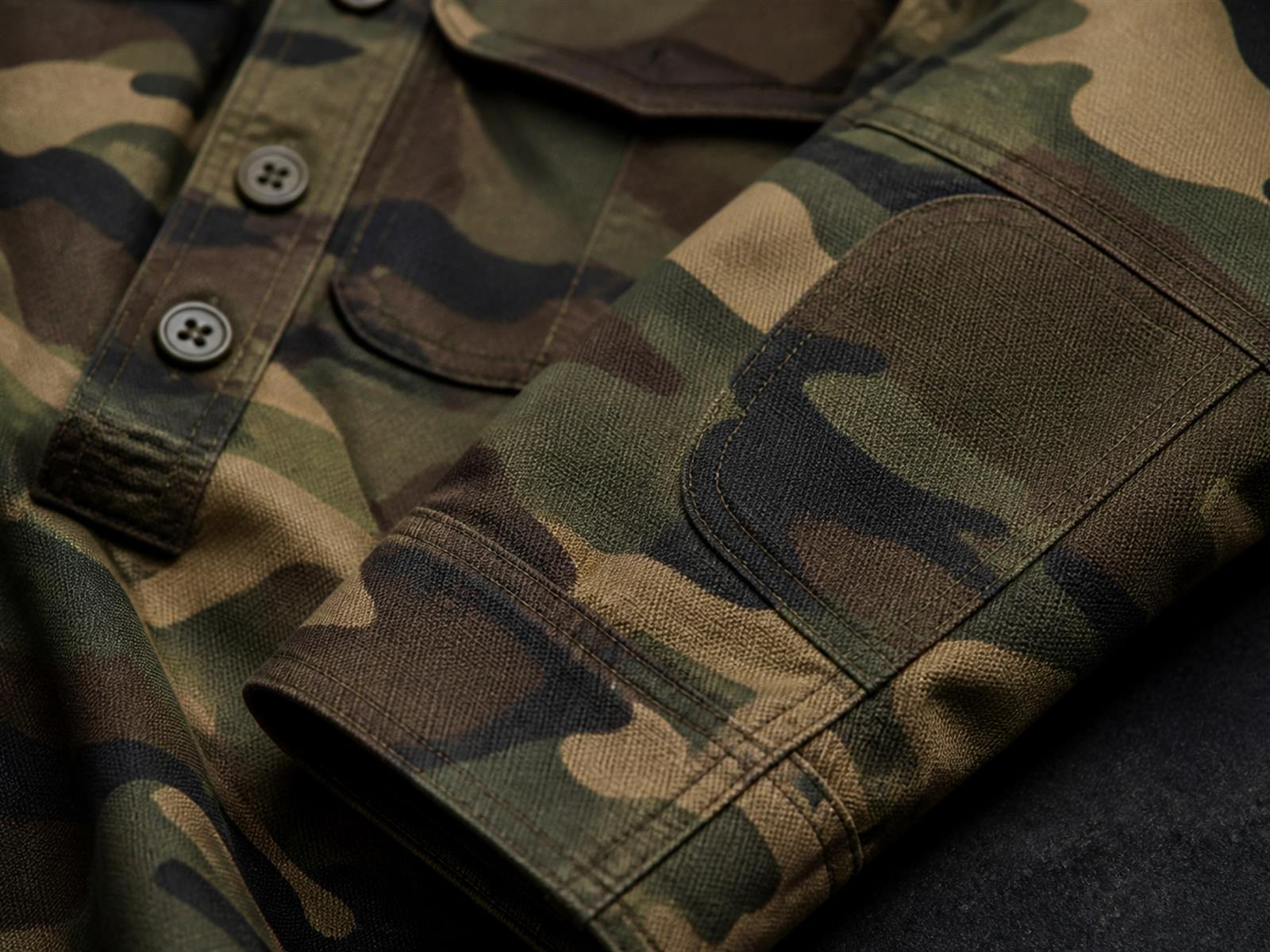
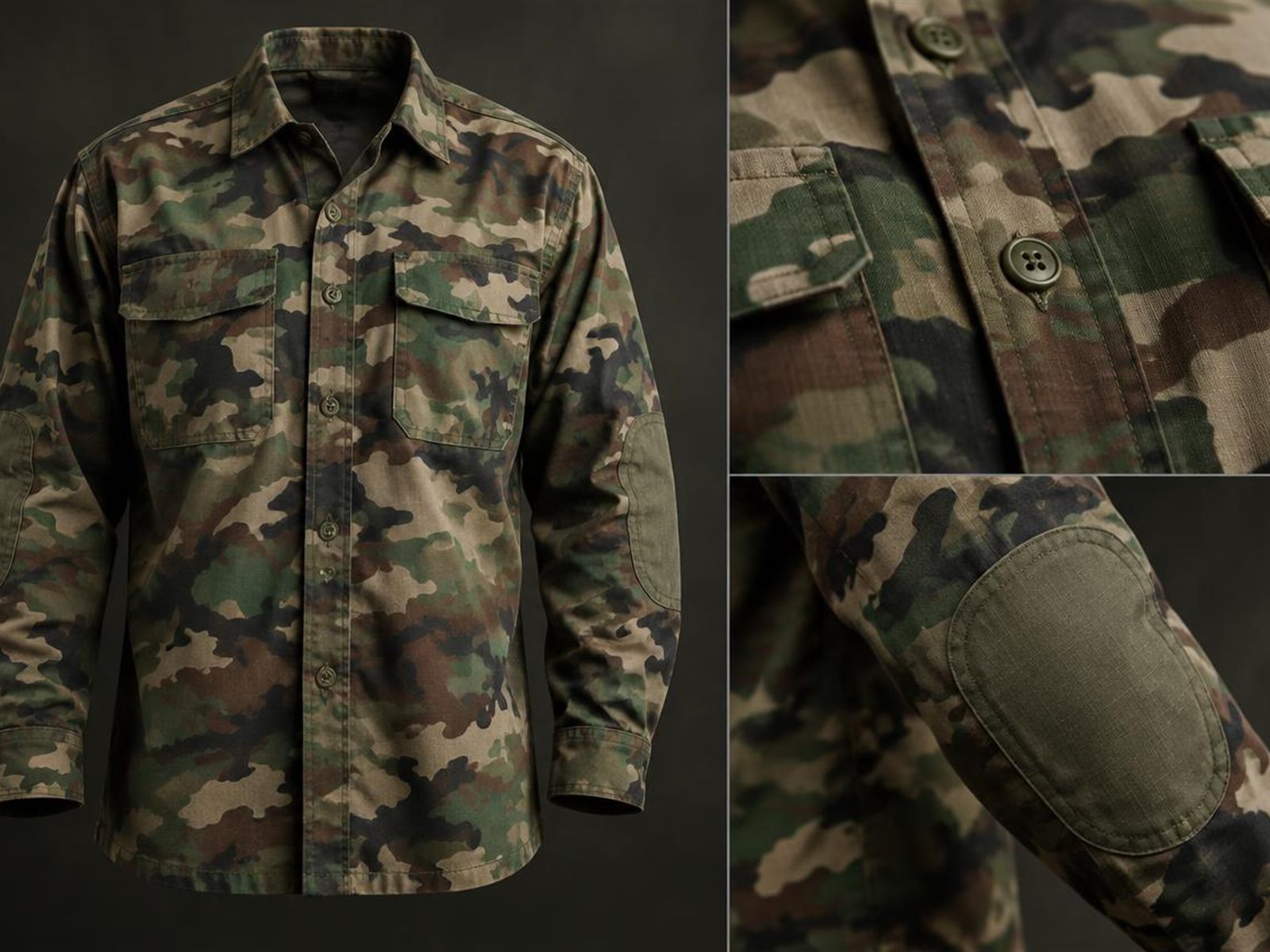
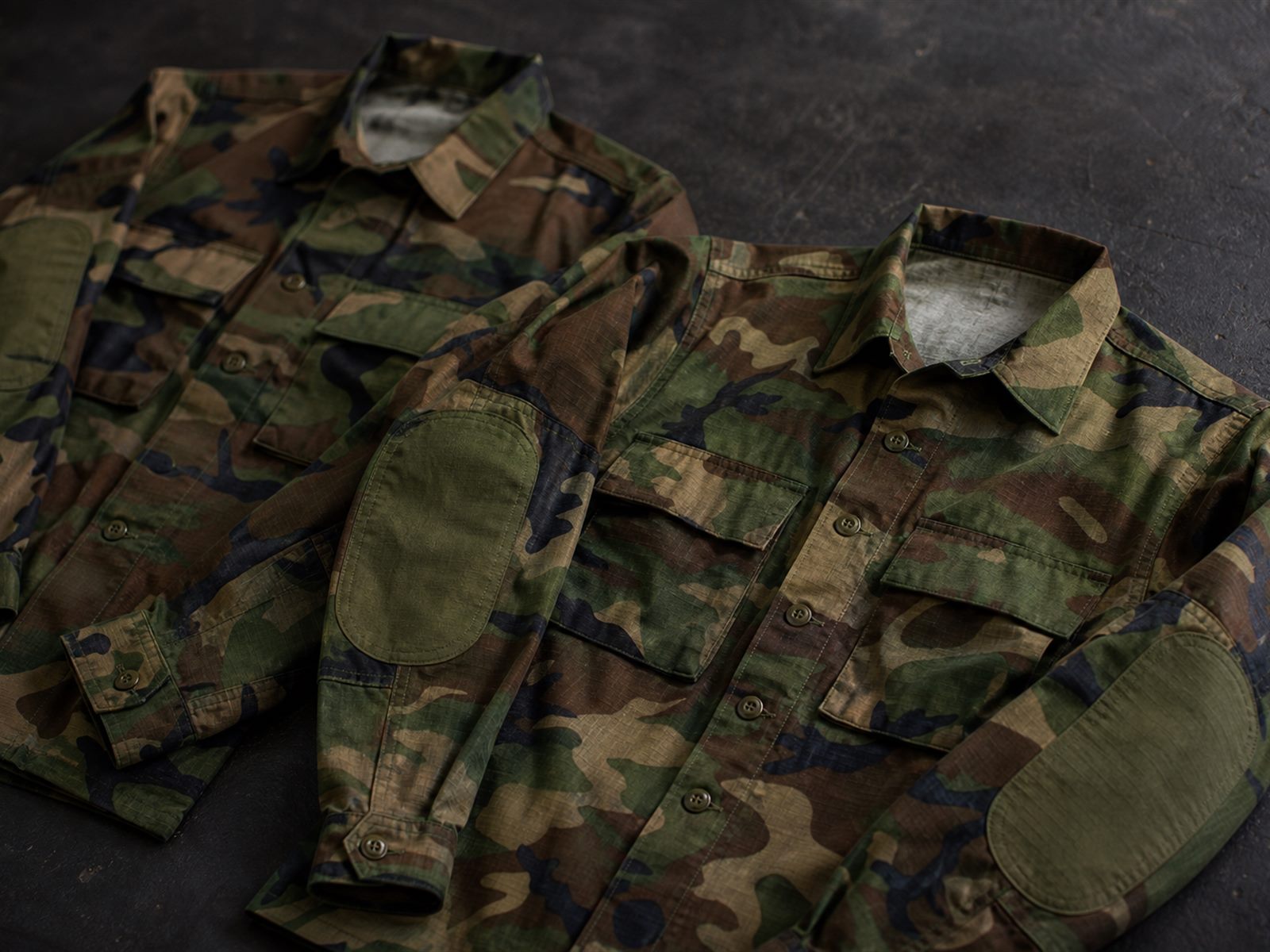
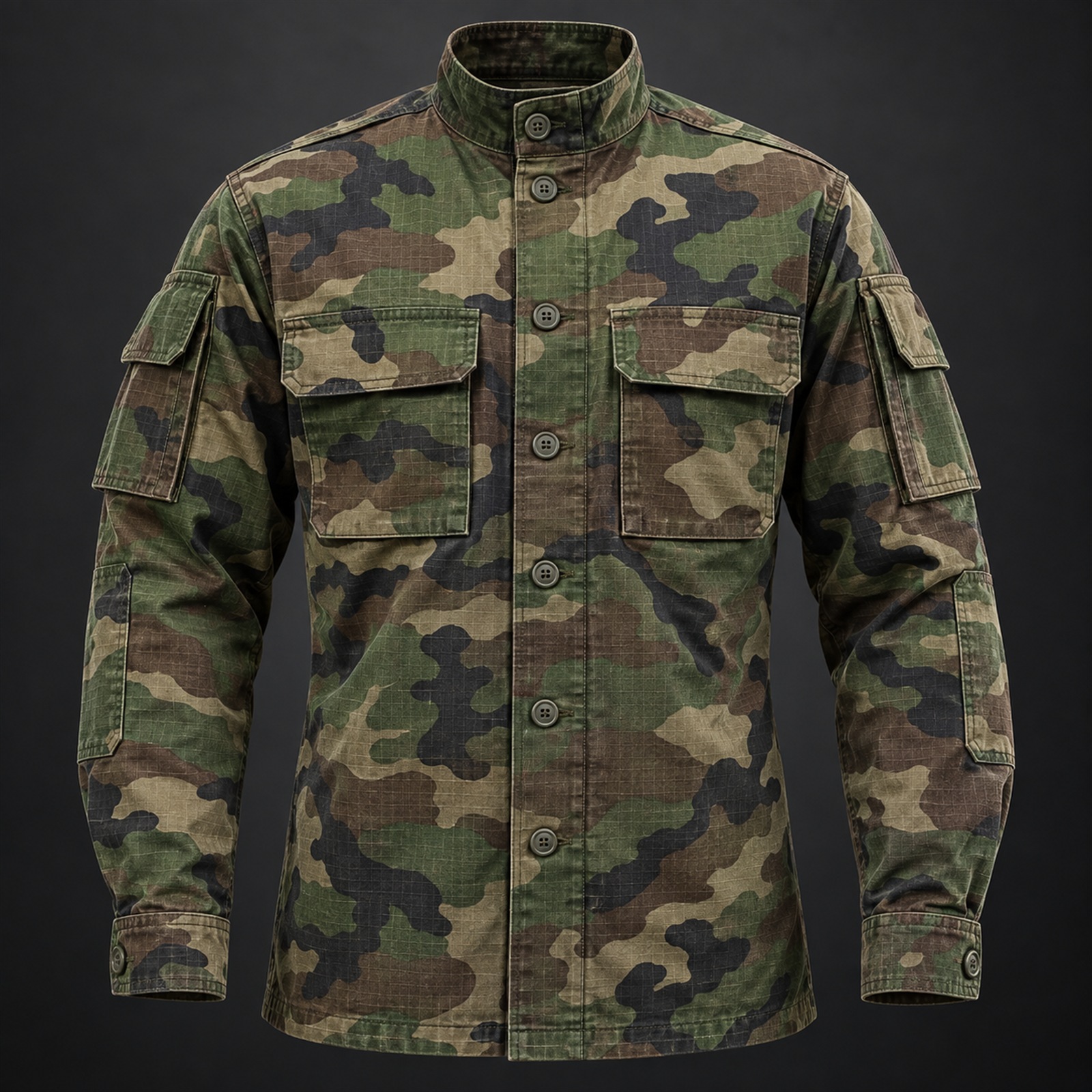
Custom BDU field shirt with button placket and reinforced elbows manufactured for OEM buyers
Primary keyword
bdu shirt manufacturer
Climate focus
Temperate / Cool / Field · Hot / Tropical / Desert · Urban Duty / Mixed / All Season
Development input
Tech pack · Reference sample · Sketch · Photo
Field / BDU ShirtsField / BDU ShirtsField / BDU ShirtsField / BDU Shirts

Buyers

Who buys field / bdu shirts?

Field / BDU Shirts is specified by organisations rather than bought as a single garment, so a quotation has to satisfy all 6 buyer profiles listed below.

Tactical Brands

A production partner who can hold a button-front field shirt pattern, pocket block and collar shape across repeat orders without the fit drifting between batches.

Uniform Distributors & Wholesalers

Volume in a stable size set with a documented specification, so a reorder matches the shirts already sold into their channel.

Security & Facility Management Companies

Duty-appropriate colourways, insignia and name-tape application, and a shirt that keeps its appearance after repeated industrial laundering.

Government Contractors & Procurement Companies

Full specification transparency, pre-production sample approval, measurement documentation and inspection records before shipment.

Outdoor & Hunting Brands

A quieter, less military field shirt in solid or printed fabric, with their own label, packaging and a civilian-friendly fit range.

Private Label Brands & Importers

Woven labels, hangtags and retail-ready packaging on a shirt they can present as their own design.

Types

Field / BDU Shirts types

The same category name covers very different garments depending on climate and wear pattern. 3 types of Field / BDU Shirts are covered here, and the type is chosen before the fabric.

Temperate / Cool / Field

Traditional BDU Field Shirt

The classic cut: button-front placket, two or four chest pockets with flaps, a fold-down collar, sleeve roll-up tabs and elbow reinforcement. Fabric is normally a stable ripstop or twill chosen for shape retention and abrasion resistance rather than for heat management. The trade-off is weight and drying time.

  • Button-front placket with reinforced ends
  • Two or four chest pockets with buttoned flaps
  • Fold-down collar with stays
  • Elbow reinforcement option
  • Sleeve roll-up tab and adjustable cuff
Hot / Tropical / Desert

Lightweight Hot Weather Field Shirt

A lighter, faster-drying version of the same pattern. Fabric weight is reduced, pocket layers are simplified, and construction detail that traps heat is removed. The trade-off is abrasion life and shape retention: a lighter shirt creases more in wear and wears faster at the elbow and collar edge.

  • Lightweight quick-dry body fabric
  • Reduced pocket and placket layer count
  • Ventilation opening at the back yoke where specified
  • Simplified collar construction to cut heat load
  • Streamlined elbow reinforcement

Urban Duty / Mixed / All Season

Duty & Service Field Shirt

Built for appearance retention and public-facing wear. Colourfastness under frequent laundering, a collar that holds its shape, placket that does not gap when the shirt is buttoned, and clean attachment points for badges, name tapes and rank slides. Comfort features are deliberately restrained because the shirt is worn as a uniform.

  • Colourfast, shape-retaining body fabric
  • Reinforced collar edge and placket ends
  • Badge, name tape and rank attachment points
  • Optional pencil or ID pocket
  • Consistent appearance after repeated laundering

Engineering

Construction, part by part

8 construction decisions define Field / BDU Shirts, and each row below is one decision you control at specification stage.

Body & Torso

  • Ripstop woven body
  • Twill woven body
  • Lightweight quick-dry woven body
  • Mechanical stretch woven body
  • Printed camouflage body

Body fabric sets the shirt's whole behaviour: how it creases, how it dries, how it holds shape at the collar and placket. Buyers should state the climate and the laundering method before the body fabric is locked, because an industrial wash at high temperature shortens the life of a lightweight shirting weave more than a stable ripstop.

Placket & Button Closure

  • Full button placket
  • Concealed button placket
  • Button placket with reinforced ends
  • Hook and loop closure
  • Zip front

Placket gapping and button breakage are the most common field shirt complaints. Placket width, interlining and button attachment method all affect whether the front stays closed in wear, and the specification should be confirmed on the sample rather than assumed.

Collar

  • Fold-down field collar
  • Fold-down collar with stays
  • Stand collar
  • Zip-through collar with chin guard
  • Reinforced collar edge

A fold-down collar with stays reads as a uniform and fades toward the formal end; a stand collar reads more technical and traps less heat. The choice is usually driven by what the shirt is worn with — a tie and badge, or a vest and helmet.

Chest Pockets

  • Two chest pockets with buttoned flaps
  • Four pockets with buttoned flaps
  • Zippered chest pockets
  • Pleated utility pockets
  • Pen slot on pocket
  • No chest pockets

Pocket count drives both cost and heat load, and each flap adds a layer over the chest. Buyers should state what the end user actually carries, because an oversized pocket that is never filled only adds bulk and heat.

Sleeves & Elbow

  • Plain sleeve
  • Flat reinforced elbow patch
  • External elbow pad pocket
  • Internal elbow pad pocket
  • Abrasion-resistant overlay panel
  • Roll-up sleeve tab

The elbow is the first place a field shirt fails, usually from resting on ground, benches or vehicle surfaces. Reinforcement that is too stiff transfers stress into the sleeve fabric, so the overlay fabric and its attachment method matter as much as its presence.

Cuff

  • Button cuff
  • Two-button adjustable cuff
  • Elasticated cuff
  • Hook and loop adjustable cuff
  • Extended cuff with thumb loop

Cuff type decides whether the sleeve can be closed over a glove or a wrist device. Adjustable cuffs are the common specification but add hardware that must be checked for wash durability.

Shoulder & Epaulette

  • Plain shoulder seam
  • Epaulettes with button
  • Hook and loop insignia panel
  • Name tape panel above the pocket
  • Reinforced shoulder panel
  • No insignia provision

Insignia provision costs little and matters a great deal to uniform buyers. Placement should be agreed on the pattern for every size, because a tape position that reads correctly in the middle size can sit wrong on the extremes.

Reinforcement & Stress Points

  • Bartacks at pocket corners and placket ends
  • Reinforced pocket flap corners
  • Double-layer elbow and yoke
  • Reinforced side seams
  • Reinforced button attachment points

Reinforcement is worth more when it is targeted than when it is spread across the garment. Buyers should name the failure they are trying to prevent — pouch weight on a pocket corner, ground contact at the elbow, laundering stress at the placket — so the reinforcement matches it.

Available fabrics

Material options by garment area

Body Fabrics

Poly cotton ripstopNYCO ripstopCotton ripstopLightweight hot weather fabricMechanical stretch fabric

NYCO is generally selected where abrasion resistance and shape retention matter most but dries more slowly and costs more; poly cotton is the usual compromise where drying speed and cost dominate. Composition and weight are confirmed per programme rather than carried over from an earlier order.

Reinforcement Panels

Heavier ripstop overlayAbrasion-resistant woven overlayDouble-layer self fabricPrinted self-fabric overlay for camouflage builds

Self-fabric reinforcement keeps the print or shade continuous but adds a second layer where heat builds; a plain overlay uses less fabric but introduces a tone that has to be matched against the body.

Trims & Findings

Coordinated thread shadesButtons matched to the fabric toneFusible or sew-in collar and placket interliningZip tape matched to the body colourHook and loop in subdued tones

Interlining is the least visible and most consequential trim on a field shirt: it is what keeps the collar standing and the placket from gapping after washing. Buyers should ask how it is specified and whether it survives the laundering the end user will apply.

Customization

What can be customized

15 specification lines are available for Field / BDU Shirts, and where an option changes cost, weight or durability the consequence is stated next to it.

Fabric

Ripstop familyTwill familyLightweight hot weather familyStretch woven familyBuyer-specified composition and weight

Color

Solid colorwaysBuyer Pantone targetsBuyer lab dip approvalSubdued duty tones

Camouflage Pattern

Buyer artworkWoodland styleDesert styleDigital styleCustom seasonal pattern

Fit

Standard field fitRelaxed fitTrimmed duty fitTuck-in or untucked length

Placket & Closure

Full button placketConcealed button placketHook and loop closureZip frontReinforced placket ends

Collar

Fold-down field collarFold-down with staysStand collarZip-through with chin guard

Pocket Layout

Two chest pocketsFour pocketsZippered chest pocketsPen slotInterior document pocketNo chest pockets

Button

Standard buttonsSubdued buttonsReinforced button attachmentBuyer-specified button size and tone

Sleeve

Long sleeveShort sleeveRoll-up tabElasticated sleeveTwo-button adjustable

Elbow

Reinforcement patchInternal pad pocketExternal pad pocketAbrasion overlayNone

Cuff

Button cuffTwo-button adjustableHook and loopElasticThumb loop

Insignia & Name Tape

Shoulder epaulettesName tape panelHook and loop insignia panelSleeve patch positionChest badge position

Reinforcement

Pocket corner bartacksPlacket end bartacksDouble-layer elbowReinforced yokeReinforced side seams

Logo

Woven labelPrinted labelRubber patchEmbroideryHeat transfer

Label & Packaging

Main labelSize labelCare labelCountry of origin labelPoly bagPrinted poly bagHangtagHeader cardCustom box

Sizing

Size development

Size development starts from the measurements the end user is issued, not from a generic chart. Before a size set is built we need the buyer's target size range, either body measurements or garment measurements taken from a reference shirt, the intended fit direction — standard, relaxed or trimmed — and any sizing system the buyer already sells, such as a national uniform sizing standard or their own chart. From there we build a size set sample so the buyer can check critical measurements across the range rather than only in the middle size: chest, shoulder width, sleeve length, back length, collar size, cuff opening and pocket position and depth. Because a field shirt is often worn tucked, body length has to be checked where the wearer bends and reaches, not only standing. Insignia and name tape positions are also verified in every size, since a placement that reads correctly on the middle size can sit wrong at the extremes. Measurement tolerance is agreed in writing before bulk so that inline and final inspection use the same numbers.

How size development works

Branding

Private label

Private label covers everything the end customer sees. Main label, size label, care label and country of origin label are produced to the buyer's artwork and content requirements, and care content is matched to the fabric and trim specification actually used so the end user is not given instructions that damage the garment. Branding can be applied as woven label, printed label, rubber patch, embroidery or heat transfer, and insignia, name tape and rank positions are agreed on the pattern so they sit correctly in every size. Packaging can be as simple as a poly bag or as complete as a printed poly bag with hangtag, header card and custom box for private label brands selling the shirt as a retail product.

Customization capability

Development

Sampling process

Sampling for Field / BDU Shirts runs in 8 stages, each one removing a specific risk before the next stage commits cost.

01

Requirement review

We review the buyer's tech pack, reference shirt, sketch or photo and list every open specification before any fabric is cut — including pocket count, collar type, button specification, insignia positions and required tolerances.

02

Material selection

Body fabric, reinforcement fabric and interlining are proposed against the intended climate, laundering method and appearance requirement, with alternatives where a specification is not yet fixed.

03

Pattern development

The pattern is developed or adapted to the buyer's reference, including collar shape, placket width, pocket blocks, sleeve and cuff construction and body length.

04

Prototype

A first sample is produced in the proposed materials so the buyer can assess fit, collar behaviour, placket closure and material feel in hand.

05

Revision

Buyer comments are consolidated into a single revision round so the specification converges instead of drifting across multiple samples.

06

Size set

The full size range is produced for measurement confirmation, with collar size, sleeve length, body length and insignia positions checked across the range.

07

Laundering review

Where the buyer specifies an industrial or high-temperature wash, the sample construction is reviewed against it so collar interlining and placket behaviour are not a surprise after the first production wash.

08

Pre-production sample

The final approved construction, materials, interlining and labelling are locked in a pre-production sample that becomes the bulk standard.

Production

Bulk manufacturing

Bulk production of Field / BDU Shirts runs in 7 stages, which is where an approved specification is either held or lost.

01

Fabric and trim approval

Bulk fabric, buttons, interlining, thread, zips and labels are approved against the pre-production standard before cutting begins.

02

Shade and roll control

Fabric rolls are grouped by shade and assigned to cutting orders so panels from visibly different lots are not mixed within one garment.

03

Bulk cutting

Cutting follows the approved pattern with markers controlled for shade, nap and direction-sensitive camouflage prints.

04

Panel preparation

Collars and plackets are interlined, pockets and flaps are prepared, and any printed or embroidered panels are checked before assembly rather than after.

05

Assembly

Assembly follows the approved construction sequence, with collar attachment, placket alignment, pocket placement and elbow reinforcement sewn in the agreed order.

06

Inline quality control

Garments are inspected during assembly so a fault is corrected on the line instead of being discovered after packing.

07

Finishing and packing

Thread trimming, button security check, measurement verification and packing are completed against the agreed inspection standard and packing instruction.

Quality Control

Quality control for this category

Inspection of Field / BDU Shirts is measured against an agreed standard, and the 7 checks below are listed with what each one is measured against.

01

Incoming fabric inspection

Fabric is checked on receipt for shade, width, weight, weave or print alignment and defects before it enters production.

02

Trim inspection

Buttons, interlining, thread, zips and labels are checked for tone, size and function against the approved standard.

03

Pre-production approval

The pre-production sample is approved by the buyer and becomes the reference standard for bulk.

04

Inline inspection

Work in progress is inspected at defined points during assembly, with particular attention to collar attachment, placket alignment, pocket placement and elbow reinforcement.

05

Measurement inspection

Critical measurements — chest, shoulder, sleeve length, back length, collar size and cuff opening — are measured against the approved size set with agreed tolerances.

06

Construction inspection

Stitching, button security, bartack placement, pocket symmetry and collar shape are checked against the approved sample.

07

Final and packing inspection

A final inspection is carried out on finished goods before packing, and label content, folding, poly bagging and carton marking are checked against the packing instruction.

Choosing a Field / BDU Shirts manufacturer

How to choose a field / bdu shirts manufacturer

The 6 questions buyers ask about Field / BDU Shirts before committing to a first order.

Ask what keeps the collar standing

A field shirt's collar is the first thing to look tired, and the reason is usually the interlining rather than the fabric. Ask what interlining is specified, whether it is fusible or sew-in, and whether it was tested against the laundering the end user will actually apply. A supplier who treats interlining as an afterthought will deliver shirts that look worn before they wear out.

Test the placket against the load it will carry

Placket gapping and button breakage are the most common field shirt complaints. Explain what the end user carries on the shirt — radio, notebook, badge, pouch — and ask how the placket and button attachment were specified to cope with it. Button attachment method is a real cost line, and it is worth confirming on the sample before bulk.

Match the collar type to how the shirt is worn

A fold-down collar with stays reads as a formal uniform and works with a badge and tie; a stand or zip-through collar reads technical and suits a vest or helmet. Choosing the wrong one for the wearer costs a full re-pattern, so this is settled before pattern development rather than during sampling.

Count the pocket layers honestly

Four pleated chest pockets with flaps add several layers of fabric directly over the chest, which matters in hot climates and when a vest is worn on top. Where the pockets are not actually filled in service, reducing to two flat pockets improves heat management and lowers cost at the same time.

Check how the shirt behaves after washing, not just in hand

Field shirts are laundered far more often than they are worn hard. Ask how the approved sample behaves after repeated washing in the specified method — collar roll, placket flatness, pocket flap curl, shrinkage and colour retention — because those are the properties the buyer's customer will judge.

Agree the inspection standard before bulk

Measurement tolerances, AQL level, button security criteria and the packing instruction should all be in writing before bulk starts. Agreeing them afterwards turns any appearance complaint, particularly shade between two shipment lots, into a dispute rather than a documented non-conformance.

Products

Field / BDU Shirts products

Each product in Field / BDU Shirts is a developed specification with its own material options, construction detail and customization map.

Field / BDU Shirts

BDU Field Shirt

The BDU field shirt earns its place by being the garment a wearer keeps on when conditions change.

TemperateCool to mildLayered under a jacket
View product

FAQ

Field / BDU Shirts FAQ

Can you develop a field shirt from a reference shirt instead of a tech pack?

Yes. Sending a physical reference shirt is often the fastest route because fit, collar shape and pocket blocks can be taken directly from it. A tech pack with measurements, tolerances and material preferences still shortens development and reduces the number of revision rounds.

What is the difference between a BDU-style field shirt and a combat shirt?

A field shirt is a single-fabric button-front garment intended to be worn as an outer layer or underlight, with the emphasis on abrasion resistance and appearance. A combat shirt is a two-material garment with a moisture-managing torso and ripstop sleeves, designed to be worn under a vest or plate carrier. The correct choice follows from the layering and climate, not from fashion.

Which fabric should we choose for a hot climate?

Start from how the shirt is worn. Worn under a vest, a lighter and faster-drying body fabric with simplified pockets reduces heat load noticeably. Worn as an outer layer in dry heat, a slightly heavier stable weave holds shape better and looks sharper for longer, at the cost of some comfort. The right answer depends on layering and humidity.

Are elbow pads included?

Pads are not part of the garment. What we build is the internal or external pad pocket to the dimensions of the pad you intend to issue, or a flat reinforcement patch where no pad is used. Confirming the pad dimensions before pattern development avoids a pocket that does not fit the product the user receives.

How are insignia, name tapes and rank applied?

As sewn or hook and loop panels, direct embroidery, heat transfer or a dedicated tape panel, depending on what the buyer issues. The method and the position are confirmed on the pre-production sample for every size, because a placement that is correct in the middle size may sit wrong at the extremes of the range.

Can you match the sizing and the collar sizes we already sell?

Yes. Send the garment measurement chart you currently sell, or a reference shirt from your range. Pattern development works from your measurements and collar size convention, and the size set lets you verify the full range before bulk.

What information do you need for a quotation?

Shirt type and fit, target quantity, body fabric preference, colour or camouflage direction, collar and pocket specification, sleeve and cuff type, insignia provision, size range, labelling and packaging requirements, the target market and the climate, and the laundering method the end user will apply. A reference shirt, photo or tech pack helps most. Where a figure such as MOQ or lead time has not been confirmed with you, we will state that explicitly rather than quote a number we cannot hold.

Request a Manufacturing Assessment

Send us your tech pack, reference sample or product idea. We review your requirement, recommend materials and construction, and come back with a development plan you can act on.