Skip to content
TACTICALOEM / ODM TACTICAL APPAREL
ENEnglish

Products / Cold Weather Uniform Sets

Cold Weather Uniform Set Manufacturer

A cold weather uniform set is bought as one line on a tender and issued as one outfit, but it is produced as several garments that must agree with each other. That is where sets fail. A jacket and trouser in the same nominal size can leave a gap at the waist, a mid layer can bind under a shell in the shoulders, and two fabric types dyed to the same reference can look different side by side. This category is the whole-kit version of a Base / Mid / Insulation / Shell system: the buyer specifies the set, the layers inside it and how it is issued, rather than specifying garments one at a time. This page covers the decisions that belong to sets specifically — which layers are included, how the set divides into jackets and trousers, how size consistency is held across every component, how colour and trims are matched across different fabric types, and how the set is labelled, packed and issued per person for a large staff group.

custom cold weather uniform setwinter uniform set OEMlayered uniform set supplierwholesale cold weather duty set
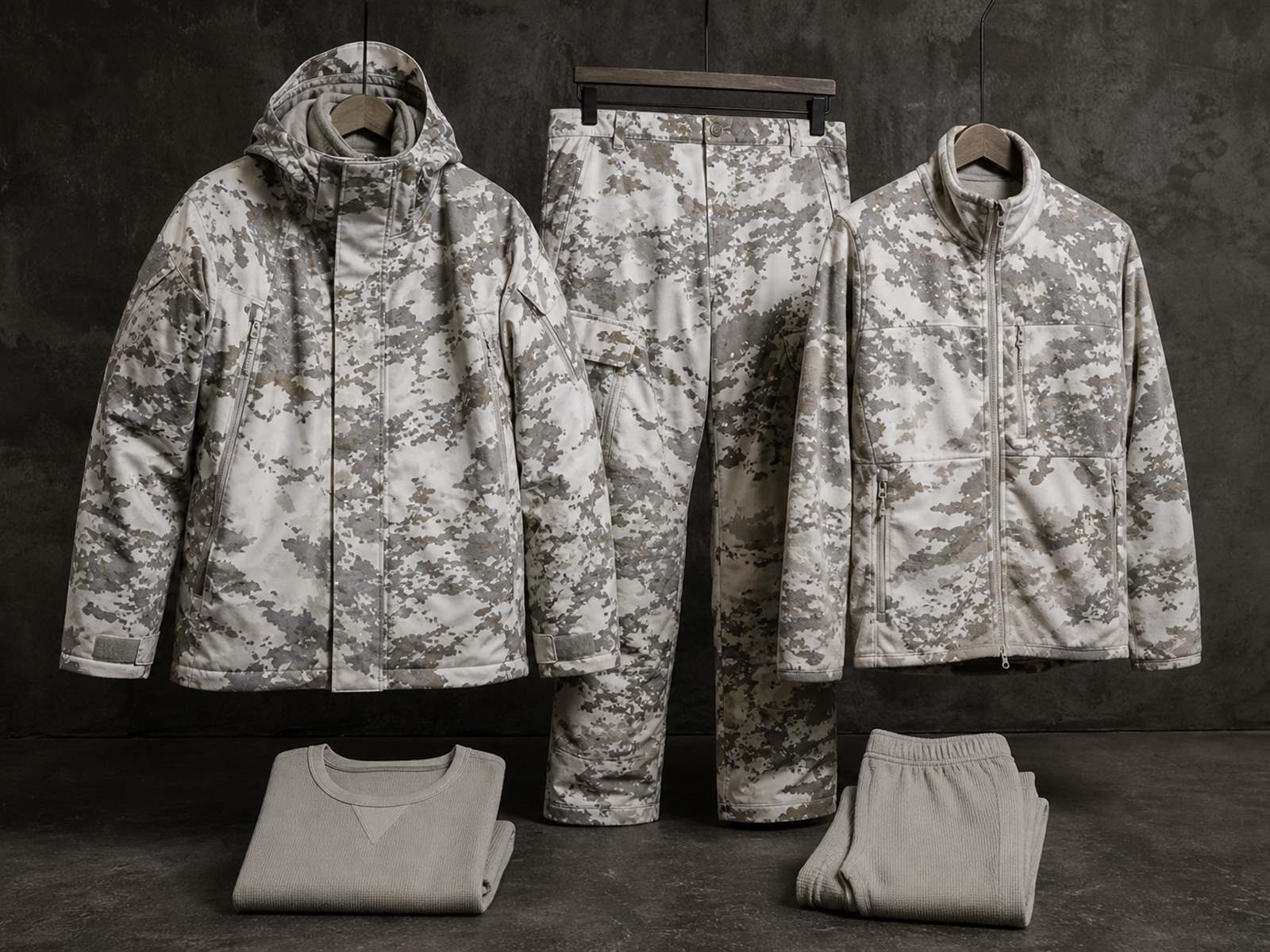
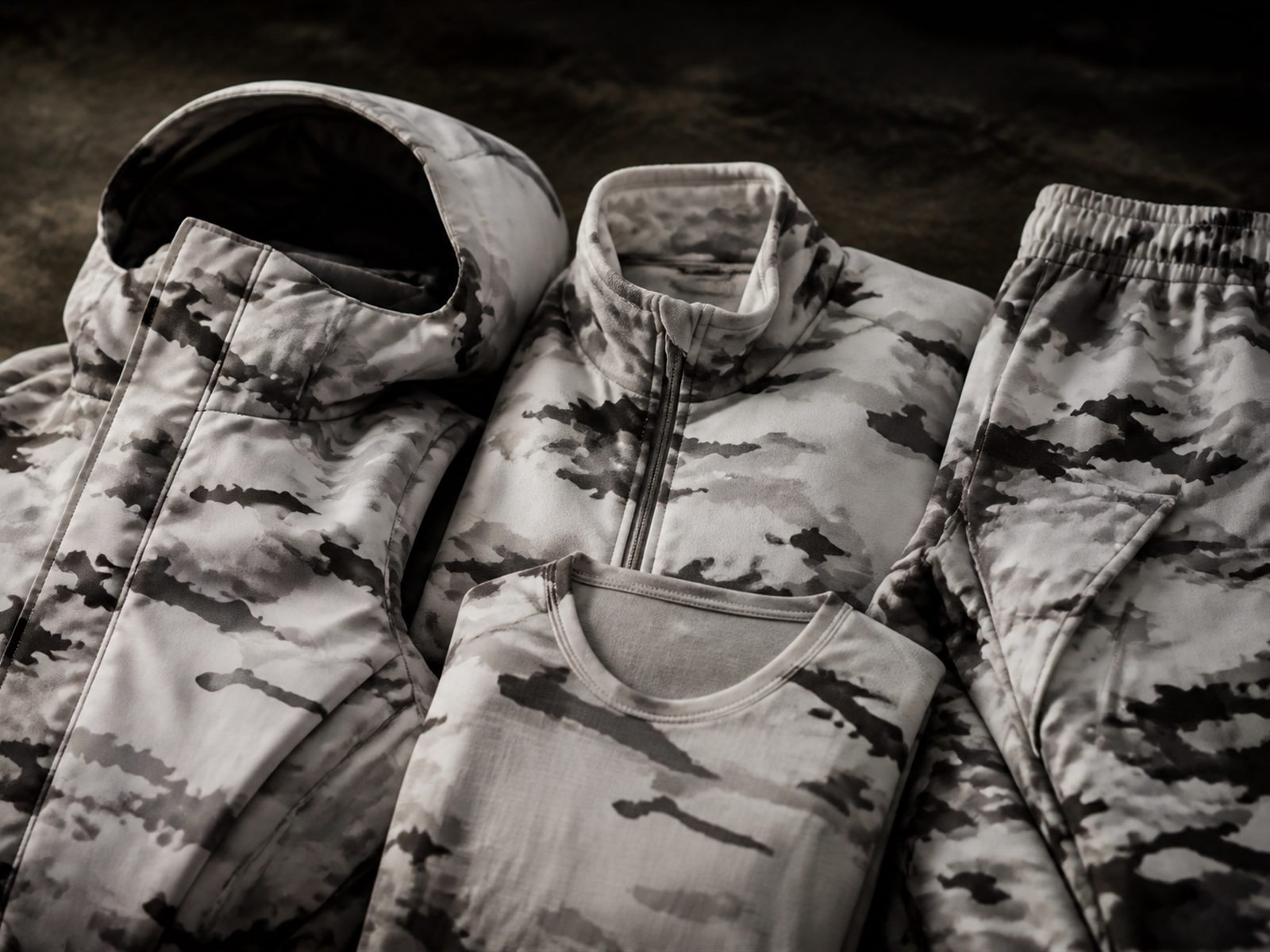
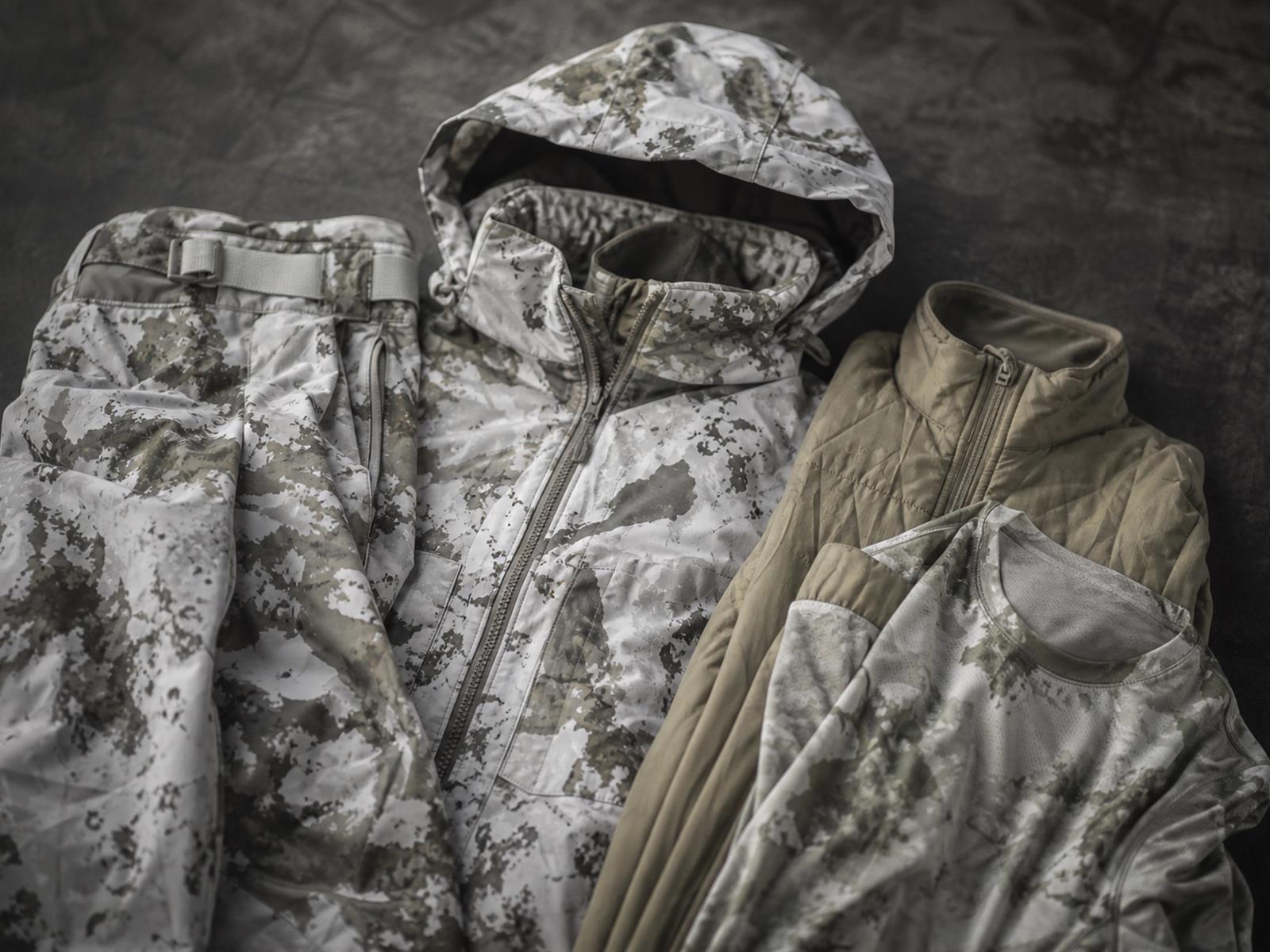
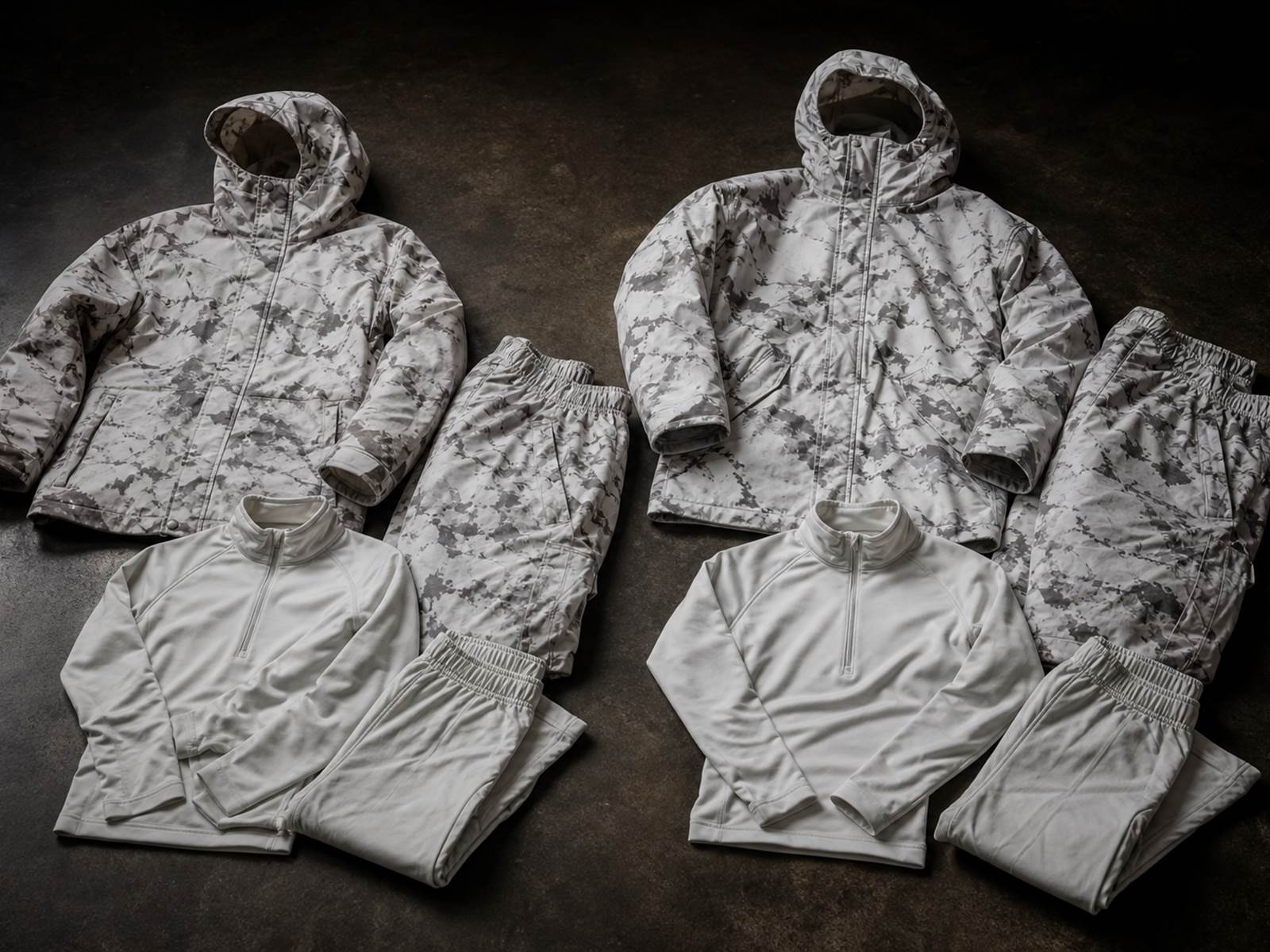
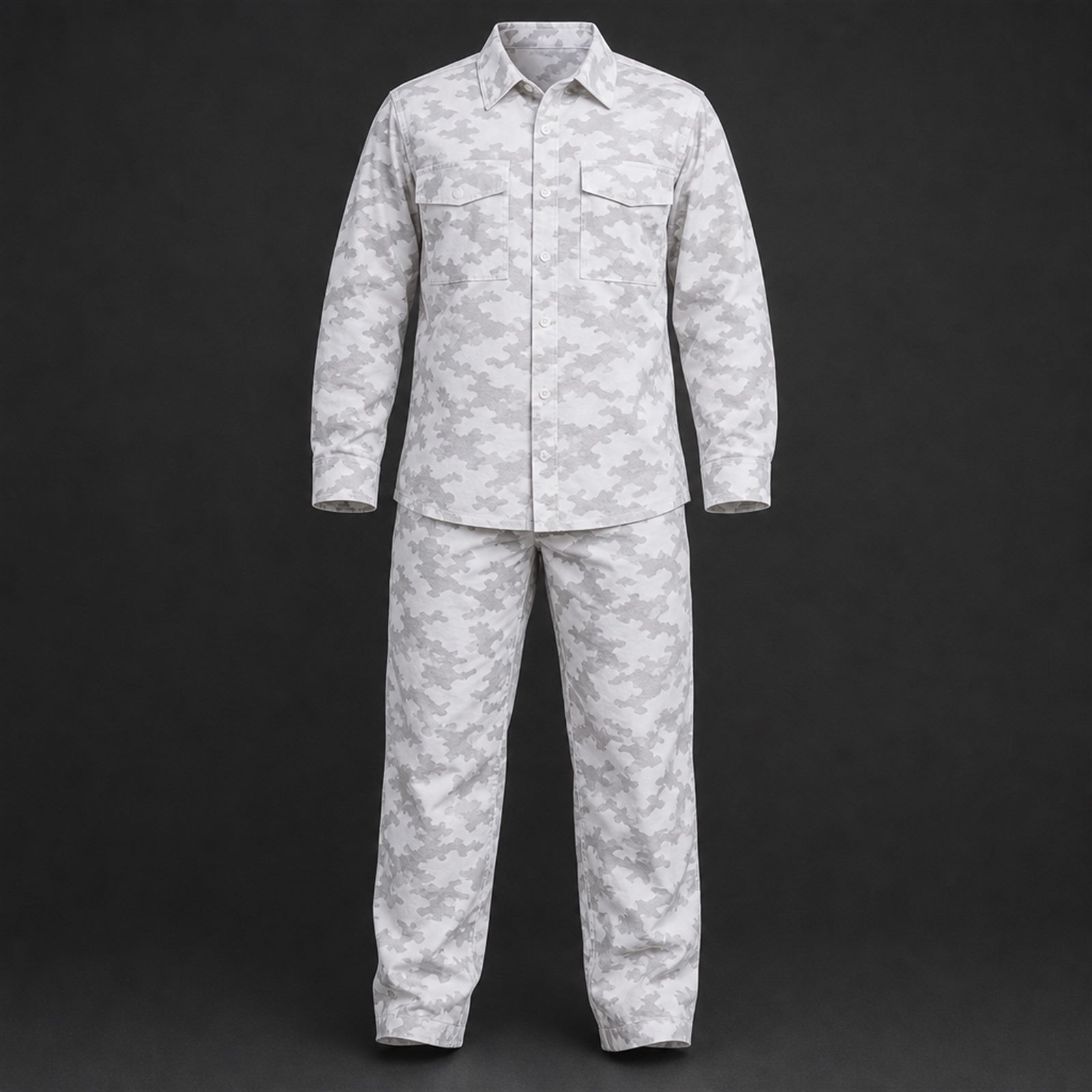
Cold weather uniform set with jacket, trouser, mid layer and base layer matched in colour and size for issue
Primary keyword
cold weather uniform set manufacturer
Climate focus
Cold / Duty and site work · Severe cold / Extended outdoor work · Cold / Staff moving between indoor and outdoor work
Development input
Tech pack · Reference sample · Sketch · Photo
Cold Weather Uniform SetsCold Weather Uniform SetsCold Weather Uniform SetsCold Weather Uniform Sets

Buyers

Who buys cold weather uniform sets?

Cold Weather Uniform Sets is specified by organisations rather than bought as a single garment, so a quotation has to satisfy all 6 buyer profiles listed below.

Tactical Brands

A complete winter set they can present as one product family, with the components sharing a fit standard so a customer buying the set gets consistent sizing across it.

Outdoor & Hunting Brands

Sets in muted or camouflage palettes where the garments are designed together, with their own labelling and packaging rather than mixed components from different ranges.

Uniform Distributors & Wholesalers

Sets held as one stock line with consistent size coding across components, so a replacement jacket ordered later still matches the trouser already in service.

Security Companies

A standard winter issue for staff across many sites, with a set that looks uniform on duty, takes company insignia, and can be reordered in the same specification.

Government Contractors & Procurement Companies

One documented specification covering every component, per-person packing, and inspection records, because the tender is assessed against the set rather than the individual garment.

Private Label Brands

Their own branding across a coordinate set, including labels, trims, size coding and retail-ready packaging.

Types

Cold Weather Uniform Sets types

The same category name covers very different garments depending on climate and wear pattern. 3 types of Cold Weather Uniform Sets are covered here, and the type is chosen before the fabric.

Cold / Duty and site work

Two-Piece Cold Weather Duty Set

A jacket and trouser developed together in matching fabric, colour and trim, for programmes that expect the wearer to add their own base and mid layers. The value of building it as a set is the waist and hem interface: the jacket hem and trouser waist are designed to overlap, and the size coding is shared so the two pieces are ordered consistently. The trade-off is that the set does nothing about moisture management underneath, so if the base layer is not specified the programme may still underperform.

  • Jacket and trouser in matched fabric and colour
  • Designed hem and waist overlap rather than an assumed one
  • Shared size coding across both garments
  • Matched trims: zips, cord locks, hook and loop
  • Reinforcement specified at the same wear points on both garments
  • Consistent insignia positions across the set
Severe cold / Extended outdoor work

Layered Cold Weather Issue Set

A set that includes the layers as well as the outer garments — base layer, mid layer, shell jacket and trouser — developed as one composition. This is the configuration that solves the whole-kit problems at once, because the layering allowance in the shell is developed from the mid and base layers actually issued with it, and all four garments can be checked in the stack. The costs are real: more components to stock and size per person, more complex laundering, and a longer development cycle because the interfaces are designed together.

  • Base, mid, insulation and shell components developed as one composition
  • Sizing allowance in each layer developed from the layer beneath it
  • Colour and trim matching across different fabric types
  • Removable or independently replaceable components where the programme needs them
  • Set-level identification so components are not mixed between issues
  • Per-person packing by size and component

Cold / Staff moving between indoor and outdoor work

Cold Weather Set for Indoor and Outdoor Rotation

Built around staff who spend part of a shift outdoors and part of it indoors, where the problem is not maximum warmth but the ability to shed and re-add layers quickly and store them. The set is specified with removable and packable components, clearly labelled so they go back to the right wearer, and a robustness level suited to repeated donning and doffing rather than to long static exposure. The trade-off is that a set optimised for rotation is not the warmest configuration for a wearer who stays outside continuously.

  • Removable mid and insulation components
  • Closures designed for quick change with gloves on
  • Packable components that store without losing their shape
  • Durable closures that survive frequent use
  • Labelled components for shared storage and issue
  • Colour coding or coding system for component identification by size

Engineering

Construction, part by part

8 construction decisions define Cold Weather Uniform Sets, and each row below is one decision you control at specification stage.

Outer Jacket Component

  • Cold weather shell jacket in the set
  • Insulated jacket in the set
  • Softshell jacket for dry cold sets
  • Parka-length jacket where coverage at the hip is required

The jacket is usually the most visible component of a set and the one that carries insignia. Its hem length is a set-level decision, because it determines how much overlap is available at the waist.

Lower Body Component

  • Trouser in the set
  • Shell over-pant with a layering allowance
  • Insulated winter pant in the set
  • High-back or bib pant where waist coverage is required

The trouser has to be graded so its waist and rise work with the jacket hem. If the trouser is graded from a different fit standard than the jacket, the set gap appears in the larger sizes first.

Mid and Insulation Components

  • Fleece or knit mid layer
  • Light insulated mid layer
  • Insulated jacket or vest as the set's warmth layer
  • No mid or insulation component (two-piece sets)

Where these components are included, their bulk decides the sizing allowance in the shell. Specifying the shell before the mid and insulation layers is how a set reaches production with a fit problem built in.

Base Component

  • Moisture-moving base layer top and bottom
  • Base layer issued with a spare set
  • Base layer not included (buyer supplies)

If the base layer is excluded from the set, the specification should say what it is expected to be, because a cotton-rich base layer undermines every layer above it regardless of how well those are built.

Colour and Fabric Card

  • Single reference colour across all components
  • Reference colour per component with a stated tolerance
  • Camouflage pattern coordinated across components
  • Mixed palette for duty and field variants

Matching colour across a knit base layer, a fleece mid layer and a woven shell is a genuine difficulty, because each fabric type takes dye differently. It is agreed as a specific requirement rather than assumed from one reference.

Set Grading and Size Coding

  • Shared size set across all components
  • Component-specific grading within a shared size code
  • Buyer size coding for stock and issuing systems
  • National uniform sizing standard where one applies

The purpose of shared coding is that a size on a jacket and a size on a trouser mean the same thing. Where components are graded independently, the size chart has to state the difference explicitly.

Set Identification and Issue Labelling

  • Size identification per component
  • Component identification within the set
  • Wearer name or issue marking panel
  • Storage and laundering instruction labels
  • Insignia and rank placement positions

For a large staff group, identification is what keeps the set usable. Components that cannot be matched back to a size or a wearer are replaced rather than repaired.

Set Packaging and Kitting

  • Component-listed poly bag per set
  • Per-person packing by size combination
  • Cartons sorted by size break
  • Printed set contents list
  • Retail-ready packaging for branded sets

How a set is packed determines how quickly it can be issued. Per-person or per-combination packing costs a little more and removes a sorting stage at the depot.

Available fabrics

Material options by garment area

Outer Components

Waterproof fabricWater resistant fabricWind resistant fabricSoftshell

Wet snow and sleet point to waterproof construction for the outer components; dry cold and high activity usually point to a wind-resistant or softshell outer with better breathability. The same set can mix these if the programme requires it, provided the difference is documented.

Mid and Insulation Components

FleeceCold weather insulation materialMechanical stretch fabric

Mid and insulation fabrics are selected against the activity pattern of the wearers, not against the outer component. A set whose mid layer is too warm for the working day is removed and left behind, which defeats the purpose of issuing it.

Base Component

Moisture wicking fabricQuick dry fabric

The base layer is the component most often underestimated in a set and the one whose absence the wearer notices least until the insulation stops working.

Reinforcement and Trims

Waterproof fabric at knee, seat and cuffStretch ripstop at articulation zonesTrim set matched across componentsSeam treatment matched to each component's construction

A set is only as consistent as its least durable component. Trim and reinforcement are specified across the whole set so the programme does not end up repairing one garment type continuously.

Customization

What can be customized

12 specification lines are available for Cold Weather Uniform Sets, and where an option changes cost, weight or durability the consequence is stated next to it.

Set Configuration

Two-piece jacket and trouserThree components with a mid layerFour-layer full issue setSet with a spare base layer

Outer Fabric

Waterproof constructionWater-resistant constructionWind-resistant constructionSoftshell construction

Colour

Single reference across all componentsPer-component reference with toleranceBuyer Pantone targetsBuyer lab dip approval across the fabric set

Camouflage

Buyer artwork coordinated across componentsWoodland styleDigital styleWinter or seasonal patternNone (solid duty colourways)

Jacket Features

Hood type and adjustabilityClosure and storm flapVentilationPocket configurationCuff and hem adjustment

Trouser Features

Knee reinforcement and pad interfaceSeat reinforcementLeg closure and hem or snow cuffWaist adjustment and bracesPocket configuration

Sizing

Shared size set across componentsComponent-specific gradingNational uniform sizing standardBuyer stock coding

Insignia

Hook and loop panelsEmbroidery positionsHeat transferRank and name markingNone

Identification

Size label per componentComponent identification within the setWearer marking panelStorage and laundering labels

Removability

Fixed componentsRemovable mid layerRemovable insulationReplaceable components by design

Logo & Label

Woven labelPrinted labelRubber patchMain, size, care and origin labels per component

Packaging

Component-listed poly bag per setPer-person packingCarton sorting by size breakPrinted set contents listRetail-ready packaging

Sizing

Size development

Set sizing is where this category differs most from single garments. We start from the buyer's target size range, their existing uniform sizing standard or stocking system, and the layer composition inside the set. The principle is one size set for the whole set: each component is graded so that a size carries the same meaning on the jacket, the trouser and any mid or base layer included, and the layering allowance in the outer components is developed from the components actually issued with them. Critical measurements are confirmed across the range on a size set — chest, shoulder, sleeve, back length and hem on the jacket; waist, hip, inseam, knee position and leg opening on the trouser — and where the buyer supplies the lower layers, the set is assessed in the full stack. Tolerances and the size coding are agreed in writing before bulk so that inspection, reordering and issue all reference the same numbers.

How size development works

Branding

Private label

Private label on a set covers every component and the way they are presented together. Main label, size label, care label and country of origin label are produced per component to the buyer's artwork and content, including any care instruction the construction requires. Branding is applied as woven label, printed label, rubber patch, embroidery or heat transfer, with insignia and identification positions agreed across the set rather than garment by garment. Packaging can be component-listed poly bags, per-person packing by size combination, or retail-ready packaging for branded sets, and a printed set contents list is produced where the buyer needs it for issue. All labelling and packing is confirmed on the pre-production sample.

Customization capability

Development

Sampling process

Sampling for Cold Weather Uniform Sets runs in 7 stages, each one removing a specific risk before the next stage commits cost.

01

Requirement review

We review the tender or tech pack and list the open points — which components are in the set, the layering composition, the issue method, insignia and identification requirements and how the set is packed — before material is cut.

02

Set-level composition

The component list is agreed first, then fabric and construction are proposed per component with the cross-component requirements — colour, trims, grading and interfaces — stated explicitly.

03

Interface and grading design

Jacket hem and trouser waist overlap, cuff and glove interface, pad and knee placement and the shared size coding are settled before any pattern is finalised.

04

Component prototypes

Samples of each component are produced so the buyer can assess fit and construction individually, and then as a stack where the programme includes inner layers.

05

Revision round

Buyer comments across all components are consolidated into a single revision round, so changes do not create inconsistency between the components of the set.

06

Size set across the set

The full size range is produced for the components required, so measurement and grading can be confirmed across the range rather than only in the middle size.

07

Pre-production sample

The approved construction, materials, trims, labelling, size coding and packing method are locked as the set standard for bulk.

Production

Bulk manufacturing

Bulk production of Cold Weather Uniform Sets runs in 7 stages, which is where an approved specification is either held or lost.

01

Fabric and trim approval per component

Fabric, reinforcement, zips, insulation, elastic, sealant, thread and labels are approved against the pre-production standard for each component before cutting.

02

Colour and lot allocation

Fabric lots are allocated so that components belonging to the same set and the same colour reference are produced from controlled lots and compared against the approved standard.

03

Bulk cutting

Cutting follows the approved patterns per component, with markers arranged for shade and direction-sensitive face fabrics and with cut pieces identified by size code.

04

Panel preparation

Seam treatment, reinforcement, insulation attachment and any printed or embroidered components are prepared and checked before assembly.

05

Assembly and inline inspection

Each component is assembled to its approved sequence and inspected during assembly, so faults are corrected on the line rather than discovered at packing.

06

Set matching and kitting

Completed components are matched by size code and colour before packing, so a set that reaches the buyer is internally consistent and correctly identified.

07

Final inspection and packing

Measurement, construction and packing inspection are completed against the agreed inspection standard for each component, and the set is packed to the agreed method before shipment.

Quality Control

Quality control for this category

Inspection of Cold Weather Uniform Sets is measured against an agreed standard, and the 7 checks below are listed with what each one is measured against.

01

Incoming fabric inspection per component

Fabrics are checked for weight, width, shade and defects on receipt, and knit, fleece and woven lots are compared against the approved colour standard for the set.

02

Cross-component colour verification

Components are compared against each other under the same lighting before packing, because a set that matches on paper can still read as mismatched once the fabric types are side by side.

03

Pre-production approval

The pre-production sample for each component is approved by the buyer and becomes the reference standard for the order.

04

Inline inspection

Work in progress is inspected at defined points per component, including seam treatment, closure protection and reinforcement placement.

05

Measurement inspection

Critical measurements per component are measured against the approved size set with the tolerances agreed in writing, including the set-level measurements that decide the waist and hem interface.

06

Construction and hardware inspection

Stitching, zip and closure function, adjusters, cuff and hem construction, insignia positions and identification labelling are checked against the approved sample for each component.

07

Set kitting inspection

Before shipment, the contents and size codes of each packed set are checked against the packing instruction so that missing or mismatched components are found before the set leaves.

Choosing a Cold Weather Uniform Sets manufacturer

How to choose a cold weather uniform sets manufacturer

The 6 questions buyers ask about Cold Weather Uniform Sets before committing to a first order.

Decide the component list before anything else

Which layers belong in the set determines every downstream decision: grading, layering allowance, colour matching, kitting and cost. A set specified as 'a winter uniform' without an agreed component list will be interpreted differently by every supplier who quotes it.

Define one size standard for the whole set

Ask how the components will be graded relative to each other and whether a size on the jacket means the same as a size on the trouser. Where components are graded independently, the difference should be written into the size chart rather than discovered during issue.

Check the waist and hem interface on a wearer

The most common complaint about a winter set is a gap at the waist when the wearer bends. Ask to see the jacket hem and trouser waist overlap measured on a wearer in the full composition, not on a flat pattern.

Treat colour matching across fabric types as a formal requirement

A knit base layer, a fleece mid layer and a woven shell take dye differently, so one colour reference does not guarantee a visual match. Require lab dips or a colour card across all components and agree what tolerance is acceptable, then check the components against each other before packing.

Plan how the set is issued and replaced

Sets are repaired component by component, so identification and coding decide whether a replacement trouser reaches the right person. Ask how components are labelled, how sets are packed, and whether a single component can be reordered against the same specification later.

Insist on one documented specification for the whole set

A set held together by samples alone drifts: one component gets updated, the others do not, and the next order no longer matches the kit already in service. Ask what documentation accompanies the order and whether it covers every component, including trims and identification.

Products

Cold Weather Uniform Sets products

Each product in Cold Weather Uniform Sets is a developed specification with its own material options, construction detail and customization map.

Cold Weather Uniform Sets

Cold Weather Uniform Set

A cold weather uniform set is bought as one line on a tender and issued as one outfit, but it is produced as several garments that have to agree with each other.

Cold working environments where the wearer alternates between outdoor exposure and indoor or vehicle time during the same shiftCold and wet conditions where the set includes a protective outer layer over the warmth layersProgrammes issuing a complete winter outfit on a tender, where consistency across the set is part of the requirement
View product

FAQ

Cold Weather Uniform Sets FAQ

What temperature range is a cold weather uniform set intended for?

We do not publish a temperature figure, and we would advise caution with any supplier who does. How warm a set feels depends on which layers are worn, activity level, wind, humidity, exposure time and fit. What we do instead is specify the set to the coldest condition your programme expects and document it so the same composition can be produced again. Any comfort claim should come from your own trials with the actual issued configuration.

Can you produce a complete set, or only individual garments?

Both, and there is a practical difference. If we develop the whole set, the layers, interfaces, grading and colour matching can be designed together, which is where most set-level problems are solved. If you already have some components in service, we can develop the missing pieces to work with them, provided we have their measurements and, ideally, physical samples to build against.

How do you keep sizing consistent across the components of a set?

Through a shared size standard and a single size set. Each component is graded so that a size carries the same meaning across the set, and the layering allowance in the outer components is developed from the components actually issued with them. We confirm the critical measurements across the size range rather than only in the middle size, and the size coding is agreed in writing so inspection and reordering use the same numbers.

Can you match colours between a knit base layer, a fleece mid layer and a woven shell?

We will attempt it and we will be honest about where it is difficult. Different fabric types take dye differently, so a single reference does not guarantee the same visual result on all components. We agree the requirement, submit lab dips across the fabric set, and verify components against each other under the same lighting before packing. Where an exact match between two fabric types is not realistic, we will say so rather than promise it.

Can sets be packed per person or per size combination?

Yes. We can pack by component-listed poly bag per set, by size combination for per-person issue, or sorted by size break in cartons, and we can print a set contents list. This is agreed at the sampling stage because it changes the packing instruction and the carton marking, and it is best decided before bulk rather than after.

What happens if one component of a set needs replacing later?

That is exactly why the specification and identification matter. Components are labelled with size and, where you require it, component identification within the set, so a replacement can be ordered against the documented specification and matched to the kit already in service. If the original specification was not documented, a replacement will only approximately match what your staff are already wearing.

What do you need to quote a set programme?

The component list, the dominant weather condition, the layering composition, quantity per size and per component, colour and camouflage requirements, insignia and identification needs, sizing standard, packaging and issue method, and the target market. A tender document, tech pack or reference samples shorten development considerably. Where a figure such as MOQ or lead time has not been confirmed with you, we will state that explicitly rather than quote a number we cannot hold.

Request a Manufacturing Assessment

Send us your tech pack, reference sample or product idea. We review your requirement, recommend materials and construction, and come back with a development plan you can act on.