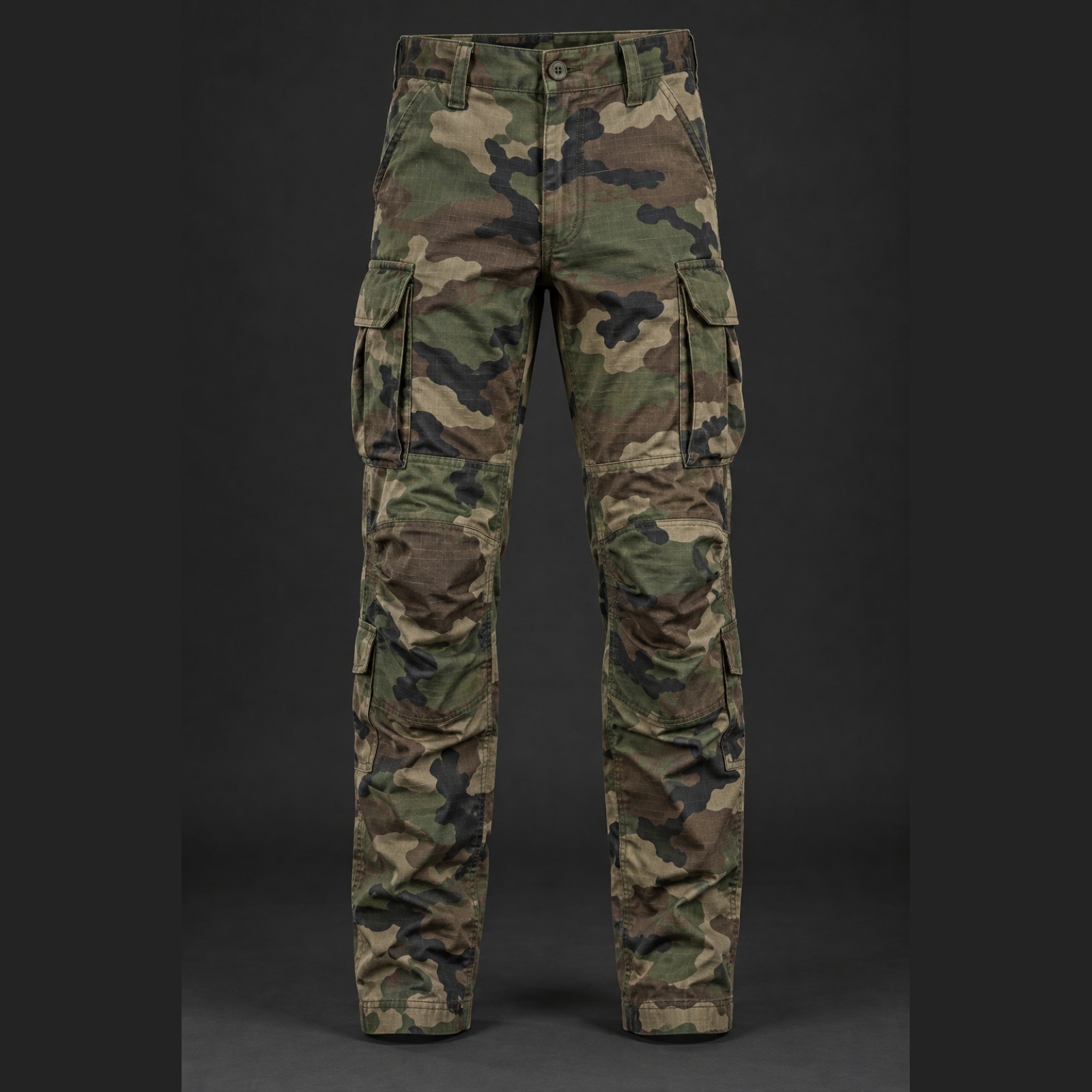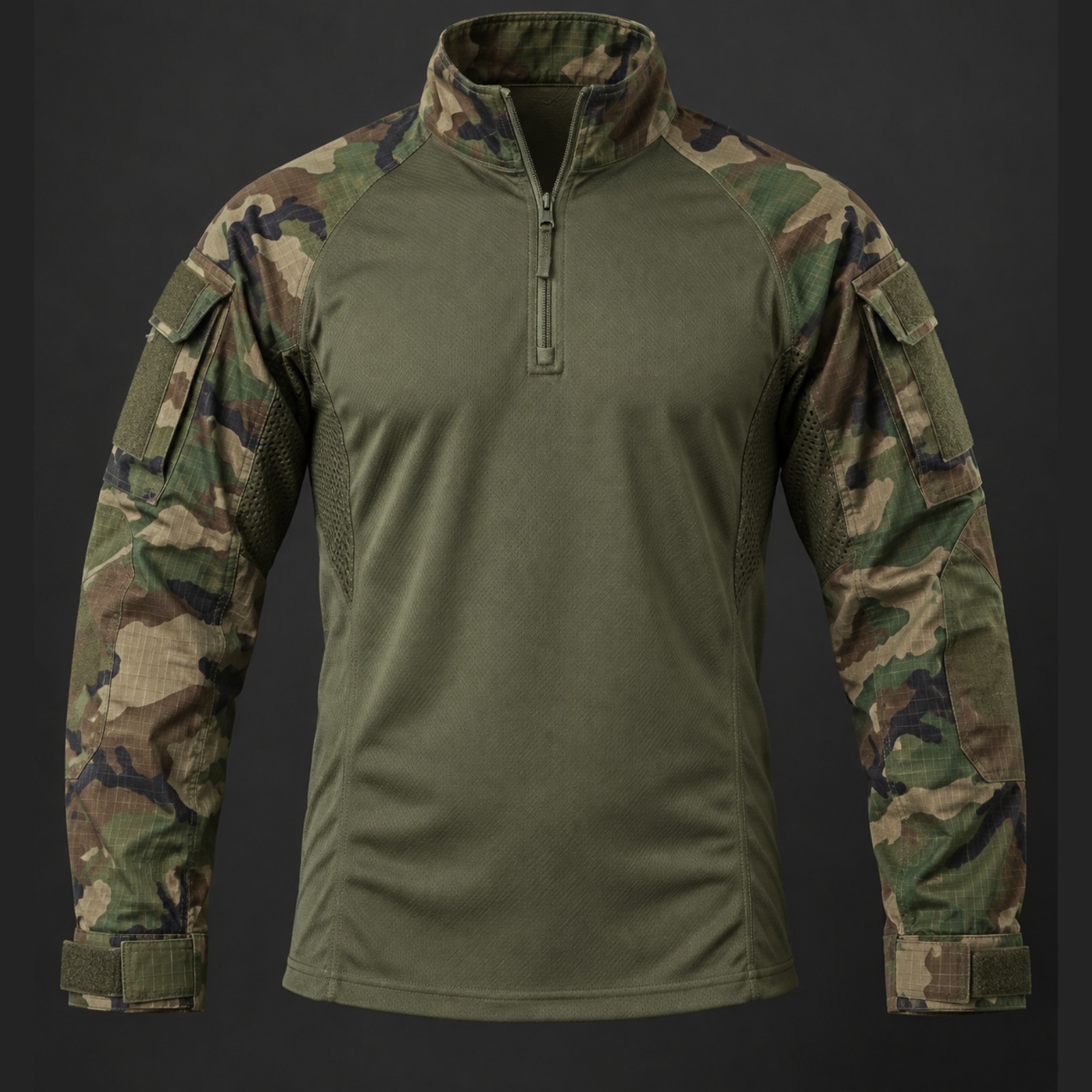
Combat Shirts
Hot Weather Combat Shirt
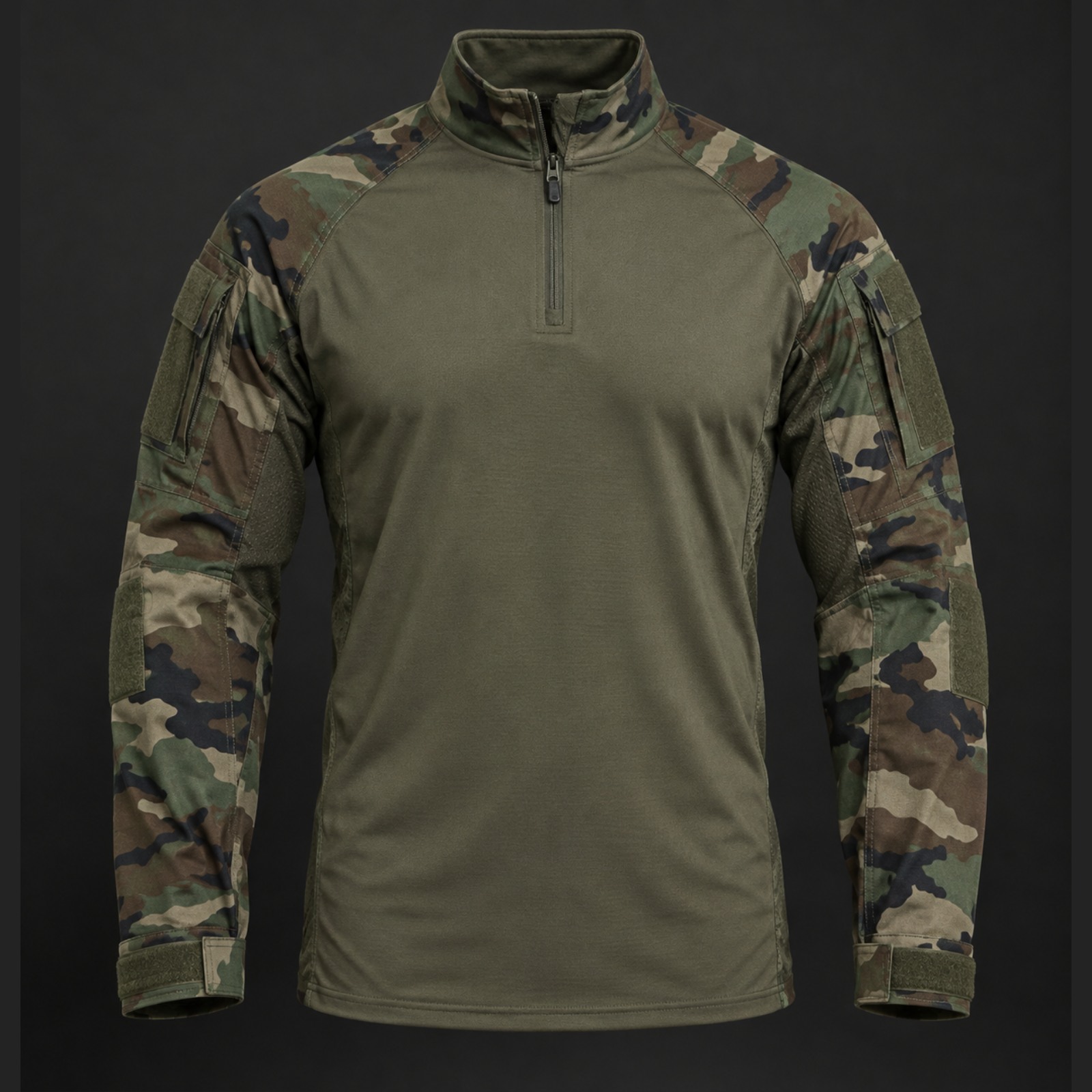
This garment exists to solve one problem: a combat shirt that can be worn through a full day of heat without becoming saturated and unusable.
HotTropical / HumidDesert
View productApplications
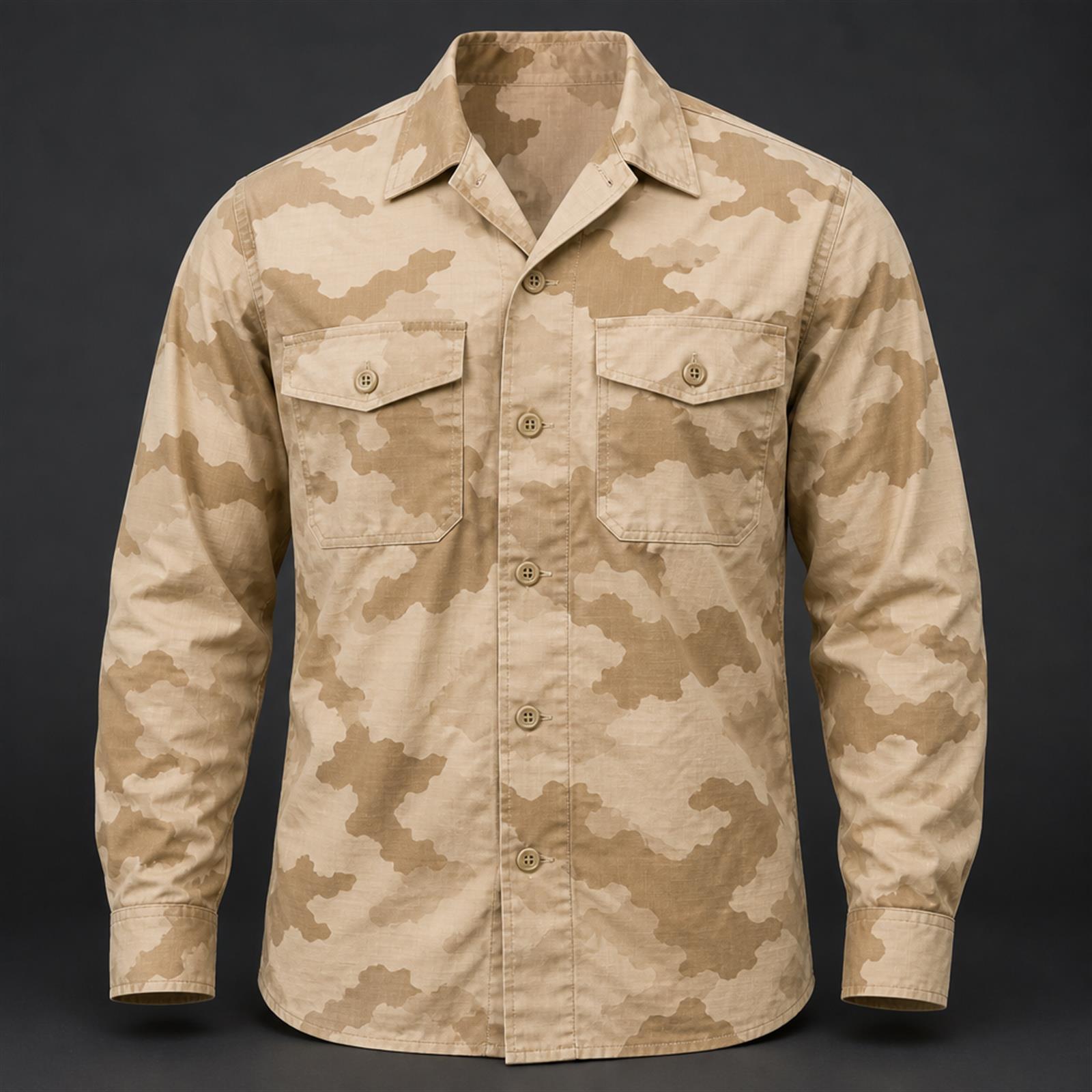
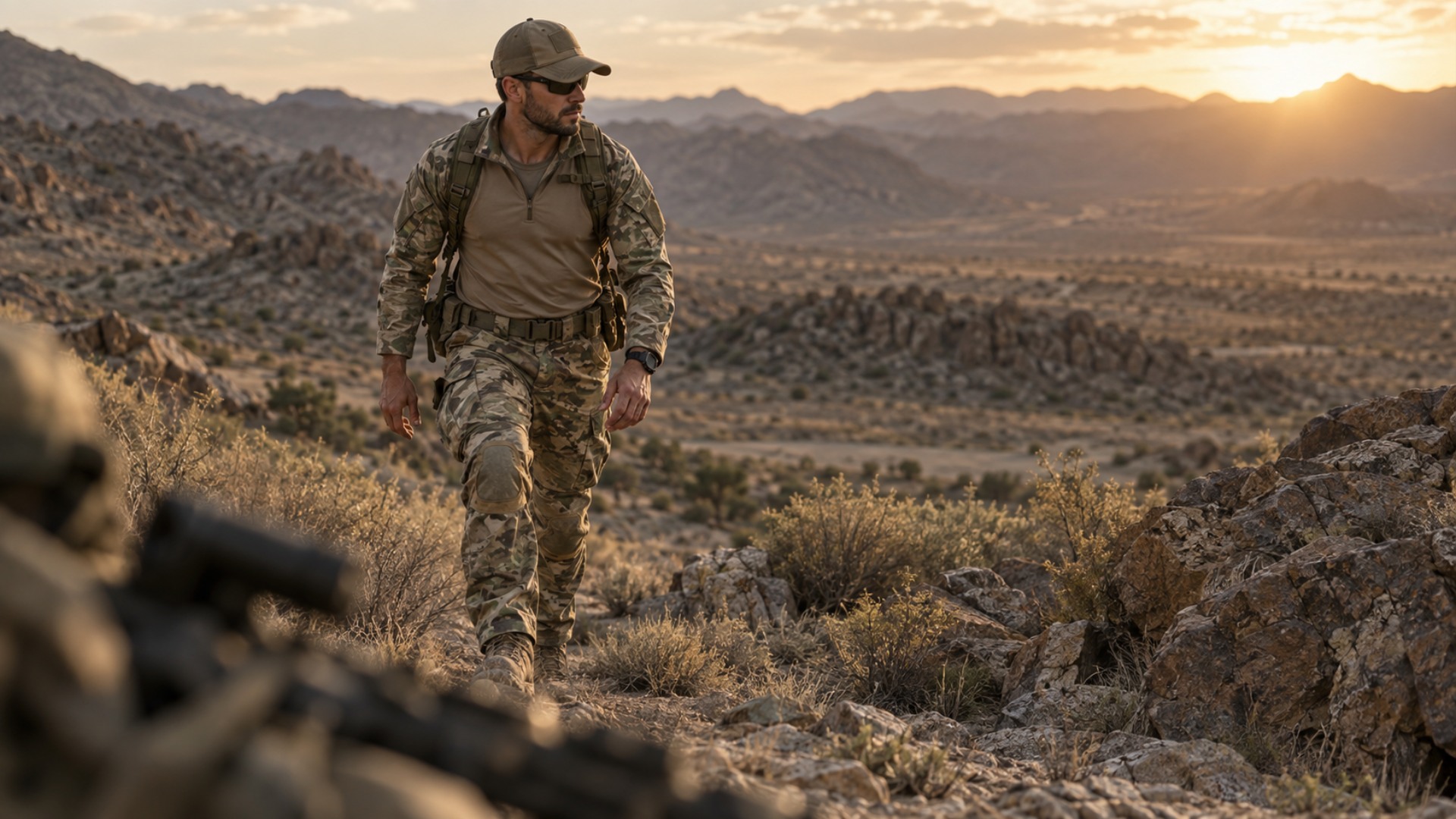
Desert conditions are defined by solar load, very low humidity, wind-borne dust and a wide temperature swing between day and night. Low humidity means sweat can evaporate, so the garment does not have to solve moisture transport the way a tropical build does. The problem is different: fabric that is light enough to be comfortable at midday is often thin enough to be destroyed by sand and sun, and a cut that exposes skin to airflow also exposes it to the highest solar load of the day. Colour stability becomes a specification item rather than a cosmetic one, because camouflage tones that drift between batches stop matching the environment they were chosen for. This section covers how coverage, abrasion resistance, dust exclusion and colour performance are balanced when the desert is the dominant constraint, and how far each one can be pushed before it costs something else.
Gallery
Conditions
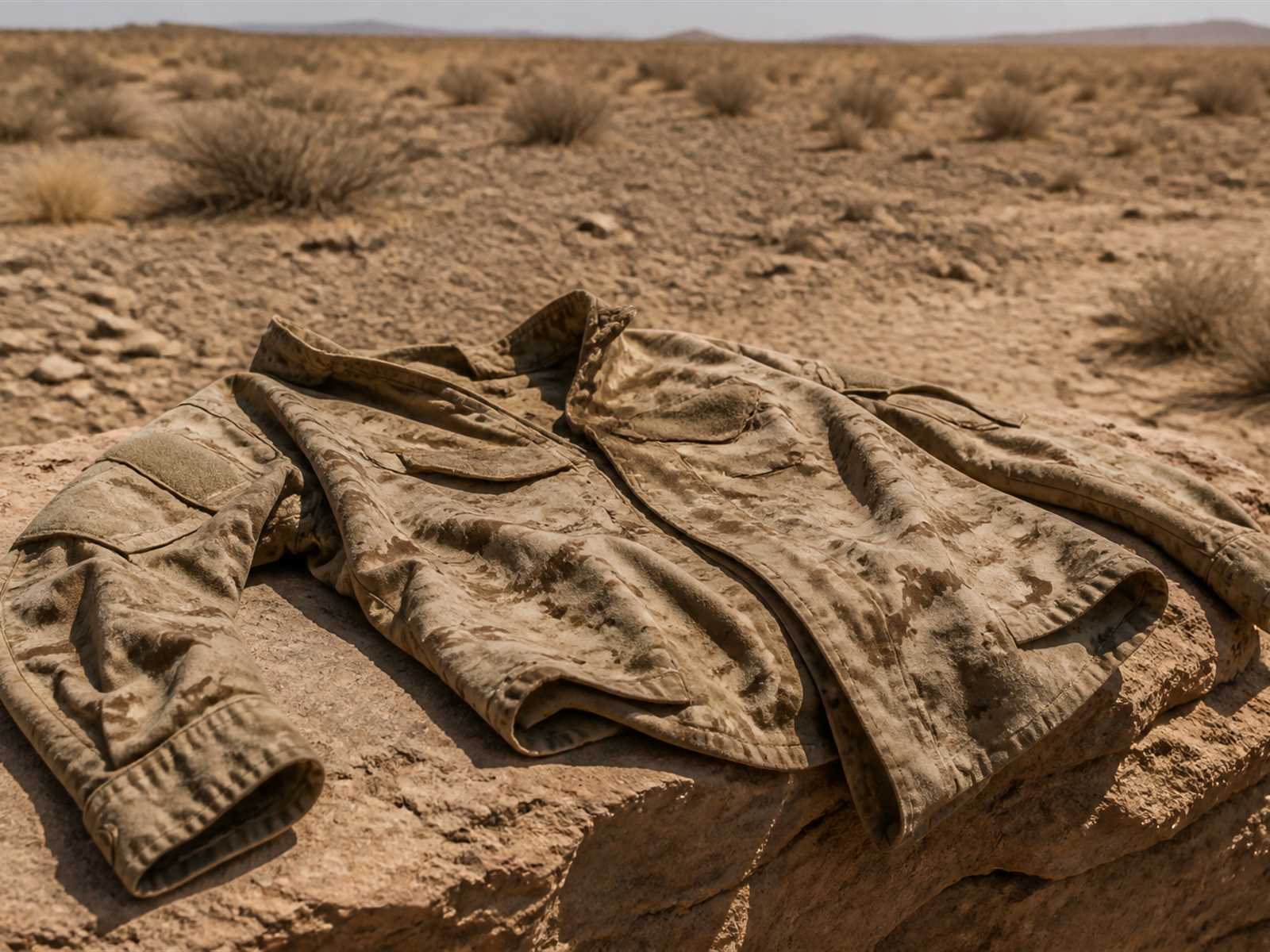
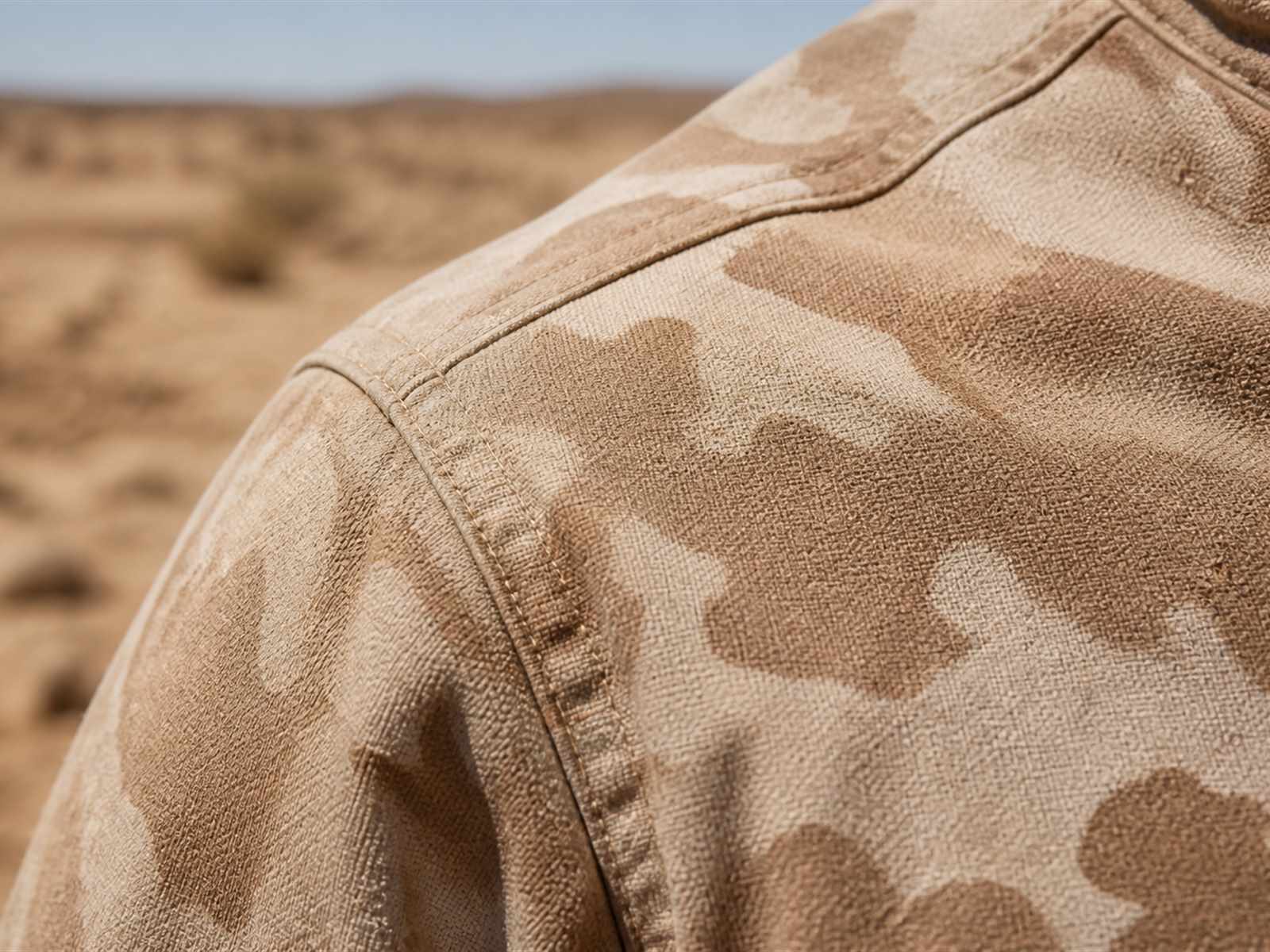
Solar load is intense, humidity is low and airborne dust is constant, so the limiting factors are heat from direct sun, abrasion from sand and dust infiltration into openings. Daytime temperatures fall sharply at night, and wind carries fine particles against every exposed surface and closure. Low humidity allows sweat to evaporate, which makes coverage and hydration management more important than moisture transport in the fabric itself.
Design priorities
These are the requirements that drive the specification. When they conflict with each other — and they usually do — the trade-off has to be decided by the buyer, not assumed by the manufacturer.
Bare skin is not cooler in desert sun. Full coverage with a loose cut allows evaporative cooling in the air gap between fabric and skin while blocking direct radiation, which is why desert builds cover the forearm and neck rather than exposing them.
Wind-driven sand acts as an abrasive against the whole garment, not only at ground contact points. Fabric weight, weave tightness and yarn choice decide how quickly a panel thins out where sand collects, particularly at the hem, cuff and shoulder.
Dust enters through the cuff, collar, pocket flap and any unsealed zip, and once inside it grinds against the wearer and the fabric. Closing these pathways is a construction decision that costs ventilation, so each opening is treated as a trade-off rather than a default.
Deployed desert uniform tones are expected to stay recognisable against the environment. Dye selection, yarn choice and colour fastness requirements must be agreed before production so that batch comparison happens against a stated standard rather than an opinion.
The same garment may be worn in strong heat at midday and in cold wind before dawn. Builds are usually designed to work as a layer under a shell rather than to solve both extremes on their own, and the fit has to allow that.
Movement in a desert environment tends to be sustained rather than explosive. Patterns are built to avoid binding at the shoulder and knee over long periods, because a garment that restricts range of motion becomes a fatigue problem rather than a comfort one.
Buyer problems
These are the complaints that reach us from buyers already selling into these conditions. Every one of them is a specification decision that was made before production, not a manufacturing accident.
Garment strategy
The same category of garment is built differently in each environment. These are the construction decisions that change.
Cover more, not less
The instinct to reduce fabric in heat is wrong in the desert. A loose cut with full coverage creates an air gap that supports evaporative cooling, and it removes the direct solar load that bare skin would take instead.
Close the dust pathways deliberately
Cuff, collar and pocket flaps are treated as controlled openings. Where a closure is tightened to keep sand out, the ventilation lost is replaced elsewhere so the garment does not simply become hotter.
Reinforce by exposure, not by habit
Sand abrades panels that a temperate build would never reinforce, such as the hem and the forearm. Reinforcement positions are set by where the garment actually contacts sand, ground and equipment, and each addition is weighed against heat retention.
Treat colour as a technical requirement
Colour fastness is specified alongside the physical requirements, with the target agreed against a retained standard. This protects both the buyer and the wearer when a partially faded garment has to be worn with a new one.
Design the garment as part of a layer system
A desert build has to sit comfortably under a shell for the cold early hours without bunching at the shoulder. Fit tolerances are set against the layer stack the buyer actually uses, confirmed per programme rather than assumed.
Fabric strategy
Each material below is recommended for a stated reason, not as a generic option. Open any material to read where it performs and where it fails.
Material
Used for the panels that need to stay cool and cover the body at the same time, provided the panel is not one that takes sand abrasion.
Material
The usual answer for trousers, sleeves and shoulder panels where abrasion resistance and colour stability matter more than the drying penalty.
Material
Selected when the build has to combine abrasion performance with a softer hand, which matters on garments worn against the skin for long periods.
Material
Placed at the knee, seat and shoulder where the pattern has to articulate without the fabric giving up abrasion resistance.
Material
Considered for the cold end of the swing, either as a panel or as a separate layer, since desert wind strips warmth quickly once the sun is down.
Construction
Where the specification should focus for this environment.
Products
Each product page carries the full material, construction and customization detail for this application.
Combat Shirts
This garment exists to solve one problem: a combat shirt that can be worn through a full day of heat without becoming saturated and unusable.
Hot Weather Tactical Clothing
In sustained heat the limiting factor is not durability, it is whether the wearer can keep working.
Tactical Pants
In sustained heat the limiting factor is not durability, it is whether the wearer can keep working.
Tactical Uniform Sets
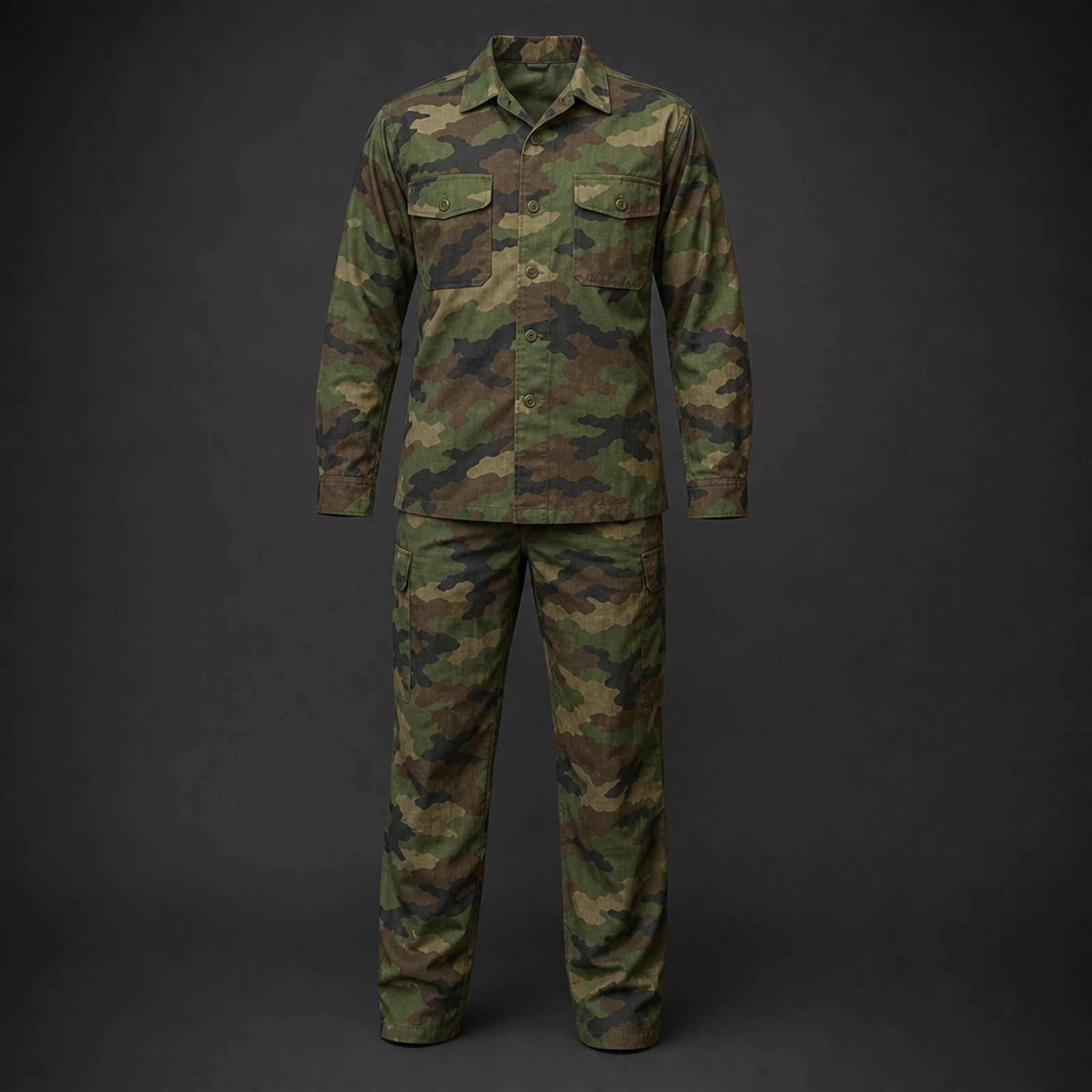
A uniform set is a specification problem that two separate garments do not have: the shirt and the pant have to behave as one system.
Combat Shirts
Ripstop is not a single fabric, it is a weave construction.
Tactical Pants
A tactical pant is judged by three things: whether the crotch survives, whether the knee holds up, and whether the waist still fits the same after a full day of movement.
FAQ
The panels should not all be treated the same way. Torso panels can go lighter because sand abrasion there is limited, while trousers, sleeves and shoulders usually need a ripstop that can survive wind-driven sand. A single lightweight cloth throughout tends to fail at the first contact points, and a single heavy cloth makes the garment unwearable at midday.
Every opening is treated as a controlled trade off. Closures at the cuff, collar and pocket flaps keep dust out, and the ventilation that is lost at those points is provided elsewhere, typically where the garment is not directly exposed to blown sand. The right balance depends on how the garment is used, which is why the intended layering and activity are part of the brief.
Yes, provided the target is agreed against a retained standard rather than a verbal colour name. We confirm the reference, state the colour fastness requirement in the specification, and check colour at batch level so a partially faded garment and a new one can still be worn together without a visible mismatch.
No. Reinforcement adds weight, retains heat and can stiffen a panel so it no longer moves with the wearer. It is added where a garment genuinely fails, such as the knee, seat, hem and pocket corners, and the cost in heat and mobility is stated so the buyer can decide whether it is acceptable.
Both. Individual garments are developed against their own specification, and sets are developed together so the shirt and trouser share fabric, colour and fit logic. Where a set crosses conditions, for example desert by day and cold before dawn, we build the fit around the layer stack you intend to use and mark any item that still needs data from you.
Related Applications
Related Capabilities
Send the destination market, the season and how the garment will be worn. We will propose the specification and state the trade-offs, rather than recommending a single fabric with no context.