Capability
Tactical Apparel Size Development and Grading
Size development is the discipline that decides whether a garment sold as a full size set actually works at every size in that set, and whether a measurement deviation on a shipment is a defect or an accepted variation. It has three parts: a base size with an agreed measurement chart, grade rules that describe how the chart moves between sizes, and a written tolerance that states how much deviation from the chart is acceptable at inspection. None of the three can be validated on paper alone. They are confirmed by producing a size set and measuring it. The reason tolerances must be agreed in writing before production is simple: after the goods are cut and sewn, the only question left is whether they conform, and the answer depends entirely on what was written down beforehand.
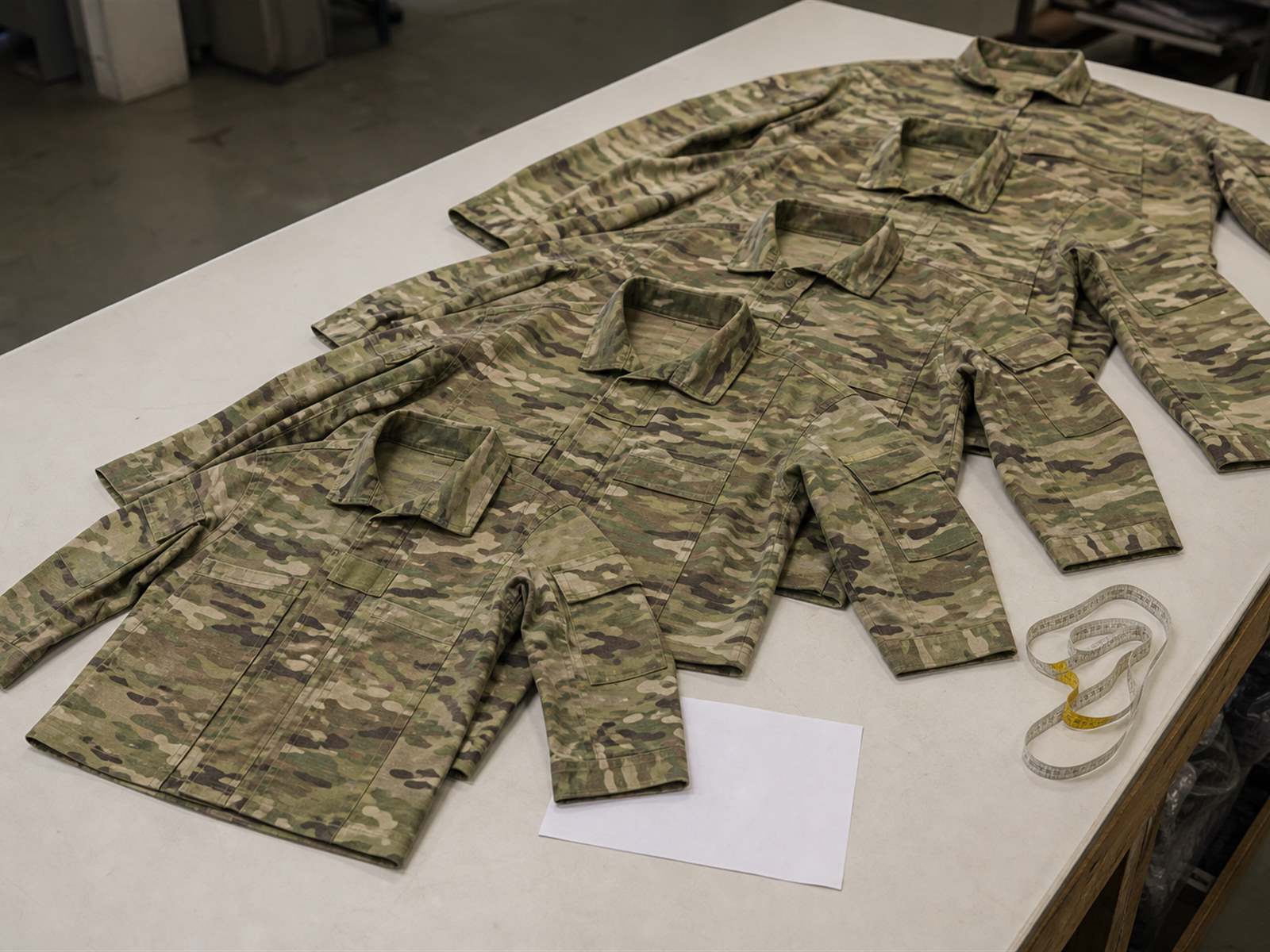
- Process steps
- 8 defined stages
- Deliverables
- 7 documented outputs
- Inputs required
- 8 from the buyer
Gallery
Size Development in practice
Inputs
What we need from you
The 8 inputs development of Size Development needs from you, and where one is missing we will tell you it is missing rather than assume it.
- Base size and the measurement chart for that size
- Full size range and the interval between sizes, including any half sizes or long and short leg options
- Grading rules or an existing graded chart the buyer already sells against
- Fit intent: how close to the body the garment should sit, and how much ease is intended
- Target market body standard and any regional fit expectation
- Shrinkage allowance policy for the approved fabric after the intended wash cycle
- Measurement tolerance policy: which dimensions are critical and how much deviation is acceptable
- Any measurement table required by the buyer's own retail or contract documentation
Deliverables
What you receive
The 7 tangible outputs you receive from Size Development — not assurances.
- Written list of chart gaps and inconsistencies
- Confirmed base size with measured record at every chart point
- Written grade rules for each measurement point
- Verified graded chart checked at the smallest and largest sizes
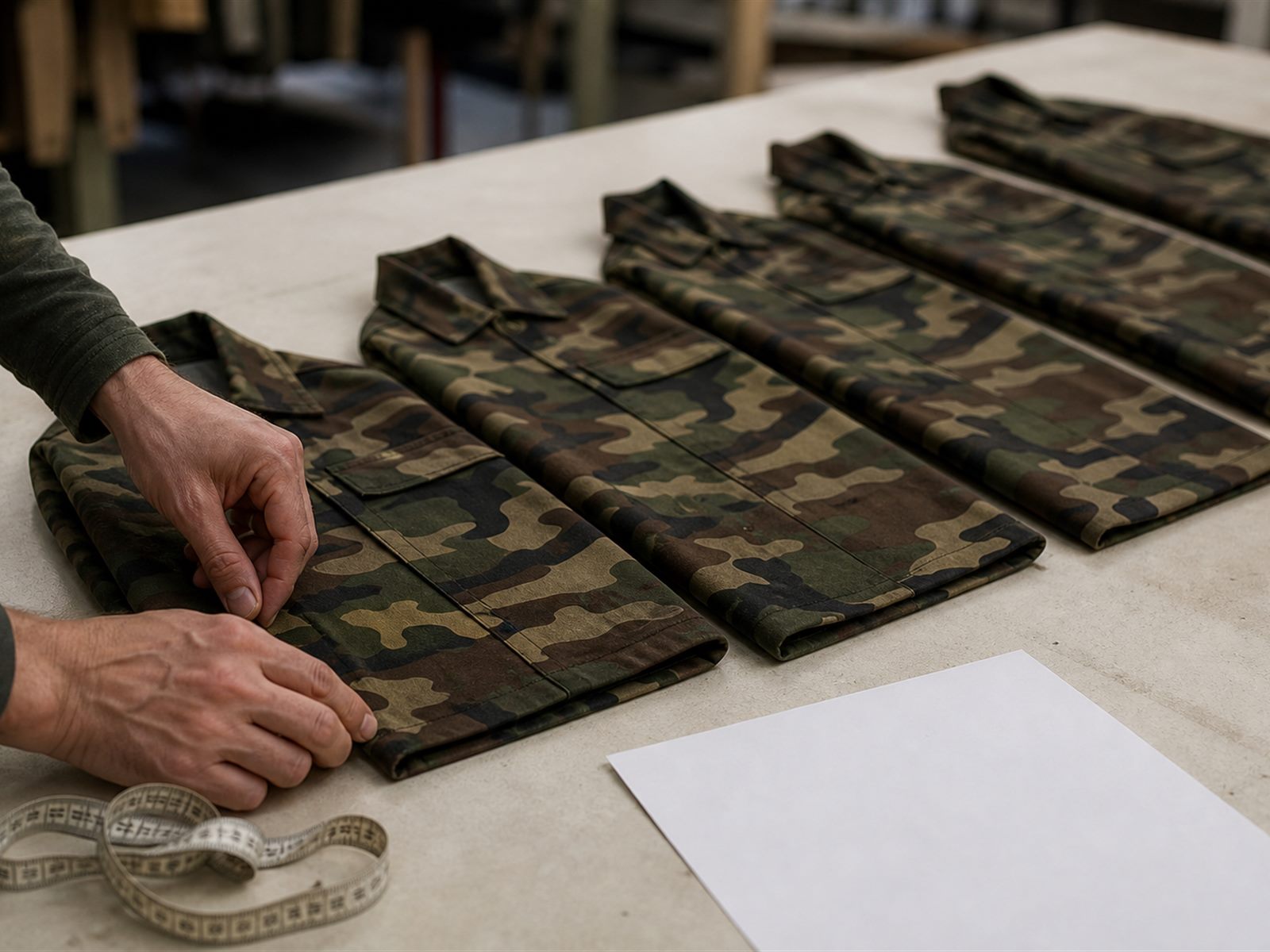
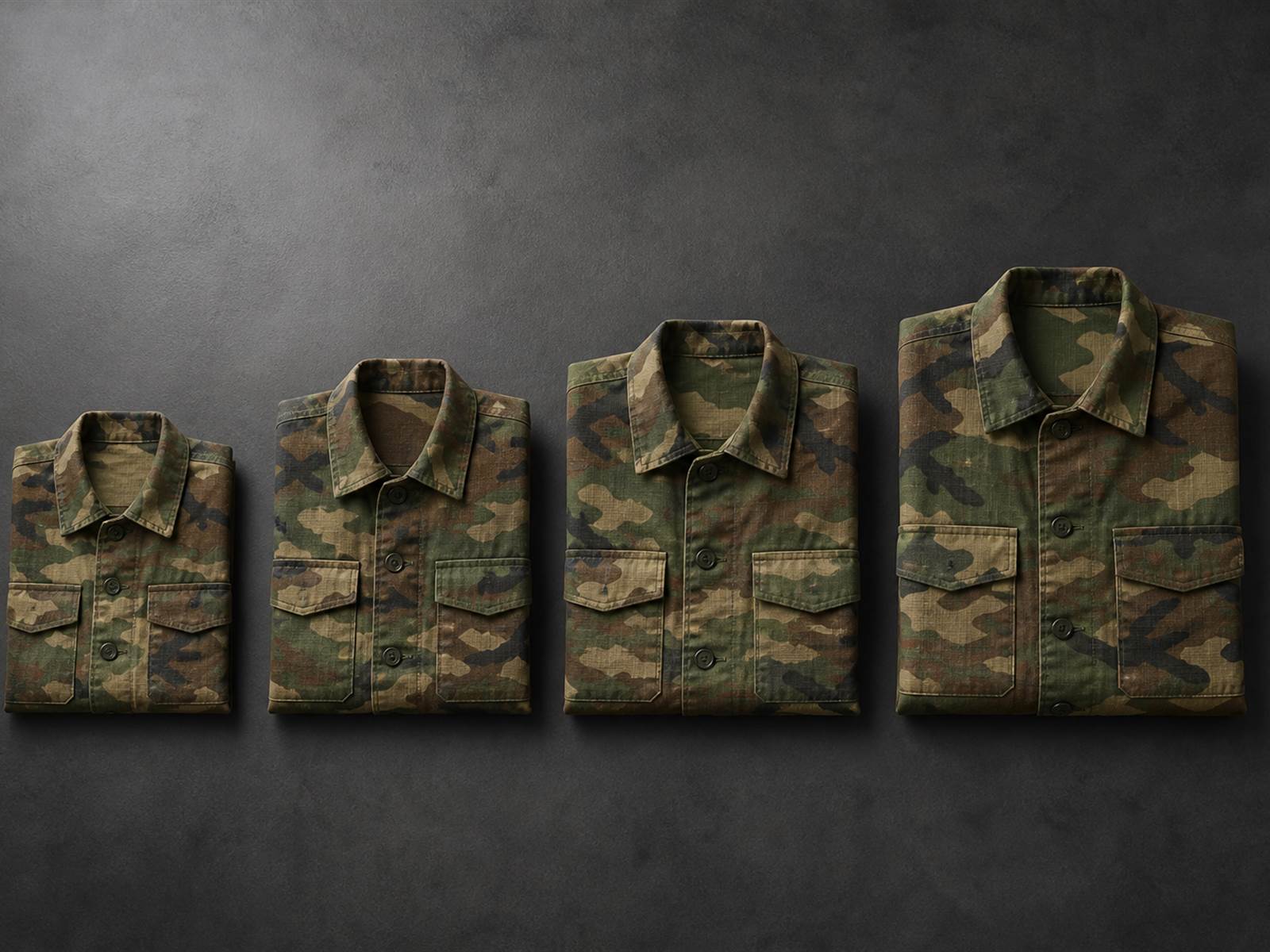
- Physical size set covering the agreed size range
- Measurement verification record for every size in the set
- Locked measurement chart with written tolerance per critical dimension
Process
The process, step by step
Size Development runs as 8 steps, and the sequence is not administrative: each step removes a specific risk before the next one commits cost.
Measurement chart review
The buyer's measurement chart is read against the intended fit and the base size, and returned with a written list of points that are missing, internally inconsistent or physically difficult to achieve. A chart with contradictory points cannot be graded reliably, so the conflict is surfaced before drafting rather than after the size set.
Base size confirmation
The base size is fixed and a sample is measured at every point on the chart. The base size is the anchor for the whole range: if it is wrong, every graded size inherits the error proportionally, which is why base size is confirmed on a physical garment rather than by calculation.
Grade rule definition
Grade rules are defined per measurement point and written down, including how key functional points behave - pocket position, knee placement, sleeve length, crotch depth and waist to hip relationship. Rules are stated so that any result can be re-derived, not just observed.
Graded chart verification
The graded chart is produced from the rules and verified against the buyer's chart and against the fit intent at the smallest and largest sizes. Verification at the extremes is deliberate: a grade rule that behaves correctly in the middle of the range can still produce an unusable garment at the ends.
Size set sampling
A full size set is cut and assembled so the range can be measured as physical garments rather than as a table. The size set is inspected for manufacture as well as measurement, because grading problems often show first as assembly problems in the smaller and larger sizes.
Measurement verification across the range
Every size in the set is measured at every chart point and recorded against the specified value. Deviations are reported as they are found, in writing, with the dimension named. A size set that is measured only at the base size has not tested the range.
Fit evaluation and correction
Fit is evaluated at the extremes for range of motion, seat and knee behaviour on pants, and shoulder and sleeve behaviour on shirts. Corrections are converted into measured changes to the chart or the grade rules, then re-verified.
Written tolerance and chart lock
The agreed measurement chart and the measurement tolerance for each critical dimension are written down and locked before bulk cutting starts. The locked chart is the document that inspection measures against, so a measured deviation is judged against a written decision rather than against opinion.
Buyer value
Why this matters to a buyer
Why Size Development matters to a buyer, framed as the 6 commercial consequences rather than as quality adjectives.
A range fault found at size set stage costs a size set to correct, and the same fault found after bulk delivery costs the whole order plus the returns it generates
Written tolerances turn inspection into a pass or fail decision, which prevents a shipment being accepted or rejected on opinion
Grade rules that are stated can be re-applied to the next order, so a running size range stays consistent between programmes
Shrinkage allowance is agreed against the intended wash cycle, so the garment still measures correctly after the care procedure the buyer specifies
Distributors who commit to full size sets get a range that works at both ends, which protects sell-through and reduces markdown stock in extreme sizes
A locked chart gives the buyer a defensible document when a downstream customer questions a garment's measurement
FAQ
Size Development FAQ
Do we need a size set, or is one sample enough?
One sample confirms the base size, not the range. A size set is what shows whether the grade rules behave at the small and large ends. Where a buyer chooses to approve from a single size, the range risk moves to bulk, where correcting it is not possible without re-cutting.
Why does the measurement tolerance have to be agreed in writing before production?
Because after the goods are made, every measurement deviation has to be judged against a number. If tolerance is not written down before cutting, inspection has no objective basis, and the discussion becomes about whether a deviation is acceptable rather than whether it conforms to an agreed limit.
Can you follow our existing size chart exactly?
Yes. Send the chart and the size range and we will build the pattern and grade rules to it. If any point in the chart is inconsistent or cannot be achieved with the approved fabric and construction, we will state that in writing before sampling rather than silently adjusting it.
How is shrinkage treated in the chart?
Shrinkage allowance is handled against the fabric's behaviour under the wash procedure the buyer specifies, and it is stated as an allowance rather than assumed. The final measurement standard is defined after the specified wash, so the chart describes the garment as it will be used, not only as it leaves the sewing line.
What happens if bulk measurements deviate from the chart?
Bulk is measured against the locked chart and the written tolerance. Deviations inside tolerance conform. Deviations outside tolerance are reported with the dimension, the measured value and the extent, so the buyer can decide on rework, sorting or rejection with the facts rather than with a summary.
Related
Related content
Related Products
Related Applications
Related Capabilities
Related Articles
Related Categories
Request a Manufacturing Assessment
Send us your tech pack, reference sample or product idea. We review your requirement, recommend materials and construction, and come back with a development plan you can act on.