Skip to content
TACTICALOEM / ODM TACTICAL APPAREL
ENEnglish

Products / Tactical Jackets

Custom Tactical Jacket Manufacturer

A tactical jacket is a set of decisions rather than a single garment. The shell fabric decides wind and water behaviour, the lining decides warmth and drying speed, and the pattern decides whether the jacket actually works over a plate carrier, a duty belt or a mid-layer fleece. Most buyers arrive with a clear look and an unclear specification, and the real work is turning that look into a construction that can be repeated identically across production runs. This page covers shell and lining selection, hood and collar geometry, cuff and hem adjustment, pocket layout, reinforcement at contact points, colour and camouflage control, size set development, private label, sampling and bulk production. It also states the trade-offs plainly, because they are the part buyers are rarely told: wind and water resistance usually cost breathability, insulation usually costs packability, and heavier shell fabrics usually cost quietness and drying speed. Deciding which of those costs your market will accept is the first real decision, and it should be made before fabric is ordered, not after the first sample arrives.

custom tactical jacketstactical jacket OEMwholesale tactical jacketstactical jacket supplier
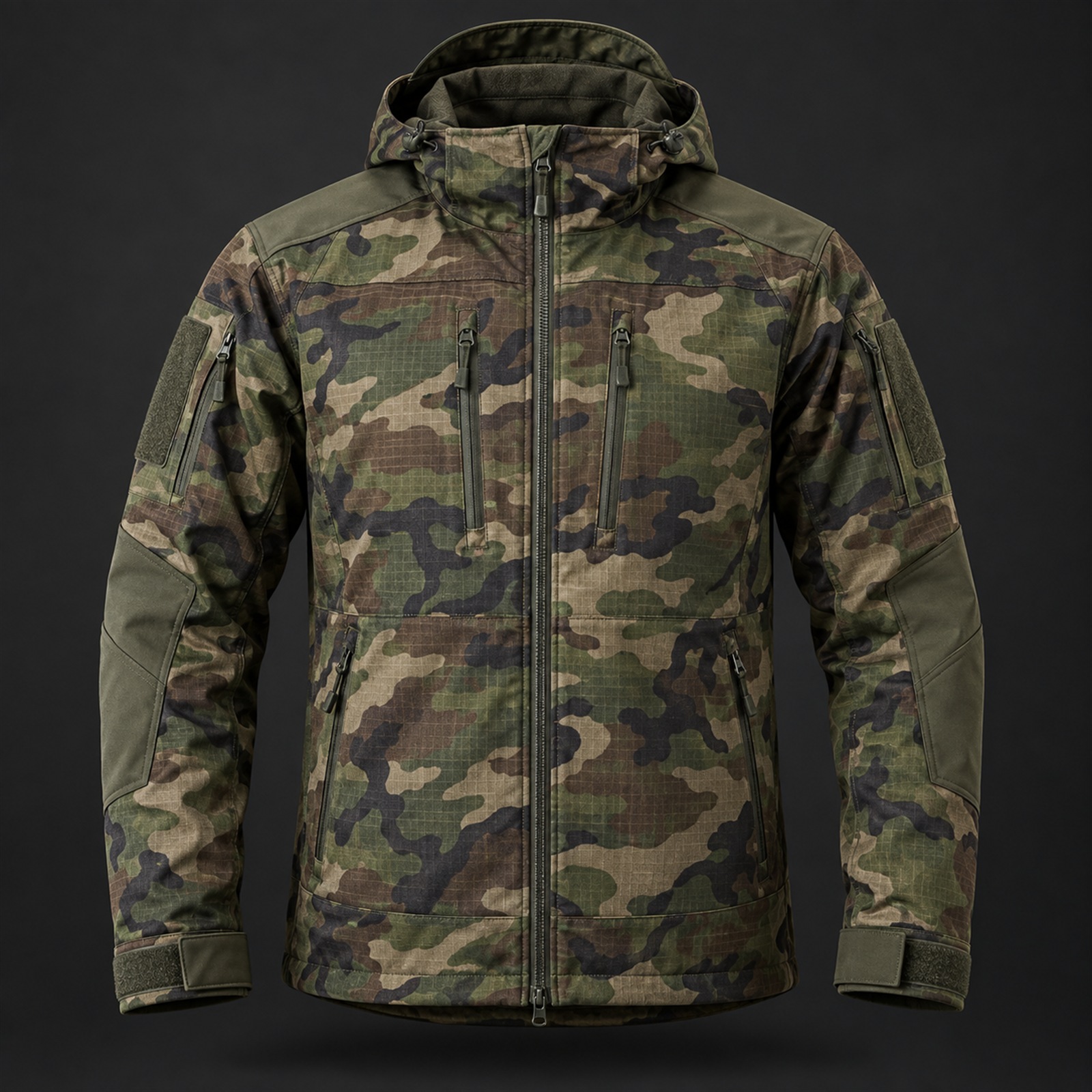
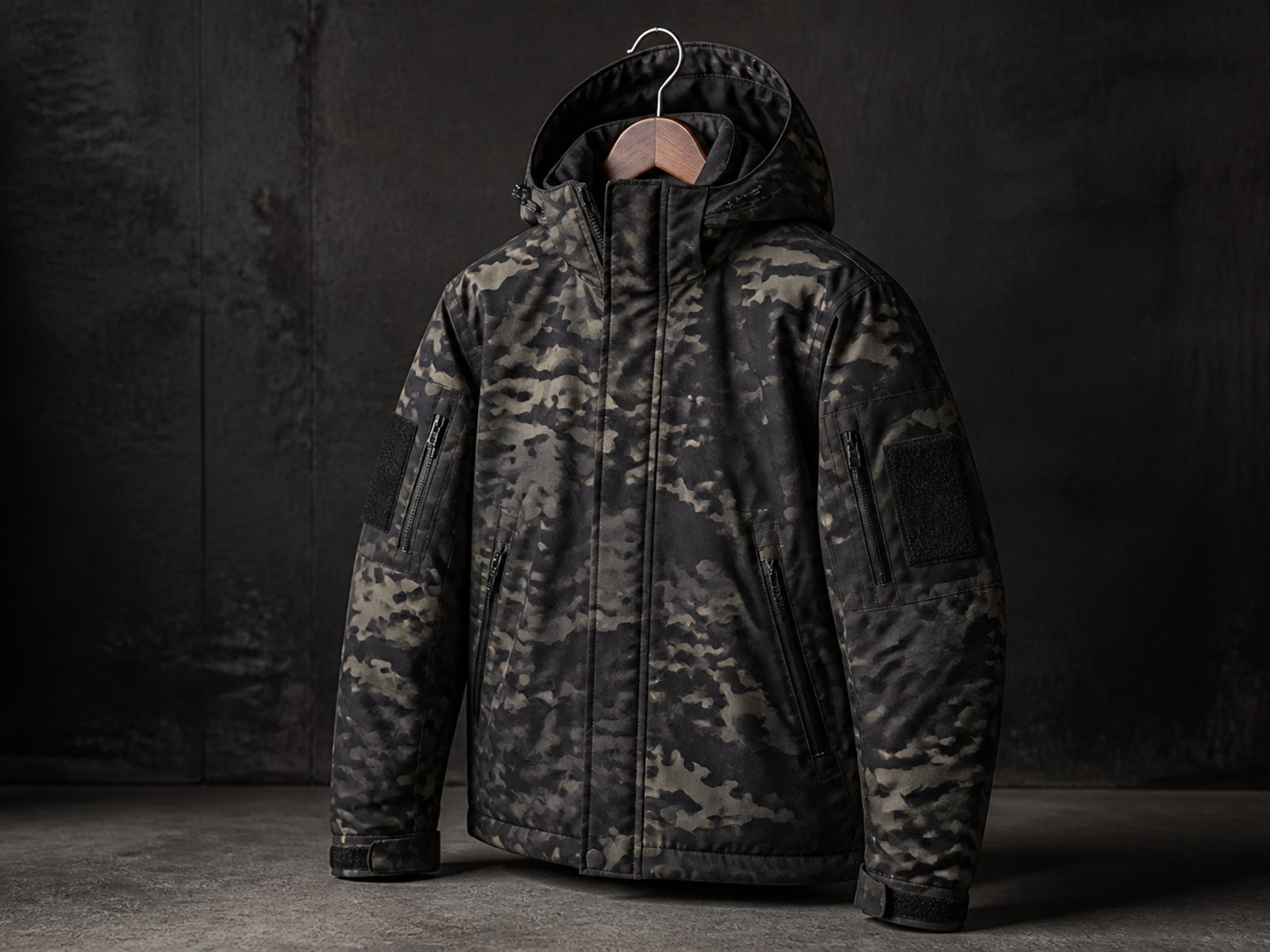
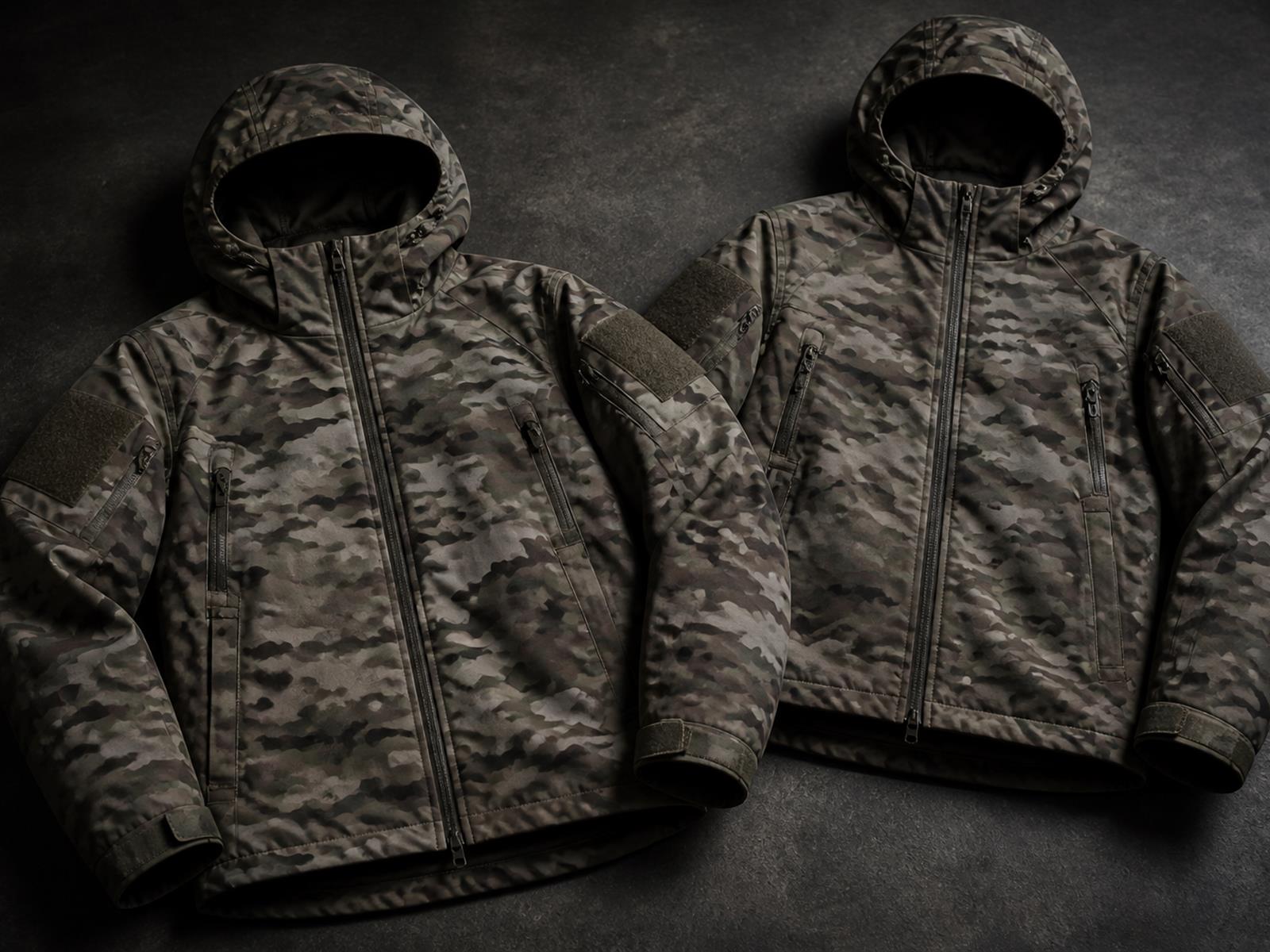
Custom tactical jacket with wind resistant shell and insulated lining made for OEM buyers
Primary keyword
tactical jacket manufacturer
Climate focus
Temperate / Mild / Variable · Cold / Winter / Static Duty · Wet / Rain / Storm
Development input
Tech pack · Reference sample · Sketch · Photo
Tactical JacketsTactical JacketsTactical JacketsTactical Jackets

Buyers

Who buys tactical jackets?

Tactical Jackets is specified by organisations rather than bought as a single garment, so a quotation has to satisfy all 6 buyer profiles listed below.

Tactical Brands

A production partner who can hold a signature jacket pattern, fit and hardware set across repeat orders so that a reorder matches what retailers already stocked.

Outdoor & Hunting Brands

Quieter shell surfaces and camouflage-printed outer fabrics, with insulation options tuned to their own climate range rather than a generic winter build.

Uniform Distributors & Wholesalers

A documented specification and stable size set in volume, so replacement orders can be sold against the same size chart without customer complaints.

Security & Facility Management Companies

Duty-appropriate colourways, discreet branding and a construction that survives daily wear, repeated laundering and constant movement.

Procurement Companies & Importers

Full material and construction transparency, pre-production sample approval, and inspection documentation issued before shipment is released.

Private Label Brands

Buyer artwork, woven and printed labels, hangtags and retail-ready packaging on a jacket the brand can present entirely as its own.

Types

Tactical Jackets types

The same category name covers very different garments depending on climate and wear pattern. 3 types of Tactical Jackets are covered here, and the type is chosen before the fabric.

Temperate / Mild / Variable

Lightweight Field Jacket

The goal here is mobility and wind resistance with as little bulk as possible, which usually means a single-layer or lightly lined shell that can be worn as an outer layer in mild conditions and as a mid-layer under a heavier jacket later. Because lining is minimal, breathability is easier to protect, but warmth is limited and the garment depends on layering to cover cold weather.

  • Lightweight wind-resistant shell
  • Minimal lining to reduce bulk
  • Articulated sleeve for shoulder movement
  • Adjustable cuff and hem
  • Pocket layout kept flat for layering

Cold / Winter / Static Duty

Insulated Cold-Weather Tactical Jacket

Warmth is bought with bulk and packability. Insulation traps air, which is why it works, and the same trapped air makes the jacket harder to compress and slower to dry once it takes on moisture. The design work is deciding where insulation is needed, where it can be reduced for movement, and how the jacket vents when the wearer moves from static duty into physical work.

  • Insulated body with reduced bulk at sleeves
  • Wind-blocking outer shell
  • Ventilation openings for heat dump
  • High collar or attached hood with adjustment
  • Reinforced shoulder for load carriage

Wet / Rain / Storm

Waterproof Tactical Shell Jacket

A true shell trades breathability for water protection, and no construction removes that trade-off entirely. Seam sealing, closure design and hood geometry decide whether the jacket keeps rain out in real use; membrane choice and venting decide how uncomfortable the wearer becomes while working hard. Buyers should decide early whether the priority is staying dry in sustained rain or staying comfortable during high-output movement.

  • Waterproof shell with sealed seams
  • Storm flap over the front closure
  • Adjustable hood with brim
  • Ventilation openings or pit zips
  • Water-resistant pocket closures

Engineering

Construction, part by part

8 construction decisions define Tactical Jackets, and each row below is one decision you control at specification stage.

Hood

  • Fixed hood
  • Roll-away hood
  • Detachable hood
  • Helmet-compatible hood
  • No hood (collar-only builds)

Hood volume has to be decided against headwear. A hood cut for a bare head will not sit over a helmet, and a hood cut for a helmet looks bulky and collapses over the face when worn without one. Adjustment points must be agreed because cord placement affects both comfort and how the hood behaves in wind.

Collar

  • Stand collar with chin guard
  • Fleece-lined stand collar
  • Fold-down collar
  • High collar with hook and loop closure

A fleece-lined collar increases comfort against the neck but adds a material that holds moisture longer than the shell. Buyers should state whether the collar will be worn over a neck gaiter or under a helmet strap.

Front Closure

  • Full-length zip
  • Zip with internal storm flap
  • Zip with external storm flap
  • Snap or hook and loop placket
  • Two-way zip

The closure is the most common leak point on any shell. Storm flap construction, zip tape choice and flap stiffening all change both weather performance and how easy the jacket is to operate with gloves on.

Shoulder

  • Plain shoulder seam
  • Reinforced shoulder panel
  • Hook and loop insignia panel
  • Anti-slip shoulder overlay
  • Shoulder vent

Shoulders carry packs and slings, so this is a wear point on most tactical builds. Reinforcement improves durability but adds stiffness and can interfere with the drape of a lightweight jacket.

Sleeve

  • Straight sleeve
  • Articulated sleeve with elbow dart
  • Raglan sleeve
  • Set-in sleeve
  • Reinforced forearm panel

Articulation improves reach and reduces pull across the back, which matters when the jacket is worn over a carrier. It costs additional pattern work and must be graded carefully so the improvement holds across the full size range.

Cuff

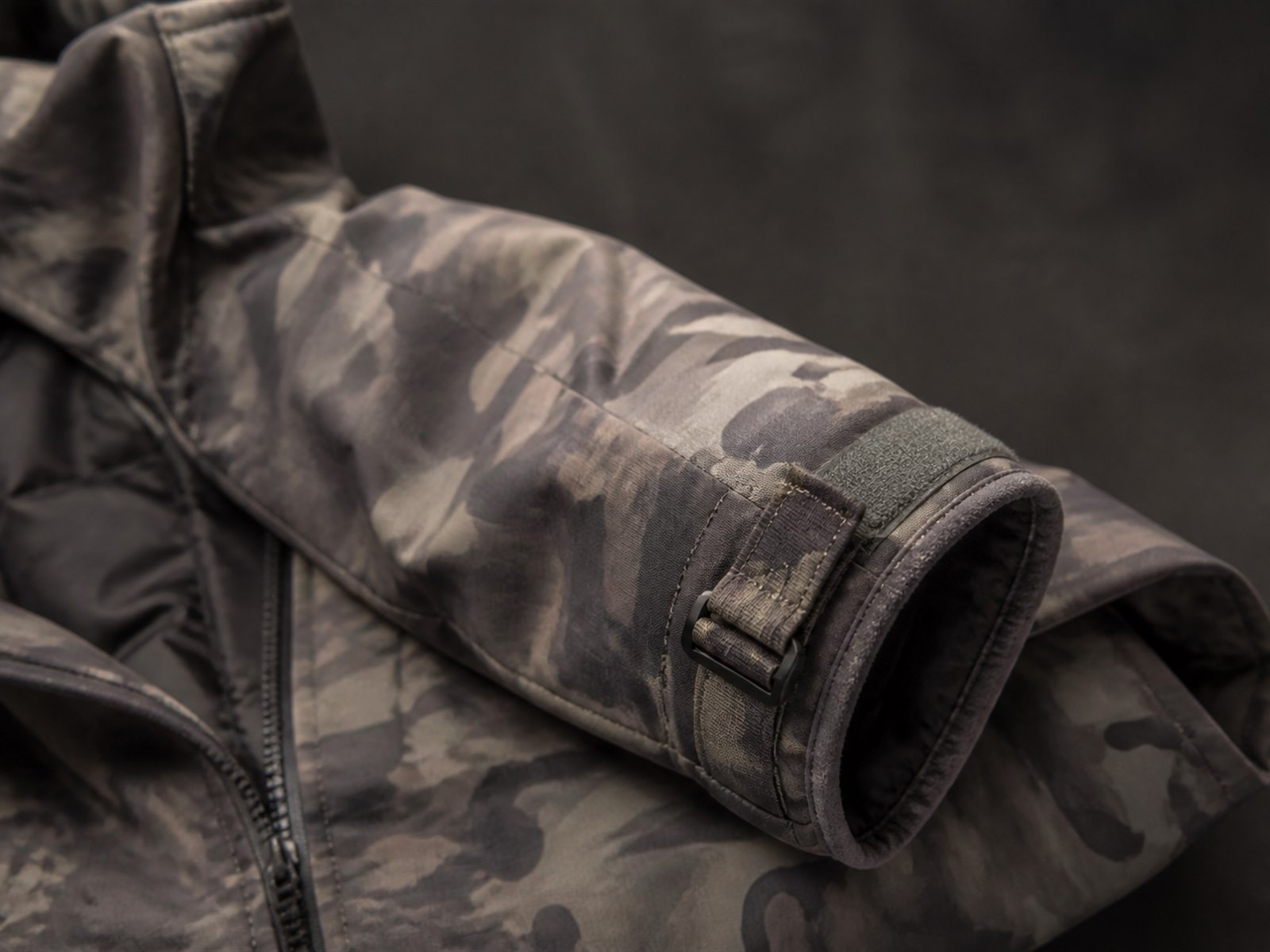
  • Hook and loop adjustable cuff
  • Elasticated inner cuff
  • Plain hemmed cuff
  • Extended cuff with thumb loop
  • Inner storm cuff

An inner storm cuff improves water and wind protection but traps heat and slows drying at the wrist. This is a specification where the intended climate should decide the answer rather than the sample's appearance.

Pockets

  • Zippered chest pocket
  • Hand warmer pockets
  • Internal security pocket
  • Sleeve pocket with zip
  • Utility or admin pocket

Pocket position must be checked against the equipment the wearer carries. Pockets placed behind a duty belt or under a sling become unusable, and this is one of the most frequent reasons a first sample is rejected.

Hem & Drawcord

  • Elasticated hem
  • Internal drawcord with toggles
  • Straight hem with hook and loop tabs
  • Extended back hem
  • Dropped back with no drawcord

Hem adjustment controls how much wind enters from below and how the jacket behaves when the wearer reaches overhead. External cords snag on equipment, so internal routing is often preferred for field use.

Available fabrics

Material options by garment area

Shell

SoftshellWater resistant fabricWaterproof fabricWind resistant fabricPoly cotton ripstopStretch ripstop

Shell choice drives the whole performance profile. As water and wind resistance increase, breathability and quietness generally decrease, so the shell should be selected from the climate and activity level rather than from a fabric name alone.

Lining & Insulation

Mesh liningTaffeta liningFleece liningCold weather insulation materialBrushed knit liningUnlined single layer

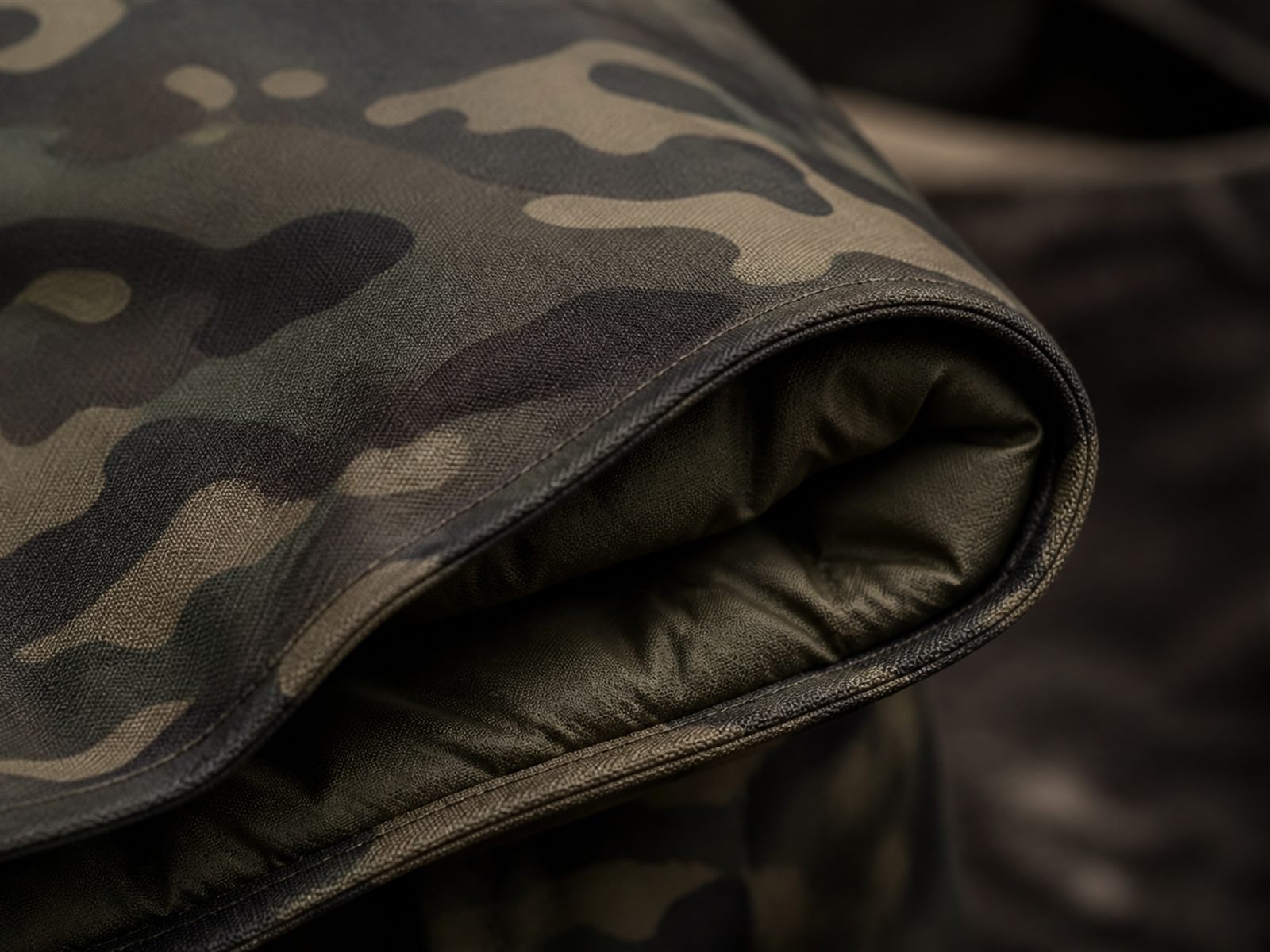
Lining affects warmth, drying speed and how easily the jacket slides over a mid-layer. Fleece adds warmth and comfort but holds moisture longer than a smooth lining, which matters in wet climates.

Reinforcement

Abrasion-resistant woven overlayRipstop elbow and forearm panelsAnti-slip shoulder overlayHem and cuff edge bindingNone for lightweight builds

Reinforcement is applied where the garment contacts gear, ground or vegetation. It extends service life but adds weight and stiffness, so it should be placed deliberately rather than added across the whole garment.

Customization

What can be customized

15 specification lines are available for Tactical Jackets, and where an option changes cost, weight or durability the consequence is stated next to it.

Fabric

Shell familyLining and insulation familyReinforcement optionsBuyer-specified composition

Color

Solid colourwaysBuyer Pantone targetsBuyer lab dip approval

Camouflage Pattern

Buyer artworkWoodland styleDesert styleDigital styleCustom seasonal pattern

Hood

FixedDetachableRoll-awayHelmet-compatibleNone

Collar

StandFleece-linedFold-downHigh collar with chin guard

Closure

Full zipZip with storm flapTwo-way zipSnap placket

Zipper

Buyer-specified brand or tape widthWater-resistant zipStandard coil zipGlove-friendly puller

Cuff

Hook and loopElasticatedInner storm cuffThumb loop

Pocket

ChestHand warmerSleeveInternal securityUtility or admin

Ventilation

Pit zipsBack ventMesh-lined vent panelsNone

Insulation

Uninsulated shellLight insulationFull insulationRemovable insulated liner

Reinforcement

Shoulder panelsElbow and forearm panelsHem edgesStress point bartacks

Logo

Woven labelPrinted labelRubber patchEmbroideryHeat transfer

Label

Main labelSize labelCare labelCountry of origin label

Packaging

Poly bagPrinted poly bagHangtagHeader cardCustom box

Sizing

Size development

Size development for a jacket starts from how the garment will be worn, because the same body measurement produces different garment measurements depending on what sits underneath. Before a size set is built we need the buyer's target size range, the garment measurements from a reference sample or existing size chart, and a statement of the intended layering, for example base layer only, base layer plus fleece, or carrier underneath. From there a size set is produced so the buyer can check the measurements that actually cause returns: chest and shoulder width, sleeve length measured from the shoulder point, back length, hem opening and cuff opening. Tolerances are agreed in writing before bulk so that inline and final inspection are measured against the same numbers the buyer approved, and so that a reorder placed later can be measured against the same standard.

How size development works

Branding

Private label

Private label covers everything the end customer sees and touches. Main label, size label, care label and country of origin label are produced to the buyer's artwork and content requirements. Branding can be applied as woven label, printed label, rubber patch, embroidery or heat transfer, and insignia panels can be positioned where the buyer needs them. Trims such as zip pullers, cord ends and hardware finishes can be coordinated with the brand colour direction. Packaging can be as simple as a poly bag or as complete as a printed poly bag with hangtag, header card and custom box. All artwork is confirmed on the pre-production sample, so there is no interpretation left open at the bulk stage.

Customization capability

Development

Sampling process

Sampling for Tactical Jackets runs in 8 stages, each one removing a specific risk before the next stage commits cost.

01

Requirement review

We review the buyer's tech pack, reference photo, sketch or physical sample and list every open specification before any material is cut.

02

Layering and use case definition

The intended layering, climate and activity level are written down first, because they determine shell weight, lining and ventilation more than any drawing does.

03

Material selection

Shell, lining and reinforcement fabrics are proposed against the intended use, with alternatives where a specification is not yet fixed.

04

Pattern development

The pattern is developed or adapted to the buyer's reference, including sleeve articulation, hood volume, pocket positions and closure construction.

05

Prototype

A first sample is produced in the proposed materials so the buyer can assess fit over the intended layers, material hand and hardware function.

06

Revision

Buyer comments are consolidated into a single revision round so the specification converges instead of drifting between samples.

07

Size set

The full size range is produced for measurement confirmation across the range, not only in the sample size.

08

Pre-production sample

The approved construction, materials, hardware and labelling are locked in a pre-production sample that becomes the bulk standard.

Production

Bulk manufacturing

Bulk production of Tactical Jackets runs in 8 stages, which is where an approved specification is either held or lost.

01

Fabric and trim approval

Bulk shell fabric, lining, zips, cord, hook and loop, thread and labels are approved against the pre-production standard before cutting.

02

Shade and lot verification

Shell fabric lots are checked against the approved colour or print standard before cutting, because lots received at different times rarely match by default.

03

Bulk cutting

Cutting is done against the approved pattern with markers controlled for shade, pile direction and camouflage repeat alignment.

04

Panel preparation

Reinforcement panels, pocket bags, hood sections and linings are prepared and checked before assembly rather than during it.

05

Assembly

Line assembly follows the approved construction sequence, with bartacks and reinforcement placed at the stress points defined in the specification.

06

Inline quality control

Garments are inspected during assembly so a fault is corrected on the line instead of being found after packing.

07

Finishing and hardware check

Thread trimming, function testing of every zip, cord and adjuster, and pressing are completed before final inspection.

08

Final inspection and packing

Measurement, construction and packing inspection are completed against the agreed standard and documented for the buyer.

Quality Control

Quality control for this category

Inspection of Tactical Jackets is measured against an agreed standard, and the 7 checks below are listed with what each one is measured against.

01

Incoming fabric inspection

Fabric is checked on receipt for shade, width, weight, print alignment and defects before it enters production.

02

Accessory inspection

Zips, cord, toggles, hook and loop and labels are checked for function and colour against the approved standard.

03

Pre-production approval

The pre-production sample is approved by the buyer and becomes the reference standard for bulk.

04

Inline inspection

Work in progress is inspected at defined points during assembly, including closure assembly, hood attachment and lining insertion.

05

Measurement inspection

Critical measurements are measured against the approved size set with the tolerances agreed in writing.

06

Construction and function inspection

Stitching, seam integrity, reinforcement, closure function and symmetry are checked against the approved sample.

07

Final and packing inspection

Finished goods are inspected before packing, and labels, folding, bagging and carton marking are checked against the packing instruction.

Choosing a Tactical Jackets manufacturer

How to choose a tactical jackets manufacturer

The 6 questions buyers ask about Tactical Jackets before committing to a first order.

Decide what the jacket must not do

Warmth, breathability, water resistance, quietness, packability and cost cannot all be maximised in one garment. Buyers who get good results define the one property the jacket must not sacrifice, for example breathability during movement or quietness in the field, and accept the cost elsewhere. A specification that demands everything produces a garment that does nothing well and a sample round that never converges.

Test the jacket over the layers it will actually be worn with

A jacket that fits well over a T-shirt can be unwearable over a fleece and a carrier. Send the mid-layer or specify its thickness, and ask the sample to be fitted over that combination. Fit problems caused by layering are far cheaper to fix in the sample than in a sold order.

Ask how shell fabric lots are controlled

Colour and hand vary between fabric lots, and the difference is most obvious on a jacket because large panels sit next to each other. Ask how incoming lots are checked against the approved standard, what happens when a lot does not match, and whether shade is verified before cutting. This is a process question, and the answer tells you whether the supplier is set up for repeat production.

Compare quotations against a written specification

Two quotes for the same jacket often differ because one has a lighter lining, a shorter storm flap, fewer bartacks or a simpler hood. Compare line by line against a written specification rather than against the total, and record which version you approved so that a reorder cannot quietly become a cheaper build.

Check the adjustment hardware in person

Hood cords, cuff tabs, hem toggles and zip pullers are where a jacket is judged in daily use, and where it fails first with gloves on. Ask for these to be functional on the pre-production sample and confirm that the same components will be used in bulk.

Agree the inspection standard before bulk starts

Measurement tolerances, inspection level and the packing instruction should be in writing before production. Inspecting against a standard negotiated after the goods are made turns a quality conversation into a commercial dispute.

Products

Tactical Jackets products

Each product in Tactical Jackets is a developed specification with its own material options, construction detail and customization map.

Tactical Jackets

Tactical Field Jacket

A field jacket is bought for a specific job: it carries what the wearer needs to reach without opening a pack, stays out of the way when the wearer kneels, climbs or drives, and can be worn over a shirt or a fleece without becoming a straightjacket.

TemperateCool to mildLayered outerwear
View product

FAQ

Tactical Jackets FAQ

Is a softshell or a waterproof shell the right choice for our market?

Start from the weather the jacket will actually meet. A softshell blocks wind and shrugs off light moisture while staying quiet and flexible, which suits dry cold, wind and active use. A waterproof shell is the right answer where sustained rain is expected, but it is stiffer, noisier and less breathable. Many ranges carry both and position them for different parts of the season.

Can you match a jacket we already sell?

Yes. Send the reference sample or your existing garment measurement chart. Pattern development works from your measurements, and the size set lets you verify the full range across all sizes before bulk rather than only in the middle size.

How is warmth specified if we do not want to name a fabric weight?

We can work from a reference garment, a target temperature range, or the layering system the jacket has to work inside. Fabric weight and insulation are then confirmed per programme with you, rather than assumed. If a figure has not been confirmed with you, we will state that explicitly instead of quoting a number we cannot hold.

Can the hood be made helmet-compatible and still look normal without a helmet?

It can be done, but it is always a compromise. A helmet-compatible hood needs extra volume and a wider opening, which reads as bulk when worn without headgear. The usual solution is a hood with rear volume adjustment so it can be cinched down, plus an agreed pattern that keeps the collapsed hood tidy at the neck.

How do you control camouflage print alignment on a jacket?

Print consistency is a fabric lot and cutting issue rather than a sewing issue. It is controlled by approving a print standard before bulk, checking incoming lots for shade and repeat alignment, and cutting markers so adjacent panels come from the same print position where the design requires continuity.

What do you need from us to quote and develop a jacket?

Product type, target quantity, shell and lining direction, colour or camouflage reference, required features, size range, labelling and packaging requirements, and the target market and climate. A reference sample, photo or tech pack helps most. Where a figure such as MOQ or lead time has not been confirmed with you, we will say so rather than invent one.

Request a Manufacturing Assessment

Send us your tech pack, reference sample or product idea. We review your requirement, recommend materials and construction, and come back with a development plan you can act on.