Skip to content
TACTICALOEM / ODM TACTICAL APPAREL
ENEnglish

Applications

Extreme Cold Weather Tactical Clothing System

Extreme cold is not a colder version of a normal working day. It changes what a garment has to do. Sweat that cannot leave the body becomes the main risk to warmth, wind strips heat from any surface it reaches, snow and sleet add weight and wet out insulation, and thick layers reduce the mobility the wearer still needs. That is why we do not approach this as a single jacket. We develop it as a system: a base layer that moves moisture, a mid layer that manages warmth during activity, an insulation layer that holds heat when the wearer stops moving, and a protective shell that blocks wind and precipitation. Each layer is specified separately and tested as a composition, because a system that works while moving and fails when standing still is not a cold weather system.

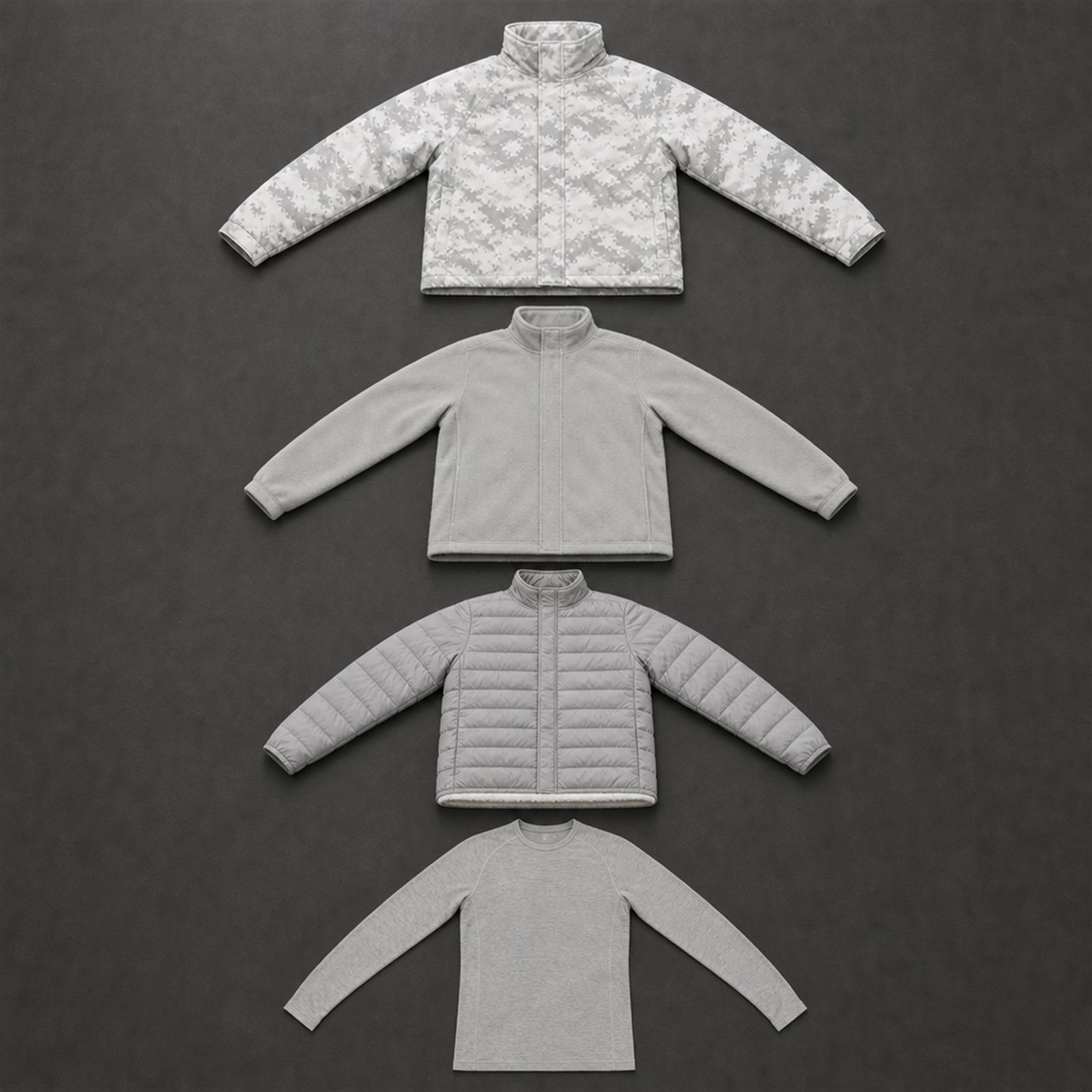
Layered extreme cold weather tactical clothing system with base layer, mid layer, insulation and shell
Priority
Moisture management before insulation · Layered, configurable warmth · Wind and precipitation control at the shell
Products suited
7 in range
Materials suited
0 technical pages
Extreme Cold Weather tactical clothingExtreme Cold Weather tactical clothingExtreme Cold Weather tactical clothing

Layering system

Built as a system, not a single jacket

In extreme cold no single garment solves the problem. Each layer has one job, and the buyer's real decision is the composition: what goes over what, and what is fixed versus removable.

Exploded view of a cold weather tactical clothing layering system

Select a layer to see what it is responsible for.

Layer 1

Base Layer

Move moisture away from the skin and keep a dry microclimate next to the body.

Function

  • Wick perspiration away from the skin rather than holding it
  • Dry relatively quickly so the layer does not stay wet after exertion
  • Fit close to the body without restricting movement
  • Provide light warmth without trapping moisture

Garment types in this layer

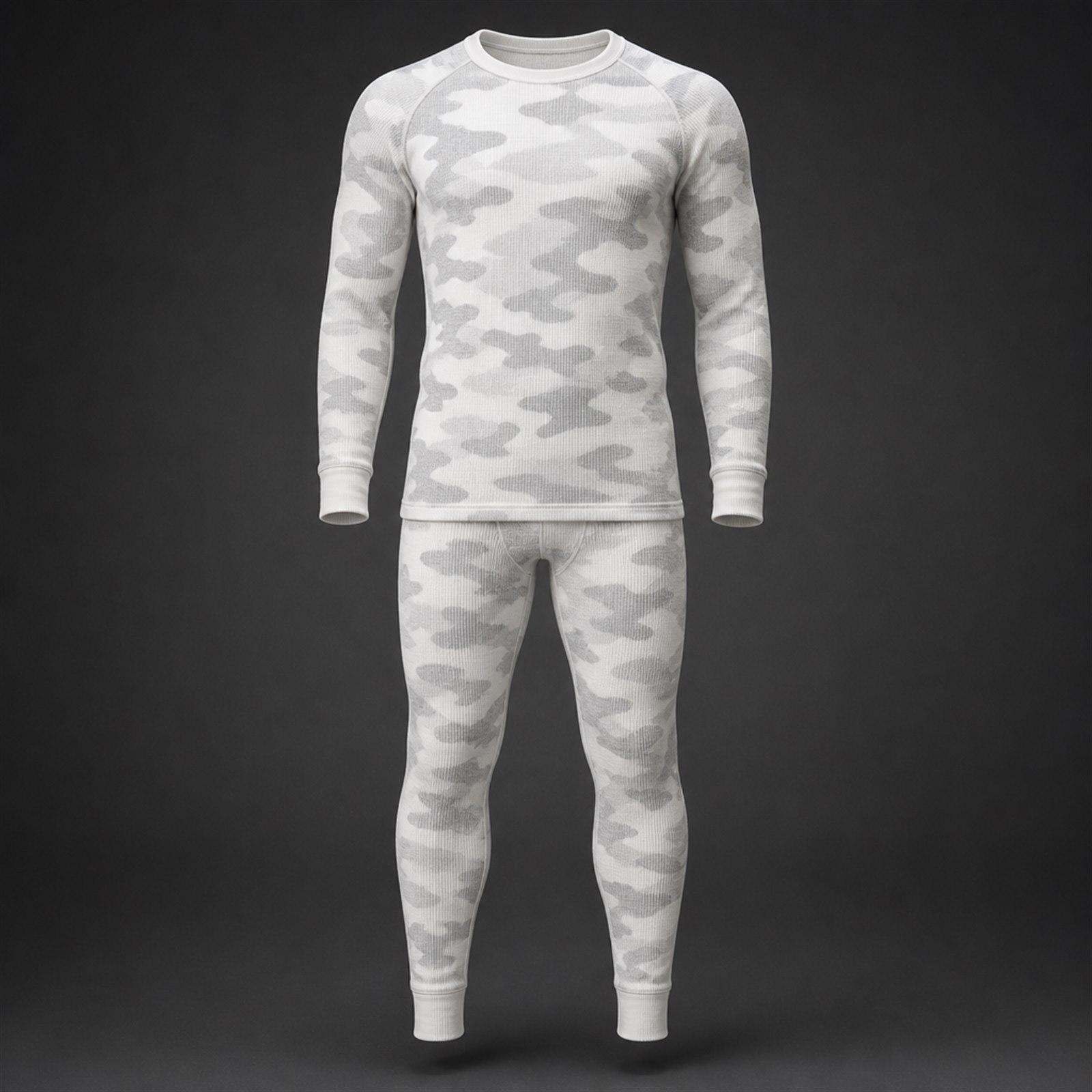
  • Thermal base layer top
  • Thermal base layer bottom
  • Base layer top with underarm ventilation
  • Lightweight base layer for high-output activity

Typical use

Worn against the skin for the whole working period, including indoors where layers above are removed.

Specifying a cotton-rich base layer for cold weather is a common and expensive mistake: it holds moisture against the skin instead of moving it away.

Layer 2

Mid Layer

Provide active warmth and manage the transition between moving and resting.

Function

  • Trap air for insulation while the wearer is active
  • Continue to insulate when damp, unlike some other layer types
  • Release excess heat during high-output movement
  • Add a removable warmth increment without bulk at the shoulders

Garment types in this layer

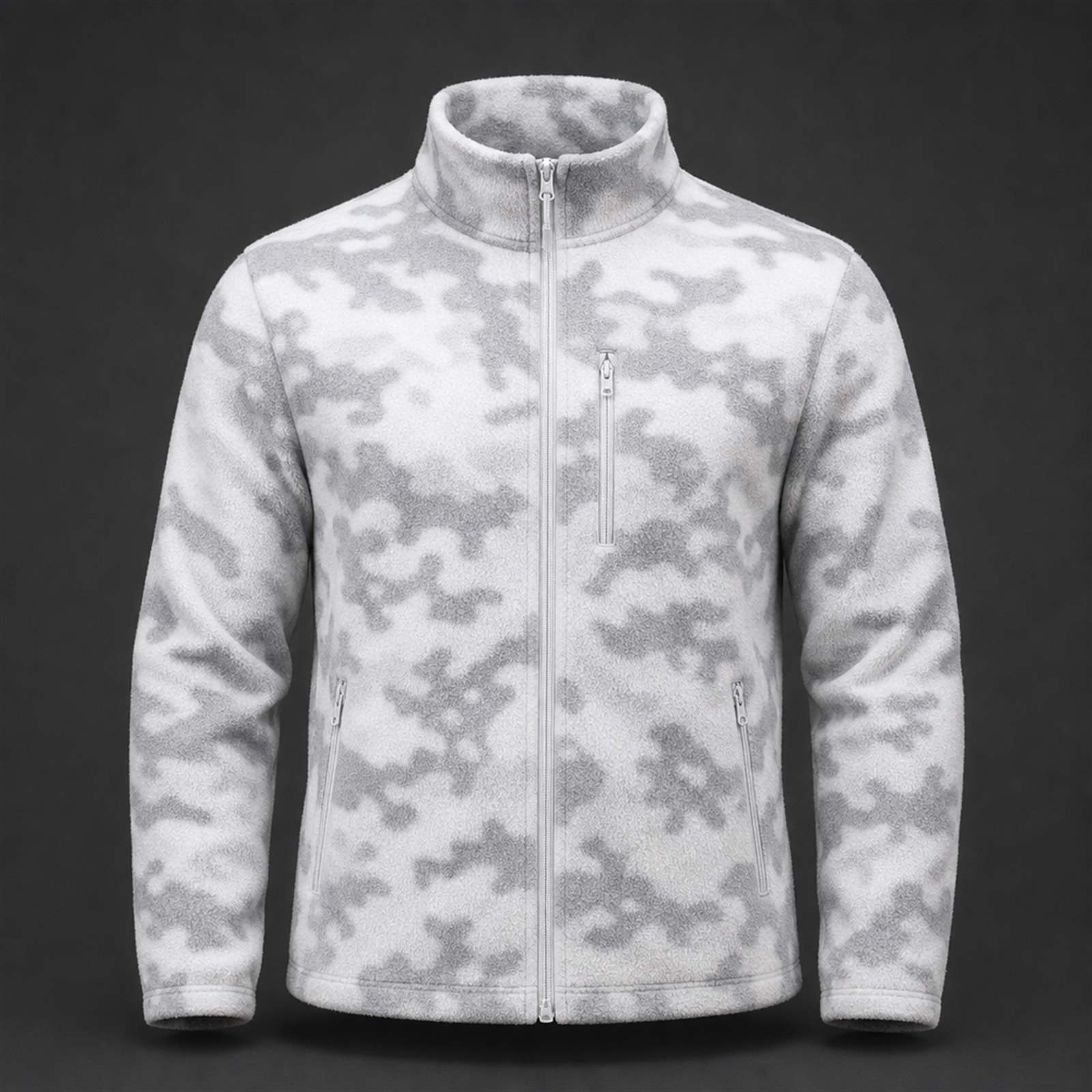
  • Fleece jacket
  • Grid fleece or knit mid layer
  • Light insulated mid layer
  • Mid layer with full front ventilation

Typical use

Worn over the base layer during movement; often the layer that stays on indoors after the shell and insulation are removed.

This is the layer most often skipped in a specification, and its absence is why a system that looks correct on paper feels cold during activity.

Layer 3

Insulation Layer

Hold warmth when the wearer is static or moving slowly, and be removable when they are not.

Function

  • Retain warmth during static periods after exertion
  • Allow warmth to be added or removed as activity changes
  • Recover after compression from packing and storage
  • Protect the insulation from moisture reaching it from inside or outside

Garment types in this layer

  • Insulated tactical jacket
  • Insulated parka
  • Insulated liner designed to be worn under a shell
  • Insulated vest for core warmth with arm mobility

Typical use

Added when the wearer stops moving or the temperature drops further; removed before sustained high-output activity.

How insulation is quilted or baffled matters as much as which insulation is used, because it controls whether warmth stays distributed or migrates away from the body.

Layer 4

Protective Shell

Stop wind and precipitation reaching the layers below, while letting internal moisture escape where the design allows.

Function

  • Block wind from stripping heat out of the insulation
  • Keep snow, sleet and rain out at seams, closures and openings
  • Allow internal moisture to escape rather than condensing inside
  • Provide a durable outer surface that resists abrasion in use

Garment types in this layer

  • Cold weather shell jacket
  • Waterproof winter tactical pants
  • Parka shell with removable liner
  • Softshell for dry cold and high activity

Typical use

The outermost layer in precipitation and wind, or in dry cold where a breathable softshell is the better choice.

Where wet snow or prolonged precipitation is expected, a water-resistant shell is the wrong specification regardless of how well the layers beneath perform.

Conditions

What the environment demands

Low ambient temperature is only part of the exposure. Moisture is the more serious problem: sweat produced during movement, or snow and sleet from outside, displaces the air that provides warmth. Wind accelerates heat loss from any exposed surface and drives precipitation into seams, closures and fabric. Insulation also reduces shoulder rotation, hip flexion and knee bend, so mobility under bulk is part of the environment rather than a comfort preference.

Design priorities

Design priorities in this environment

These are the requirements that drive the specification. When they conflict with each other — and they usually do — the trade-off has to be decided by the buyer, not assumed by the manufacturer.

Moisture management before insulation

If sweat cannot move away from the skin, additional insulation only traps moisture closer to the body. The base layer is specified first and the insulation is matched to it.

Layered, configurable warmth

Warmth needs to change during the day as activity level changes. A system of removable and adjustable layers covers that, where a single heavily insulated garment cannot.

Wind and precipitation control at the shell

The outer layer is responsible for keeping wind and precipitation out of the insulation, and for letting internal moisture escape where the design allows it.

Movement range under bulk

Pattern, gusseting, articulation and seam placement are specified so that range of motion survives the added volume of insulation.

Reinforcement where the garment actually wears

Cold weather clothing is worn against equipment and repeatedly packed and unpacked. Reinforcement follows the wear points rather than the seams that are easiest to reinforce.

Compatibility with the rest of the kit

The system has to work over a base layer, under or over load-bearing equipment, and with gloves, headwear and footwear the buyer already issues.

Buyer problems

Problems buyers report in this environment

These are the complaints that reach us from buyers already selling into these conditions. Every one of them is a specification decision that was made before production, not a manufacturing accident.

  • Garments that work while moving but feel cold within minutes of standing still
  • Insulation that becomes heavy and loses warmth once it has taken on moisture
  • Sweat build-up because the base layer cannot move moisture away from the skin
  • Wind cutting through the shell at the chest, shoulders and closures
  • Seams and pocket openings letting snow or sleet in during active use
  • Restricted shoulder and knee movement once the full layering system is worn
  • Elbows, knees, seat and cuffs failing long before the rest of the garment
  • Sizing bought from an existing temperate range that does not allow for layering underneath
  • Layer colours and tones that do not match within the same order or across repeat orders
  • No documented specification, so the second order does not match the first

Engineering

What has to be engineered, and why

Every section below is a specification decision. Where a figure cannot be verified against real material data or garment testing, we say what has to be tested rather than quoting a number.

Module 01

Extreme Cold Environment

What actually changes when a programme moves into extreme cold, beyond the number on a thermometer.

The first change is that the margin for error disappears. In a temperate climate a garment that manages moisture badly is uncomfortable; in extreme cold it becomes a safety issue, because moisture held near the body is the fastest route to losing warmth once activity stops.

The second change is that conditions move during the day. Wind picks up, precipitation starts or stops, and the wearer alternates between exertion and waiting. A specification built for one static condition will be wrong for most of the working period.

The third change is that equipment does not go away. Cold weather clothing is worn with load-bearing equipment, gloves, headwear and footwear, and every interface is a potential point of restriction, cold bridging or snow entry.

Dry cold

Low humidity and little precipitation. Breathability and wind protection usually matter more than full waterproofing, and a softshell is often the better shell.

Wet cold

Sleet, wet snow or freezing rain. Insulation that takes on moisture loses effectiveness and weight increases; shell and seam specification become the priority.

Wind-affected cold

The same garment performs very differently in wind. The outermost layer must stop wind reaching the insulation, particularly at chest, shoulders and closures.

Static exposure

Standing or waiting after exertion. Requires the insulation layer to be present and effective; this is the condition that most often exposes a system that only works while moving.

Because these conditions combine differently in each programme, the working specification has to be agreed with the buyer rather than chosen from a catalogue.

Module 02

Moisture Management

The single most common reason a cold weather system underperforms.

Warmth in clothing is largely a function of trapped air. Water displaces that air. When perspiration cannot leave the system, insulation gradually loses the property it was chosen for, and the wearer feels cold even though the garments are the ones that were specified.

Moisture moves through a system by two routes: it is transported away from the skin by the innermost layer, and it leaves the system through the outermost layer. A gap at either end breaks the path, which is why base layer and shell breathability have to be specified as a pair.

Wicking from the skin

The base layer moves liquid away from the skin to a place where it can spread out and evaporate. Fit matters: a layer that does not touch the skin cannot move anything.

Vapour escape at the shell

Moisture leaves as vapour where the shell allows it, and through ventilation when the design provides it. Fully blocking one route puts more demand on the other.

Ventilation as a design decision

Underarm vents, chest vents and two-way closures let the wearer dump heat during exertion without removing layers in the cold.

The static-after-exertion case

The moment the wearer stops, internal moisture has nowhere to go and insulation is at its most vulnerable. This transition is the case to design for, not the cruising state.

We will not state a moisture vapour transmission figure for a garment unless it comes from a test actually performed on that material and construction.

Module 03

Thermal Insulation

How warmth is created, where it is needed, and what decides whether it survives compression and moisture.

Insulation works by holding still air. That means the decisions that matter are how much air is held, where it sits on the body, and whether it stays in place after the garment has been compressed, packed and worn.

Insulation is therefore mapped by panel rather than applied evenly. Chest and back carry more, inner arms and shoulders carry less so that movement is preserved, and areas exposed to compression in use are handled differently from areas that are not.

Air retention

The insulating value comes from trapped air, which is why loft structure and how it is held in place matter more than nominal thickness.

Panel mapping

Different insulation amounts or constructions at different body zones, so warmth is provided where it is needed without adding bulk where it costs mobility.

Compression recovery

How insulation behaves after being packed and compressed. A garment that insulates when new but not after a season of storage has a specification problem.

Performance when damp

Some insulation types retain more of their function when damp than others. This is a real selection criterion for wet-cold programmes.

We do not publish thermal resistance values. Claiming a warmth figure requires controlled testing on the finished garment construction, not an assumption from the material datasheet.

Module 04

Wind Protection

Wind is the fastest way to lose the warmth the layers below have built up.

Wind accelerates heat loss from any exposed surface and forces precipitation into seams, closures and fabric. Because it acts on the outermost layer first, wind resistance is a shell requirement rather than a property the rest of the system can compensate for.

Air permeability is the number that describes this, and it is separate from water resistance. A shell can be highly water resistant and still let enough air through to make the layers beneath feel ineffective; a shell can be windproof and trap so much moisture that the wearer wets out from the inside.

Air permeability

How much air passes through the fabric. Low air permeability blocks wind, but taken too far it also blocks the escape of internal moisture.

Draft paths

Front closures, cuff openings, hem and collar. The largest heat loss in a wind is usually through an opening rather than through the fabric.

Wind plus moisture

The combination is what makes wet-cold conditions dangerous. Neither property can be specified in isolation.

Module 05

Snow & Water Protection

Where precipitation is kept out, and where it normally gets in.

In practice, water enters a cold weather garment at a small number of predictable places: seams under load, fronts that are not protected behind a storm flap, cuff and hem openings, pocket edges, and hood interfaces. Fabric performance matters, but construction decides the outcome.

Snow behaves differently from rain. Dry snow is often repelled by a water-resistant surface, but wet snow and sleet behave much more like rain and will find the same seams and openings. Where a programme includes wet snow, the shell is specified as waterproof construction with sealed seams rather than water resistant.

Storm flaps

A second layer of fabric behind the front closure. One of the highest-value construction details in a cold weather garment and one of the most commonly omitted.

Seam treatment

Exposed shoulder and hood seams are the first to leak under load. Which seams are sealed, taped or left plain is a specification decision per position.

Protected closures

Pocket and ventilation closures need coverage, not just a zip. Water entering a chest pocket is water inside the insulation.

Cuff and hem interfaces

Adjustable, and specified together with the gloves and footwear the buyer issues, so the seal is closed by design rather than by fit.

We do not quote water column or waterproof rating figures. Where a buyer's tender requires a rating, the correct sequence is to agree the required test method first and have the result produced on the actual construction.

Related Capabilities

Module 06

Mobility

The constraint that insulation creates, and how it is engineered around.

Bulk reduces range of motion. The areas that suffer first are rotational movement at the shoulders, hip flexion, and knee bend — the three movements a wearer needs most when working, climbing in and out of vehicles or handling equipment.

There are two levers: reduce bulk where it constrains movement, and build articulation where warm must stay. Both are pattern decisions made before sampling, and both need to be assessed on a wearer in the full layer stack rather than on a single garment.

Articulation

Pattern shaping at elbows and knees that builds the bend into the garment instead of relying on extra width.

Gusseting

Added fabric at crotch and underarm where a joint needs to open further than a flat panel allows.

Bulk redistribution

Moving or reducing insulation at inner arms and shoulders so the layer stack does not lock the arms forward.

Sizing allowance

The extra room required for the layers beneath. Getting this wrong is the single most common cause of a system being rejected after delivery.

Module 07

Durability

Cold weather clothing is used hard, packed, and worn against equipment.

The wear pattern in cold weather garments is predictable, and it is not uniform. Elbows, knees, seat and cuffs take the abrasion; shoulders take the load from equipment; hems and cuffs fail at the openings. Reinforcement is specified against these points rather than applied evenly across the garment.

Insulation adds a second durability question that summer garments do not have: whether warmth survives repeated compression. A garment can be intact and still have lost its function.

  • Reinforcement placed at the wear points the buyer reports, not at the seams that are easiest to reinforce
  • Stitch and thread specification written into the tech pack rather than left to the line
  • Abrasion and seam performance treated as testable properties, not as adjectives
  • Compression and recovery considered in how the garment is packed and stored
  • Repairability considered: whether a damaged panel or liner can be replaced on its own

Module 08

Equipment Compatibility

A cold weather system is worn with other equipment, not instead of it.

Every interface is a place where a garment can fail functionally even when it performs well on its own: a waist that shifts under a belt, a hood that fights headwear, a cuff that will not close over a glove, a shoulder that collects pressure from a strap.

These are specified against what the buyer actually issues. Where that list is not yet fixed, we document the interfaces as open points rather than guessing, because an interface assumed wrong is discovered in the field.

Module 09

Sizing & Layering

Why a size chart from a temperate range cannot be reused unchanged.

A cold weather system is worn over other garments, so the body dimensions the garment covers are not the body dimensions the size chart describes. Chest, shoulder width, back length and sleeve length all need to accommodate the layer stack, and arm length is especially sensitive because two or three insulating layers together shorten effective reach.

Sizing is therefore developed with the intended composition, produced as a size set, and confirmed on a wearer in the full stack. Where a buyer has an existing uniform sizing standard, we develop against it rather than replacing it, so the cold weather programme stays consistent with everything else issued.

Layer allowance

Extra circumference and length to accommodate the layers the wearer will actually put underneath.

Size set

A set of garments across the size range produced for measurement confirmation before bulk.

Critical dimensions

The measurements that decide whether a system is wearable: chest, shoulder, sleeve length, back length, hip, inseam, cuff and hem opening.

Tolerances

Agreed in writing before bulk, so inline and final inspection measure against the same numbers.

Related Capabilities

Module 10

Extreme Cold Customization

What a buyer can specify, beyond colour and logo.

In a cold weather programme the specification decisions that matter most are structural rather than cosmetic: how many layers, which of them are removable, where insulation is mapped, how the openings seal, and how the system is labelled and issued.

We develop each of these to the buyer's programme, and document them so the composition can be reproduced. Branding — labels, trims, colour matching across fabric types — is specified at the same time, because it interacts with the fabric choices rather than sitting on top of them.

  • Number of layers in the system and which are issued together
  • Fixed insulation versus removable liner construction
  • Insulation mapping and amount per body zone per garment
  • Shell specification: waterproof, water resistant or softshell, by environment
  • Ventilation, closure and storm flap configuration
  • Hood and collar interface design, including headwear compatibility
  • Cuff and hem sealing, specified against the gloves and footwear issued
  • Pocket configuration and closure type, around the equipment carried
  • Reinforcement placement matched to reported wear points
  • Colour and tone matching across different fabric types in one order
  • Labelling, care labelling and sizing identification for issue and storage
  • Packaging and packing method for compressed storage and transport
Durability

Where this clothing fails first

Reinforcement should follow the wear points, not the seams that are easiest to reinforce.

Elbows and forearms

The first place a cold weather jacket shows abrasion, from resting on surfaces and working in confined spaces. Reinforcement and, where the buyer requires it, an elbow pad interface are specified here.

Knees

Kneeling on cold or abrasive ground, made worse by the stiffness of insulated fabric. Reinforced knee panels with articulation rather than simply a thicker patch.

Seat and inner thighs

Wear from sitting, and where insulated pants most often fail first. Panel construction and seam placement matter more here than fabric weight.

Cuffs and hems

Openings take abrasion, hold snow and ice, and are the most common point of moisture ingress. Adjustment hardware and edge finishing are both specified.

Shoulders

Pressure from load-bearing equipment. Straps abrade the fabric and compress the insulation beneath them, which locally reduces warmth.

Front closure

Repeated opening and closing under gloves, and the primary route for wind and water. Zip specification, storm flap and chin guard are treated together.

Equipment

Working with the rest of the kit

Cold weather clothing is worn over other equipment, so it has to be designed around it.

Load-bearing equipment

Shoulder and waist interfaces must not shift the garment or compress insulation under strap load. Ventilation and pocket access are positioned so they remain usable while equipment is worn.

Gloves

Cuff openings are specified to close over or under the issued glove, and closures must be operable while wearing them.

Headwear and hearing protection

Hood and collar are designed to work with what the buyer issues, with an adjustable interface rather than a fixed one.

Footwear

Pant hem and leg opening are specified against the boot height in use, so snow does not enter between hem and boot.

Body armour or protective layers

Where a cold weather layer is worn over or under protection, the fit and opening access are developed against the actual combination rather than assumed.

Vehicles and seating

Bulk at the seat and behind the knees affects how a wearer sits and drives. Where relevant this is assessed on a wearer in the full system.

Clothing systems by climate

Build the system to your environment

This is a specification aid, not a performance statement. It suggests a starting layer composition for discussion; it does not state that any garment supports a particular temperature. Comfort depends on activity level, wind, humidity, layer configuration, exposure time and individual variation. The final specification for your programme is agreed with us and, where you require figures, verified by testing on the actual construction.

Expected climate
Dominant weather condition
Activity pattern
Typical use

Suggested layer composition

Cold weather system

Three layers for cold working days where the wearer moves regularly and can shelter. Warmth is mostly managed by adding or removing the mid layer.

  1. Layer 1Moisture-moving base layer, top and bottom
  2. Layer 2Fleece or knit mid layer
  3. Layer 4Water-resistant or wind-resistant shell

Specification considerations

  • Base layer moisture transport is the priority; a cotton-rich layer will cause problems even in mild cold
  • Shell choice depends on whether precipitation is expected, not only on temperature
  • Ventilation in the mid layer lets the wearer manage heat during activity without removing layers

Insulated cold weather system

Four layers with an independent insulation layer, for conditions consistently below freezing where the wearer alternates between moving and waiting.

  1. Layer 1Moisture-moving base layer, top and bottom
  2. Layer 2Fleece or insulated mid layer
  3. Layer 3Insulated jacket or parka, removable if the programme requires it
  4. Layer 4Wind-resistant or waterproof shell

Specification considerations

  • Insulation is mapped by panel so bulk does not sit where it restricts arm movement
  • Removable insulation lets one garment cover a wider working range and be replaced independently
  • Sizing must account for the layers beneath, not only the outer garment
  • Front closure, cuff and hem sealing become primary performance details rather than finishing touches

Extreme cold weather system

Four layers with heavier mapped insulation and a fully protective shell, for sustained low temperature where the wearer is exposed for long periods and mobility still matters.

  1. Layer 1Moisture-moving base layer, top and bottom
  2. Layer 2Fleece or high-loft mid layer
  3. Layer 3Heavily insulated jacket or parka with mapped insulation
  4. Layer 4Waterproof shell with sealed exposed seams

Specification considerations

  • Articulation at shoulders and knees is required, not optional, once bulk reaches this level
  • Ventilation is needed for high-output periods so the wearer does not wet out from the inside
  • Wet snow and sleet make waterproof construction with protected closures the correct shell specification
  • Colour matching across shell, insulation and base fabrics is a known difficulty and is agreed explicitly

Extended exposure system

The four-layer extreme configuration, specified for a programme where the wearer cannot shelter, dry out or change layers for extended periods.

  1. Layer 1Moisture-moving base layer with a spare set issued for changing
  2. Layer 2Fleece or high-loft mid layer
  3. Layer 3Insulated jacket or parka, plus an insulated vest for core warmth
  4. Layer 4Waterproof, wind-blocking shell with maximum opening protection

Specification considerations

  • Drying capability becomes a requirement of the programme: what the wearer can dry, and how fast, decides whether the system keeps working
  • Compression recovery of insulation matters more when garments are packed and carried
  • Repairability is a real requirement: a damaged panel or liner should be replaceable in isolation
  • Consider whether a spare base layer and spare gloves are part of the issue, since the system is only as good as its weakest dry component

Additional considerations by weather condition

  • Dry coldBreathability and ventilation generally matter more than full waterproofing. A softshell is often the better outer layer, and a waterproof shell that traps moisture can be the wrong specification.
  • Strong windWind resistance moves to the top of the shell specification. Draft paths at closures, cuffs and hem usually lose more heat than the fabric itself.
  • Dry snowDry snow is largely handled by a water-resistant surface, but seals at cuffs, hem and hood interface decide whether snow ends up inside the garment.
  • Wet snow / sleet / freezing rainTreat this as rain. Waterproof construction with sealed exposed seams and storm flaps is the correct shell specification; water resistance alone is not.

Additional considerations by activity level

  • Mostly static, standing or waitingInsulation does the work and must be present and effective. This is the condition that exposes a system designed only for movement; ventilation matters less here than retained warmth.
  • Low output, intermittent workThe system spends long periods between exertion and rest, so the ability to add and remove a layer quickly matters more than maximum insulation.
  • Moderate output, alternating work and restThis is the case where ventilation and the mid layer earn their place: heat is generated and then lost repeatedly through the day.
  • High output, sustained movementMoisture management dominates. Ventilation and a base layer that moves moisture decide whether the insulation is still working when the wearer stops.

Garment strategy

How the garment changes

The same category of garment is built differently in each environment. These are the construction decisions that change.

Specify the system, then the garments

We start from the composition the wearer will actually use — what is worn while moving, what is added when static, what is removed indoors — and only then define each garment in the system. This avoids the common outcome of four good garments that do not work together.

Define what is fixed and what is removable

Some buyers want a single parka with a removable liner. Others want independent layers that can be issued and replaced separately. Both are valid; the choice changes pattern, sizing allowance and how the system is documented, so it is a decision made at the start.

Control bulk where it constrains movement

Insulation is reduced or redistributed at the shoulders and inner arms where bulk costs movement. Where warmth cannot be reduced, articulation is added instead of simply loosening the fit.

Design the openings deliberately

Ventilation, storm flaps, adjustable cuffs, hem drawcords and collar or hood interfaces are all specified against how the wearer moves and what they carry, not added as standard features.

Make the specification repeatable

Every element that carries visual or functional identity — fabric, insulation, construction, colour, trims, labelling — is written down as a manufacturing specification so a repeat order can be produced against it.

Fabric strategy

Materials that fit this environment

Each material below is recommended for a stated reason, not as a generic option. Open any material to read where it performs and where it fails.

Construction

Construction priorities

Where the specification should focus for this environment.

  • Seam construction and sealing specified per garment position: exposed shoulder and hood seams treated differently from internal seams
  • Storm flaps behind every front closure, with a chin guard at the collar
  • Adjustable cuffs that close over or under gloves, specified together with the glove interface
  • Hem adjustment that seals against wind and snow entry without restricting hip movement
  • Articulated elbows and knees, with gussets at the crotch and underarm where the range of motion requires it
  • Insulation mapped by panel rather than applied as one uniform thickness
  • Reinforcement at elbows, knees, seat, cuffs and hems, matched to the wear points the buyer reports
  • Pocket placement and closures specified around load-bearing equipment and gloves
  • Hood designed to work with headwear and hearing protection already in use, with an adjustable interface
  • Every functional detail documented in the tech pack, including thread type, stitch density and trim specification

Products

Products suited to extreme cold weather

Each product page carries the full material, construction and customization detail for this application.

Cold Weather Layering Systems

Cold Weather Layering System

This is not a garment category in the usual sense.

Sustained cold where the wearer alternates between exertion and waiting, and warmth has to be added and removed through the dayExtreme cold where the margin for error is small and moisture trapped against the body is the fastest route to losing warmthMixed cold and wet conditions where the composition needs a protective outer layer over the warmth layers
View product

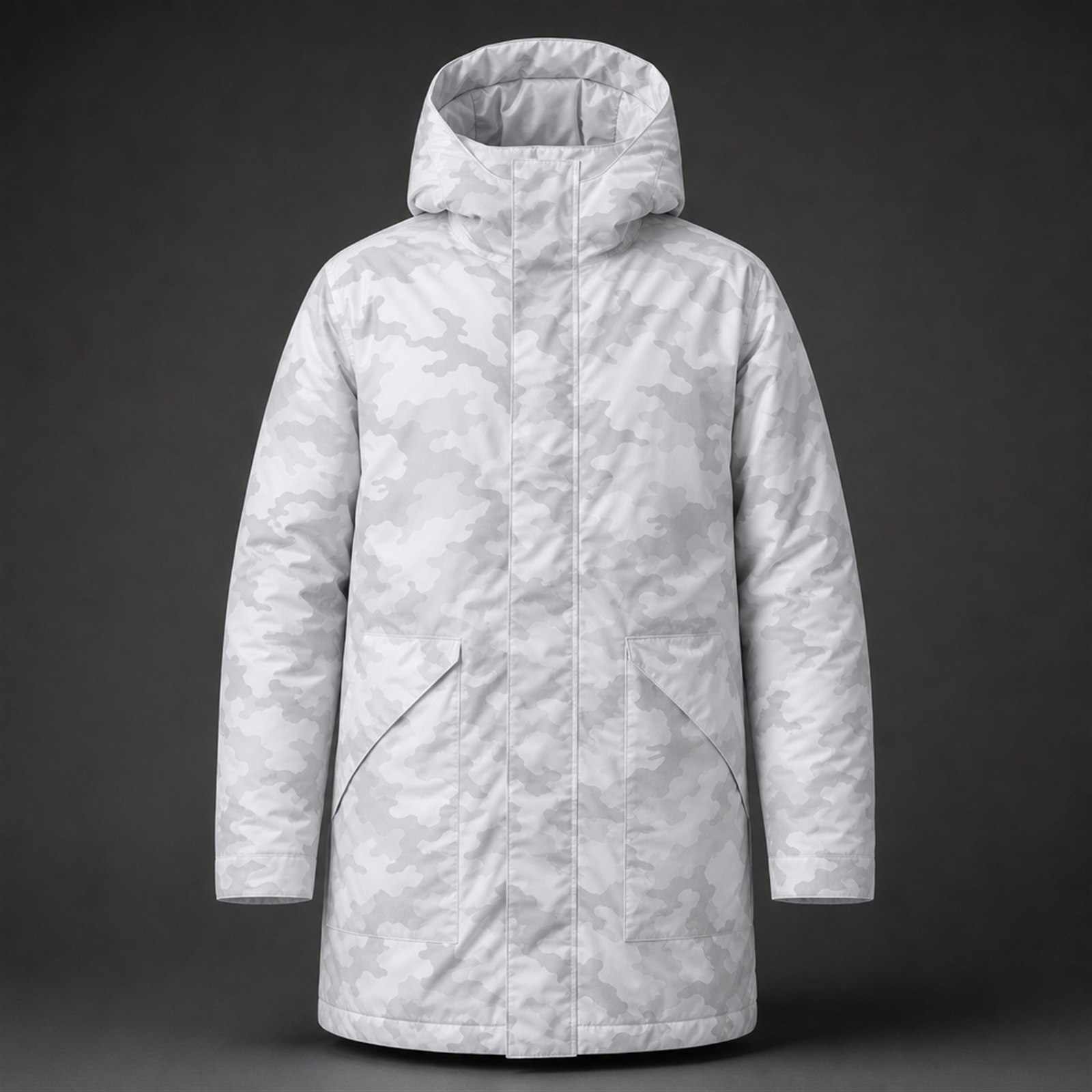
Extreme Cold Weather Parkas

Expedition Parka

A parka for extreme cold is a system, not a garment with more filling.

Extreme cold and dry continental wintersCold and wet conditions where a waterproof shell over insulation is requiredStatic and low-activity duty where warmth retention matters more than breathability
View product

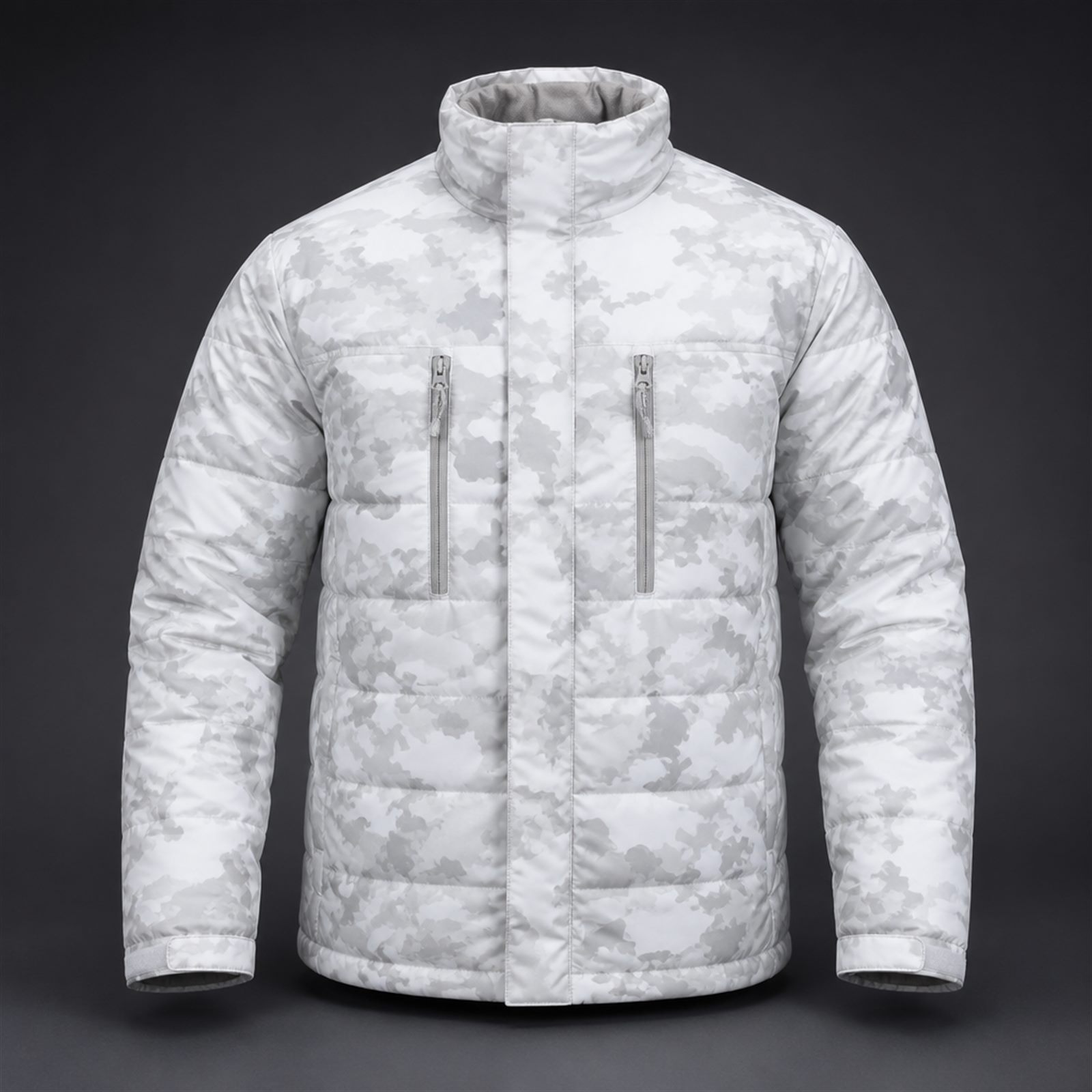
Extreme Cold Weather Jackets

Extreme Cold Weather Jacket

An extreme cold weather jacket is specified for the coldest condition a programme expects, and it is defined less by what it is filled with than by where it sits in a layering system.

Sustained low temperature where the wearer is exposed for long periods and the conditions change during the working dayWet cold with sleet, wet snow or freezing rain where precipitation reaches the shell and the insulation must stay dryWind-affected cold where the outermost layer has to stop wind reaching the insulation, particularly at the chest, shoulders and closures
View product

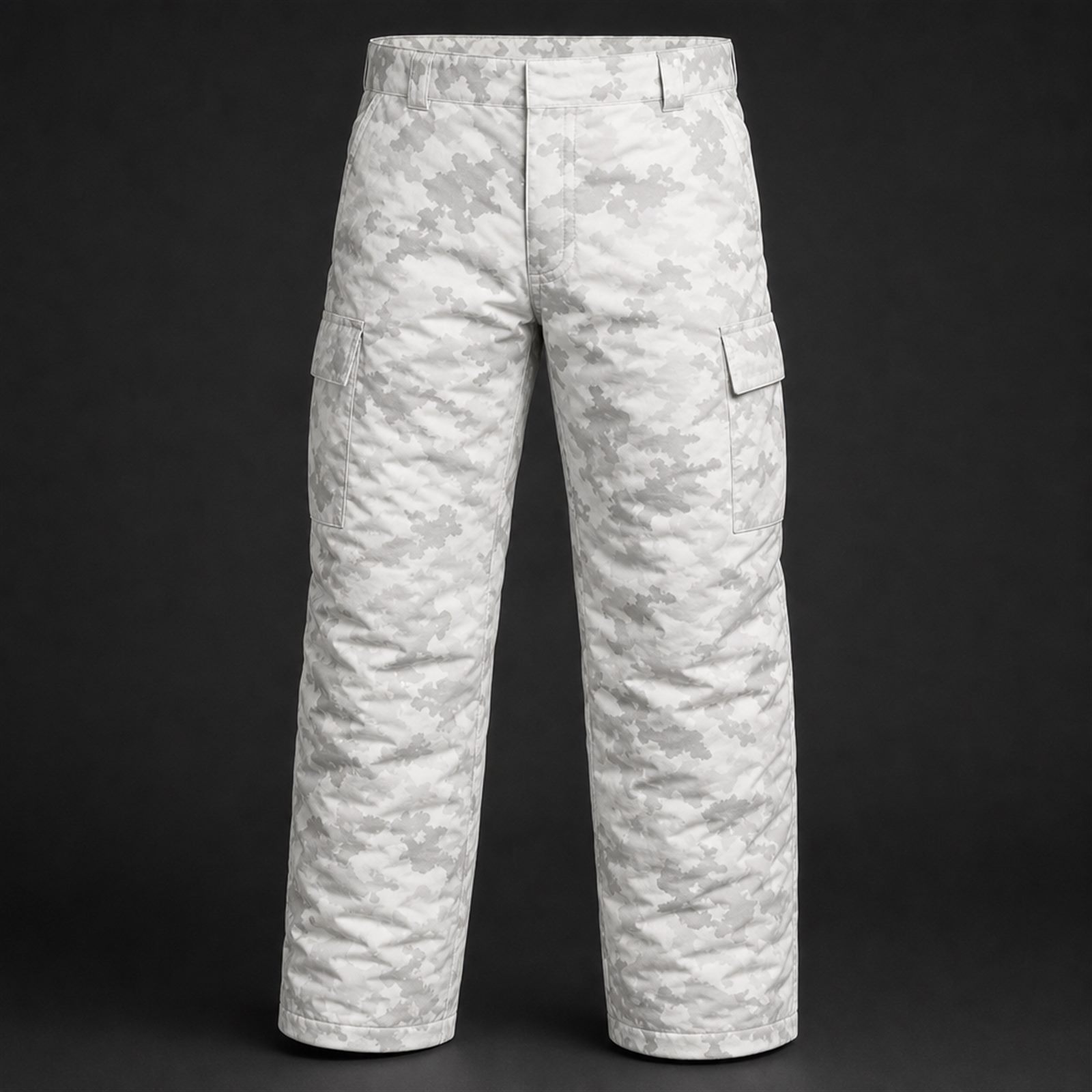
Cold Weather Tactical Pants

Insulated Cold Weather Field Pants

A cold weather pant is not a jacket for the legs.

Cold working days with intermittent activity where the wearer alternates between moving and waitingDry cold where wind rather than precipitation is the dominant exposure and the pant does not need to be waterproofInside a layer stack under a waterproof over-pant, where the insulated pant supplies warmth and the shell supplies protection
View product

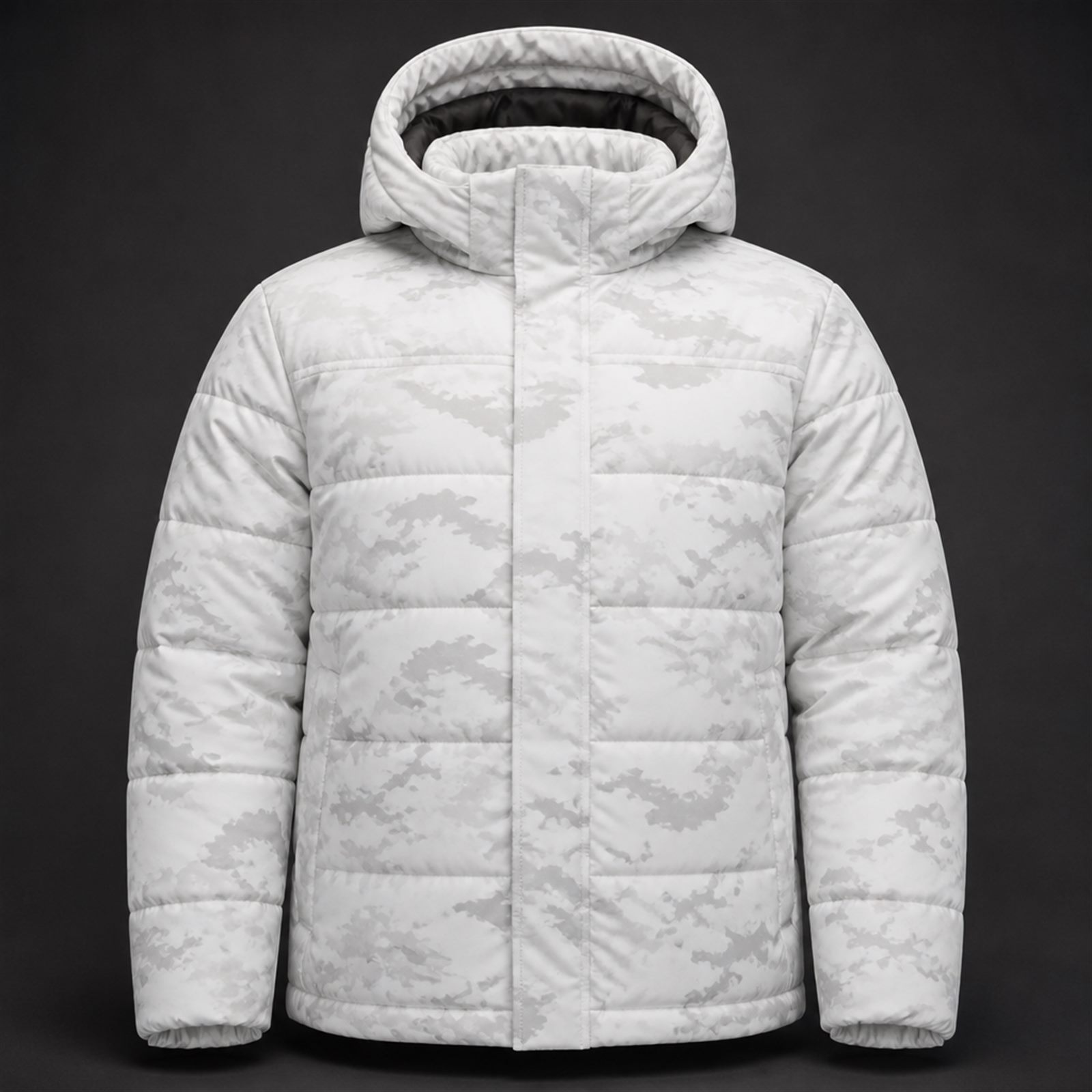
Insulated Tactical Jackets

Insulated Tactical Jacket

An insulated tactical jacket is defined by its fill: a layer of lofted material carried inside the garment to hold the warmth the wearer generates.

Cold conditions below freezing where the wearer alternates between moving and waiting and needs warmth that can be removedExtreme cold where the jacket forms the insulation layer of a four-layer composition, worn under a protective shellDry cold where an insulated jacket is worn as the outermost garment over a base layer and a mid layer
View product

Tactical Fleece & Mid Layers

Tactical Fleece Mid Layer Jacket

A fleece or mid layer is not simply a warmer shirt.

Cold working days where the wearer alternates between exertion and rest and warmth has to be added and removed through the dayMild to moderate cold where the mid layer is often the outermost garment worn, with or without a shell over itInside a four-layer system, directly over the base layer and directly under an insulated jacket or shell
View product

Thermal Base Layers

Thermal Base Layer Set

A base layer is the cheapest garment in a layering system and the one that decides whether the rest of it works.

Cold and extreme cold under an insulated layerCool and wet conditions where moisture management matters more than warmthHot markets as a wicking layer under a uniform shirt
View product

FAQ

Extreme Cold Weather FAQ

What temperature range does this clothing system work in?

We do not publish a temperature rating, and we would advise any buyer to be cautious about supplier-supplied temperature figures. How warm a system feels depends on activity level, wind, humidity, how long the wearer is exposed, which layers are worn and how they fit — not only on the fabric. What we do instead is specify the build to the coldest condition your programme expects and document it, so the specification is repeatable. Any comfort claim should come from your own field trials with the actual composition, and that is the evidence worth holding a supplier to.

Which layer matters most?

The base layer is the one most often underestimated. If moisture cannot leave the skin, the insulation above it gradually loses effectiveness. Buyers who have only ever specified the outer jacket usually see the largest improvement when they fix the base layer and the moisture path through the system.

Should the insulation be permanent or removable?

It depends on how the garment is issued and used. A removable liner gives one garment a wider working range and lets a damaged liner be replaced independently. A permanent, mapped insulation build gives more control over where warmth sits and usually a cleaner fit under equipment. We develop both; the decision is best made on how the wearer's day actually changes.

Do you develop the whole system or individual garments?

Both. If you already have layers in use, we can develop the missing piece to work with them. If you are building a programme from the start, we develop the composition first and then the garments, so that sizing allowance, hood and cuff interfaces and colour matching are consistent across the set.

Can you match colours across different fabrics in one order?

This is one of the harder parts of a cold weather programme, because shell, insulation and base layers are often different fabric types that take colour differently. We treat colour matching across a fabric set as a specific requirement to be agreed and verified, and we will tell you where an exact match between two fabric types is not realistic rather than promise it.

How do you handle sizing when wearers layer underneath?

Sizing is developed with the intended layer stack in mind, and we produce a size set for confirmation. If your size chart was built for a single temperate garment, using it unchanged for a system is one of the most common causes of returns — the chest and arm length that fit over two layers are not the same numbers.

How do we know the second order matches the first?

Through documentation. Fabric, insulation, construction, trims, colour and labelling are written into a manufacturing specification held with the order, and physical or approved samples are retained. If your supplier cannot produce that documentation, repeatability is being assumed rather than managed.

Specifying for extreme cold weather conditions?

Send the destination market, the season and how the garment will be worn. We will propose the specification and state the trade-offs, rather than recommending a single fabric with no context.