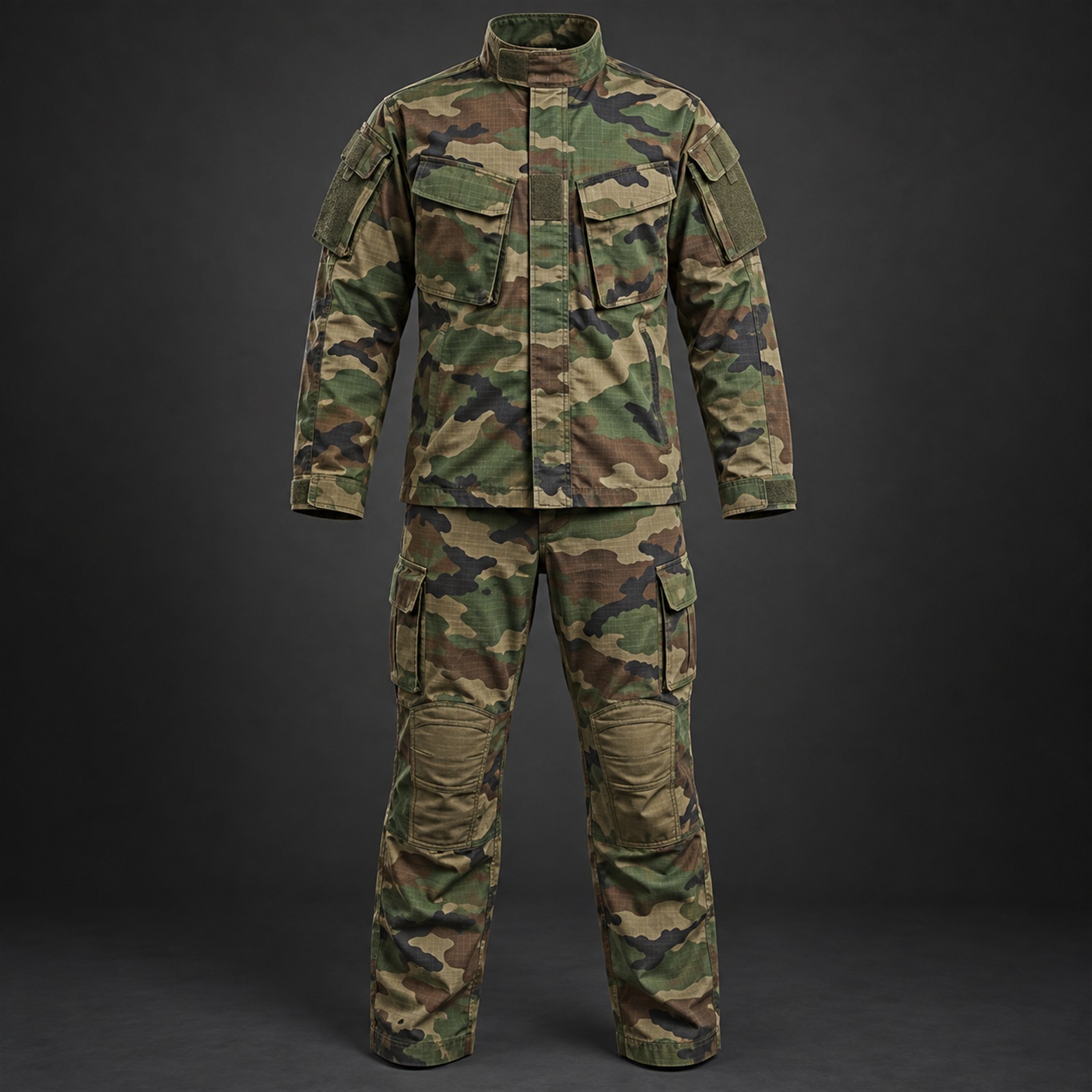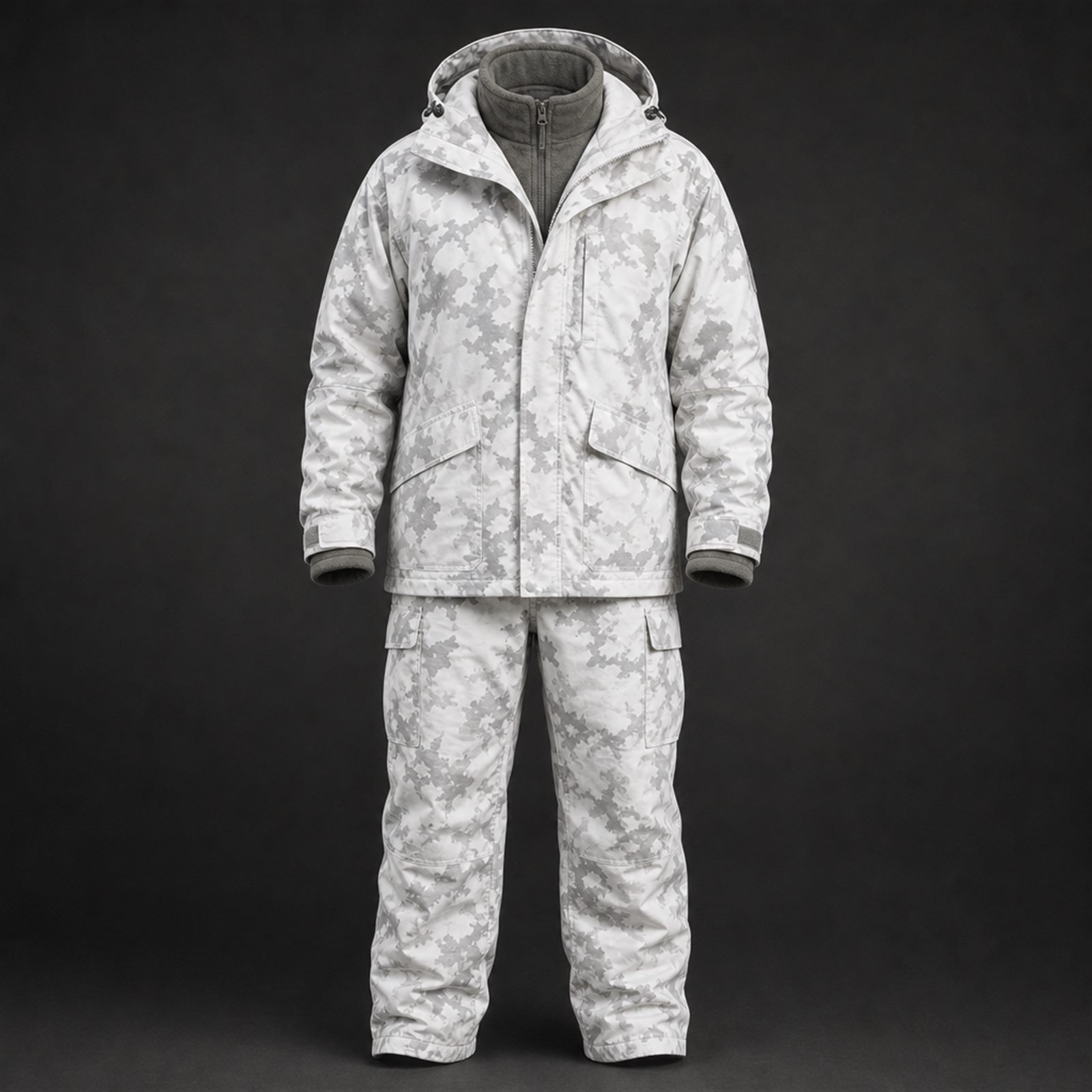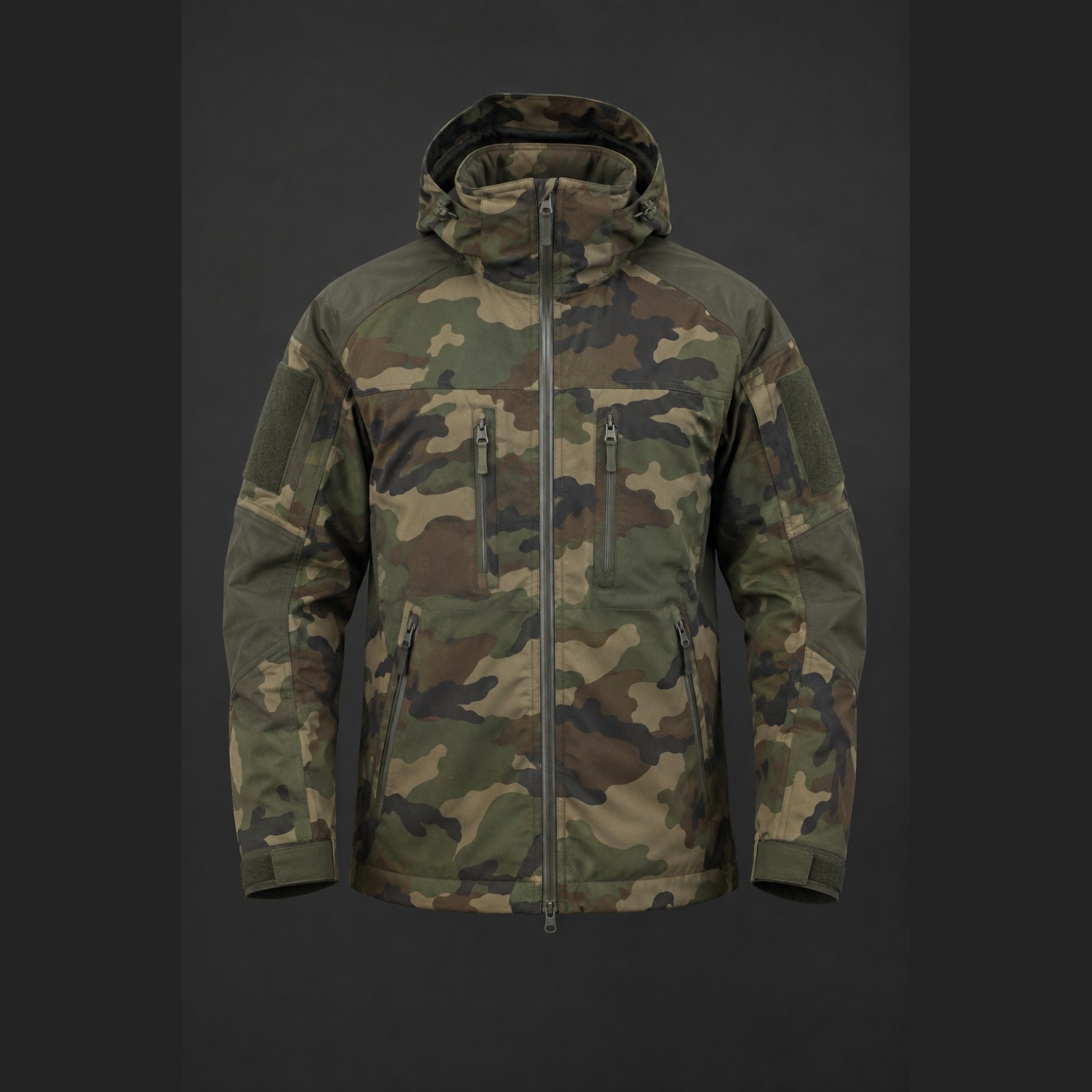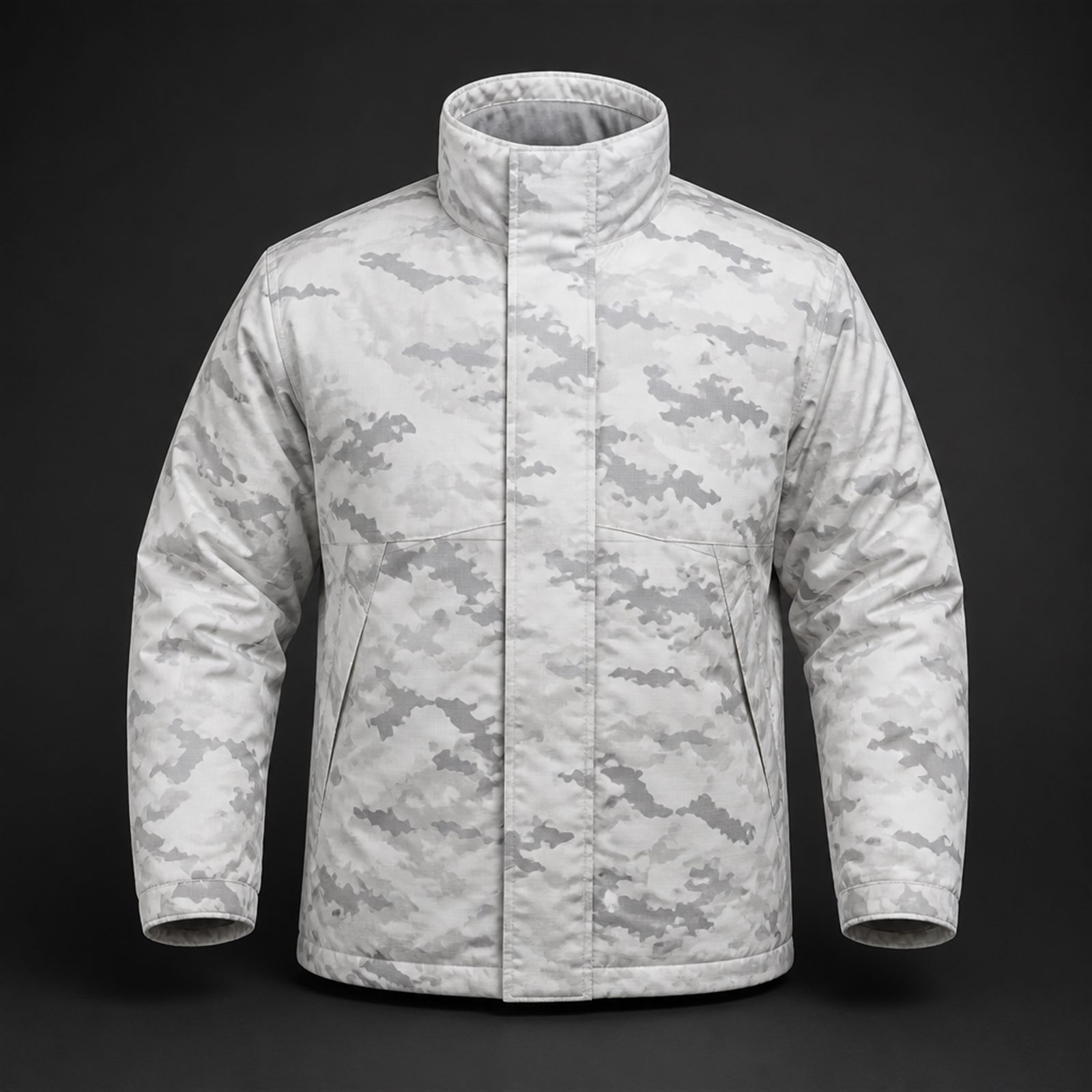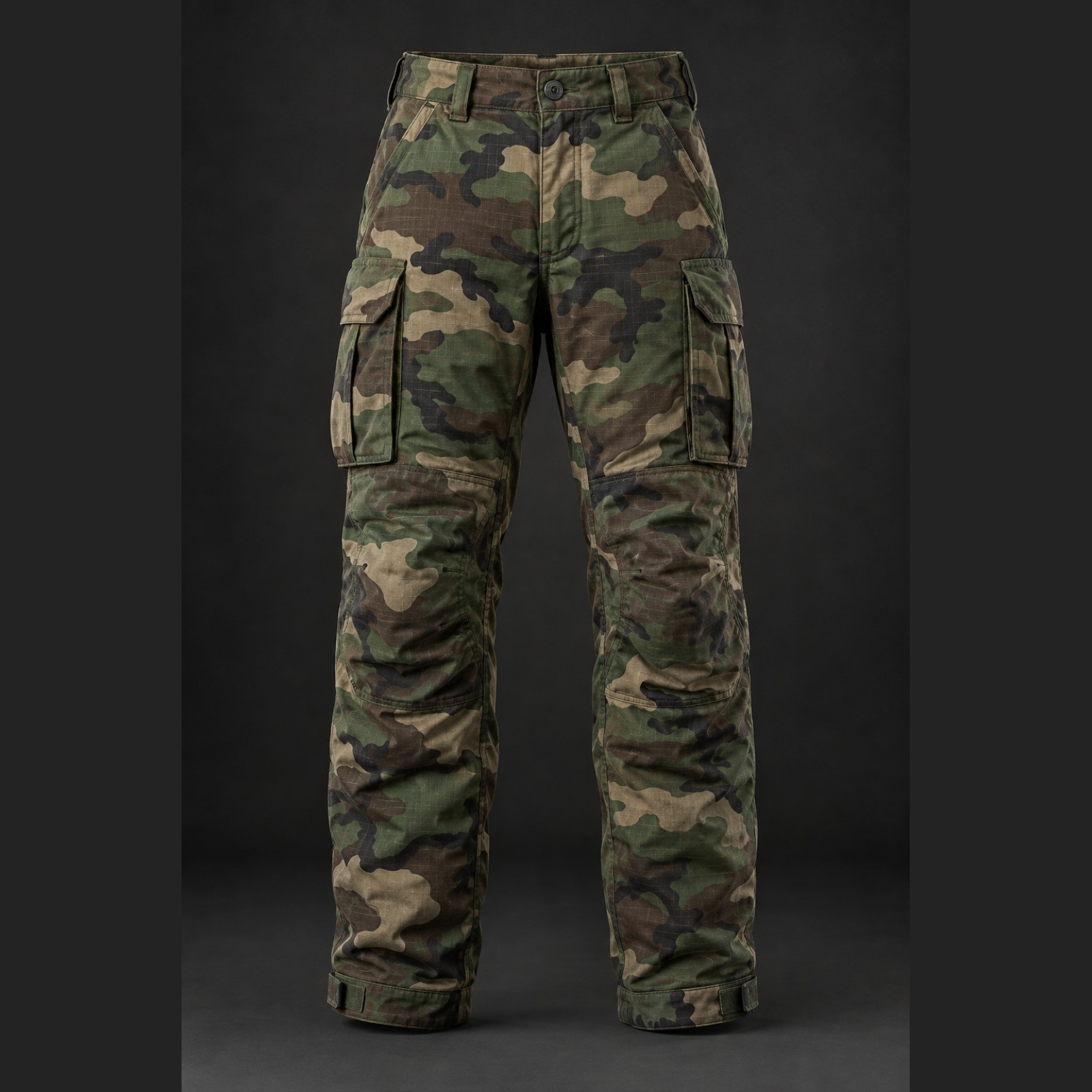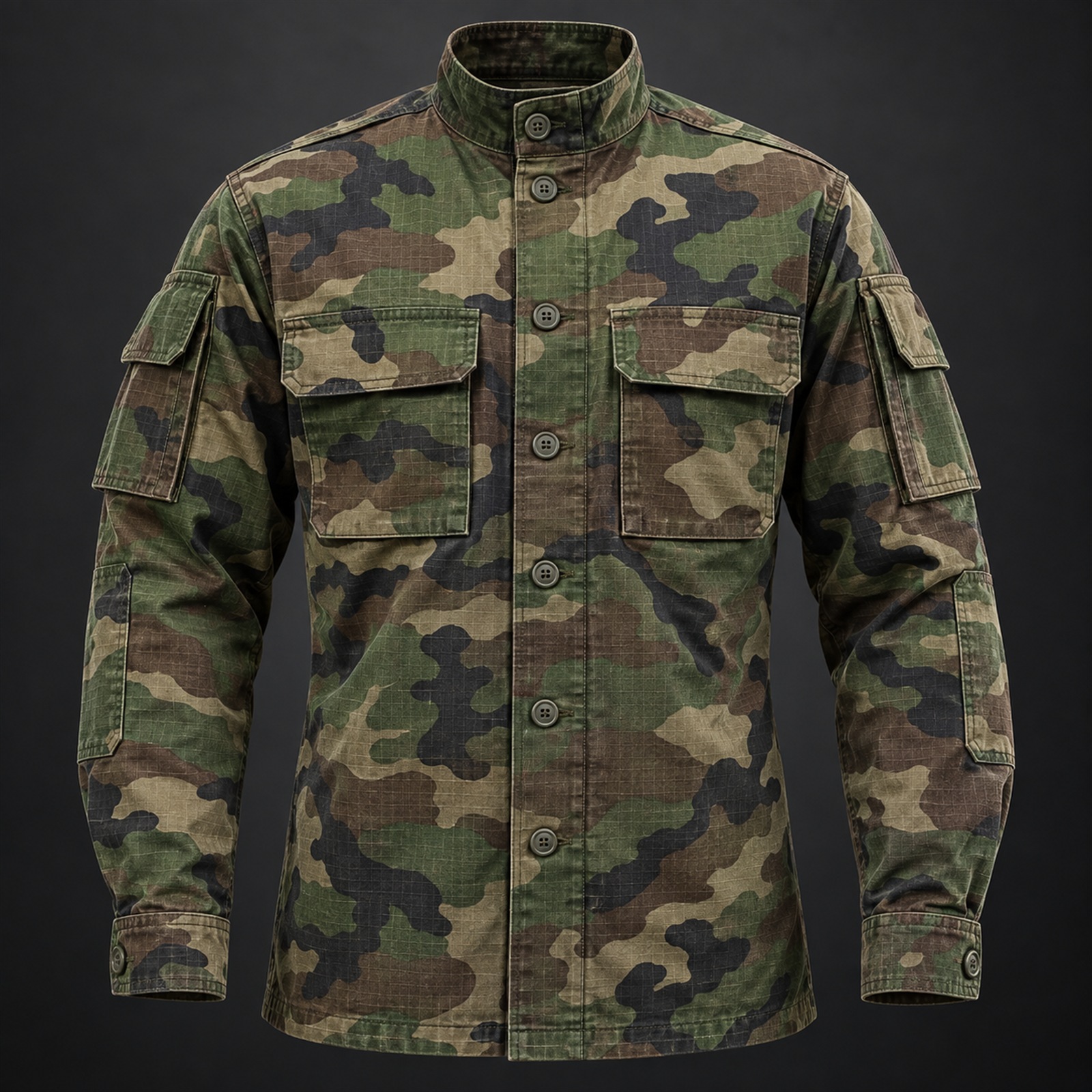
Field / BDU Shirts
BDU Field Shirt
The BDU field shirt earns its place by being the garment a wearer keeps on when conditions change.
TemperateCool to mildLayered under a jacket
View productPerformance Tactical Apparel
OEM & ODM tactical apparel engineered for durability, mobility and demanding environments.
Section 02
A garment is only correct relative to the conditions it is used in. Dry desert heat, humid tropical heat, cold, wet and sustained field use each change what the correct fabric, construction and reinforcement should be. These are the four environments our product development starts from.
Section 03
Production is deliberately focused on apparel. Every category below is developed, sampled and produced as a technical garment rather than traded as a catalogue item.
Category
A combat shirt is not a T-shirt with pockets.
Category
A tactical pant usually fails in one of two places: the crotch blows out under a squat, or the knee wears through from repeated ground contact.
Category
A tactical uniform set is a supply problem before it is a garment problem.
Category
Hot weather tactical clothing is a set of trade-offs, not a fabric.
Category
On a camouflage uniform, the print is the product.
Category
A tactical jacket is a set of decisions rather than a single garment.
Category
A softshell jacket sits between fleece and a hard shell, and that position explains both why buyers like it and why it is easy to get wrong.
Category
Cold weather tactical clothing is a warmth against mobility problem.
Section 04
Not because of adjectives. Buyers stay because the development process produces a specification they can hold a supplier to, and because the fifth production run matches the first.
Capability
Batch consistency means that a garment from the first carton, a garment from the last carton and a garment from a repeat order a season later are interchangeable.
Capability
Customization in tactical apparel is not a single option list.
Capability
Material sourcing is the decision that fixes most of a garment's cost, comfort and durability before a single panel is cut.
Capability
A pattern is the set of physical decisions that determines whether a garment fits, whether a pocket sits where a user can actually reach it, and whether the size range grades cleanly from the smallest to the largest size.
Capability
Product development is the stage where a garment either becomes manufacturable or becomes a permanent source of disputes.
Capability
Quality control only works as a sequence.
Capability
Sampling exists to move decisions off the drawing and onto a physical garment while the cost of being wrong is still one sample.
Capability
Size development is the discipline that decides whether a garment sold as a full size set actually works at every size in that set, and whether a measurement deviation on a shipment is a defect or an accepted variation.
Section 05
Development is a sequence, and each step exists to remove a specific risk before the next one starts. Skipping a step does not save time. It moves the cost of finding the problem from the sample room to the production line.
Requirement review
We read the input and return a written list of specification gaps: measurements that are missing, features that are ambiguous, and decisions that must be made before a pattern can be cut. This is the step that prevents late-stage rework.
Material recommendation
Fabrics and trims are proposed against the intended climate, wear pattern and target cost. Where alternatives exist, the trade-off between them is stated rather than presented as a single option.
Pattern development
The pattern is developed or adapted from the reference, including pad pockets, pocket positions, collar construction and any reinforcement defined in the specification.
Prototype
A first sample is produced so the buyer can assess fit, proportions, construction and material hand-feel as a physical object rather than on paper.
Revision
Buyer comments are consolidated into a single revision round. Consolidating comments is what makes the specification converge instead of oscillating between versions.
Size set
The full size range is produced for measurement confirmation across the range. Judging a size range from one middle size is the most common cause of a sizing failure at bulk.
Pre-production sample
The approved construction, materials, labelling and packaging are locked into a pre-production sample. This sample, not the conversation, becomes the bulk standard.
Section 06
Every part of the garment is a decision, and every decision is a cost, a durability trade-off or a usability consequence. The map below shows what can be specified at each part — the same structure is used on every product page.
Collar
Shoulder
Chest pocket
Front placket
Sleeve
Sleeve pocket
Elbow
Cuff
Back panel
Hem
Section 07
Material selection is where most garment performance is decided. Each material below has its own technical page covering what it is, how it works, its advantages and its limitations — including the cases where it is the wrong choice.
Material
Cold weather insulation material keeps a wearer warm by holding still air in a structure, not by generating heat.
Material
Cotton ripstop is a woven fabric made entirely from cotton, reinforced with a grid of heavier yarns woven at regular intervals.
Material
Fleece is a pile knit or woven fabric with a raised surface that traps air.
Material
Lightweight hot weather fabric is built on a simple physical argument: less fabric mass means less stored heat, and a more open structure means more air exchange and faster evaporation of sweat.
Material
Mechanical stretch fabric obtains its extension from yarn and weave geometry rather than from elastic fibre.
Material
Moisture wicking fabric moves liquid sweat away from the skin and spreads it across the outer surface of the cloth, where it can evaporate.
Material
NYCO ripstop is a woven fabric that blends nylon with cotton and reinforces the structure with a grid of heavier yarns woven at regular intervals.
Material
Poly cotton ripstop is a woven fabric built from a blend of polyester and cotton, reinforced with a grid of thicker yarns woven at intervals.
Section 08
Every buyer in this industry has received a bulk order that did not match the sample. The cause is almost never a single bad decision. It is the absence of a documented standard. These are the six standards we hold.
Bulk fabric is checked against an agreed fabric standard on receipt, before it enters production.
Shade is approved against a retained standard, and every fabric lot is inspected against it before cutting.
The approved pattern and size set are retained, so a repeat order is graded to the same numbers.
The approved pre-production sample becomes the written production standard, including reinforcement positions.
Zips, hook and loop, thread and labels are approved against the pre-production standard before bulk.
Inline and final inspection are measured against tolerances agreed in writing before production starts.
Section 09
'Strict quality control' means nothing on a website. What matters is where the checks happen, what they are measured against, and whether the result is documented before goods ship.
Incoming Fabric Inspection
Every roll is inspected on arrival against the approved fabric standard and the retained colour swatch: construction and weave or knit, weight and width, colour under a stated lighting condition, and visible defects such as slubs, holes, mispicks, shading bands or patching. Roll lot is recorded and any roll outside the written tolerance is held before cutting rather than issued to the cutting room. The standard is the approved physical swatch, not the supplier's description.
Pre-production Approval
Before bulk cutting starts, the pre-production sample, pattern version, marker, fabric lot, trims, labels, logo and packing sample are approved in writing against the approved specification. The standard is the sealed approval sample plus the locked measurement chart. Nothing is cut against an unapproved component, because approval after cutting converts a cheap correction into a re-cut.
Inline Inspection
Garments are pulled from the sewing line during production and checked at defined stages, at minimum after the main body assembly and after closure and trim attachment. The standard is the sealed approval sample and the construction specification: stitch type and density, seam alignment, pocket and reinforcement placement, panel shade, and trim function. Defects are corrected on the line, where the cost is minutes rather than finished goods.
Measurement Inspection
Completed garments are measured at the critical dimensions of the locked chart and compared against the written tolerance, with actual values recorded. The standard is the locked measurement chart and the agreed tolerance per dimension, checked after the specified wash where shrinkage affects the final measurement. Dimensions outside tolerance are reported as measured, not summarised.
Construction Inspection
Each specified feature is checked against the approval sample and the construction specification: collar stand and symmetry, pocket depth, position and closure, zipper function and alignment, hook and loop engagement, sleeve and cuff construction, elbow and knee reinforcement, bartack and box-X positions, and overall symmetry and balance. The standard is the sealed approval sample feature by feature, not the general appearance of the garment.
Final Inspection
Finished goods are inspected as a lot against the inspection level and acceptance criteria agreed in writing, covering workmanship, appearance, symmetry, colour against the retained swatch, hardware function, label placement and fit of closures. The standard is the sealed approval sample plus the agreed acceptance criteria, and the result is recorded per lot with the defect found, the quantity affected and the disposition.
Packing Inspection
Packing is inspected against the packing specification and the approved physical packing sample: garment folded to the specified method, size sticker correct and matched to the garment inside, polybag closed, hangtag present, carton count, carton weight and carton marking. The standard is the approved packing sample, because a correct garment in a mislabelled carton still fails at the buyer's warehouse.
Pre-shipment Documentation
Before dispatch, the documentation set is assembled and checked against the buyer's stated requirement: the inspection record for each step, measurement records, batch traceability record, packing list and carton marking list, plus any document the buyer's market requires. The standard is the document list stated in your specification, so the paperwork that clears the goods exists with the shipment rather than being produced after it.
Section 10
Each product is a developed specification, not a catalogue entry. Open any product to see its material options, construction details, customization map and development sequence.
Field / BDU Shirts
The BDU field shirt earns its place by being the garment a wearer keeps on when conditions change.
Camouflage Uniforms
A camouflage uniform set is judged on the print before it is judged on anything else.
Cold Weather Layering Systems
This is not a garment category in the usual sense.
Cold Weather Shell Jackets
The shell carries no warmth of its own, and that is the point of it.
Cold Weather Tactical Clothing
A cold weather jacket has to hold warmth, allow movement and get rid of moisture, and those three requirements pull against each other.
Tactical Pants
Cold weather changes what a tactical pant has to do.
Section 11
Pattern and colour are the two things a buyer cannot judge from a specification sheet. This is why we publish the actual print, not a rendered swatch. Where a real fabric photograph has not been taken yet, the tile is labelled as an indicative colourway rather than presented as a sample.
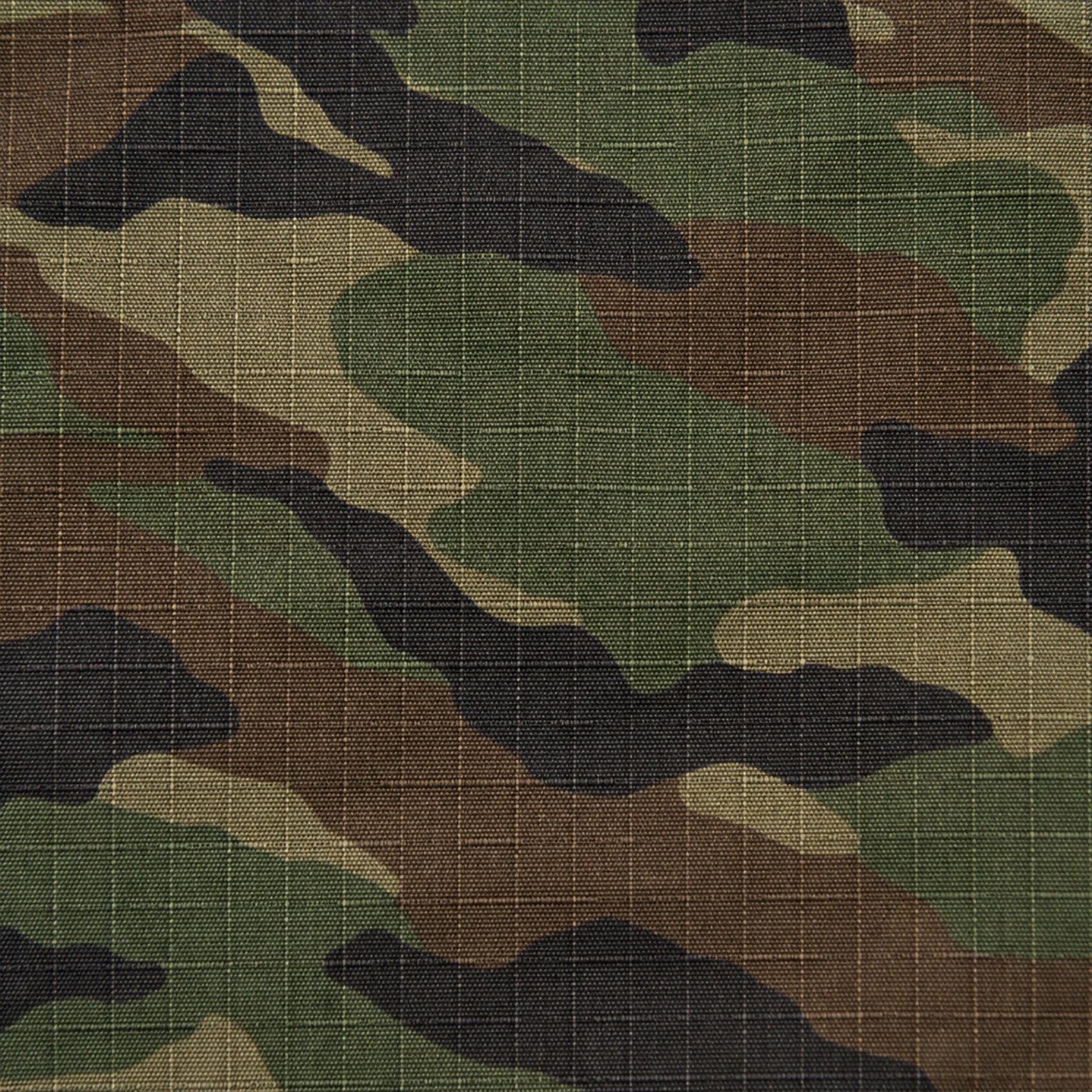 Woodland
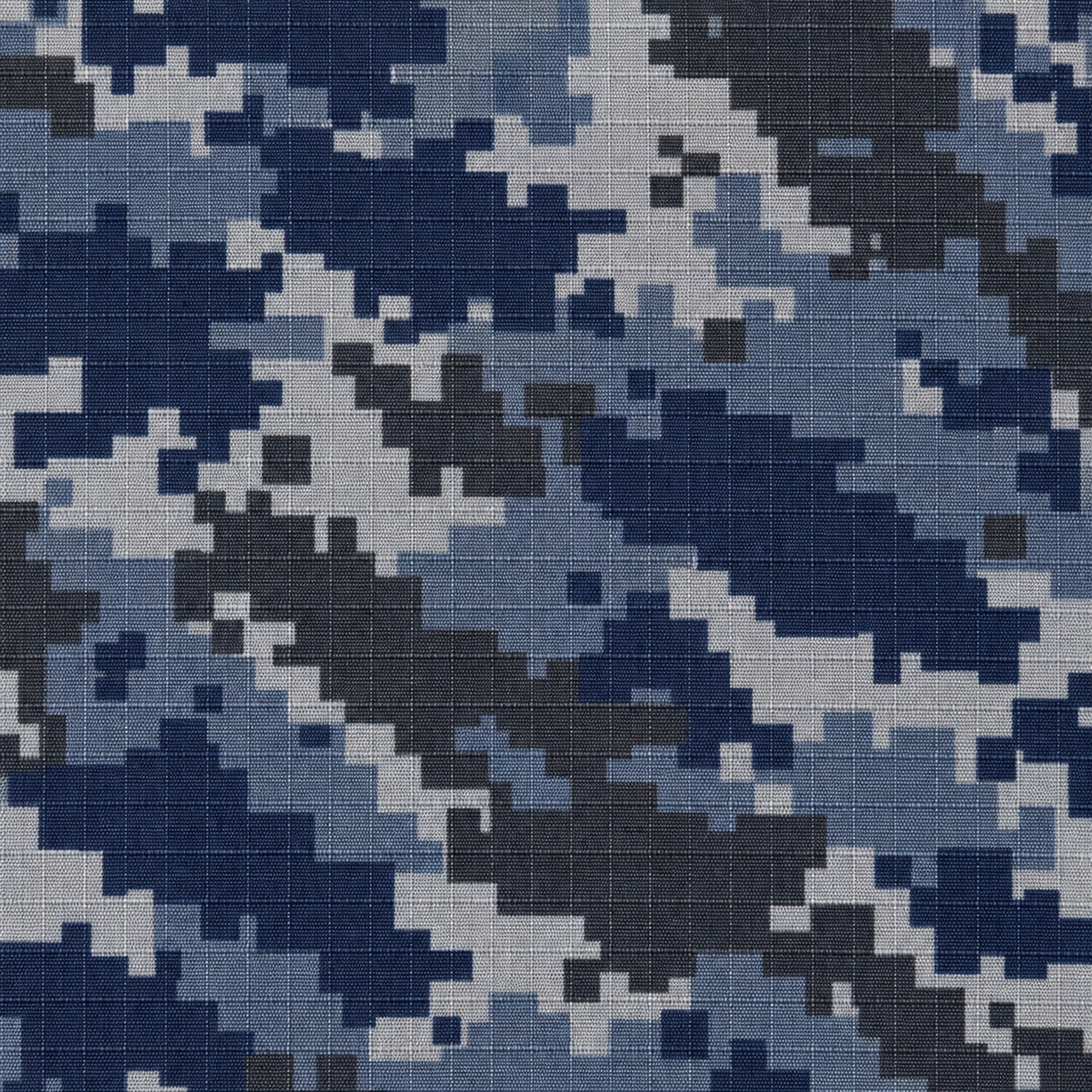 Blue
Blue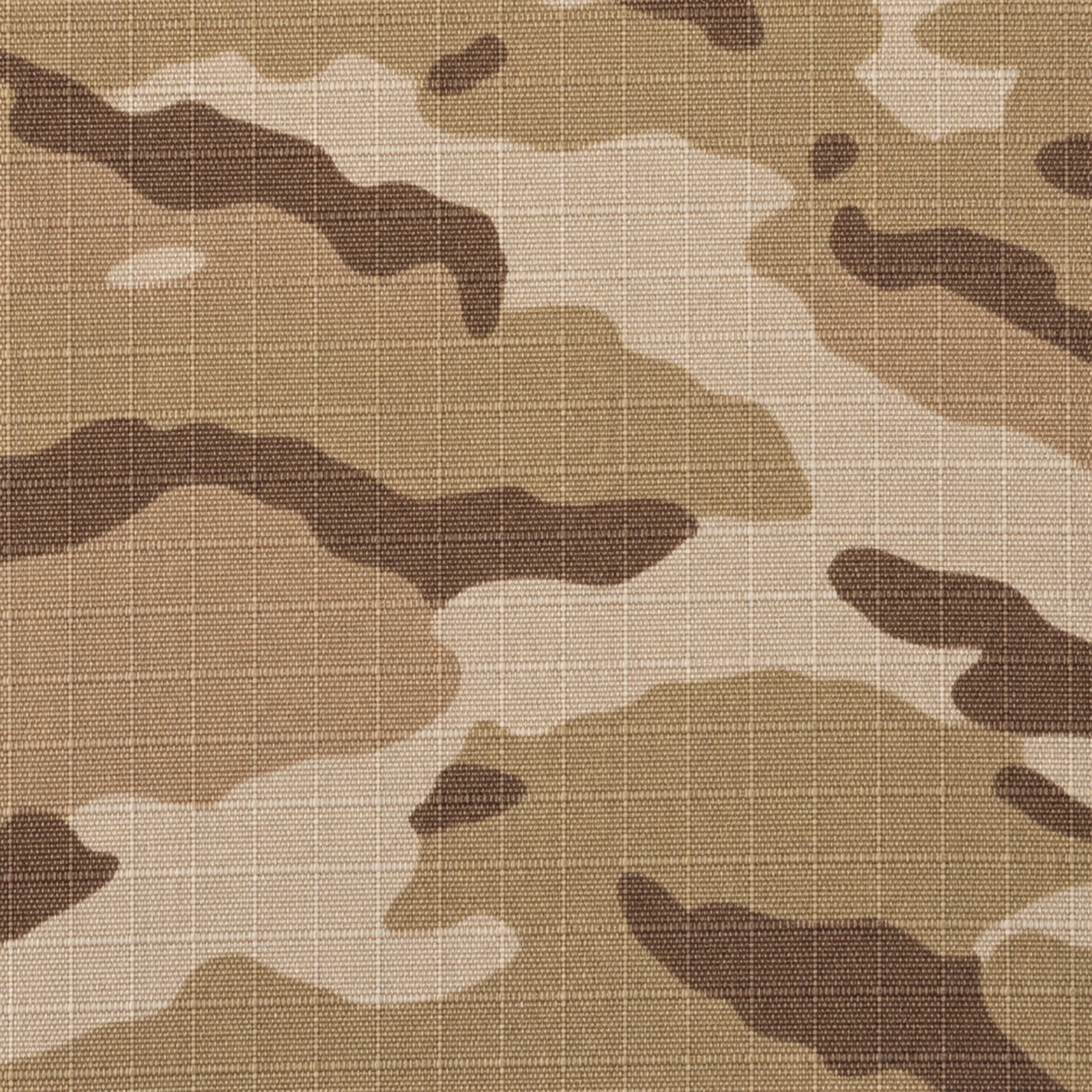 Desert
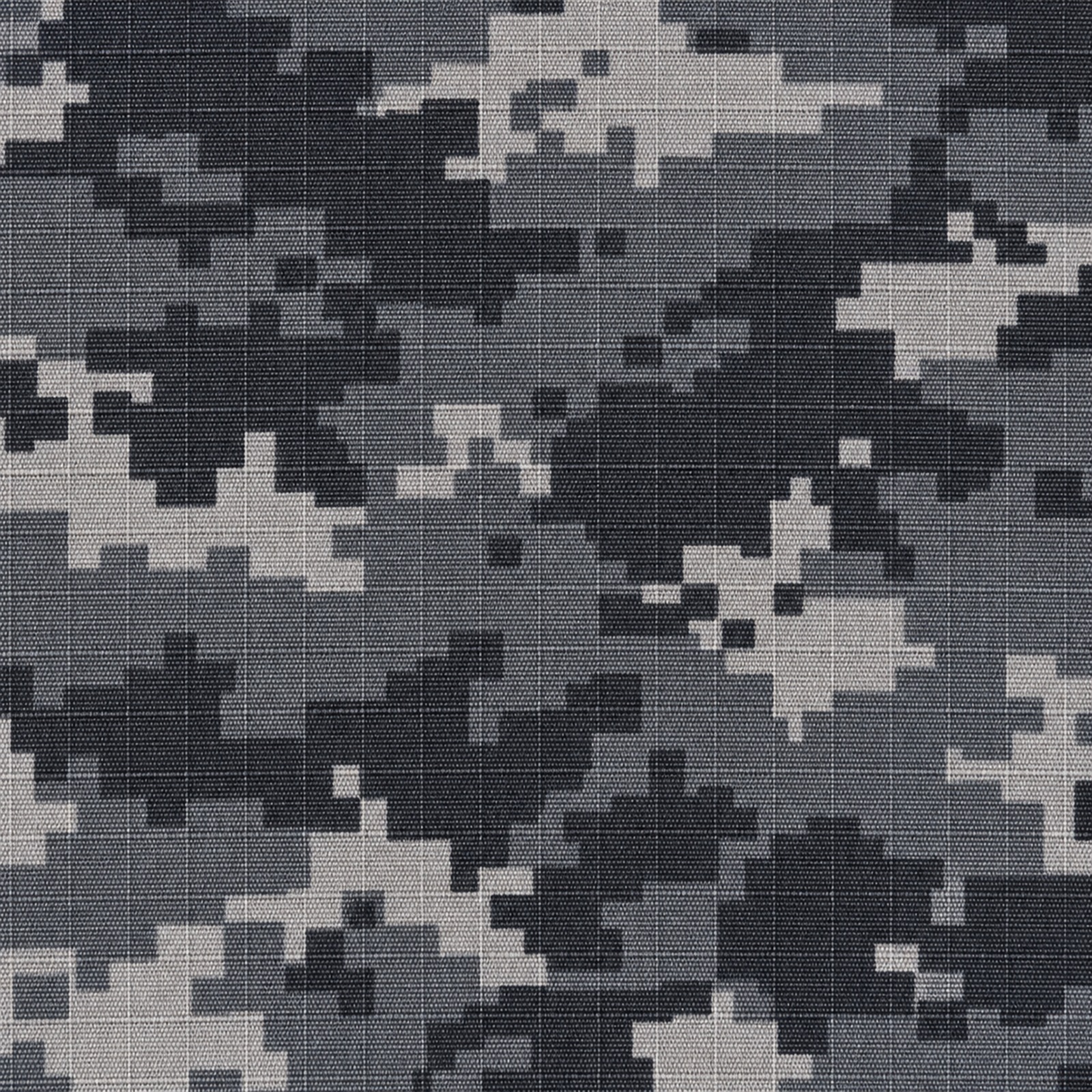 Urban Grey
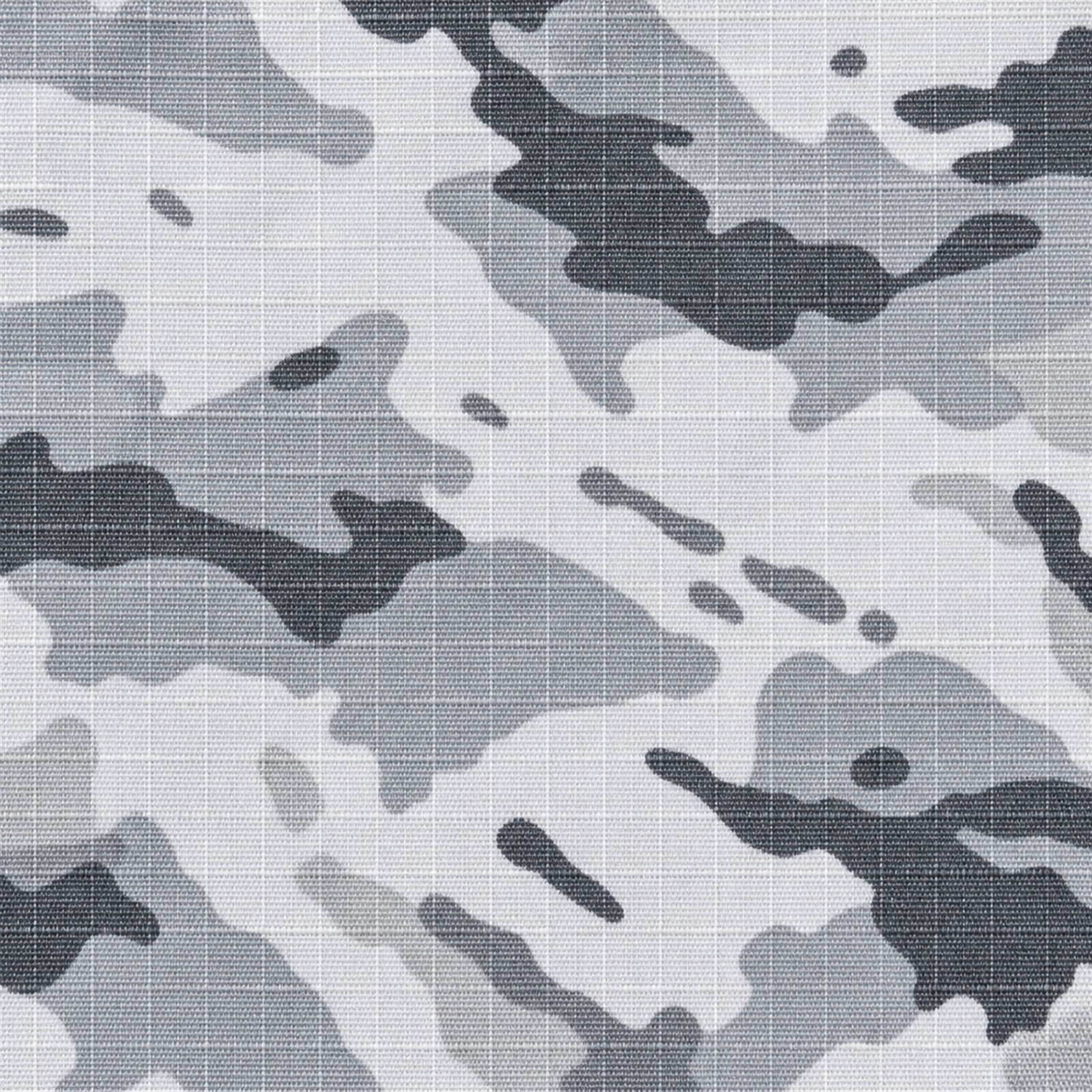 Snow
Snow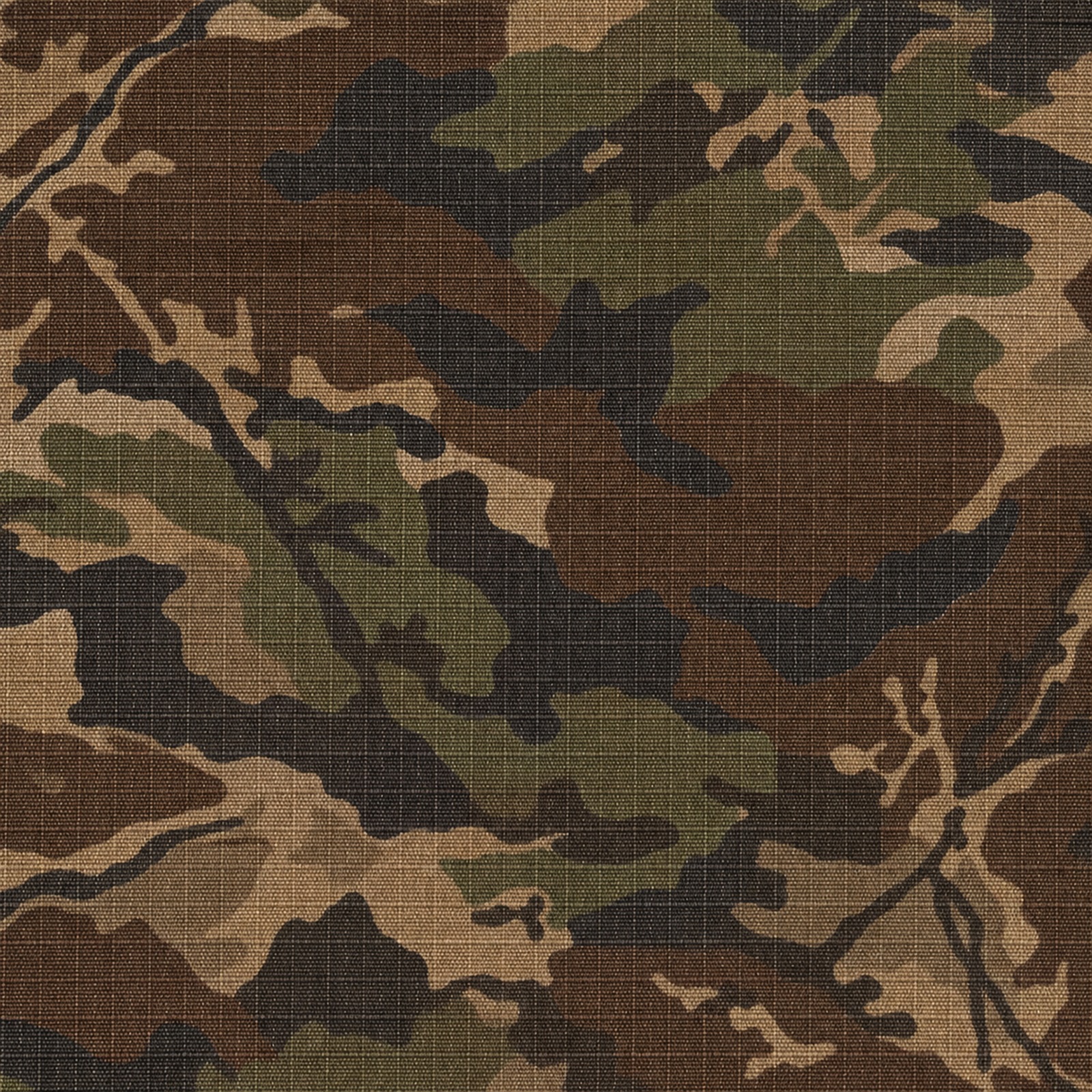 Coyote
Section 12
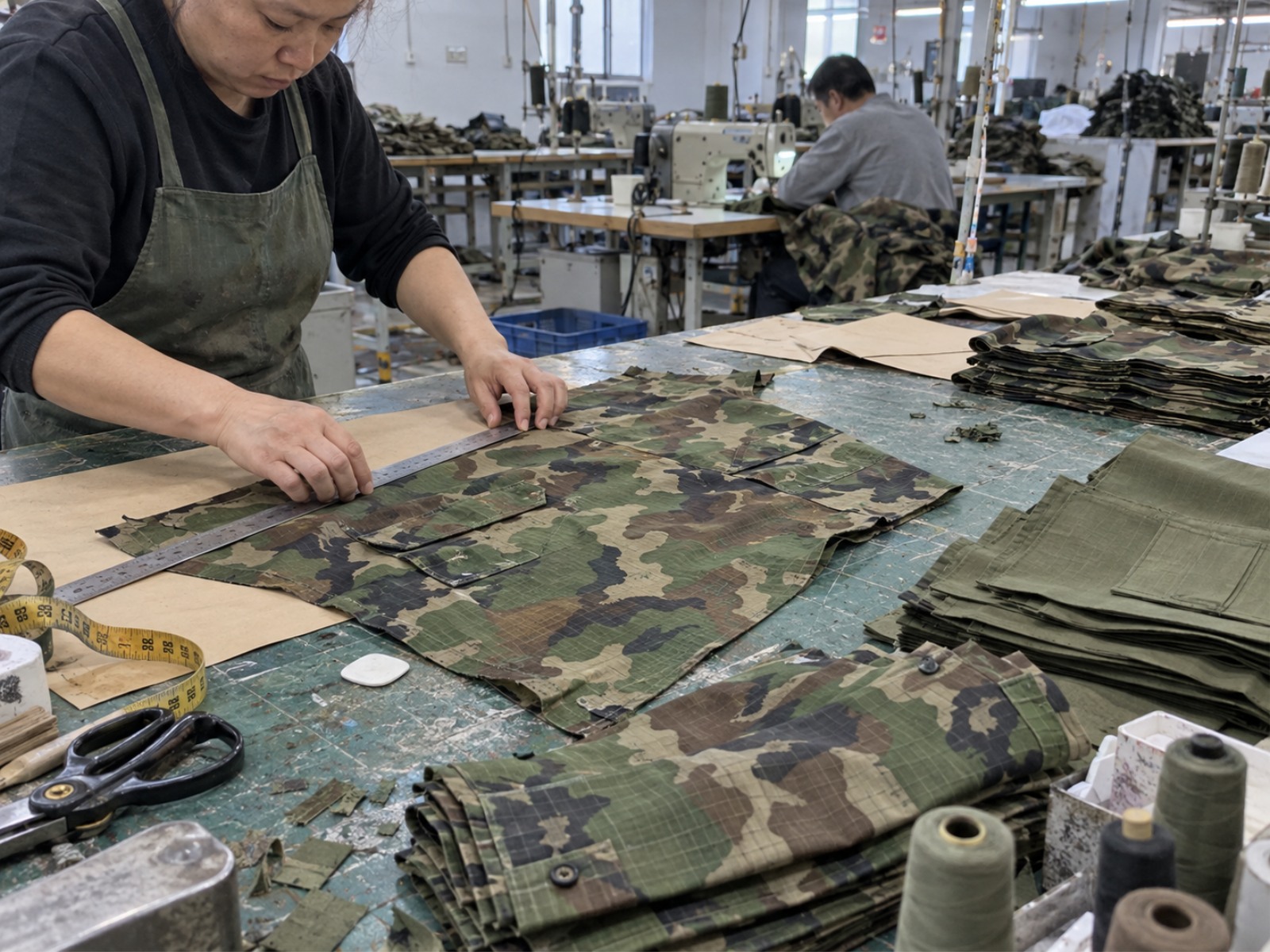
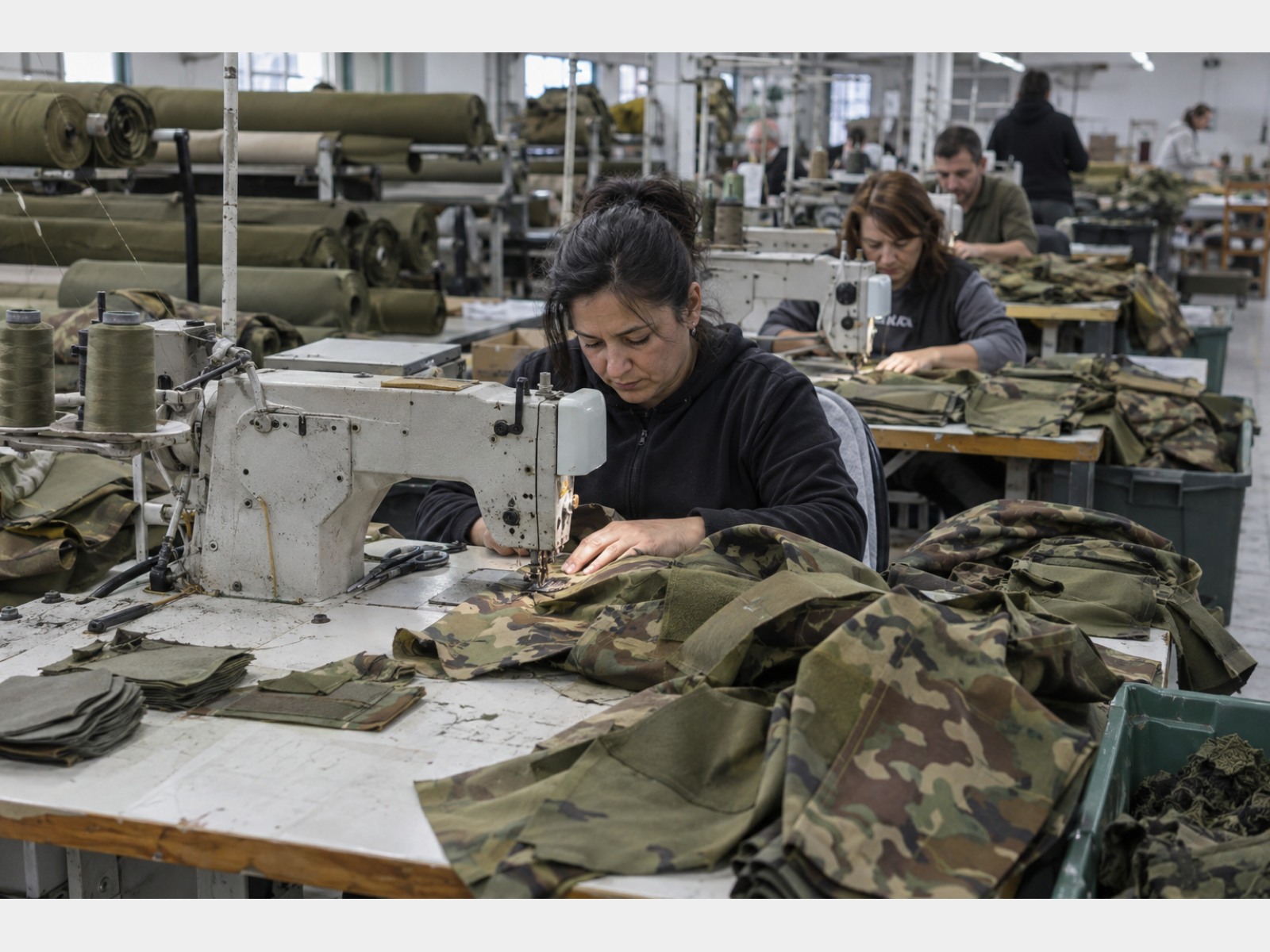
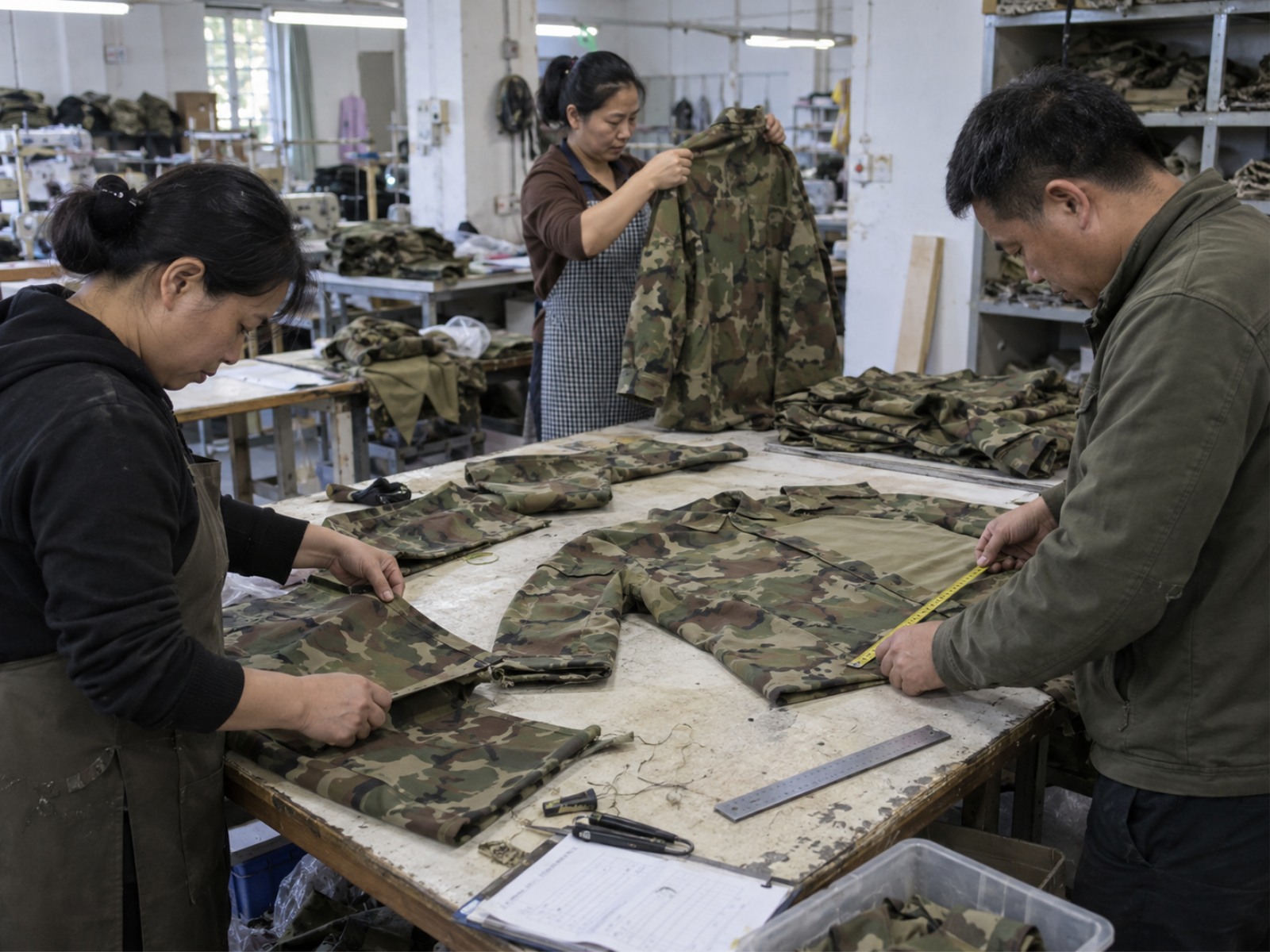
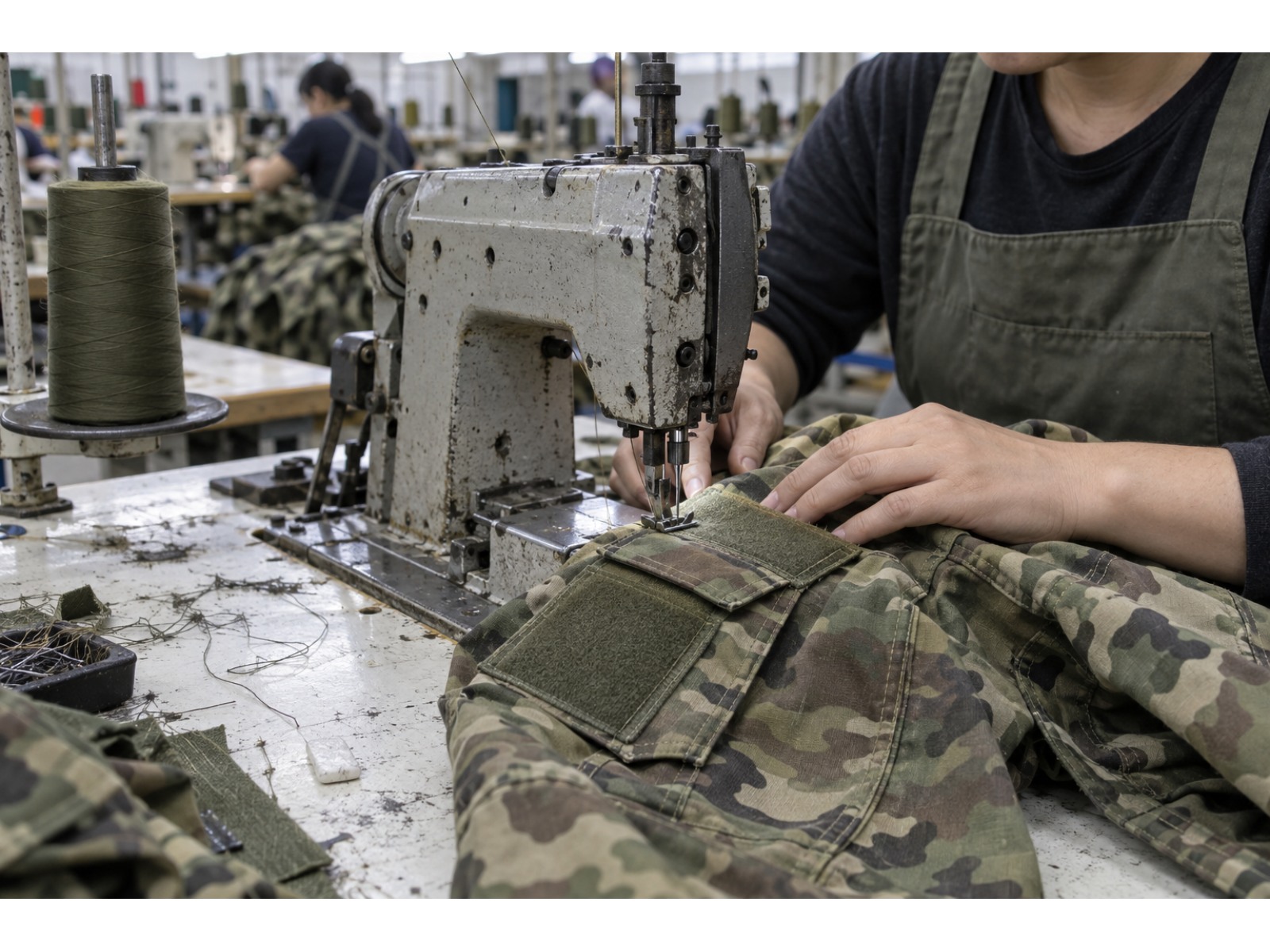
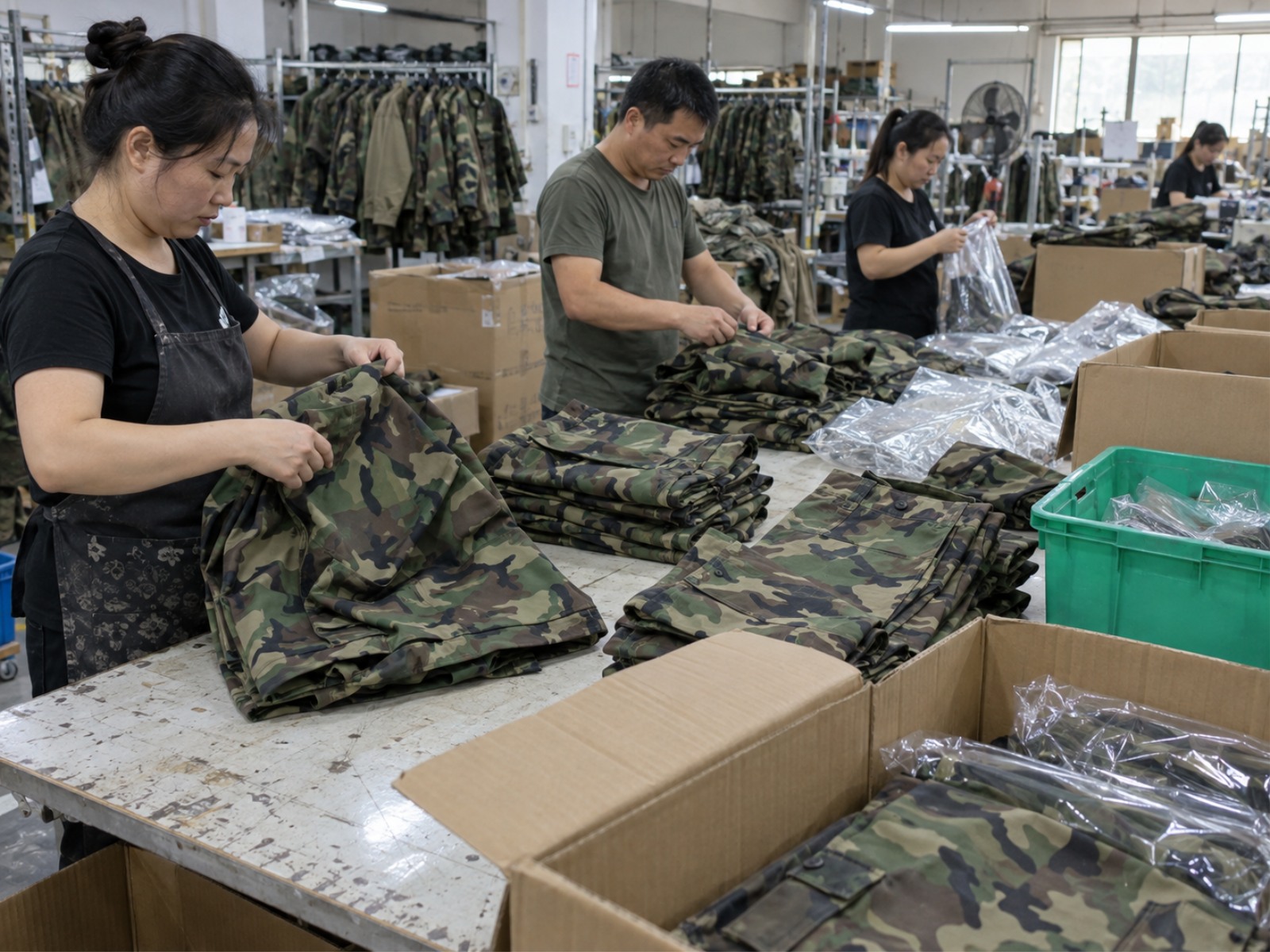
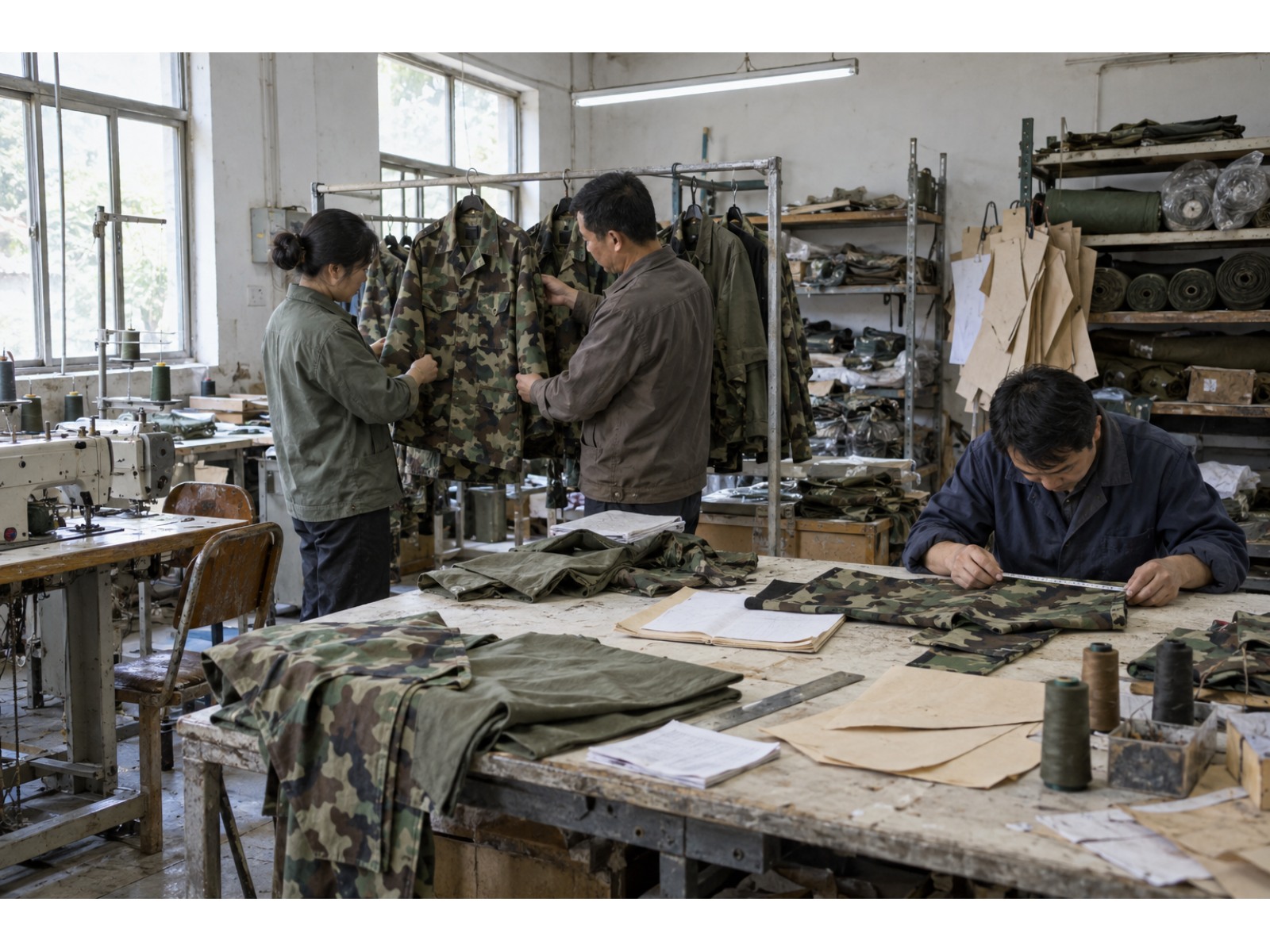
A buyer cannot audit a factory from a website, but they can see whether the plant photographs look like a real production floor or a stock image. These slots are reserved for photographs taken on our own lines.
Section 13
A public record of what we test on real material, how the test is structured, and what the limitations are. Pages are published before results exist, and results are added only when the test has actually been run.
Awaiting test data
Abrasion is the failure mode a buyer actually sees in service, and it is the one that determines whether a garment survives a season or a single deployment.
Awaiting test data
Buyers do not issue garments, they issue systems, and a system fails in ways that no single material test can predict.
Awaiting test data
Abrasion is where a cold weather garment stops being a cold weather garment.
Awaiting test data
A layer that dries slowly is treated as a single garment problem, and it is a programme problem.
Awaiting test data
A cold weather garment is rejected for restriction more often than for cold.
Awaiting test data
Colour is the specification a buyer's end user notices first and forgives last.
Section 14
Technical and procurement writing for buyers: how materials behave, where garments fail, how to specify production and how to keep it repeatable. Each article links to the category, product, material, application and capability it relates to.
manufacturing
Knee reinforcement is not a patch sewn onto a leg. It is a system of panel shape, articulation, pad retention and stitch pattern, and the choices interact. This is how the construction actually works and where it goes wrong.
climate applications
Buyers often try to solve hot-weather comfort by choosing a fabric weight in isolation. Weight is a proxy for other properties, and two fabrics at the same weight can behave completely differently. This is how to reach a weight decision you can defend.
quality control
Colour drift is rarely someone deciding to change the colour. It is what happens when no retained physical standard, no agreed assessment method and no lot-level approval process exist. This is how to build those three controls.
Section 15
Tactical brands, outdoor and hunting brands, uniform distributors and wholesalers, security companies, government contractors, procurement companies, importers and private label brands. The common requirement is a garment that has to be produced to a specification and then reproduced consistently, not a one-off purchase.
Yes. Development can start from a reference sample, a photo, a sketch, a tech pack or a product the buyer already sells. We review the input and return a written list of the specification gaps that need to be decided before a pattern is cut, rather than filling those gaps with assumptions.
Yes. Camouflage can be produced to buyer artwork with a print standard approved before bulk, and private label covers main label, size label, care label, country of origin label and packaging, including woven labels, patches, embroidery and printed packaging.
MOQ depends on the fabric, the construction and the number of colourways, so it is confirmed against your specific specification rather than published as a single number. Send the product type, the target quantity and the colourways and we will state the MOQ that applies.
Sampling time depends on whether materials have to be developed or matched and how many revision rounds are needed. Bulk time depends on the size set, the number of colourways and the finishing required. Both are stated against your actual specification rather than as a general figure, because a general figure is the most common cause of a missed delivery date.
By making consistency a documented process rather than a promise. The approved pre-production sample is retained as the production standard, incoming fabric is inspected against the agreed fabric standard before it enters production, and measurement tolerances are agreed in writing before bulk so inline and final inspection measure against the same numbers.
We review these enquiries individually. If the end user is a government agency, law enforcement body or defence organisation, we ask for the end user, the end use, the destination country and the product specification so the enquiry can be reviewed properly before any commitment. We do not automatically decline these enquiries.
Product type, target quantity, torso and sleeve material preference, colour or camouflage direction, required features, size range, labelling and packaging requirements, target market and climate. A reference sample, photo or tech pack helps most. Where a figure such as MOQ or lead time has not been confirmed with you, we state that explicitly rather than quote a number we cannot hold.
Send us your tech pack, reference sample or product idea. We review your requirement, recommend materials and construction, and come back with a development plan you can act on.