Skip to content
TACTICALOEM / ODM TACTICAL APPAREL
ENEnglish

Products / Tactical Softshell Jackets

Custom Tactical Softshell Jacket Manufacturer

A softshell jacket sits between fleece and a hard shell, and that position explains both why buyers like it and why it is easy to get wrong. Softshell fabric is built to block wind and resist light moisture while staying quiet and flexible enough for movement, so it works in conditions where a fully waterproof shell would be too noisy, too stiff or simply unnecessary. The cost of that balance is real: softshell is not a rain jacket, and any attempt to push its water resistance upward tends to reduce breathability and softness. What decides whether a softshell program succeeds is usually less about the fabric name and more about the details around it, including how the shell handles stretch recovery, how the storm flap sits over the zip, whether the hood can be adjusted one-handed, and how the sleeve pattern allows reach without pulling across the chest. This page covers those decisions, plus lining options, reinforcement placement, colour control, size set development, private label, sampling and bulk production.

custom tactical softshell jacketssoftshell jacket OEMwholesale tactical softshell jacketssoftshell jacket supplier
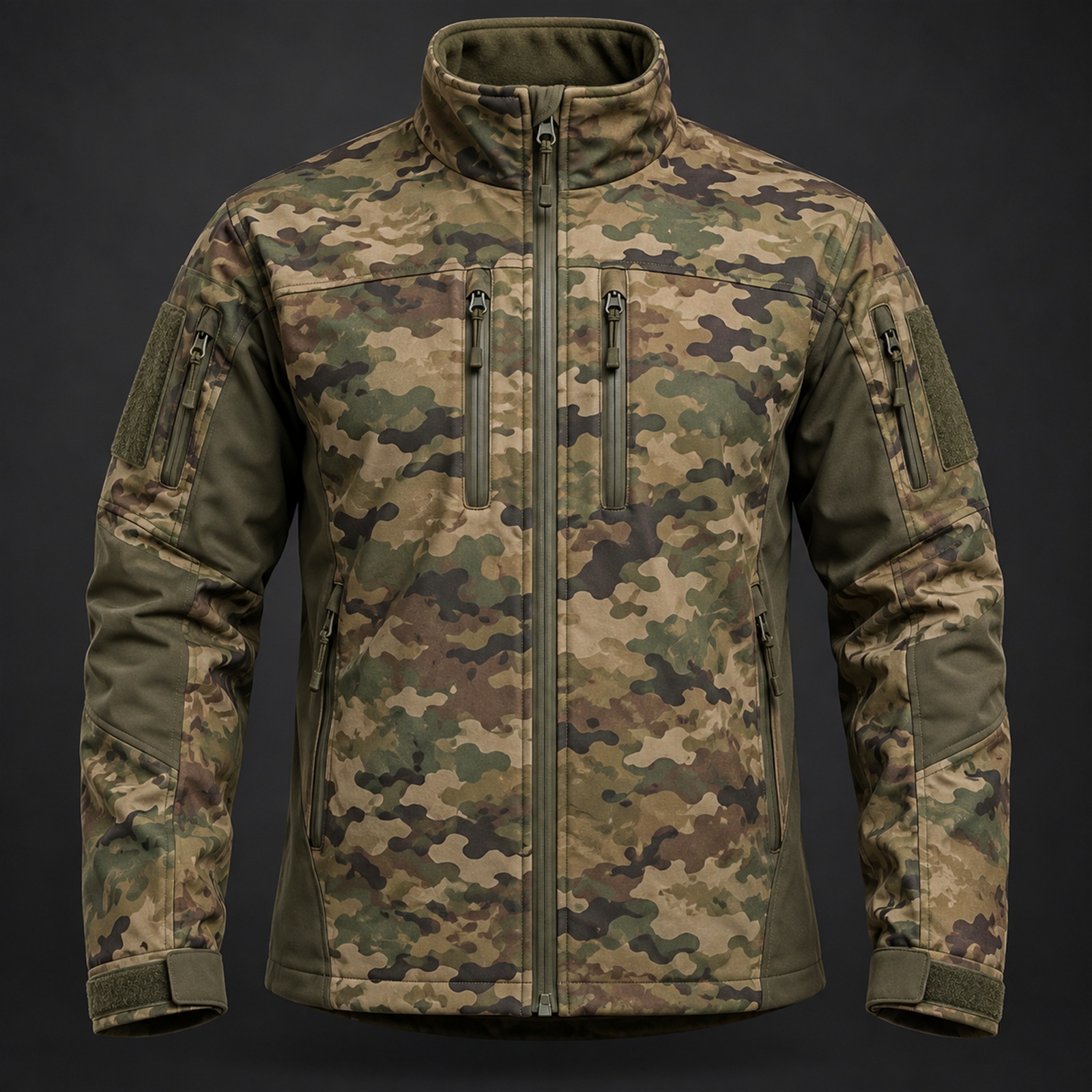
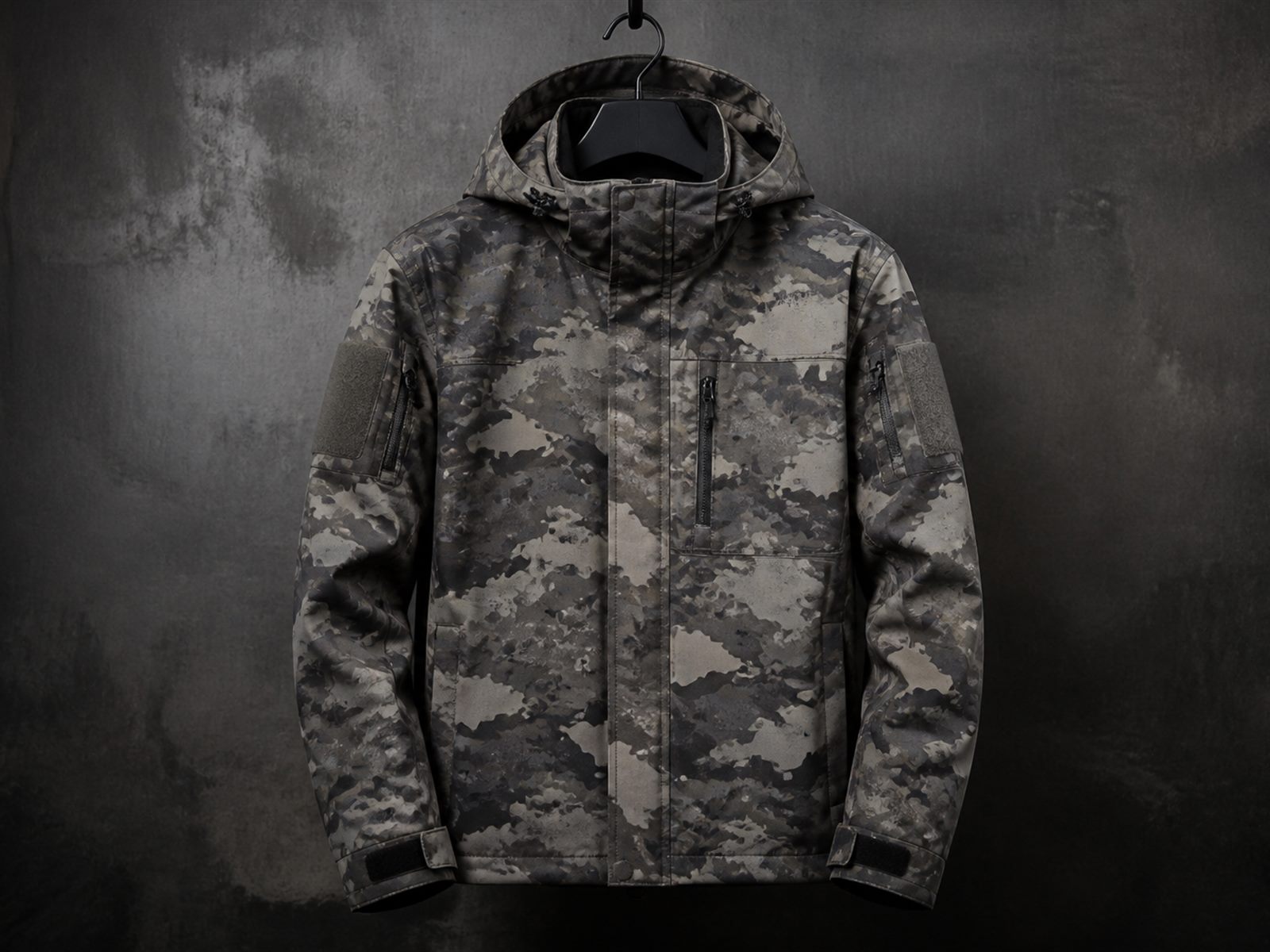
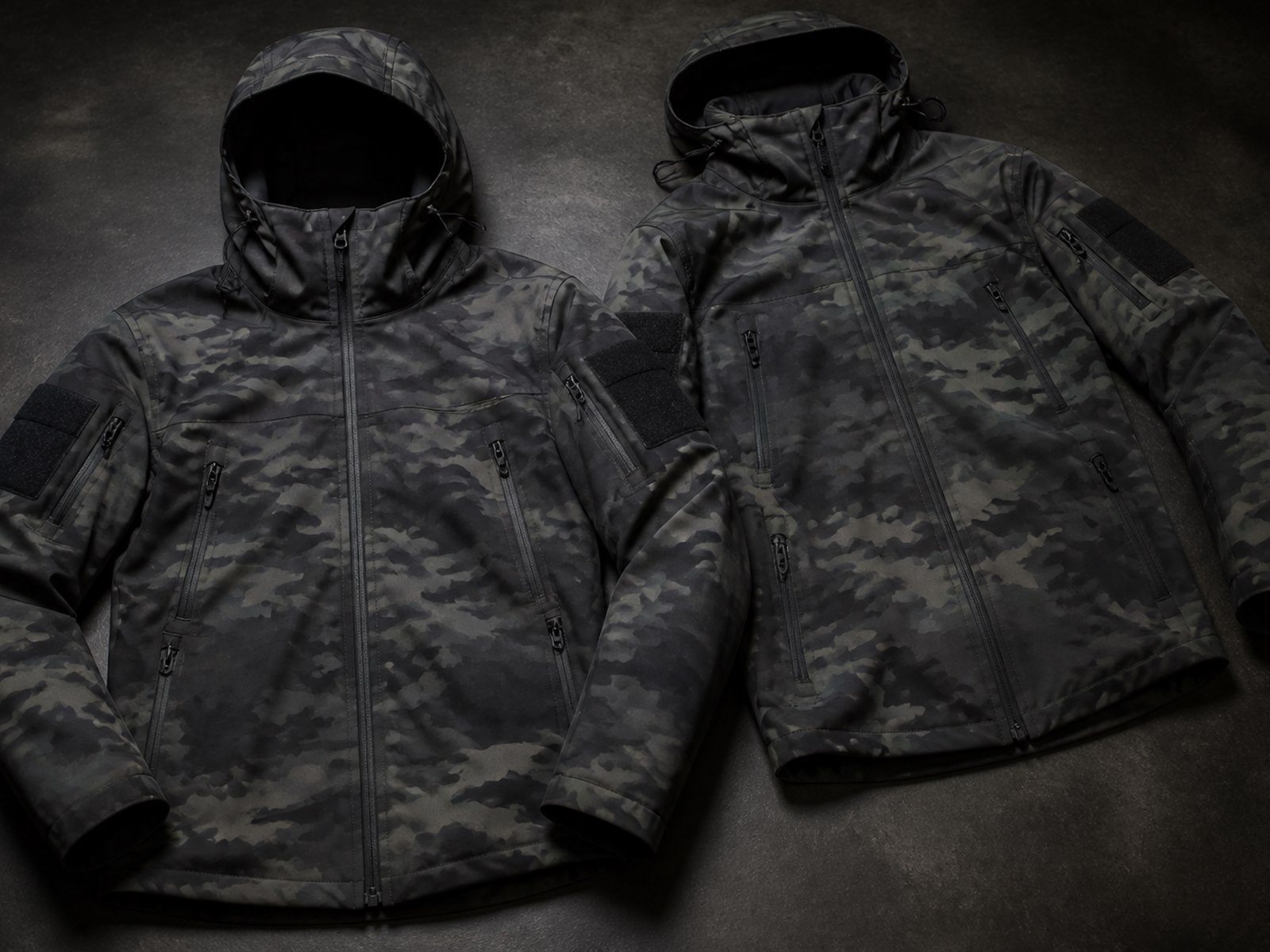
Custom tactical softshell jacket with wind resistant stretch fabric and adjustable hood for OEM buyers
Primary keyword
tactical softshell jacket manufacturer
Climate focus
Temperate / Windy / Variable · Cold / Dry Cold / Winter Duty · Temperate / Active Use / Mountain
Development input
Tech pack · Reference sample · Sketch · Photo
Tactical Softshell JacketsTactical Softshell JacketsTactical Softshell JacketsTactical Softshell Jackets

Buyers

Who buys tactical softshell jackets?

Tactical Softshell Jackets is specified by organisations rather than bought as a single garment, so a quotation has to satisfy all 6 buyer profiles listed below.

Tactical Brands

A softshell pattern with proven mobility and a hardware set that can be repeated order after order without the fit or the fabric hand changing.

Outdoor & Hunting Brands

Quiet shell surfaces, subdued camouflage prints and a build that stays flexible when the wearer is moving through dense vegetation.

Uniform Distributors & Wholesalers

A stable size set and a written specification so that repeat orders can be sold against the same size chart and colour standard.

Security & Facility Management Companies

A clean, uniform-looking outer layer with discreet insignia placement and colour consistency across a staff roll-out.

Procurement Companies & Importers

Documented material specifications, approved pre-production samples and inspection records available before shipment.

Private Label Brands

Softshell fabrics selected for their own price and climate positioning, with buyer labels, hangtags and packaging.

Types

Tactical Softshell Jackets types

The same category name covers very different garments depending on climate and wear pattern. 3 types of Tactical Softshell Jackets are covered here, and the type is chosen before the fabric.

Temperate / Windy / Variable

Lightweight Wind-Resistant Softshell Jacket

This is the most common softshell build: a single shell layer with a light backing, designed to cut wind without adding meaningful warmth. It layers easily under a heavier jacket or over a base layer, and it dries relatively quickly. The limitation is that it offers little insulation on its own, so it only works as a standalone outer layer in mild conditions.

  • Single-layer wind-resistant shell
  • Light mesh or taffeta backing
  • Adjustable hood and cuff
  • Flat pockets for layering
  • Articulated sleeve for reach

Cold / Dry Cold / Winter Duty

Insulated Softshell Jacket

Adding insulation turns the softshell into a cold weather outer layer, which is what many field and duty buyers actually want. Warmth increases, but so do bulk, drying time and cost, and breathability drops because the lining now blocks the escape route for moisture. Ventilation becomes a necessity rather than an option once insulation is added.

  • Insulated body and sleeves
  • Wind-blocking outer shell
  • Vent zips or vented panels
  • Fleece-lined collar and pockets
  • Reinforced shoulder and hem

Temperate / Active Use / Mountain

Stretch Softshell Jacket for High Mobility

Stretch softshell is selected where the wearer climbs, reaches, kneels or works with a weapon and needs the fabric to follow the shoulder and elbow without restriction. The gain is comfort and freedom of movement. The cost is that stretch fabrics vary in recovery, and a shell that relaxes after wear will lose its shape and its clean appearance long before the seams fail.

  • Mechanical stretch woven shell
  • Articulated sleeve and elbow shape
  • Low-bulk seams at movement points
  • Adjustable cuff and hem
  • Slimmer pattern for layering accuracy

Engineering

Construction, part by part

8 construction decisions define Tactical Softshell Jackets, and each row below is one decision you control at specification stage.

Hood

  • Fixed hood
  • Detachable hood
  • Roll-away hood
  • Helmet-compatible hood
  • No hood (collar-only builds)

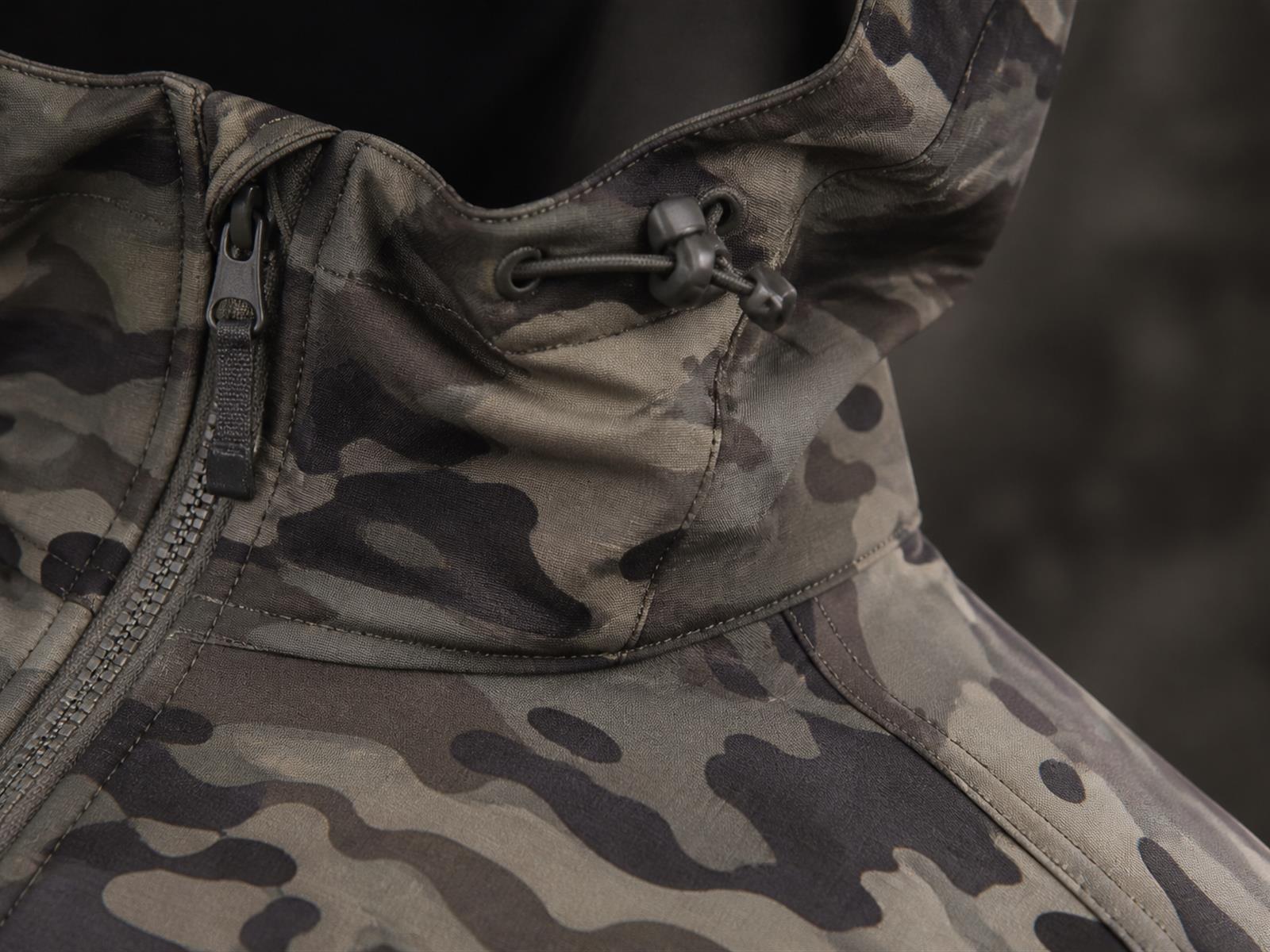
Softshell hoods must be cut to sit flat when not in use, otherwise the extra fabric at the neck reads as bulk on a fitted garment. Rear volume adjustment and one-handed front adjustment should be agreed, because glove use is the normal condition for this category.

Collar

  • Stand collar with chin guard
  • Fleece-lined stand collar
  • Zip-through collar
  • Low-profile collar for layering

A fleece-lined collar is comfortable against the neck but holds moisture and slows drying. Where the jacket is worn over a baselayer or under a pack strap, collar height should be checked for chafing rather than chosen from a drawing.

Front Zip & Storm Flap

  • Centre zip with internal storm flap
  • Centre zip with external storm flap
  • Two-way zip
  • Zip with chin guard
  • Snap-over placket

Softshell is wind-resistant rather than waterproof, so the flap mainly manages wind and light rain. A stiff flap reads as protective but can ripple along the front; a soft flap drapes cleanly but needs a firm zip tape behind it.

Shoulder

  • Plain shoulder seam
  • Reinforced shoulder panel
  • Hook and loop insignia panel
  • Anti-slip shoulder overlay
  • Raglan shoulder

Shoulders take the load from packs and slings. Reinforcement and anti-slip overlays extend service life but reduce the softness that buyers choose softshell for, so placement should be limited to the contact zone.

Sleeve

  • Straight sleeve
  • Articulated sleeve with elbow dart
  • Raglan sleeve
  • Set-in sleeve
  • Reinforced forearm

Articulation is the main reason a softshell feels better than a stiff shell. Without it, reaching forward pulls the hem up and drags the cuff off the wrist, which is the fit complaint buyers hear most often from end users.

Cuff

  • Hook and loop adjustable cuff
  • Elasticated cuff
  • Plain hemmed cuff
  • Inner storm cuff
  • Extended cuff with thumb loop

Adjustable cuffs suit gloves and variable layers; elasticated cuffs suit a cleaner, faster-fitting garment. Inner storm cuffs add wind protection at the wrist but slow drying and can feel tight over a baselayer sleeve.

Pockets

  • Zippered chest pocket
  • Hand warmer pockets
  • Internal security pocket
  • Sleeve pocket with zip
  • Napoleon-style chest pocket

Softshell seams show through if pockets are placed on tight curves. Pocket placement must be checked against the intended equipment, because a pocket hidden behind a belt or sling is wasted cost.

Hem & Drawcord

  • Elasticated hem
  • Internal drawcord with toggles
  • Straight hem with hook and loop tabs
  • Extended back hem
  • Bonded or laser-cut hem

Because softshell sits close to the body, hem adjustment changes the silhouette noticeably. Internal cord routing avoids snagging on equipment, while a simple elasticated hem is cheaper and more predictable to produce.

Available fabrics

Material options by garment area

Shell

SoftshellWind resistant fabricWater resistant fabricMechanical stretch fabricStretch ripstopFleece-backed bonded shell

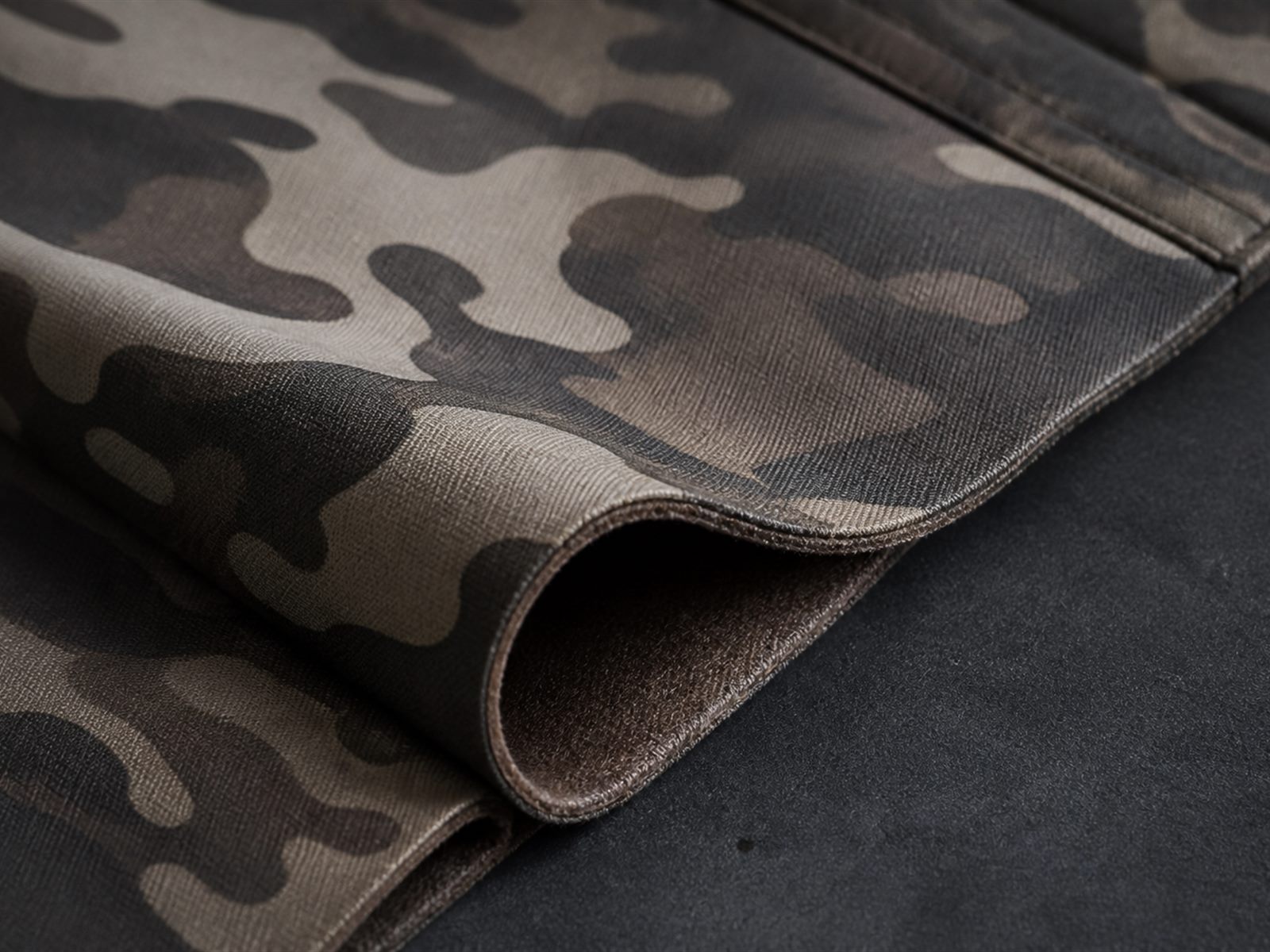
Softshell performance is a balance of wind resistance, breathability, stretch recovery and quietness. Pushing water resistance upward usually reduces breathability and softness, so the shell should be chosen against the real weather window, not against the worst case.

Lining & Backing

Mesh liningTaffeta liningFleece backingBrushed knit backingGrid fleece backingUnlined bonded construction

Backing choice decides warmth, drying speed and how easily the jacket slides over a mid-layer. Grid and brushed backings add warmth with limited weight but hold more moisture than a smooth taffeta.

Reinforcement

Abrasion-resistant woven overlayRipstop elbow and forearm panelsAnti-slip shoulder overlayHem and cuff edge bindingNone for lightweight builds

Softshell abrades at the forearm, shoulder and hem edge first. Reinforcement in those zones extends service life but stiffens the garment, so it should be agreed as a defined spec rather than added broadly.

Customization

What can be customized

15 specification lines are available for Tactical Softshell Jackets, and where an option changes cost, weight or durability the consequence is stated next to it.

Fabric

Softshell familyStretch optionsBacking and lining optionsBuyer-specified composition

Color

Solid colourwaysBuyer Pantone targetsBuyer lab dip approval

Camouflage Pattern

Buyer artworkWoodland styleDesert styleDigital styleCustom seasonal pattern

Hood

FixedDetachableRoll-awayHelmet-compatibleNone

Collar

StandFleece-linedZip-throughLow-profile

Closure

Centre zipZip with storm flapTwo-way zipSnap-over placket

Zipper

Buyer-specified brand or tape widthWater-resistant zipStandard coil zipGlove-friendly puller

Cuff

Hook and loopElasticatedInner storm cuffThumb loop

Pocket

ChestHand warmerSleeveInternal securityNapoleon chest

Ventilation

Pit zipsBack ventMesh-lined vent panelsNone

Insulation

UninsulatedLight insulationFull insulationRemovable liner

Reinforcement

Shoulder panelsForearm panelsHem edgesStress point bartacks

Logo

Woven labelPrinted labelRubber patchEmbroideryHeat transfer

Label

Main labelSize labelCare labelCountry of origin label

Packaging

Poly bagPrinted poly bagHangtagHeader cardCustom box

Sizing

Size development

Softshell is a close-fitting category, so size development has less tolerance for error than a loose outer shell. Before a size set is built we need the buyer's target size range, the measurements of a reference garment they are happy with, and a statement of what will be worn underneath. A size set is then produced and checked across the range for chest, shoulder width, sleeve length, back length, hem opening and cuff opening. Stretch fabrics add one more variable: the same pattern behaves differently depending on how the fabric recovers after wear, so fit is assessed on worn samples rather than on flat measurements alone. Tolerances are agreed in writing before bulk so that inline and final inspection measure the same numbers the buyer approved.

How size development works

Branding

Private label

Private label in this category usually carries more brand weight than in a workwear range, because softshell jackets are sold as a signature outer layer. Main, size, care and country of origin labels are produced to the buyer's artwork and content requirements. Branding can be applied as woven label, printed label, rubber patch, embroidery or heat transfer, and trims such as zip pullers, cord ends and hardware tone can be coordinated with the brand palette. Packaging can range from a plain poly bag to a printed poly bag with hangtag, header card and custom box. Every piece of artwork is confirmed on the pre-production sample so nothing is left to interpretation at bulk stage.

Customization capability

Development

Sampling process

Sampling for Tactical Softshell Jackets runs in 8 stages, each one removing a specific risk before the next stage commits cost.

01

Requirement review

We review the buyer's tech pack, reference photo, sketch or physical sample and list every open specification before any material is cut.

02

Climate and activity definition

The weather window and activity level are written down first, because they determine shell weight, backing and whether ventilation is required.

03

Material selection

Shell, backing and reinforcement fabrics are proposed against the intended use, with alternatives where a specification is not yet fixed.

04

Pattern development

The pattern is developed or adapted to the buyer's reference, including sleeve articulation, hood volume and the seam layout that keeps stretch panels working in the right direction.

05

Prototype

A first sample is produced in the proposed materials so the buyer can assess fit, stretch behaviour, material hand and hardware function.

06

Wear assessment

Where stretch or articulation is central to the design, the prototype is assessed through movement as well as on the table, since restriction shows up most clearly in the reach.

07

Revision and size set

Buyer comments are consolidated into one revision round, and the full size range is then produced for measurement confirmation across all sizes.

08

Pre-production sample

The approved construction, materials, hardware and labelling are locked in a pre-production sample that becomes the bulk standard.

Production

Bulk manufacturing

Bulk production of Tactical Softshell Jackets runs in 8 stages, which is where an approved specification is either held or lost.

01

Fabric and trim approval

Bulk shell fabric, backing, zips, cord, hook and loop, thread and labels are approved against the pre-production standard before cutting.

02

Shade and lot verification

Shell fabric lots are checked against the approved colour or print standard before cutting, because adjacent garments from different lots are easy to spot at retail.

03

Bulk cutting

Cutting is done against the approved pattern with markers controlled for shade and for stretch direction, so every garment stretches in the intended direction.

04

Panel preparation

Reinforcement panels, pocket bags, hood sections and linings are prepared and checked before assembly rather than during it.

05

Assembly

Line assembly follows the approved construction sequence with bartacks and reinforcement at the stress points defined in the specification.

06

Inline quality control

Garments are inspected during assembly so a fault is corrected on the line instead of appearing in the packed order.

07

Finishing and hardware check

Thread trimming, function testing of every zip, cord and adjuster, and pressing are completed before final inspection.

08

Final inspection and packing

Measurement, construction and packing inspection are completed against the agreed standard and documented for the buyer.

Quality Control

Quality control for this category

Inspection of Tactical Softshell Jackets is measured against an agreed standard, and the 7 checks below are listed with what each one is measured against.

01

Incoming fabric inspection

Fabric is checked on receipt for shade, width, weight, print alignment, stretch behaviour and defects before it enters production.

02

Accessory inspection

Zips, cord, toggles, hook and loop and labels are checked for function and colour against the approved standard.

03

Pre-production approval

The pre-production sample is approved by the buyer and becomes the reference standard for bulk.

04

Inline inspection

Work in progress is inspected at defined points, including closure assembly, hood attachment, reinforcement placement and lining insertion.

05

Measurement inspection

Critical measurements are measured against the approved size set with the tolerances agreed in writing.

06

Construction, symmetry and function inspection

Stitching, seam integrity, reinforcement, closure function and left-right symmetry are checked against the approved sample.

07

Final and packing inspection

Finished goods are inspected before packing, and labels, folding, bagging and carton marking are checked against the packing instruction.

Choosing a Tactical Softshell Jackets manufacturer

How to choose a tactical softshell jackets manufacturer

The 6 questions buyers ask about Tactical Softshell Jackets before committing to a first order.

Accept that softshell is not a rain jacket

Softshell resists wind and light moisture while staying quiet and flexible. It is not designed for sustained rain, and a specification that demands full rain protection from a softshell will end up either disappointed or pushed into a heavier, less breathable fabric. If rain is the primary condition, a separate waterproof shell belongs in the range and should be specified as its own product.

Ask how stretch recovery was verified

Stretch softshell only works if the fabric returns to shape. Ask how the supplier checks recovery, and whether the pattern relies on stretch for fit or simply allows it. A pattern that depends on stretch to fit correctly will produce garments that look tired after washing.

Fit the sample over the real layering combination

Softshell is often worn as a mid-layer or as an outer layer over a base and a mid-layer. Send the actual combination or give its thickness, and ask for the sample to be fitted over it. Close-fitting categories expose layering errors immediately.

Look at how the front flap and hood were resolved

On a softshell the storm flap and the hood are the two places where a good fabric becomes a poor garment. A flap that ripples or a hood that collapses onto the face are pattern and construction problems, not fabric problems. Ask how these were solved, and inspect them on the pre-production sample rather than on a rendering.

Define where reinforcement is and is not allowed

Reinforcement extends the life of the forearm, shoulder and hem edge, but it also stiffens the garment and reduces the softness that buyers choose this category for. Agree the reinforced zones explicitly so that the bulk order matches the sample.

Put the inspection standard in writing before bulk

Measurement tolerances, inspection level and packing instructions should be agreed in advance. A file describing the approved materials and construction should travel with the order, so that a reorder and a first order can be measured against the same standard.

Products

Tactical Softshell Jackets products

Each product in Tactical Softshell Jackets is a developed specification with its own material options, construction detail and customization map.

Tactical Softshell Jackets

Tactical Softshell Jacket

A softshell is a compromise, and buyers who know which compromise they are buying get a better jacket.

Cool to coldWindyVariable / active use
View product

FAQ

Tactical Softshell Jackets FAQ

What is the difference between a softshell jacket and a tactical jacket?

The categories overlap. Softshell describes the fabric system, a woven shell bonded or lined for wind resistance with some stretch and light water repellency. Tactical jacket describes the use and the feature set, which may be built from softshell, from a waterproof shell, or from a ripstop fabric with insulation. Many tactical jackets are softshell jackets, and the right specification depends on the climate the garment will meet.

Can you increase the water resistance of our softshell?

Water resistance can be adjusted through fabric finishing and construction, but it is not free. Raising it typically reduces breathability and softness, and adds the need for sealed or protected seams. If the product genuinely needs rain protection, a waterproof shell construction is the more honest answer than an over-specified softshell.

Which lining should we choose?

Choose from the climate and the activity. A light mesh or taffeta backing keeps the jacket dry and packable and suits temperate ranges. Fleece and brushed backings add warmth and comfort but hold more moisture and dry more slowly, which is a poor match for wet or humid markets. Grid backings sit in between.

Do you offer removable liners?

Yes, a removable insulated liner can be specified, and it makes one garment cover more of the season. It also adds zips, attachment points and cost, and it changes the fit of the outer shell. The attachment system should be agreed early because it affects pattern development.

Can the jacket be made in our camouflage print?

Yes. Buyer artwork can be developed as a print standard and applied to the shell fabric. Continuity across panel seams is a cutting consideration, so state whether the design needs to run continuously across seams or can break at the seam line.

What information do you need to quote a softshell jacket?

Product type, target quantity, shell and backing direction, whether insulation is required, colour or camouflage reference, hood and pocket requirements, size range, labelling and packaging, and the target market and climate. A reference sample, photo or tech pack helps most. Any figure such as MOQ or lead time is confirmed with you rather than assumed.

Request a Manufacturing Assessment

Send us your tech pack, reference sample or product idea. We review your requirement, recommend materials and construction, and come back with a development plan you can act on.