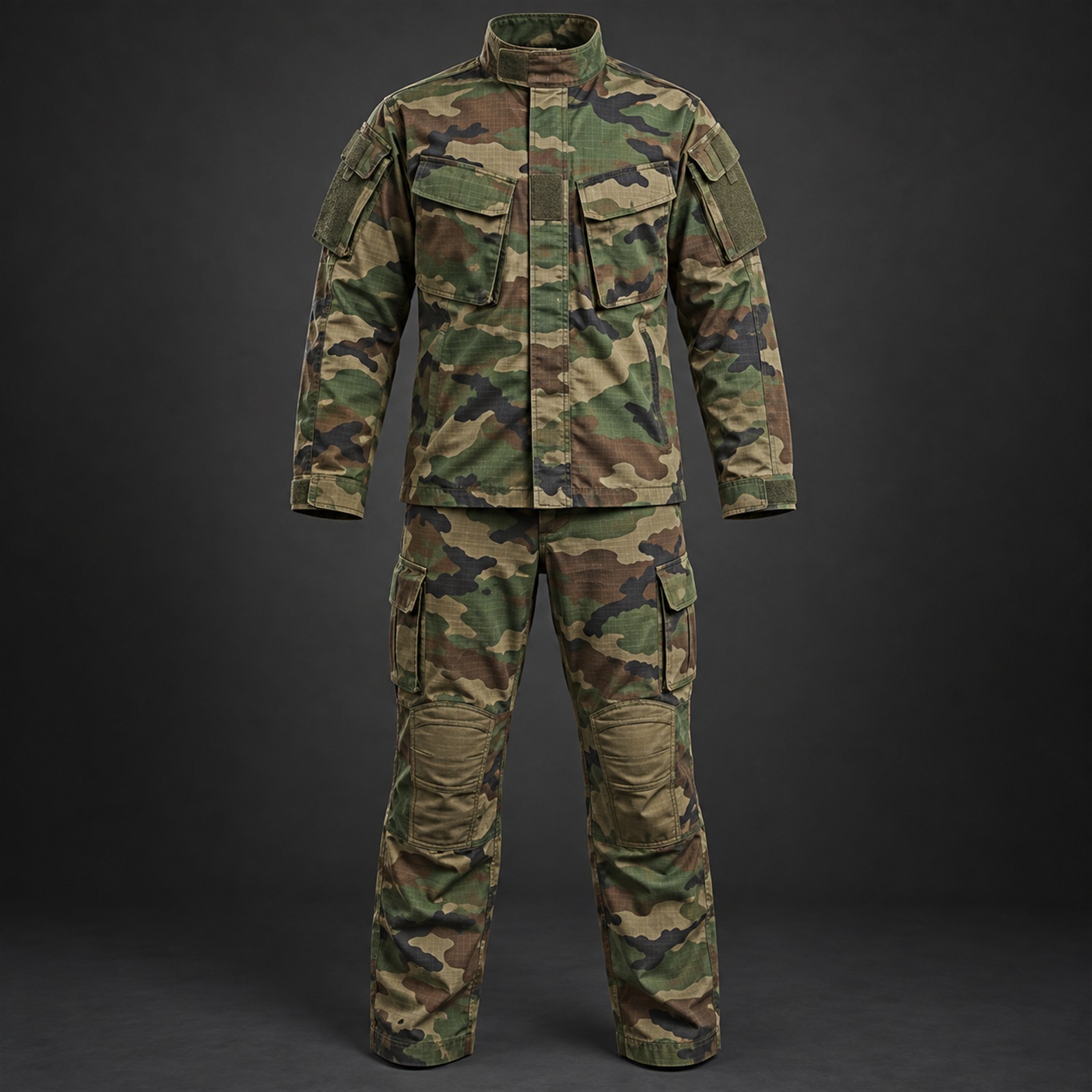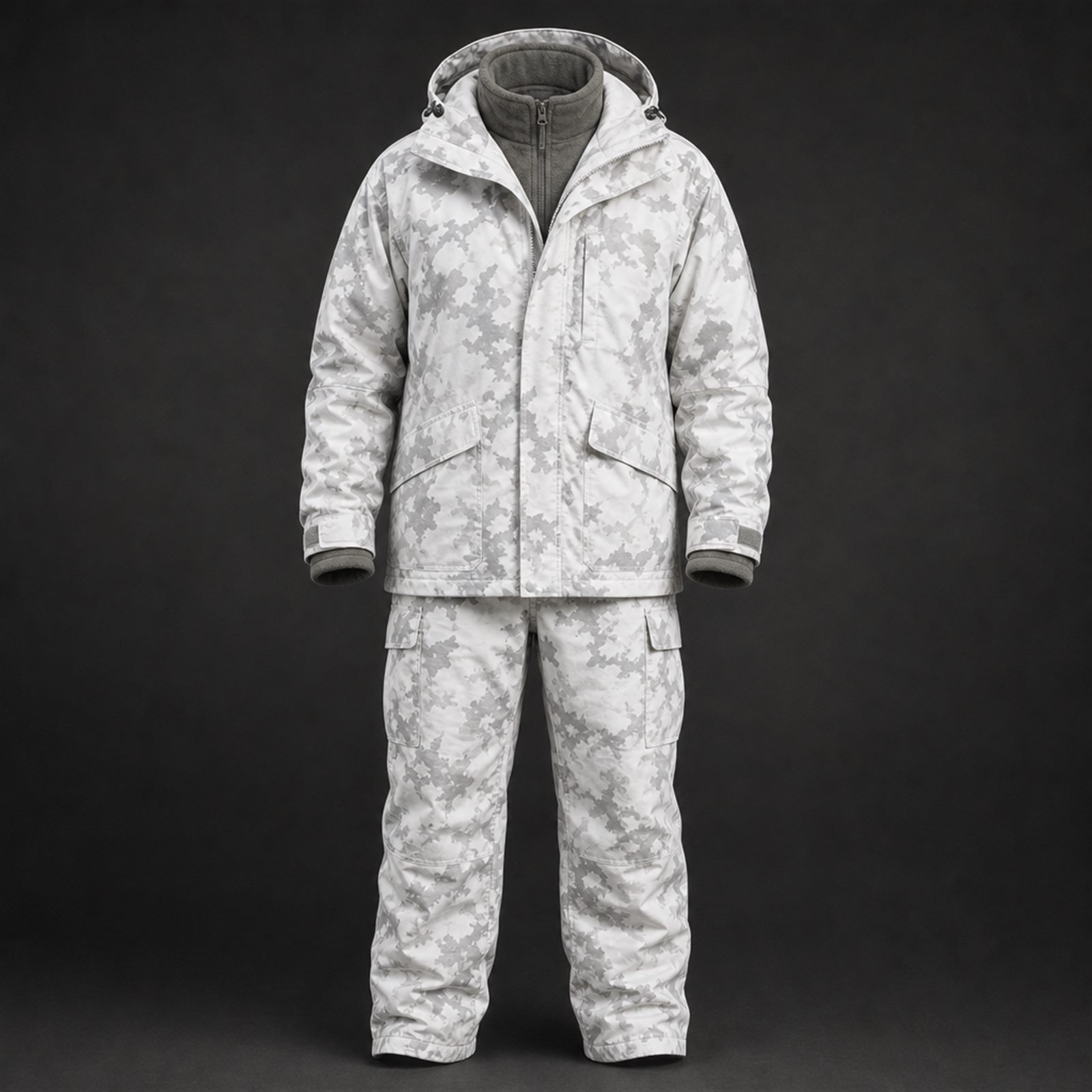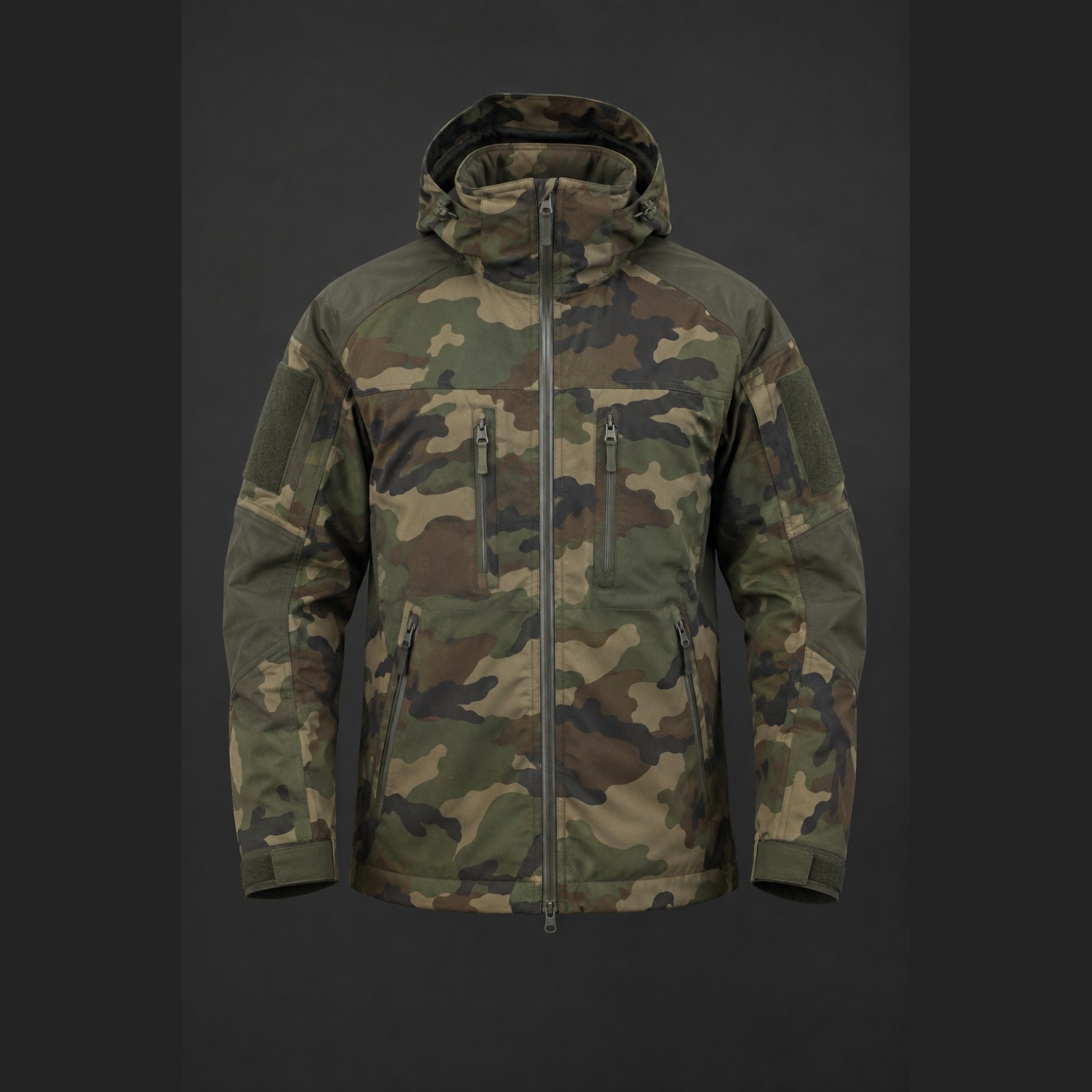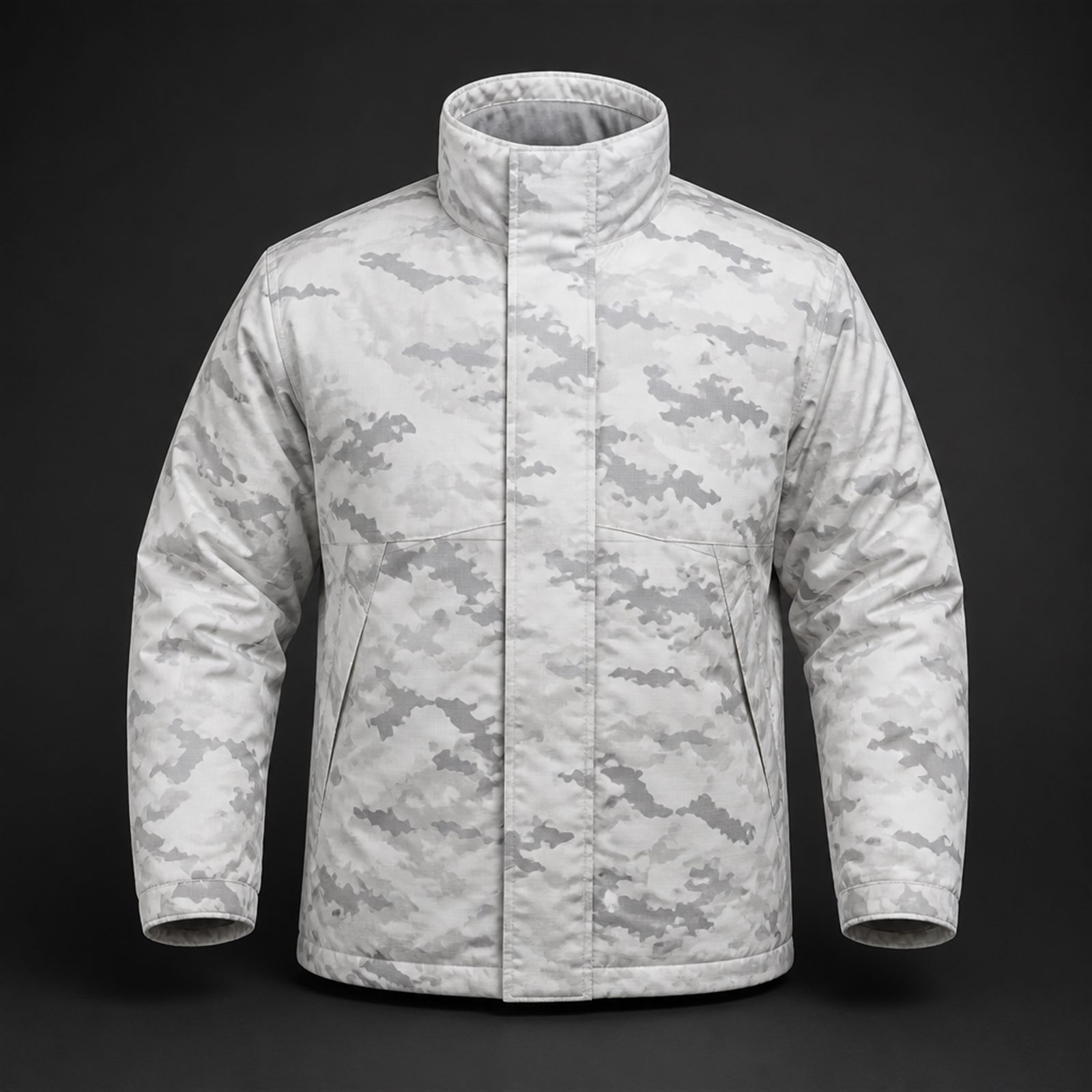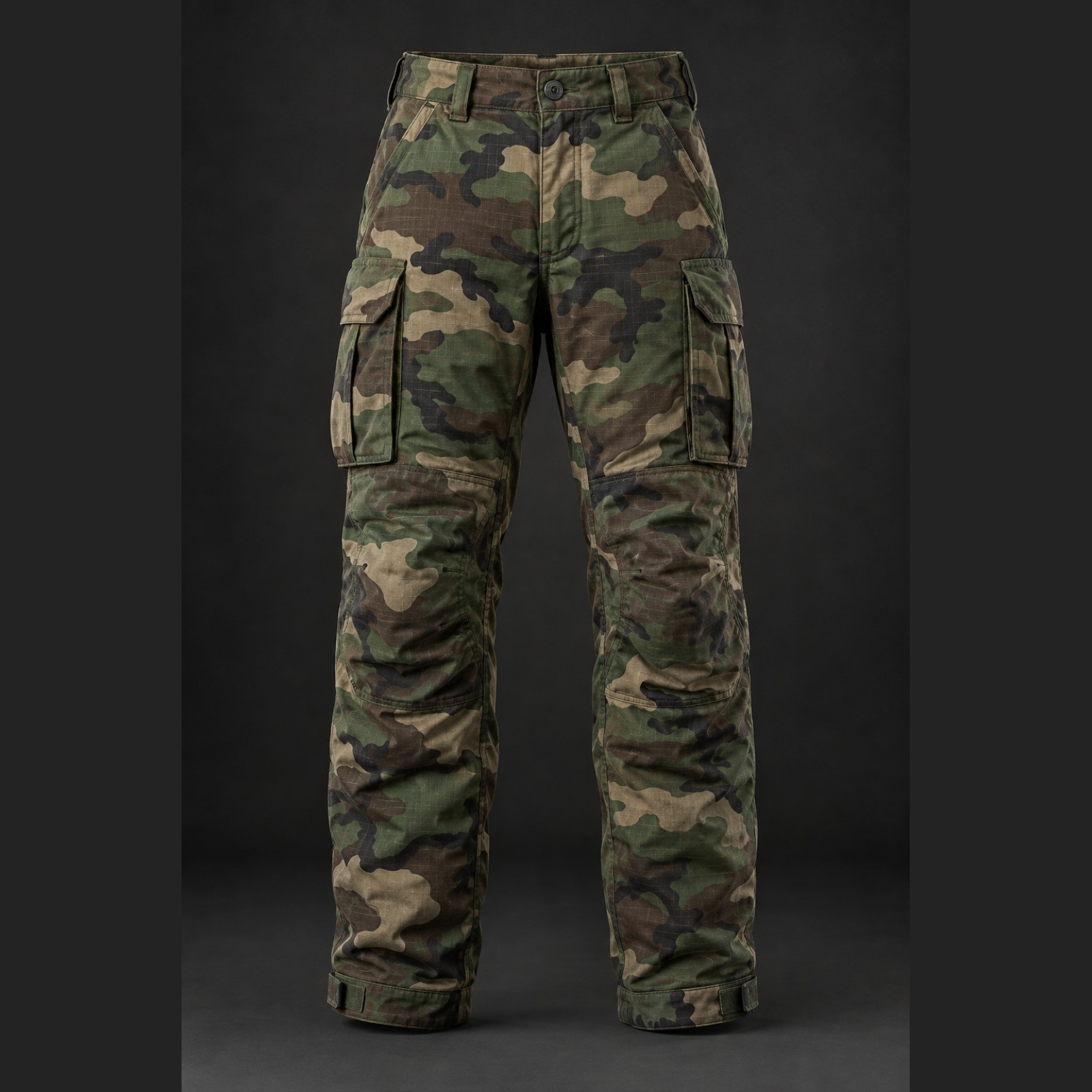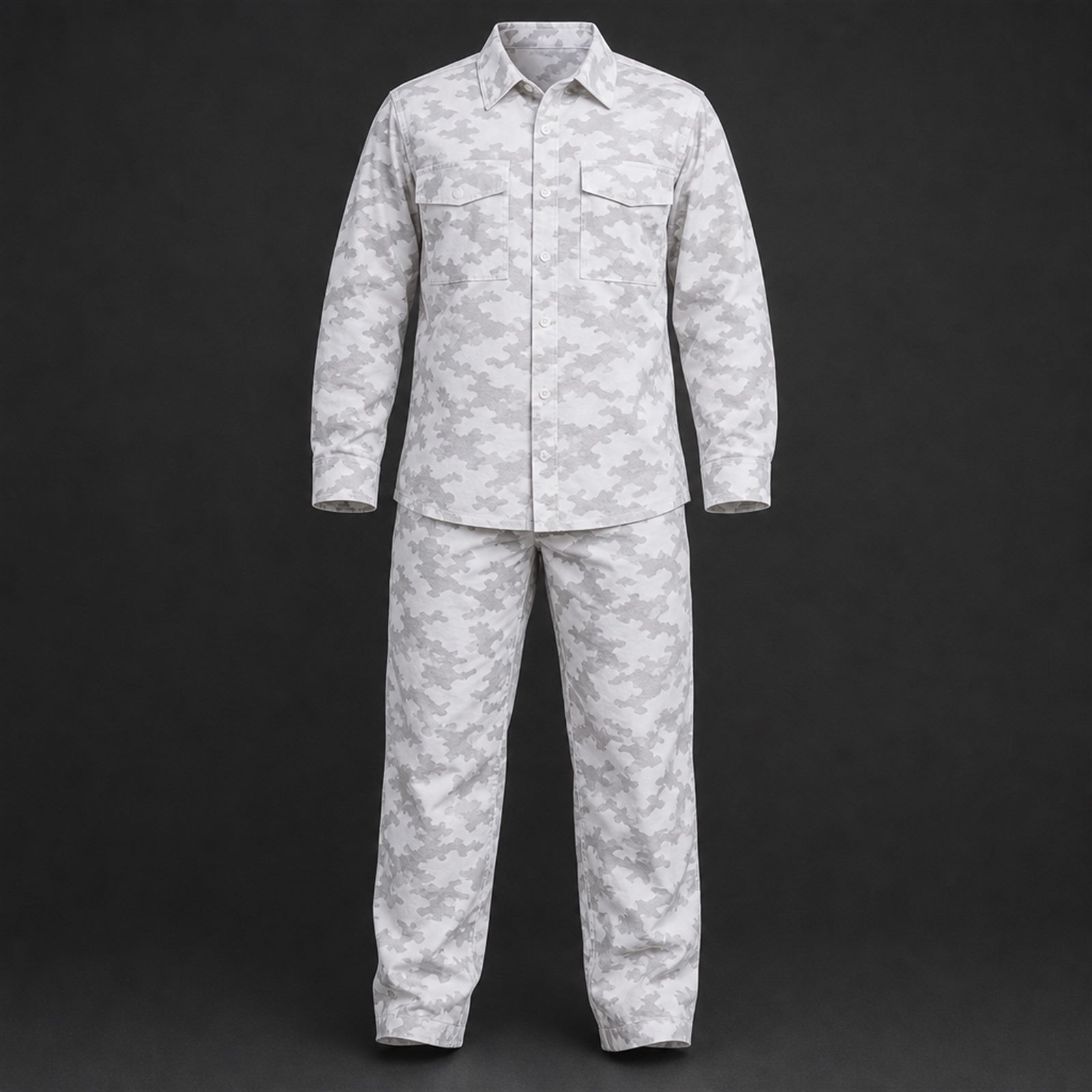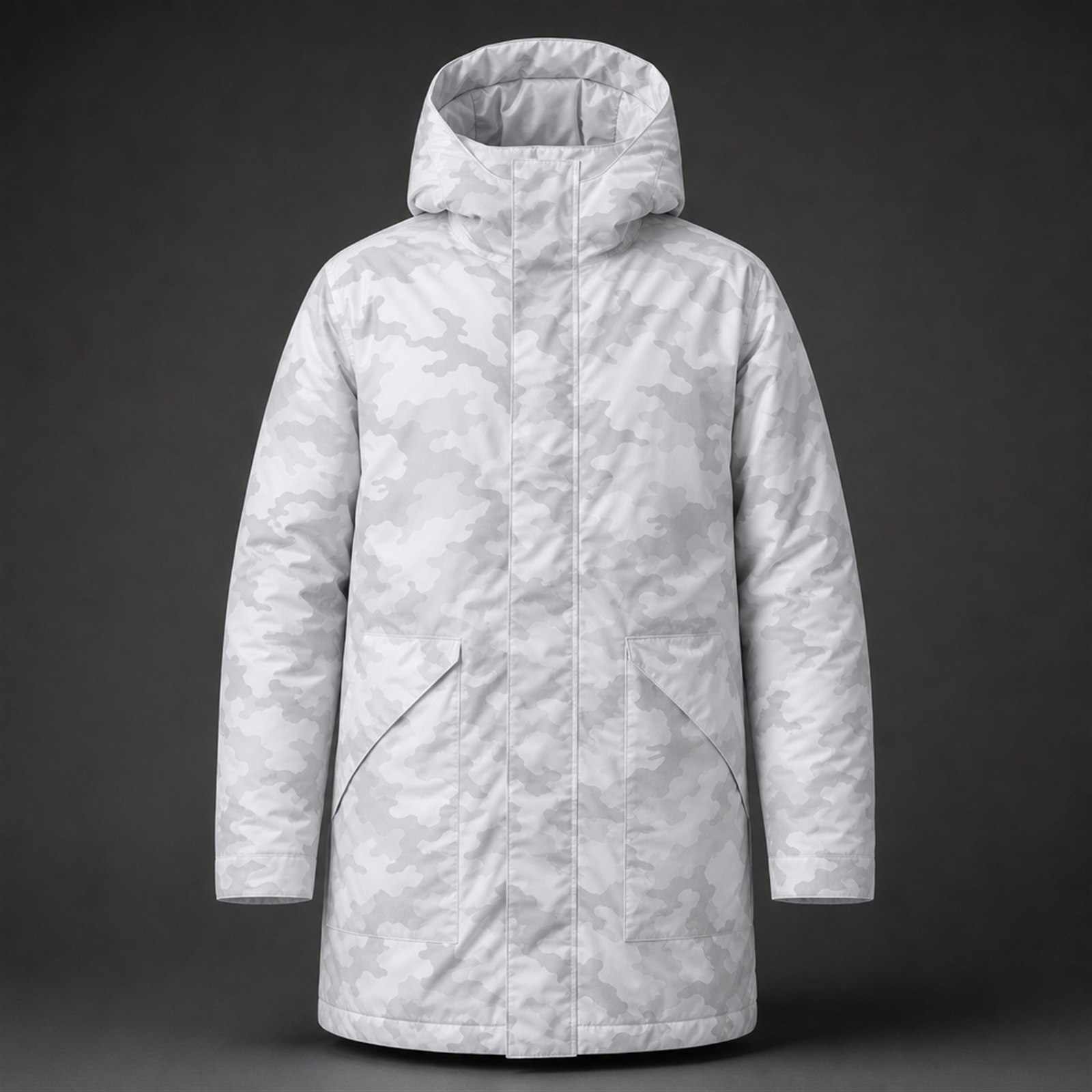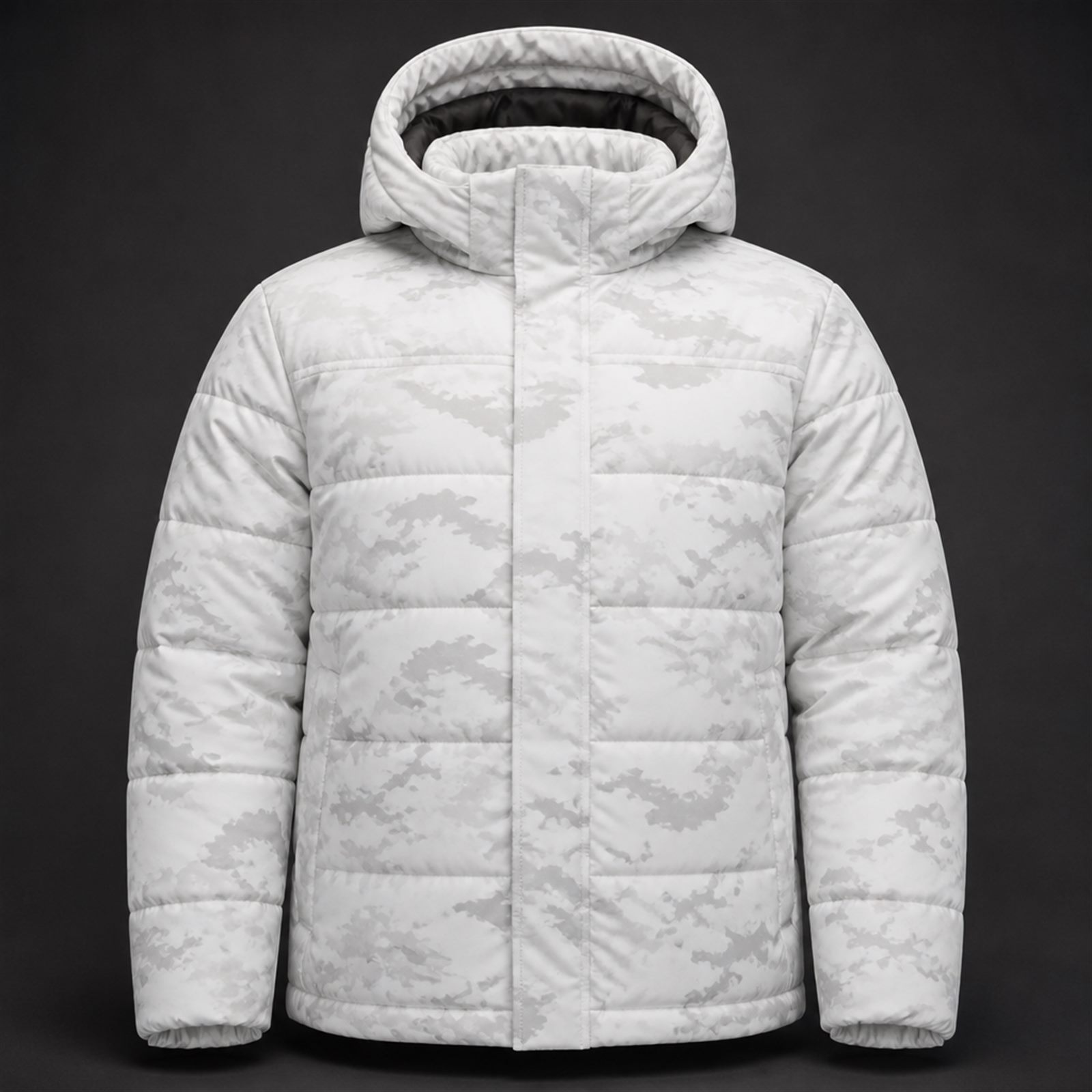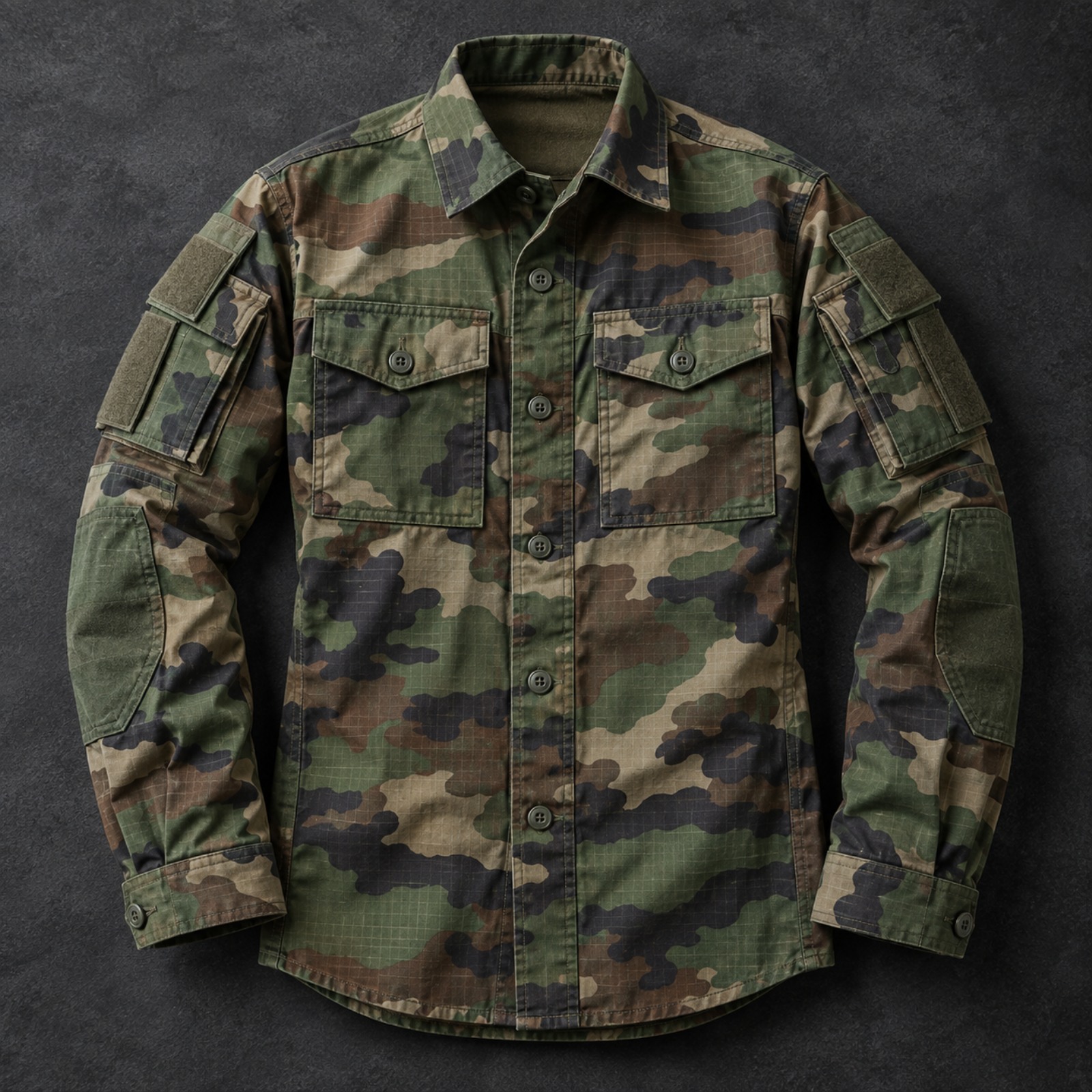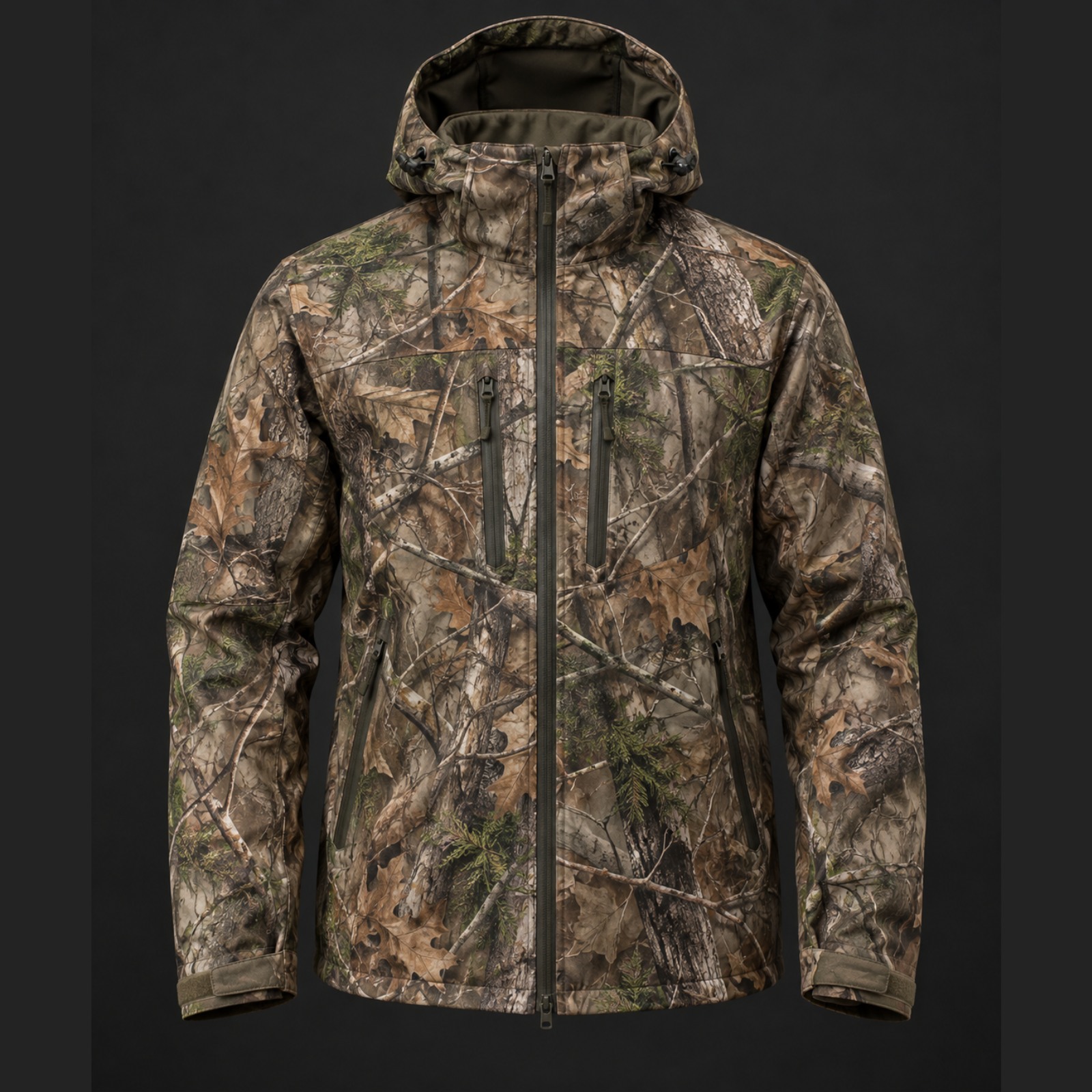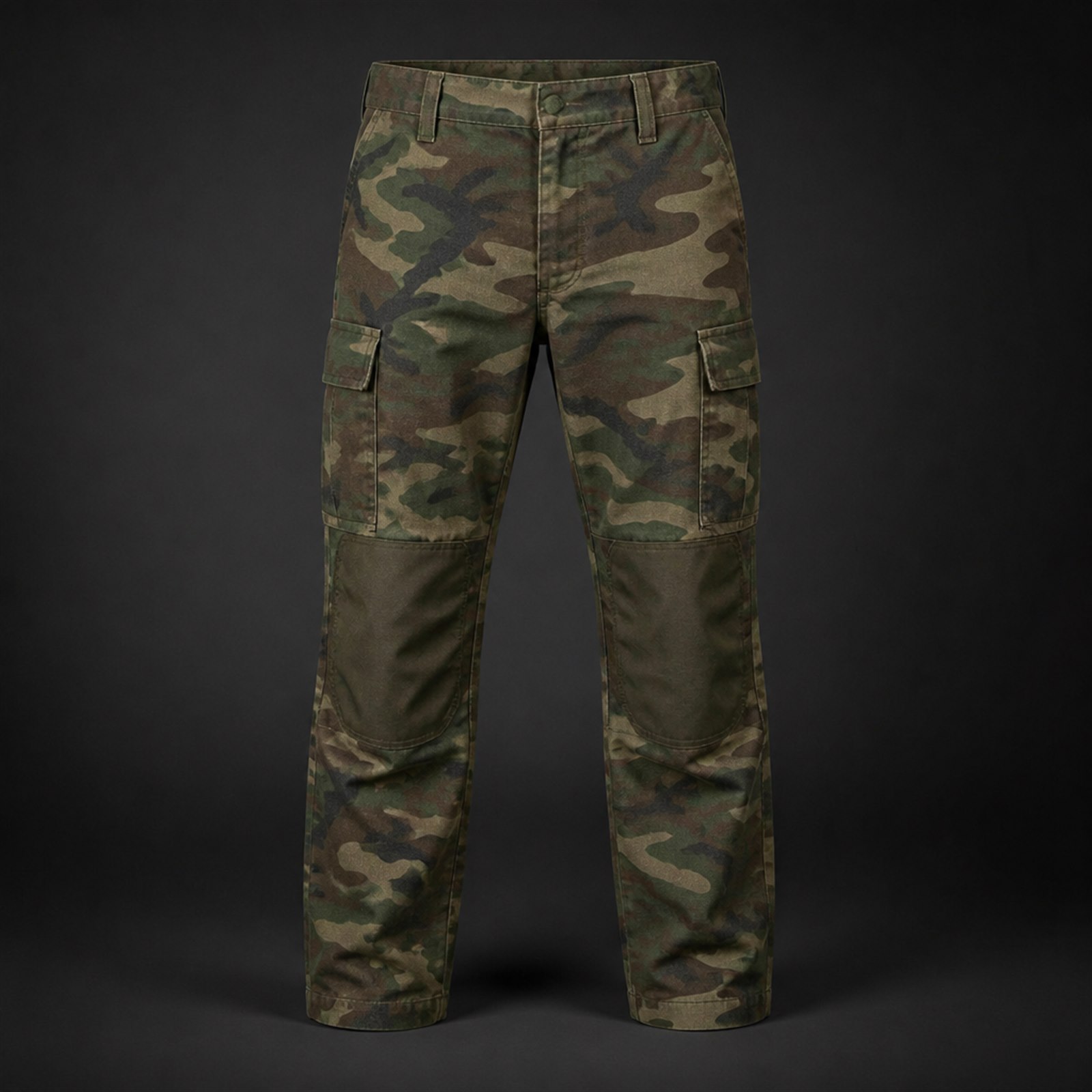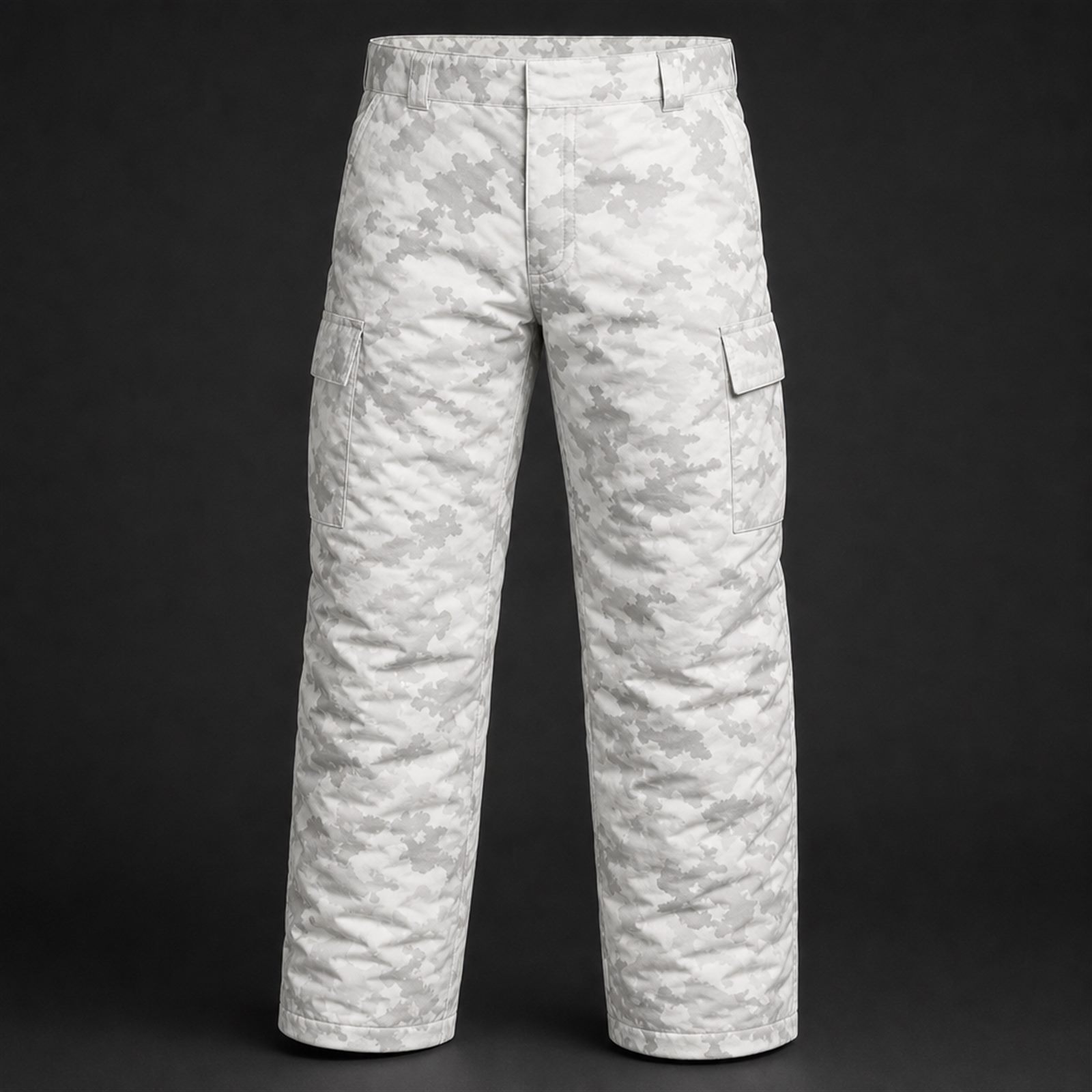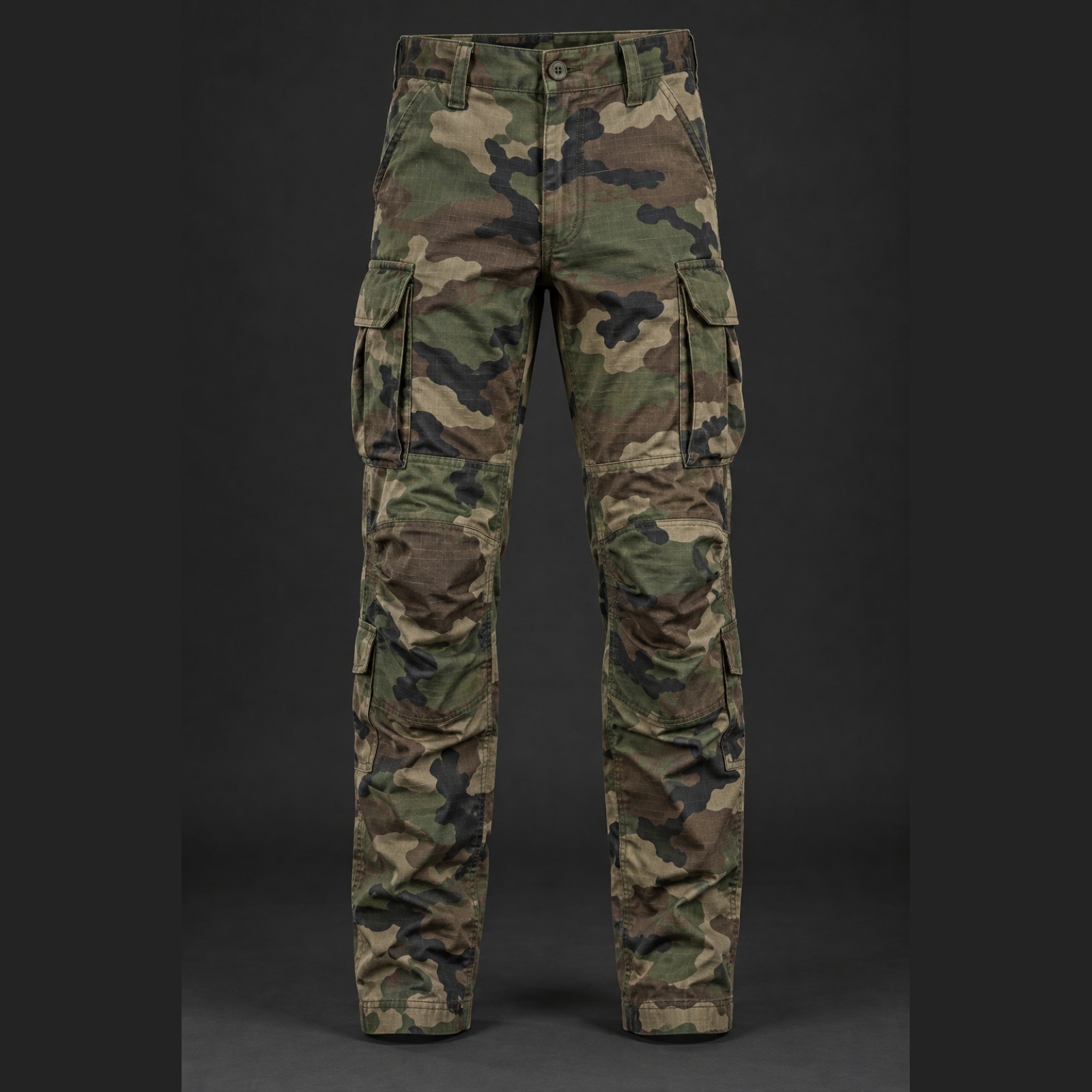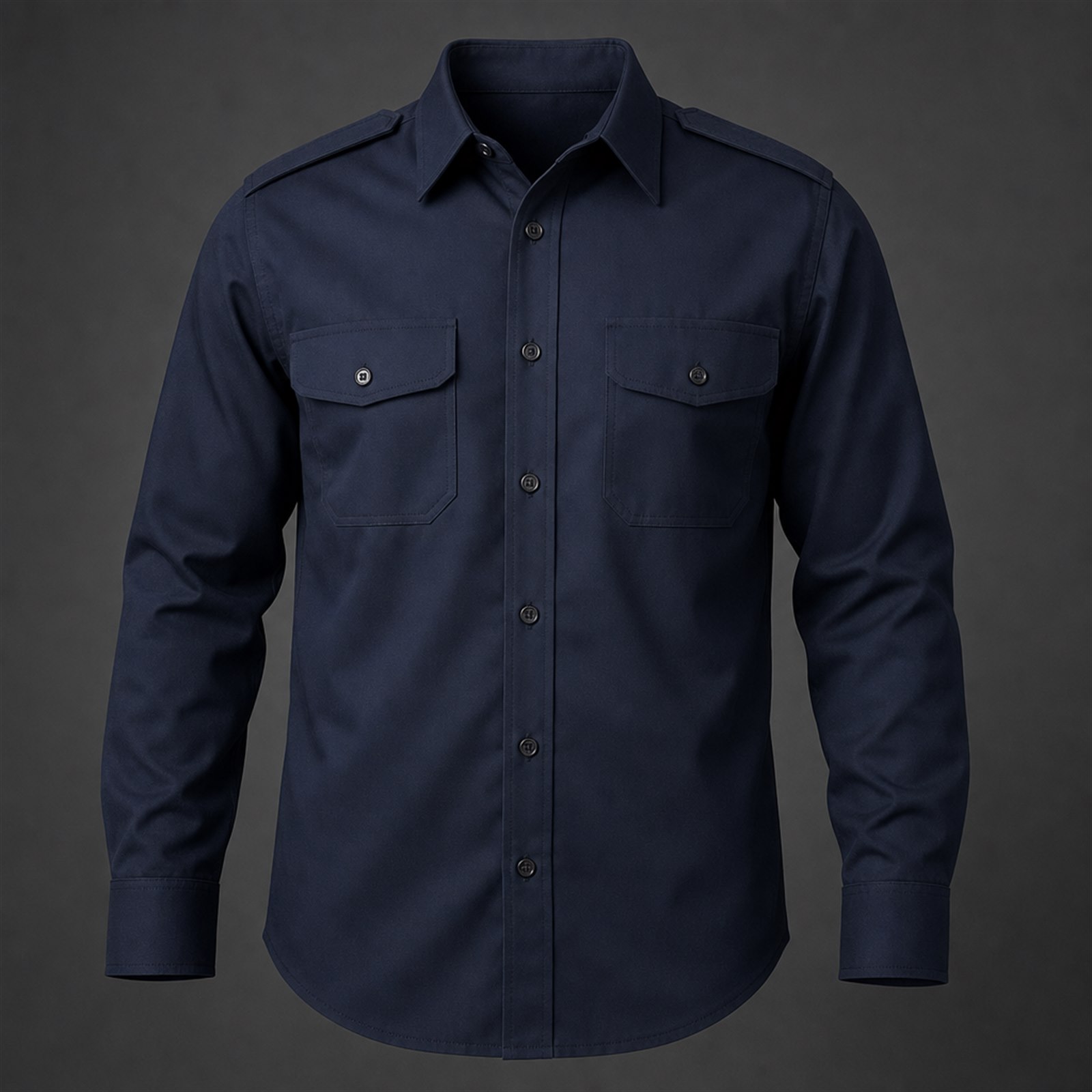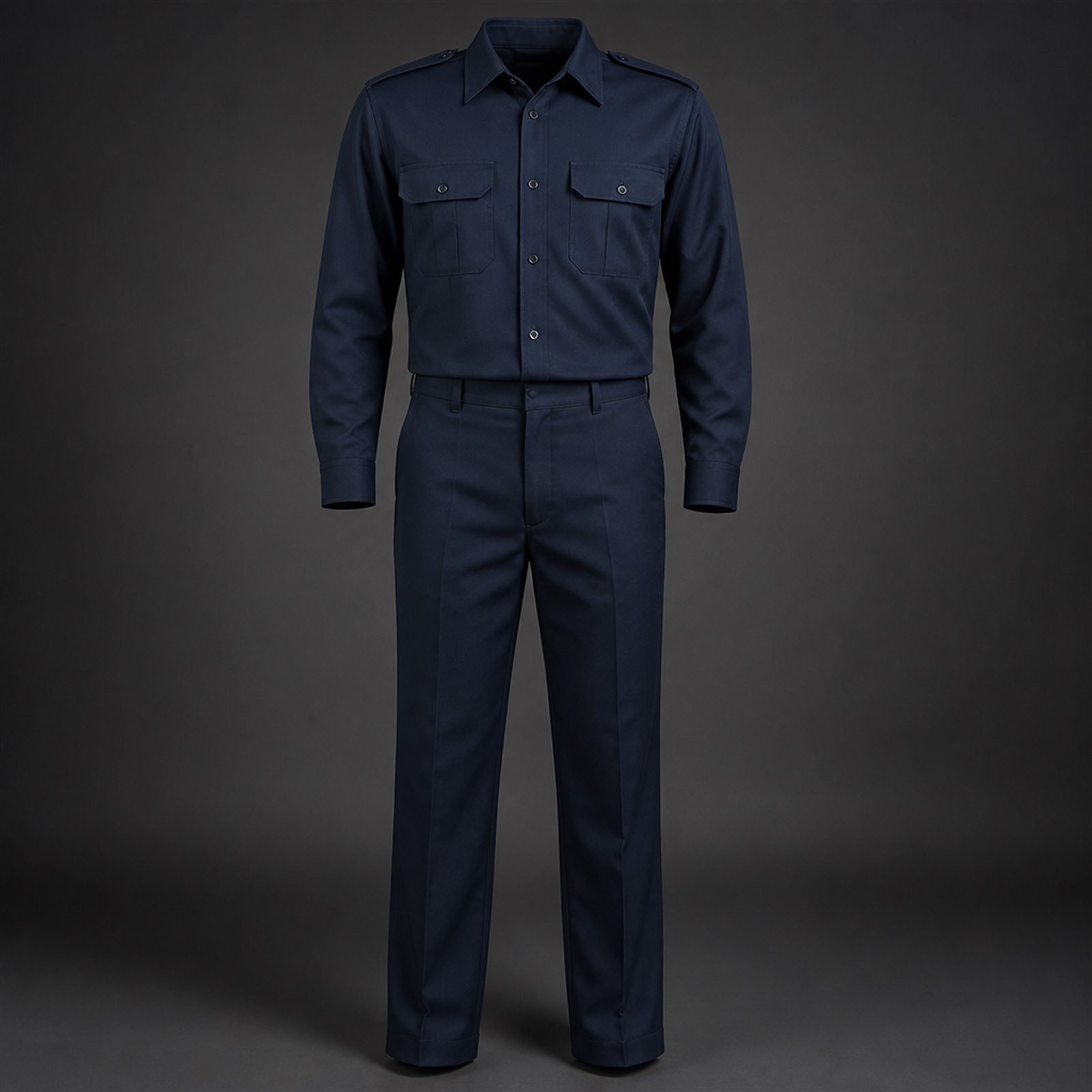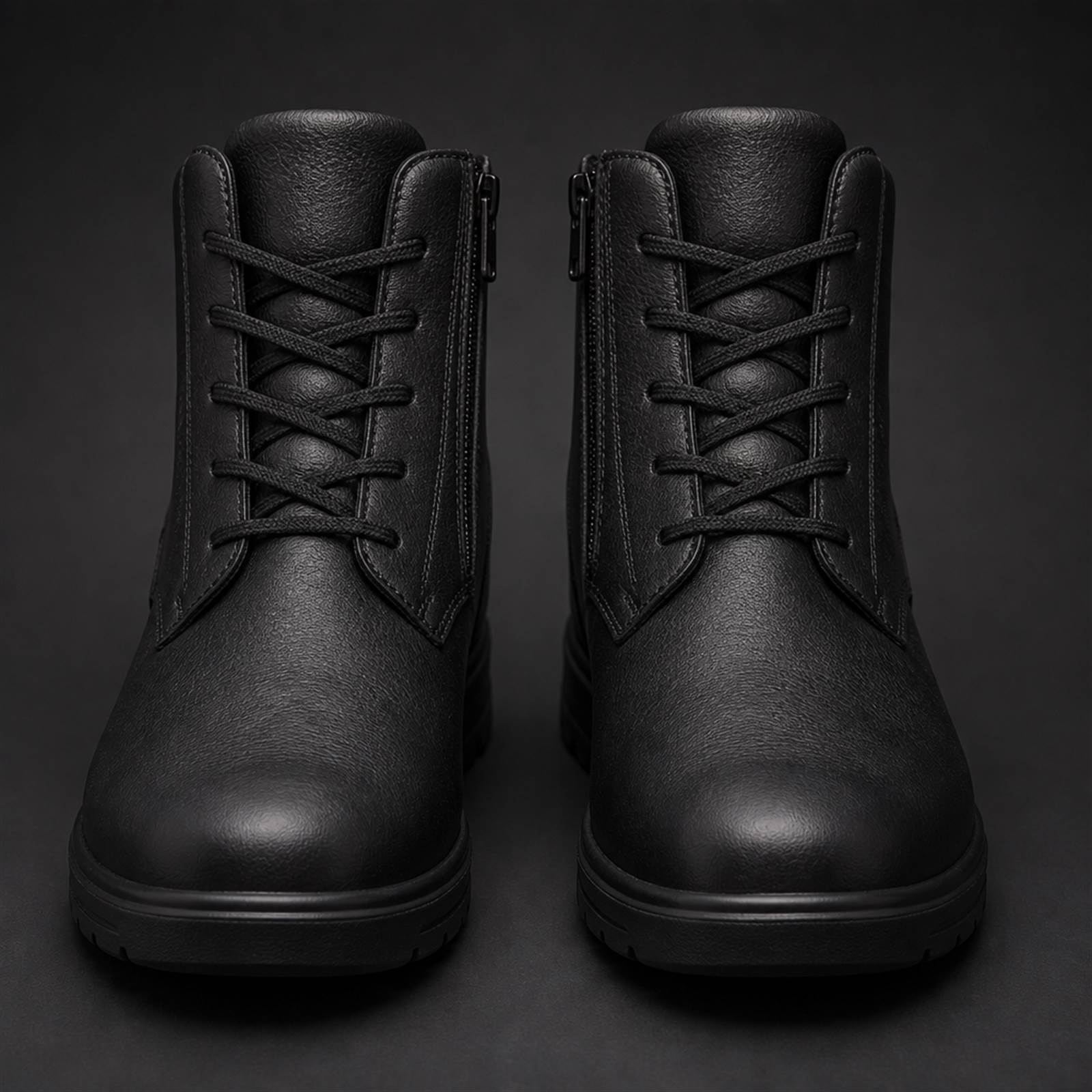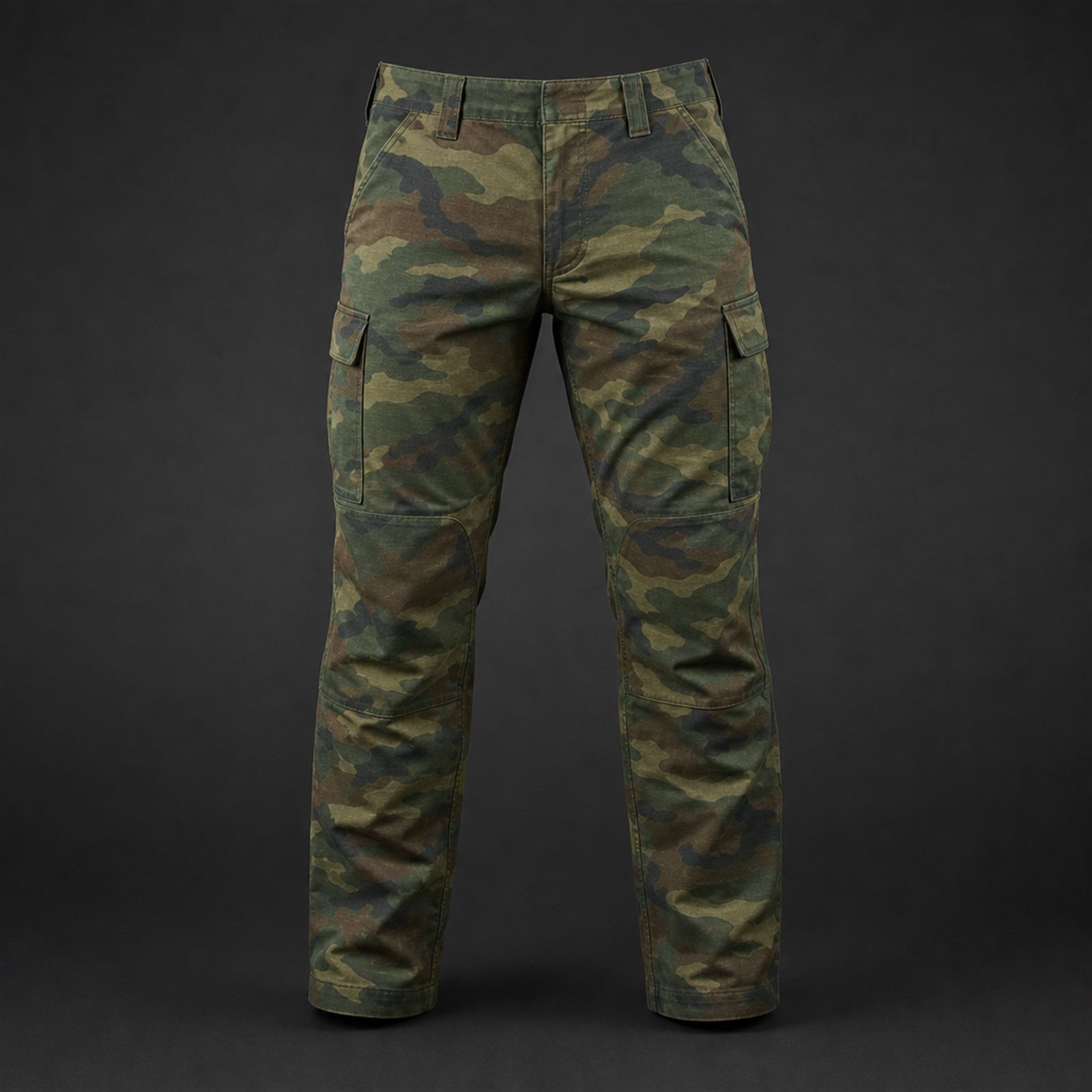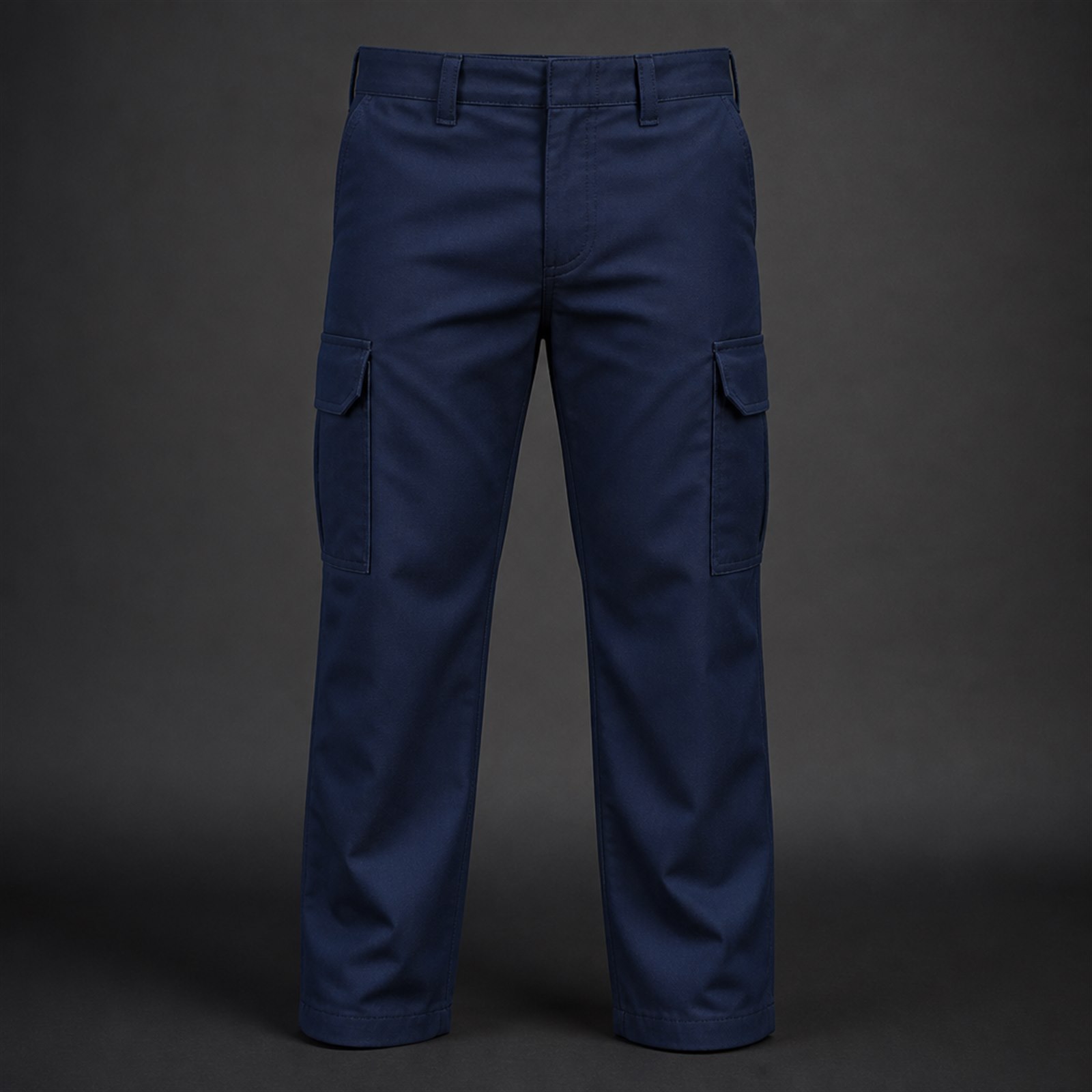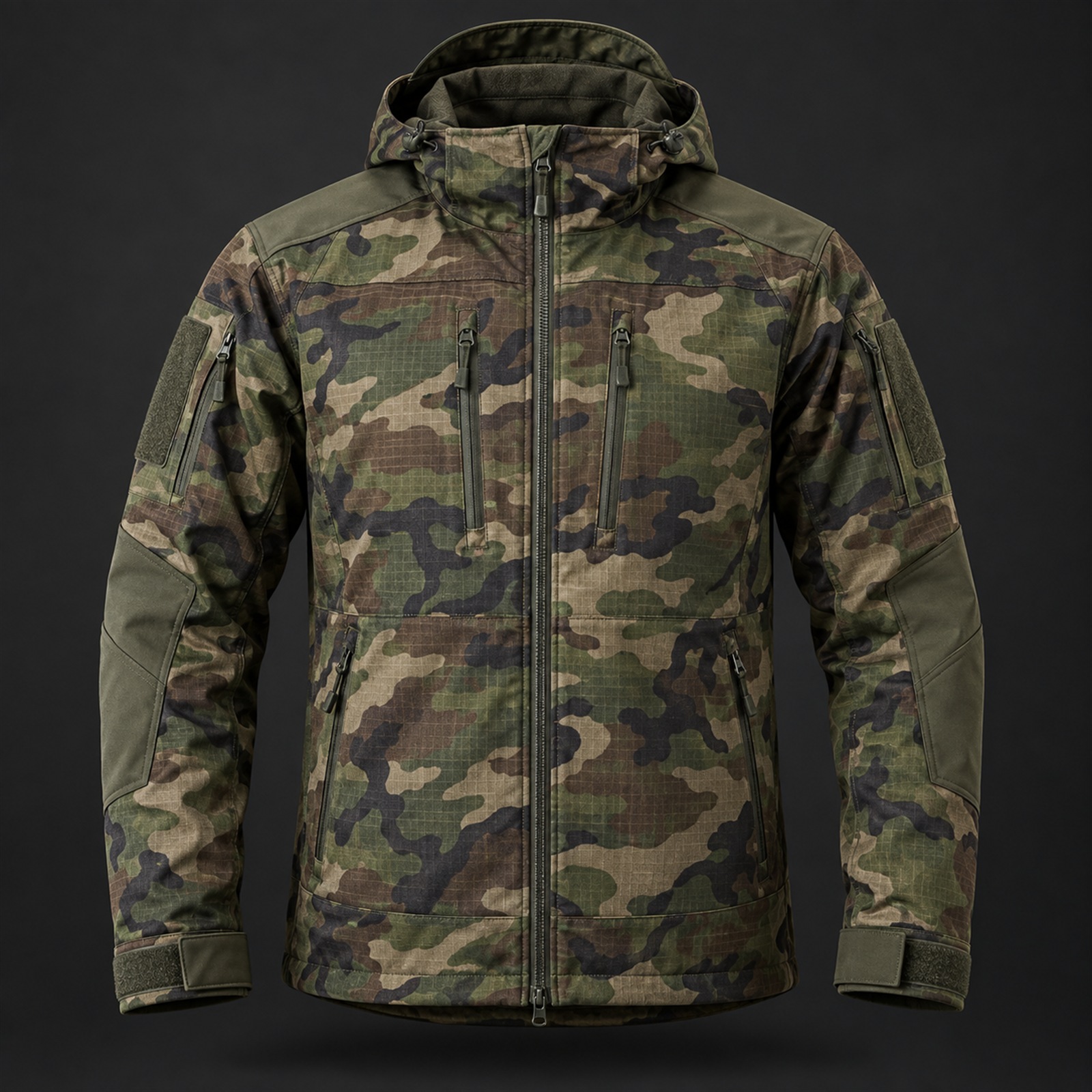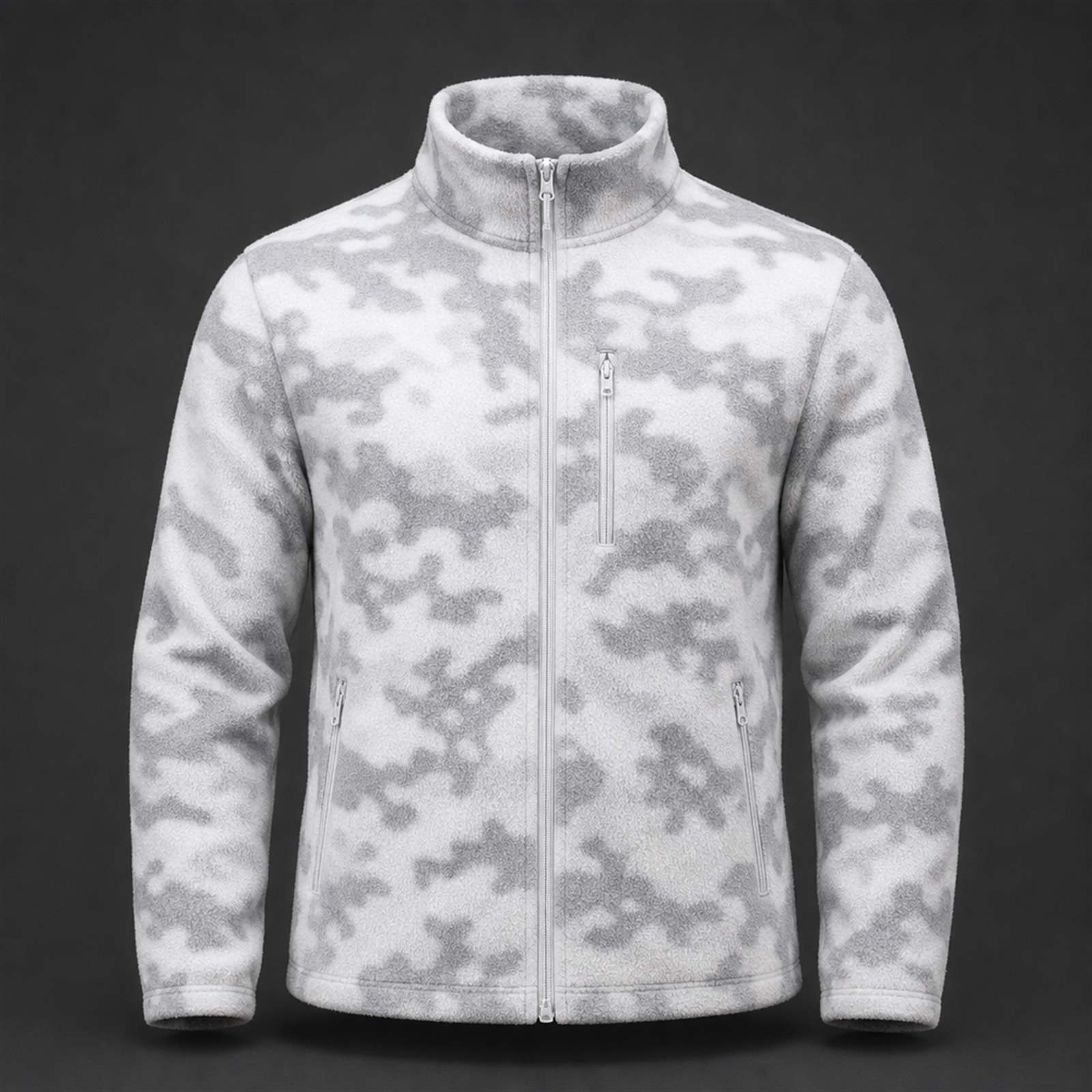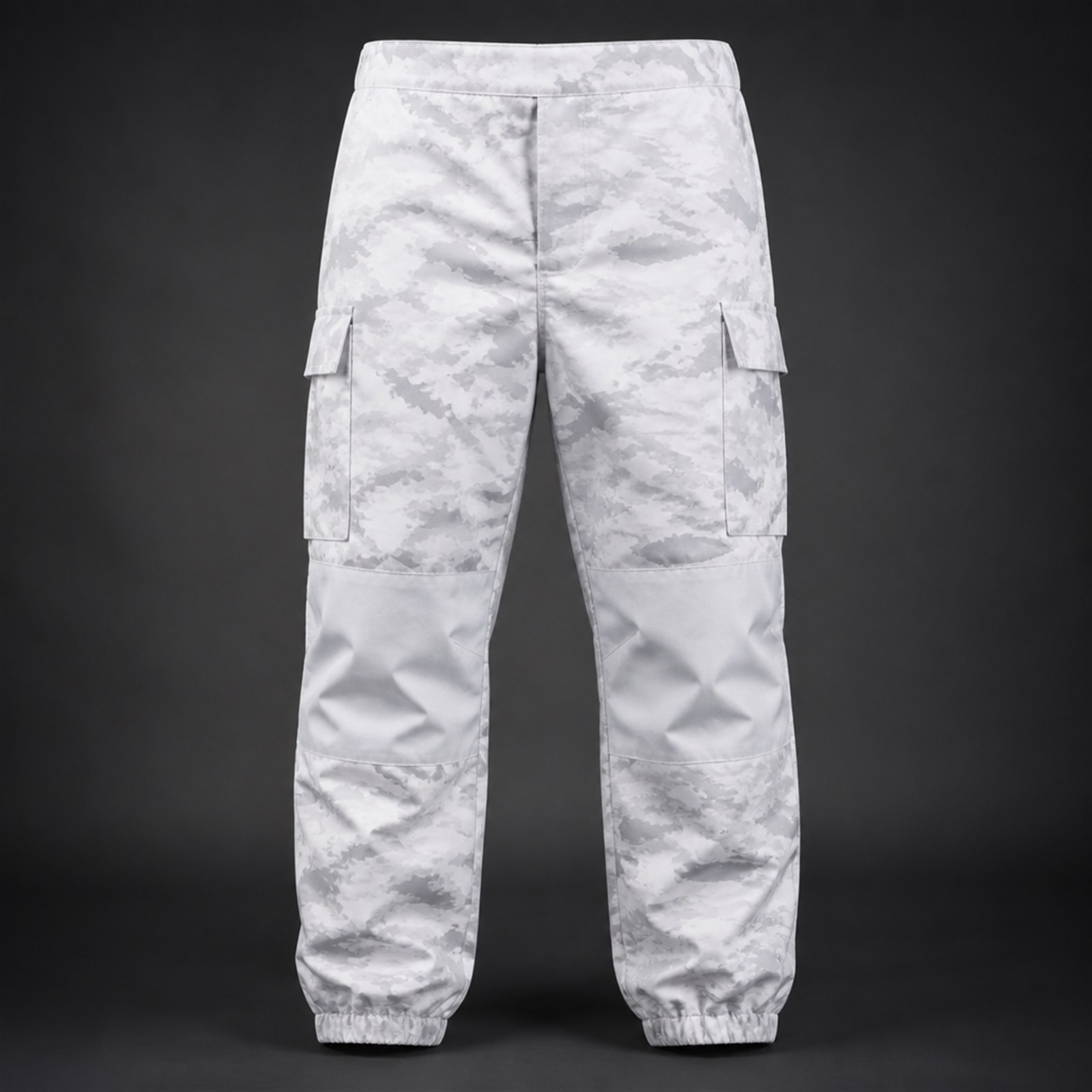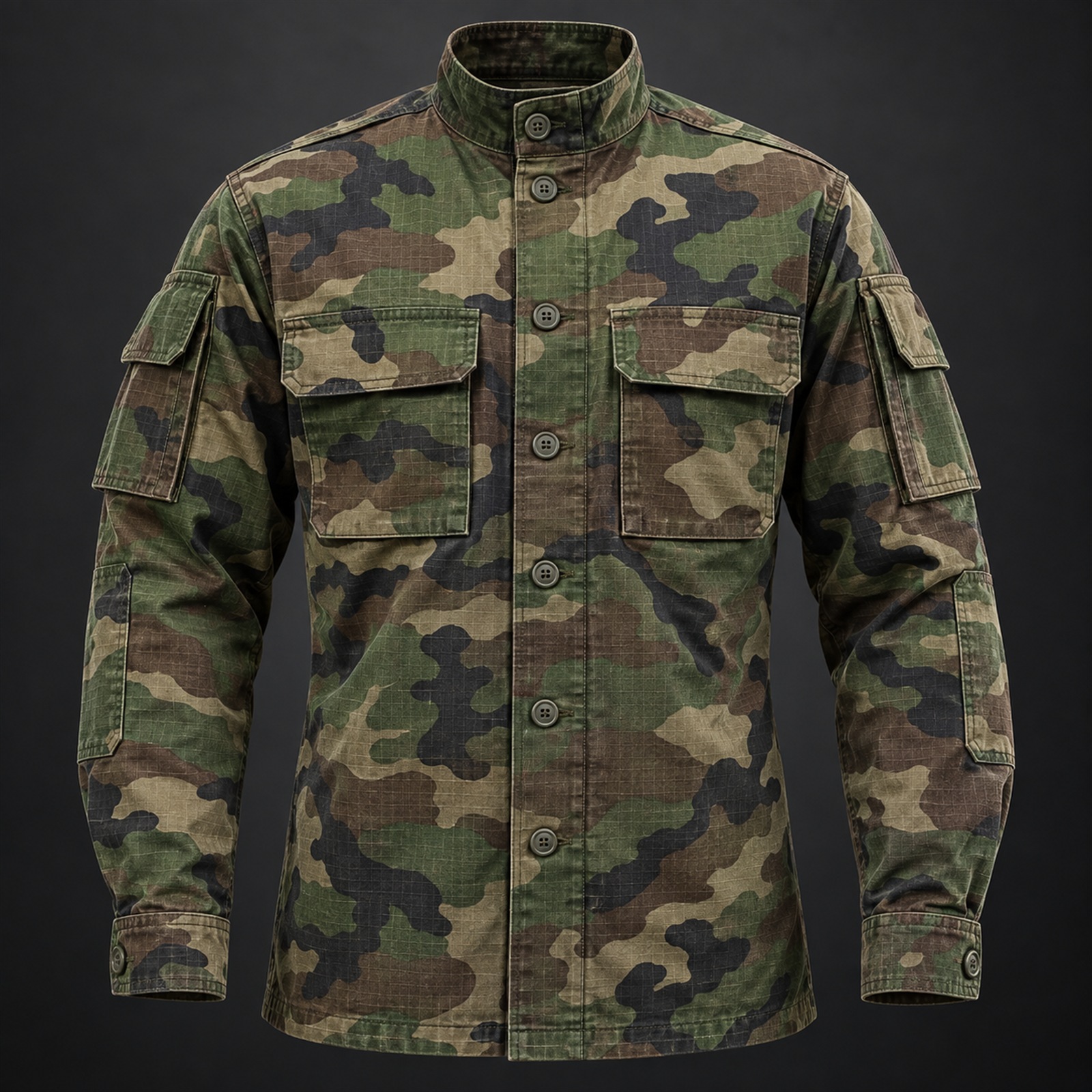
Field / BDU Shirts
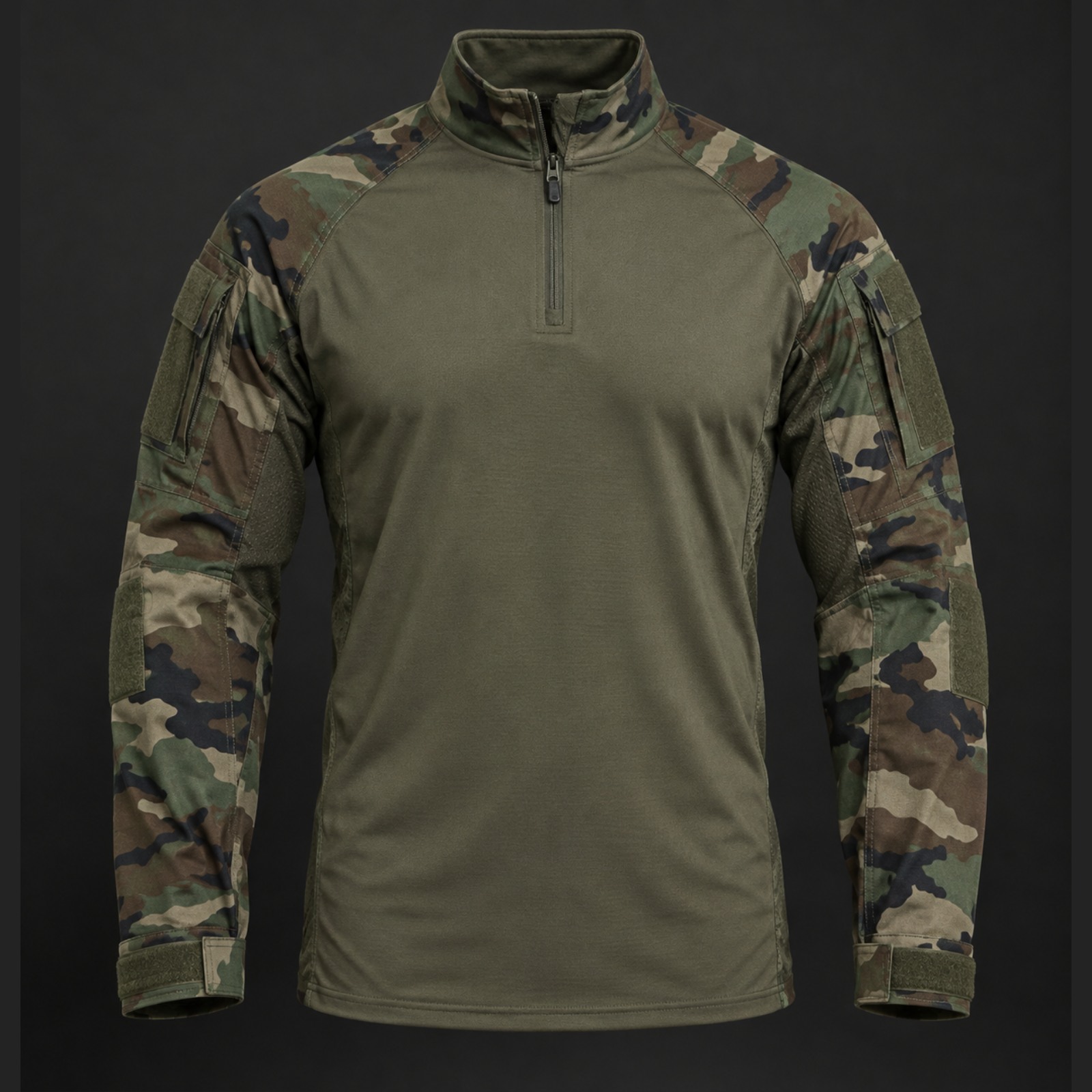
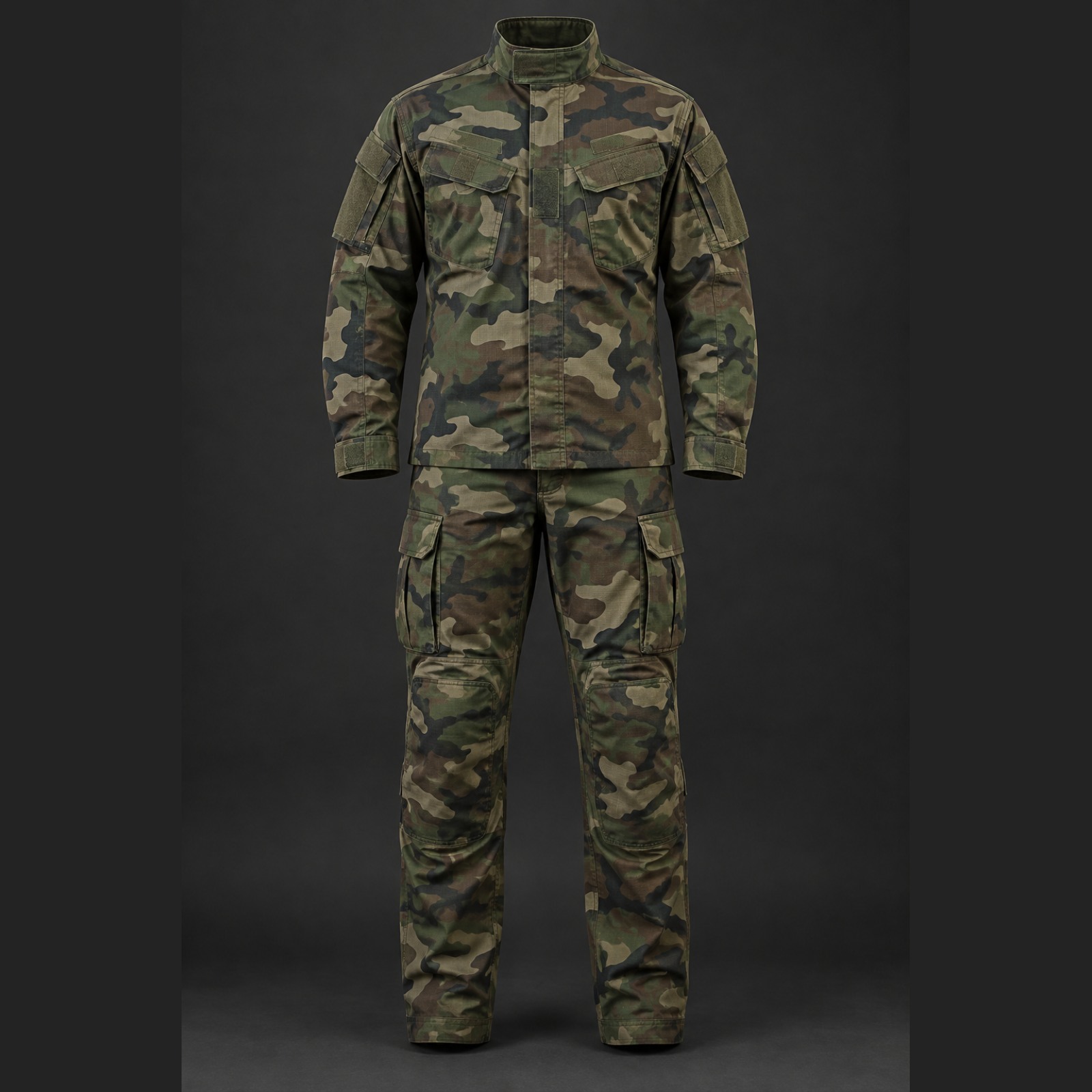
BDU Field Shirt
The BDU field shirt earns its place by being the garment a wearer keeps on when conditions change.
TemperateCool to mildLayered under a jacket
View productApplications
Heavy duty field use is defined by sustained mechanical abuse rather than by climate. The garment is worn for long periods, loaded with kit, dragged over ground and equipment, and expected to keep working when a lighter garment would already have failed. Failures are predictable and they cluster: a tear starts at a pocket corner or a seam, a stress point gives way under load, or a reinforced panel transfers the load to the fabric next to it and the adjacent area fails instead. Durability is also not free. Every additional layer of reinforcement adds stiffness and restricts movement, and a garment that is strong but unwearable gets taken off before it ever wears out. This section covers how tear and abrasion resistance, reinforcement placement, pocket and load design, and the mobility cost of durability are balanced in a specification.
Gallery
Conditions
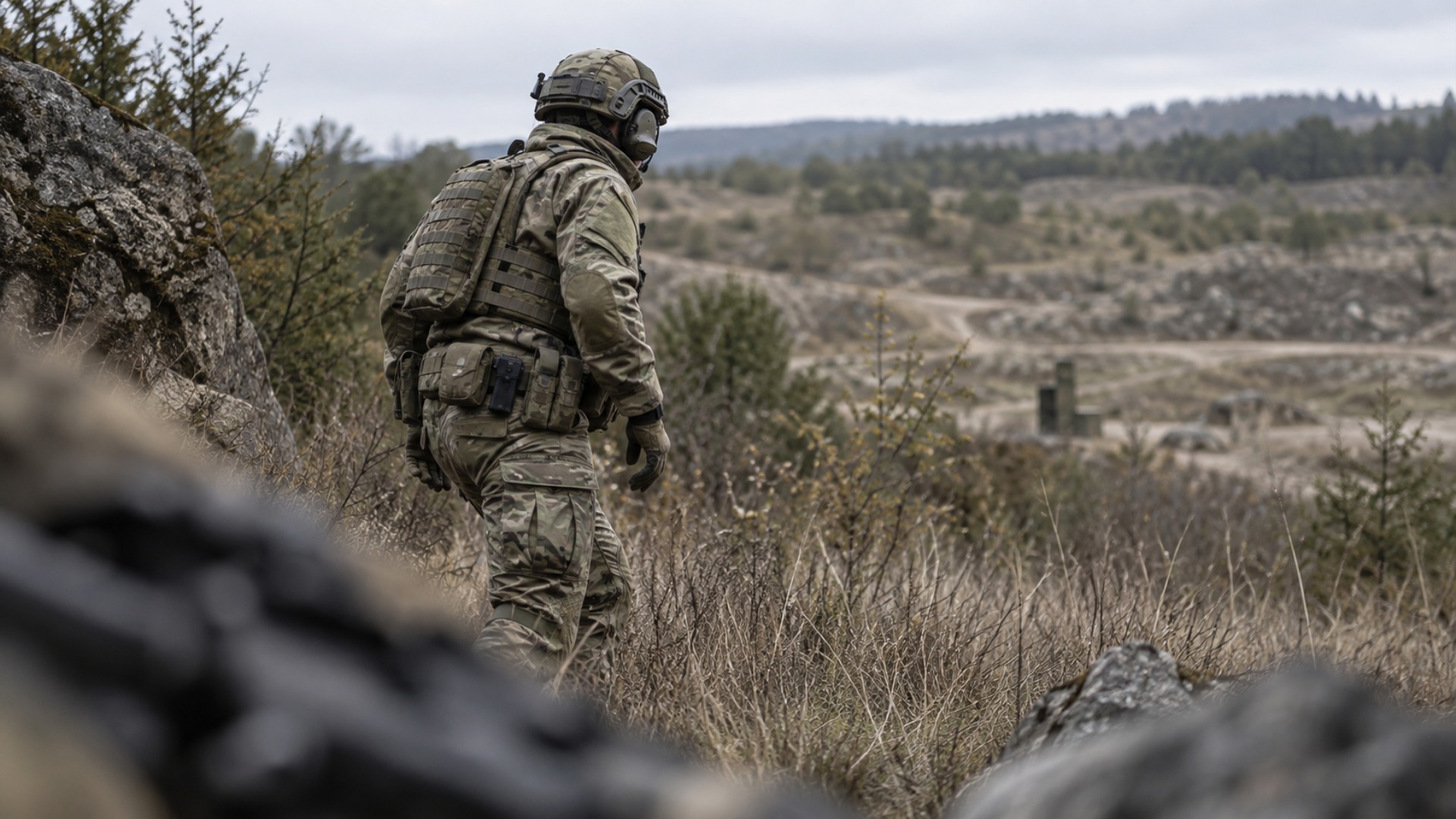
The garment is worn continuously and loaded with equipment, so it is subject to sustained abrasion from straps, webbing and ground contact. Peak loads arrive at a small number of points rather than being distributed evenly, which is why failures concentrate at pocket corners, seams, the seat and the knee. Movement is frequent and often extreme, so stiffness introduced for durability is paid for directly in range of motion.
Design priorities
These are the requirements that drive the specification. When they conflict with each other — and they usually do — the trade-off has to be decided by the buyer, not assumed by the manufacturer.
A garment rarely fails because the yarn pulled apart. It fails because a small damage point propagates into a tear. Ripstop structure and weave tightness limit that propagation, which matters more than a high breaking strength on a test line.
Loads concentrate at the pocket corner, the belt line, the knee, the seat and the seam end. Reinforcement targeted at those points protects where the garment fails, while full panel overlays mainly add stiffness and heat.
Pockets are sized, positioned and anchored for the kit actually carried. When a pocket is overloaded, the failure appears in the panel it is sewn to, so the attachment method and the surrounding reinforcement are part of the pocket design.
Every reinforcement layer, bar tack and doubled panel reduces flexibility. The cost is estimated at specification stage and stated, so the buyer decides how far durability can be taken before the garment stops being usable for its task.
A stitched reinforcement can be replaced or re-stitched. A bonded or laminated one usually cannot. Construction decisions are made with the repair route in mind, because the total service life of a repairable garment is longer than the first failure point of a sealed one.
Durability depends on yarn, weave, stitch density and reinforcement dimensions holding across batches. Where these vary, one batch wears out significantly faster than the next, which is a procurement and inventory problem rather than a garment problem.
Buyer problems
These are the complaints that reach us from buyers already selling into these conditions. Every one of them is a specification decision that was made before production, not a manufacturing accident.
Garment strategy
The same category of garment is built differently in each environment. These are the construction decisions that change.
Engineer the failure point, do not just add material
Each known failure location is designed rather than covered. Stitch type, seam end treatment and reinforcement shape are specified so a local failure does not propagate into a tear that takes the panel with it.
Anchor pockets to the garment's structure
High load pockets are attached so the pull goes into a reinforced area or a waistband structure rather than into a single layer of cloth. Pocket placement and attachment are decided together with the reinforcement plan.
Reinforce articulating zones without locking them
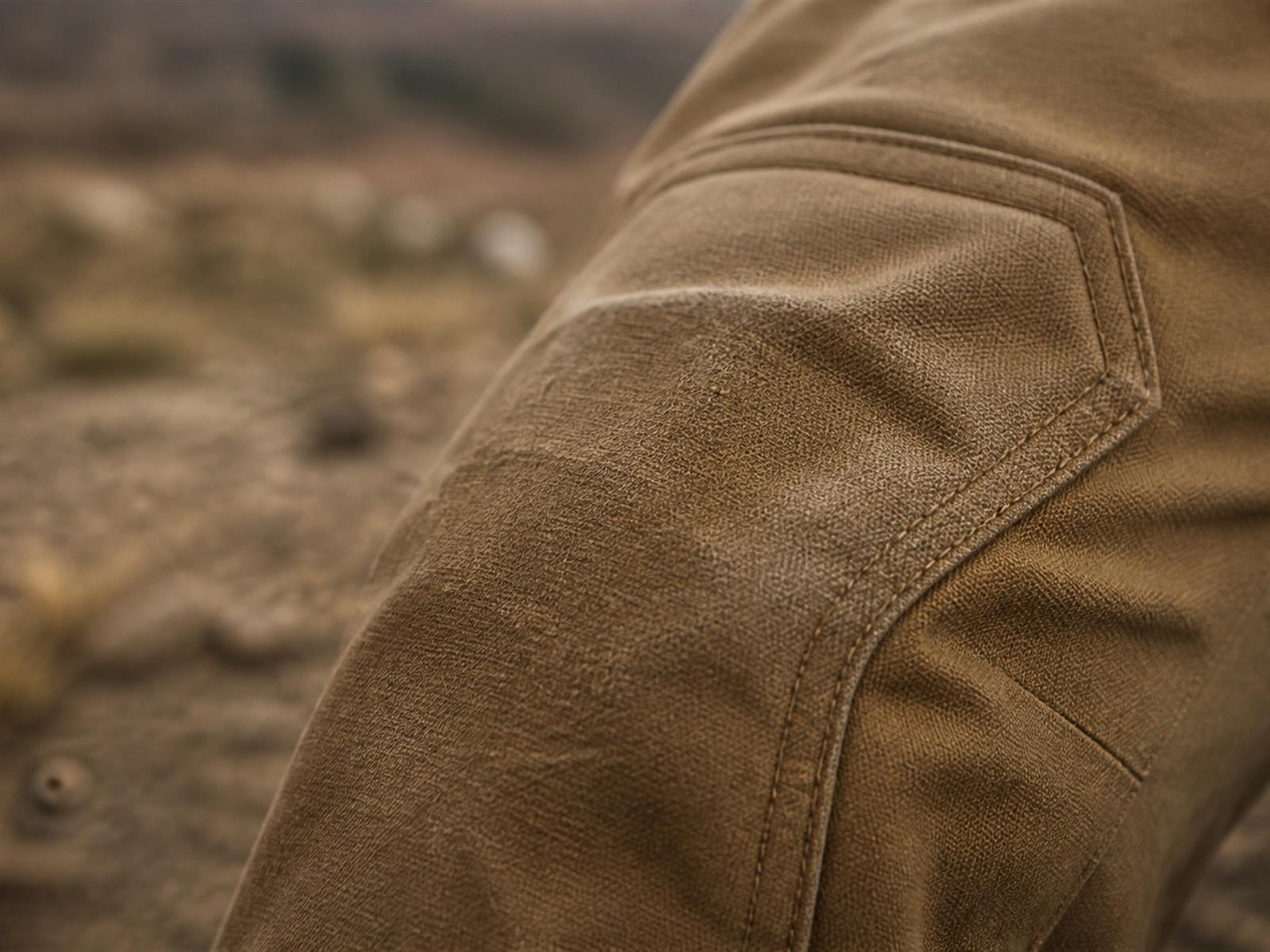
Knees, elbows and the seat need protection and movement at the same time. Reinforcement is shaped, segmented or paired with stretch so the panel flexes instead of creasing into a stiff point that wears through faster.
Keep the reinforcement strategy repairable
Where possible, reinforcement is stitched rather than bonded so it can be replaced. Construction also leaves enough seam allowance and access for a field or workshop repair, which extends service life at low cost.
Lock construction detail into the technical specification
Reinforcement dimensions, stitch density and hardware specification are written down so that a repeat order delivers the same mechanical behaviour. Without that, the second batch is a different garment even if the fabric is identical.
Fabric strategy
Each material below is recommended for a stated reason, not as a generic option. Open any material to read where it performs and where it fails.
Material
The usual choice for heavy duty trousers and field shirts where tear resistance has to be combined with a hand that stays wearable over long periods.
Material
Selected where abrasion resistance and colour stability are the priority and the drying penalty of the blend is acceptable for the duty cycle.
Material
Used at the knee, seat and shoulder so reinforcement and articulation can coexist without the panel stiffening into a failure point.
Material
Applied where the pattern needs range of motion and the durability requirement is carried by reinforcement rather than by the base cloth.
Material
Retained for builds where flame behaviour and a natural hand are the stated requirement, with durability limits documented rather than assumed.
Construction
Where the specification should focus for this environment.
Products
Each product page carries the full material, construction and customization detail for this application.
Field / BDU Shirts
The BDU field shirt earns its place by being the garment a wearer keeps on when conditions change.
Camouflage Uniforms
A camouflage uniform set is judged on the print before it is judged on anything else.
Cold Weather Layering Systems
This is not a garment category in the usual sense.
Cold Weather Shell Jackets
The shell carries no warmth of its own, and that is the point of it.
Cold Weather Tactical Clothing
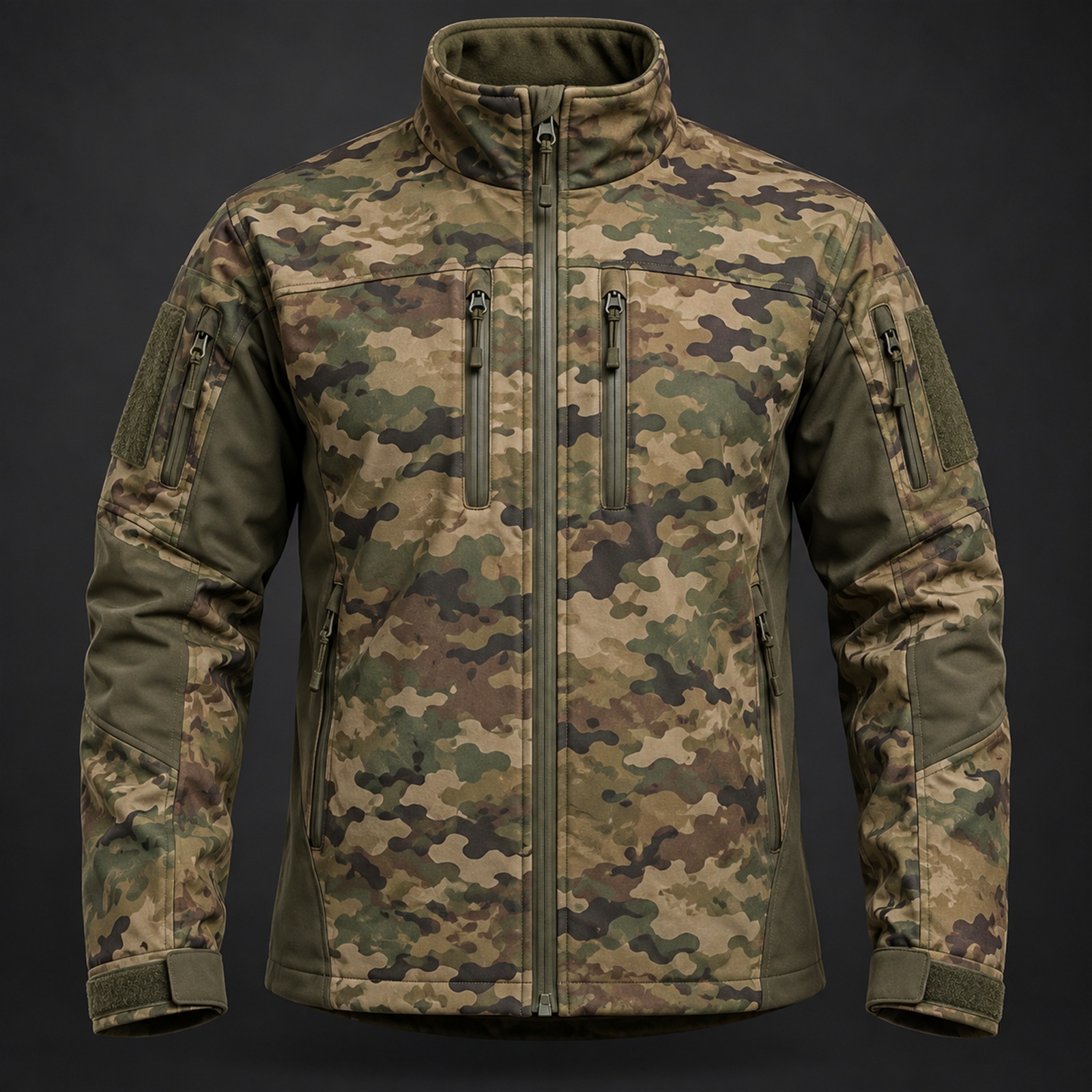
A cold weather jacket has to hold warmth, allow movement and get rid of moisture, and those three requirements pull against each other.
Tactical Pants
Cold weather changes what a tactical pant has to do.
Cold Weather Uniform Sets
A cold weather uniform set is bought as one line on a tender and issued as one outfit, but it is produced as several garments that have to agree with each other.
Extreme Cold Weather Parkas
A parka for extreme cold is a system, not a garment with more filling.
Extreme Cold Weather Jackets
An extreme cold weather jacket is specified for the coldest condition a programme expects, and it is defined less by what it is filled with than by where it sits in a layering system.
Combat Shirts
This shirt is specified for programmes where the dominant cost is not the garment, it is the replacement cycle.
Hunting & Outdoor Camouflage Clothing
A hunting jacket is judged by two properties that pull against each other: how quietly it moves through brush, and how well it survives that brush.
Hunting & Outdoor Camouflage Clothing
Hunting pants fail in predictable places, and they fail for predictable reasons.
Cold Weather Tactical Pants
A cold weather pant is not a jacket for the legs.
Insulated Tactical Jackets
An insulated tactical jacket is defined by its fill: a layer of lofted material carried inside the garment to hold the warmth the wearer generates.
Tactical Bags & Packs
A pack is judged twice: once when the buyer hangs their own pouches on it, and once at the end of a season when the shoulder straps have carried weight every day.
Tactical Shorts
Cargo shorts take more abuse than any other garment in a uniform programme: the most kneeling, the most laundering and the heaviest pockets.
Combat Shirts
Ripstop is not a single fabric, it is a weave construction.
Tactical Pants
A tactical pant is judged by three things: whether the crotch survives, whether the knee holds up, and whether the waist still fits the same after a full day of movement.
Security / Duty Uniforms
The shirt is the part of a security uniform the public actually reads, and it is also the part washed most often.
Security / Duty Uniforms
A security uniform is worn every working day, in front of the client's customers, and is expected to look formal on the last shift of the month exactly as it did on the first.
Tactical Boots
A side-zip boot exists for one reason: a shift worker can lace it once and zip it every time after.
Tactical Pants
Stretch in a tactical pant is a mobility decision with a durability bill attached.
Security / Duty Uniforms
Duty pants are worn longer than any other garment in a uniform, usually with a belt loaded with equipment, and they are judged by whether they still look presentable at the end of a shift as much as by whether they survived it.
Tactical Jackets
A field jacket is bought for a specific job: it carries what the wearer needs to reach without opening a pack, stays out of the way when the wearer kneels, climbs or drives, and can be worn over a shirt or a fleece without becoming a straightjacket.
Tactical Fleece & Mid Layers
A fleece or mid layer is not simply a warmer shirt.
Tactical Softshell Jackets
A softshell is a compromise, and buyers who know which compromise they are buying get a better jacket.
Tactical Uniform Sets
A uniform set only performs as a set if the shirt and the trousers behave as one garment.
Thermal Base Layers
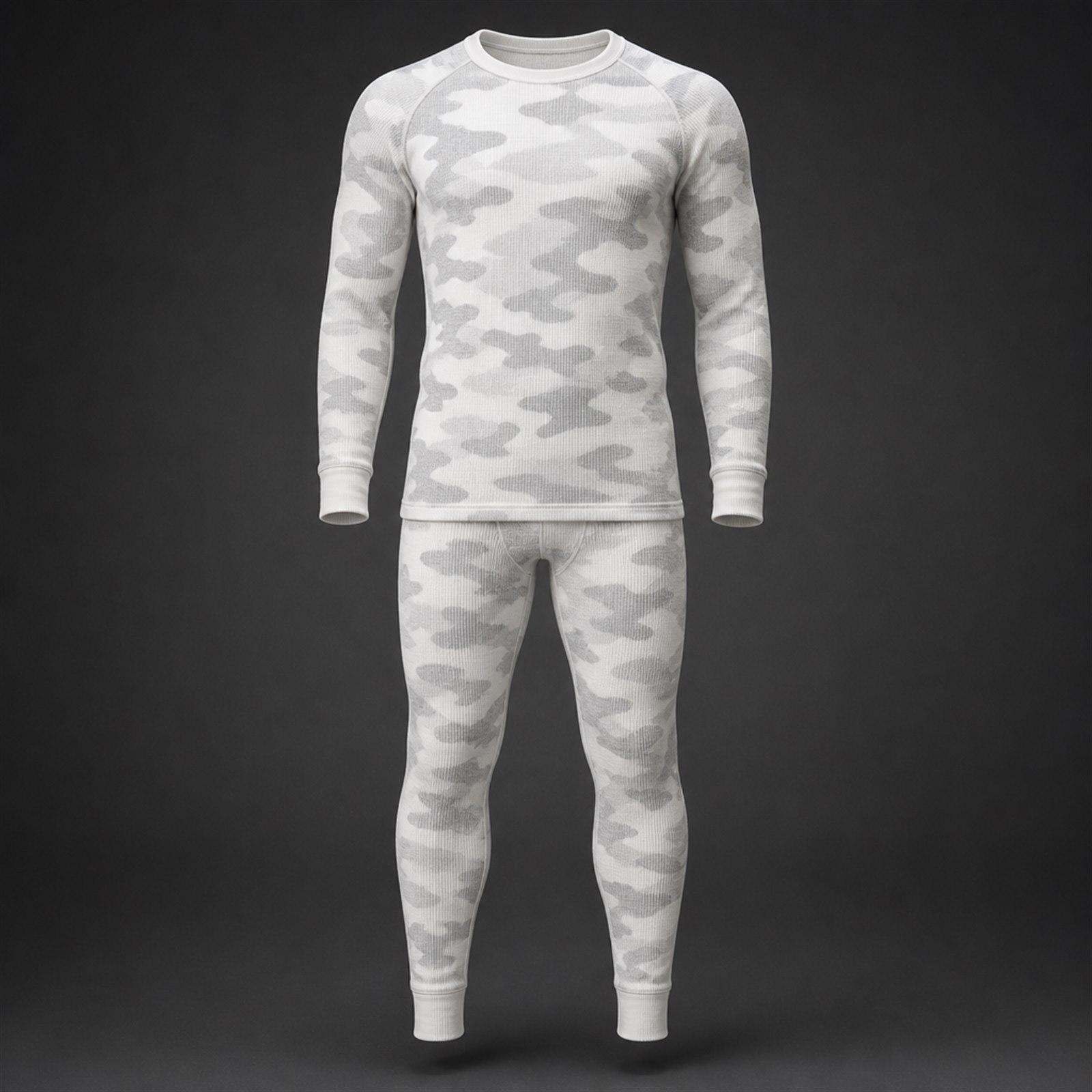
A base layer is the cheapest garment in a layering system and the one that decides whether the rest of it works.
Wet Weather Tactical Clothing
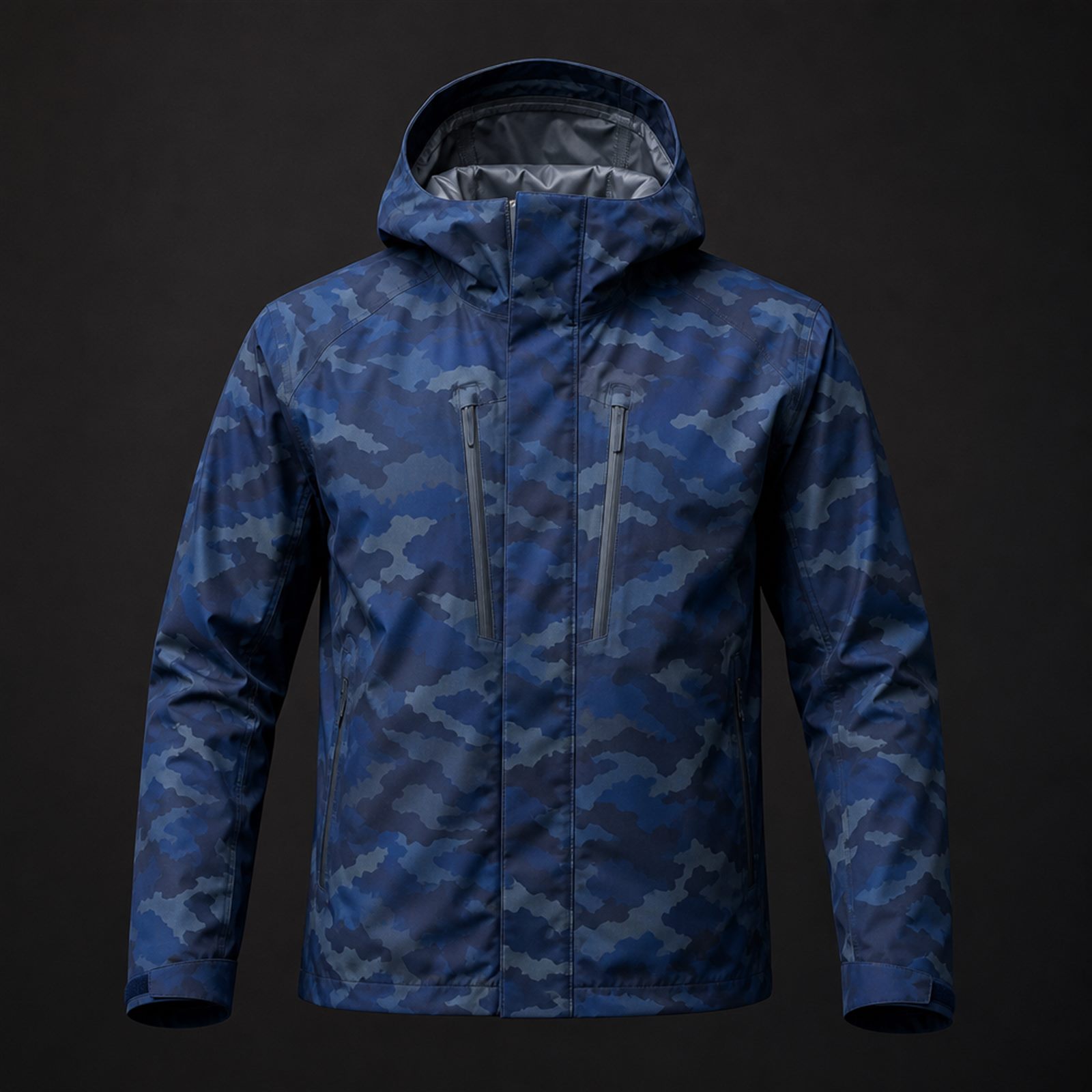
A waterproof tactical shell is a set of compromises, and a buyer should know exactly which compromises are being made.
Waterproof Winter Tactical Pants
Winter pants do not fail because the fabric on the order sheet was wrong.
FAQ
Localised damage rather than general wear. A tear usually starts at a pocket corner, a seam end, the crotch or the seat, and then propagates because nothing stops it. That is why the reinforcement plan targets those specific points, and why stitch type and seam end treatment are treated as performance decisions rather than finishing details.
Targeted reinforcement is usually the better answer. Covering a whole panel adds weight, heat and stiffness, and the added material often just moves the failure to the edge of the reinforced area. Reinforcement sized to the contact zone and shaped so it flexes with the joint protects the failing point while keeping the garment wearable.
By planning reinforcement and articulation together. The reinforcement is shaped or segmented around the flexion line, stitched so it does not create a stiff crease, and paired with stretch where the panel has to deform. Mobility loss exists either way, so it is stated in the specification and the buyer decides how much is acceptable.
Stitched reinforcement can be re-stitched or replaced, and the construction can be planned to leave access for that. Bonded and laminated constructions generally cannot be repaired in the same way, which is a real difference in total service life. Where repair is a requirement, we build for it explicitly.
By writing the mechanical details down: reinforcement dimensions, stitch density, hardware and fabric construction, with those details checked at batch level. If only the fabric is fixed and the construction detail is left to the floor, the second order is a different garment mechanically, even when it looks the same.
Related Products
Related Applications
Related Capabilities
Related Articles
Related Categories
Send the destination market, the season and how the garment will be worn. We will propose the specification and state the trade-offs, rather than recommending a single fabric with no context.