Skip to content
TACTICALOEM / ODM TACTICAL APPAREL
ENEnglish

Products / Extreme Cold Weather Parkas

Extreme Cold Weather Parka Manufacturer

A parka is defined by length. The garment extends below the hip to cover the seat and upper leg, which is where a jacket stops protecting the wearer and where cold reaches the body fastest on a stationary post. That extra length is also the whole engineering problem: a longer garment has to be opened for the wearer to walk, climb or get into a vehicle, it weighs more, it packs larger, and it needs a closure that can be undone from both directions without the hem collapsing. Many parkas solve part of this by carrying insulation in a removable liner, so one outer shell covers a wider working range and a damaged or wet liner can be replaced on its own. In the four-layer model the parka usually combines the insulation layer and the protective shell in one garment, worn over a base layer and a mid layer. This page covers length, liner construction and the trades that come with both.

custom extreme cold weather parkasextreme cold weather parka OEMwholesale extreme cold weather parkaslong insulated parka supplier
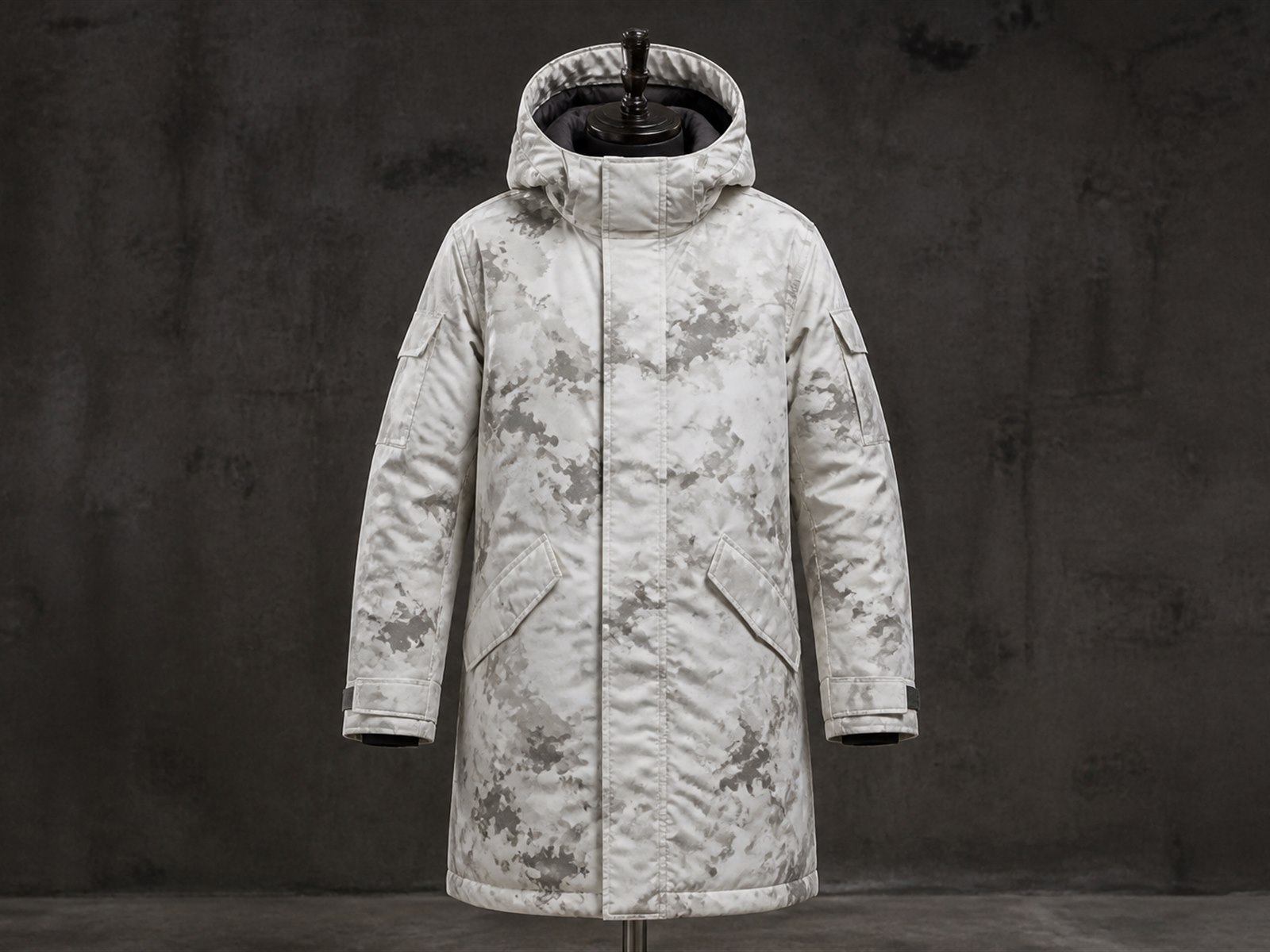
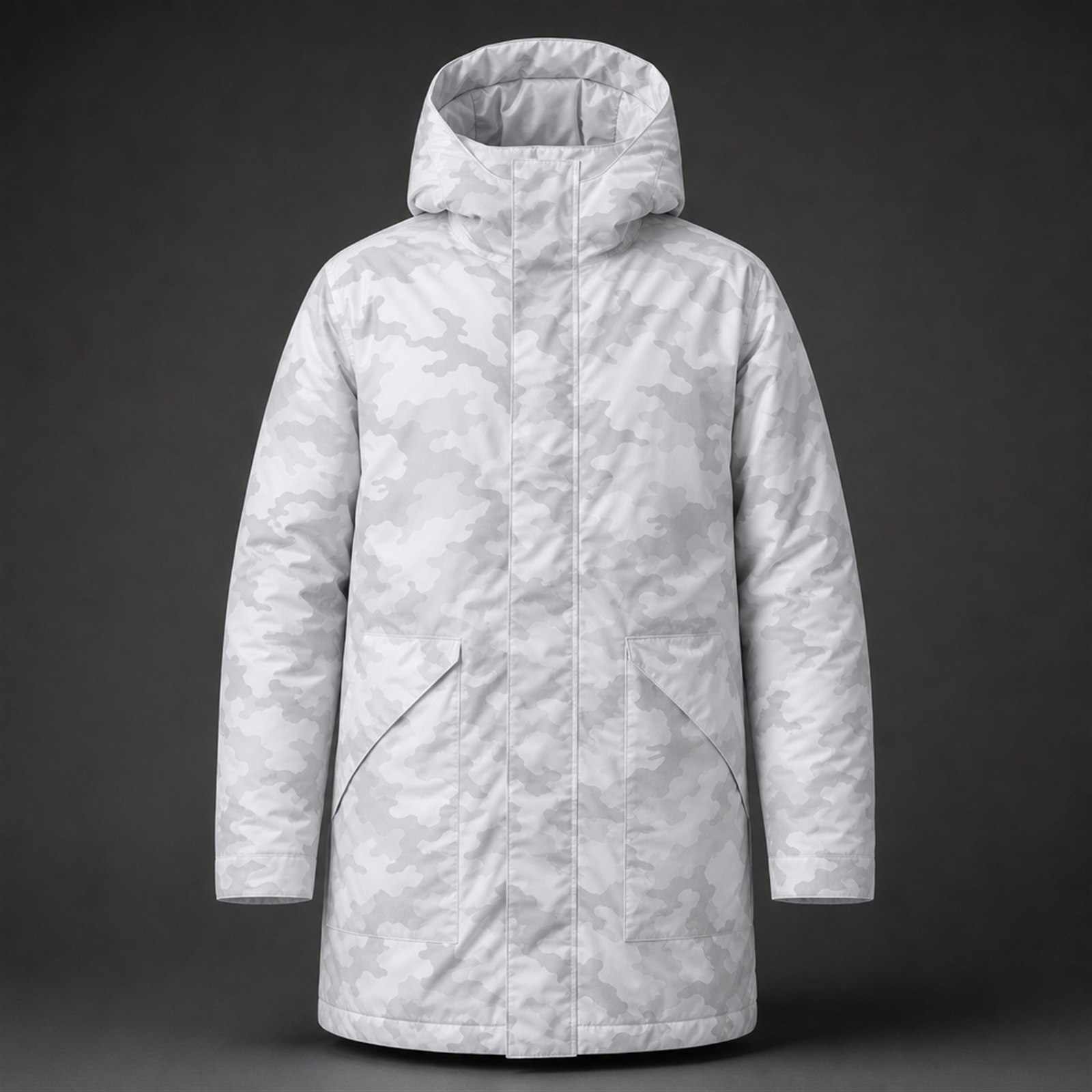
Extreme cold weather parka with extended hem coverage and removable insulated liner made for OEM buyers
Primary keyword
extreme cold weather parka manufacturer
Climate focus
Extreme cold / static exposure · Extreme cold / variable activity · Extreme cold / wet snow / layering
Development input
Tech pack · Reference sample · Sketch · Photo
Extreme Cold Weather ParkasExtreme Cold Weather ParkasExtreme Cold Weather ParkasExtreme Cold Weather Parkas

Buyers

Who buys extreme cold weather parkas?

Extreme Cold Weather Parkas is specified by organisations rather than bought as a single garment, so a quotation has to satisfy all 6 buyer profiles listed below.

Tactical Brands

A parka whose length, liner attachment and closure behaviour are documented, so a reordered garment matches the approved sample in weight and drape.

Outdoor & Hunting Brands

A long, quiet insulated parka in camouflage and earth colourways, cut for a civilian layering habit and delivered with retail labelling.

Uniform Distributors & Wholesalers

Long winter garments in volume with a fixed specification and colour standard, sized to be issued over existing uniforms.

Government Contractors & Procurement Companies

Documented length, liner and construction decisions, compatibility with garments already in issue, and inspection records before shipment.

Security Companies

A presentable long coat for static posts that still allows a foot patrol, with insignia at agreed positions and a clean silhouette.

Private Label Brands & Importers

A long winter garment developed to their own length, fill direction, fit and price architecture, with their labels and packaging.

Types

Extreme Cold Weather Parkas types

The same category name covers very different garments depending on climate and wear pattern. 3 types of Extreme Cold Weather Parkas are covered here, and the type is chosen before the fabric.

Extreme cold / static exposure

Long-Line Insulated Parka

Insulation is built into the garment and the hem extends to mid-thigh or knee, covering the seat and upper legs where a jacket leaves the wearer exposed. This is the configuration for standing, observing or waiting in sustained cold. The trade is weight, packed size and restricted stride: the longer the hem, the more the wearer has to open the garment to climb, step up or sit down.

  • Hem extended below the hip to cover the seat and upper leg
  • Insulation built in, heavier at torso and over the seat
  • Two-way front closure so the hem can be opened for movement
  • Side or rear vent to give stride without removing the coat
  • Insulated hood with adjustable interface and rear adjustment
Extreme cold / variable activity

Parka with Removable Liner

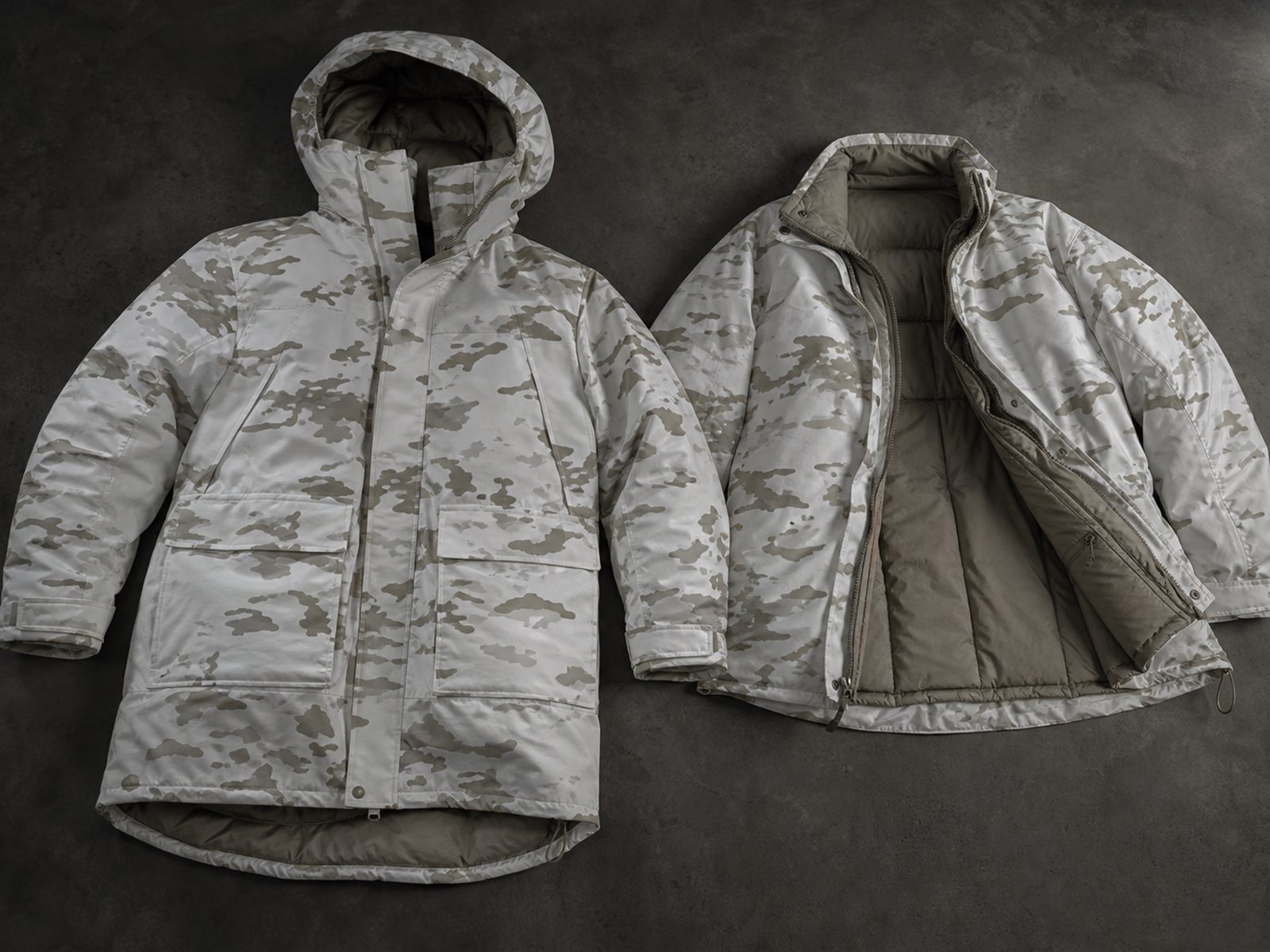
The outer shell is a weather-protective parka and the insulation is a separate liner attached inside it. One garment therefore covers more of the programme's working range, and a wet or damaged liner can be dried or replaced without replacing the shell. The trade is attachment hardware, extra weight, another set of fit tolerances and a real risk of liner shell colour mismatch across different fabric types.

  • Insulated liner attached by zip, loops or a combination
  • Liner removable for drying and separate replacement
  • Shell usable alone in milder conditions or with independent layers
  • Attachment points specified and documented for repeat orders
  • Liner sized to the shell pattern, not to a generic size

Extreme cold / wet snow / layering

Protective Shell Parka

A long protective shell with no built-in insulation, designed to be worn over independent base, mid and insulation layers. It gives the programme the most configuration freedom and the longest working range, and each layer can be replaced separately. The trade is that warmth depends entirely on what the buyer issues underneath, and a shell worn over the wrong layer stack performs badly however good the shell is.

  • Length extended without insulation weight
  • Waterproof or water-resistant construction with protected closures
  • Side vents and two-way front closure for stride when sealed
  • Sized with deliberate allowance for the layer stack beneath
  • Removable or adjustable hood interface

Engineering

Construction, part by part

8 construction decisions define Extreme Cold Weather Parkas, and each row below is one decision you control at specification stage.

Length and Hem Coverage

  • Hip length with rear drop
  • Mid-thigh length
  • Knee length
  • Hem split at the rear for stride
  • Hem drawcord to seal against wind and snow

Length trades warmth against movement, weight and packed size, so it is set against how the wearer spends their day rather than against how cold the programme is. A longer hem must be paired with a closure that opens or a vent that lets the leg swing, otherwise the garment is opened every time the wearer walks.

Liner Attachment and Removal

  • Liner attached by full-circumference zip
  • Liner attached by loops and snaps at neck, cuff and hem
  • Combination zip and loop attachment
  • No liner, independent layers instead
  • Liner with its own closure for standalone wear

The attachment system decides how easily the liner can be removed, how it sits when in place and how much hardware the garment carries. It must be specified at the start: adding a liner to an approved single-layer parka means re-patterning the shell and the liner together.

Shell and Face Fabric

  • Water-resistant woven shell
  • Waterproof shell with seam treatment
  • Wind-resistant lightweight shell
  • Softshell face for dry cold
  • Reinforced shell at shoulder and hem

On a long garment the face fabric is exposed to more than on a jacket, because the hem contacts seating, vehicle interiors and ground. Protection and abrasion behaviour are specified together rather than as separate decisions.

Hood and Collar Interface

  • Insulated fixed hood
  • Insulated removable hood
  • Low-profile hood for headwear compatibility
  • High stand collar with fleece-lined inner face
  • Zip-through collar with chin guard

Hood and collar are where cold reaches the body fastest. Where headwear or a headset is issued, the hood interface is confirmed before pattern development, because a hood corrected later loses either coverage or field of view.

Front Closure and Two-Way Zip

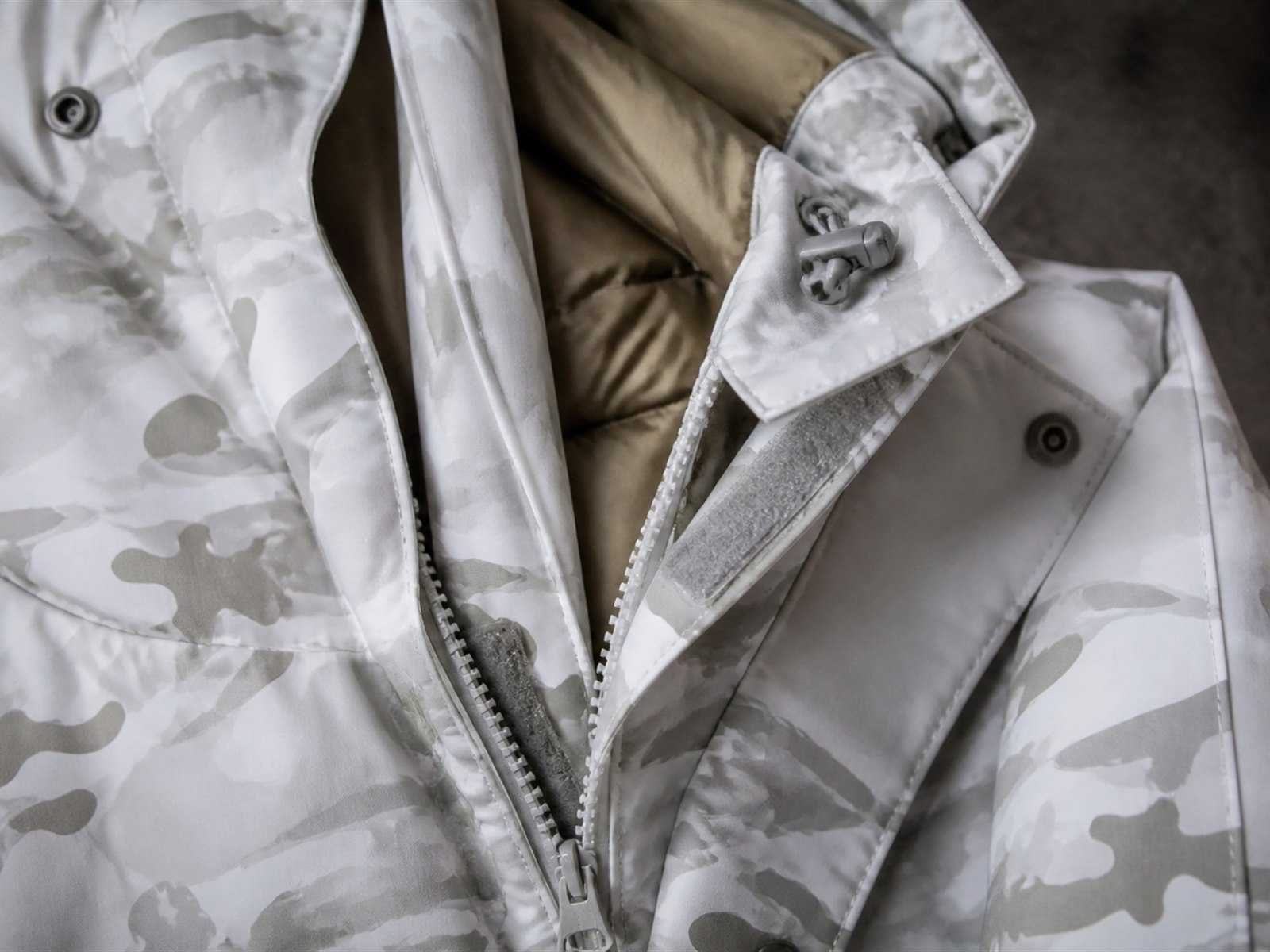
  • Two-way front zip with external storm flap
  • Full-length single zip with storm flap
  • Internal draft flap behind the closure
  • Hook and loop flap at the neck
  • Oversized pull designed for gloved operation

A two-way closure is close to essential on a long parka, because it lets the hem open for walking and for sitting without exposing the chest. Flap depth, slider type and pull design are specified for gloved use rather than for appearance.

Ventilation

  • Side vents with or without zips
  • Underarm vents
  • Chest or core vents
  • Rear vent concealed in the hem split
  • Mesh-backed vent openings

Ventilation on a parka serves two purposes: releasing heat during exertion and restoring stride when the hem is closed. Which vents are appropriate follows from whether the wearer is standing or walking.

Cuffs, Hem and Sealing

  • Adjustable hook and loop cuff
  • Elasticated inner cuff
  • Extended sleeve with thumb loop
  • Drawcord hem with internal adjusters
  • Snow or draft skirt at the hem

Heat leaves through openings before it leaves through fabric, and a long parka has more openings than a jacket. Cuff and hem hardware has to be operable with gloves, which constrains pull and toggle size.

Pockets and Wear Reinforcement

  • Insulated hand-warmer pockets
  • Chest pocket with zip
  • Internal security pocket
  • Large rear or lower utility pockets
  • Hem edge and shoulder reinforcement

On a long garment the hem edges and shoulders take the abrasion, and the lower pockets are reached in awkward positions while wearing gloves. Pocket height and opening geometry are specified against the layer stack and the equipment carried.

Available fabrics

Material options by garment area

Shell and Face Fabric

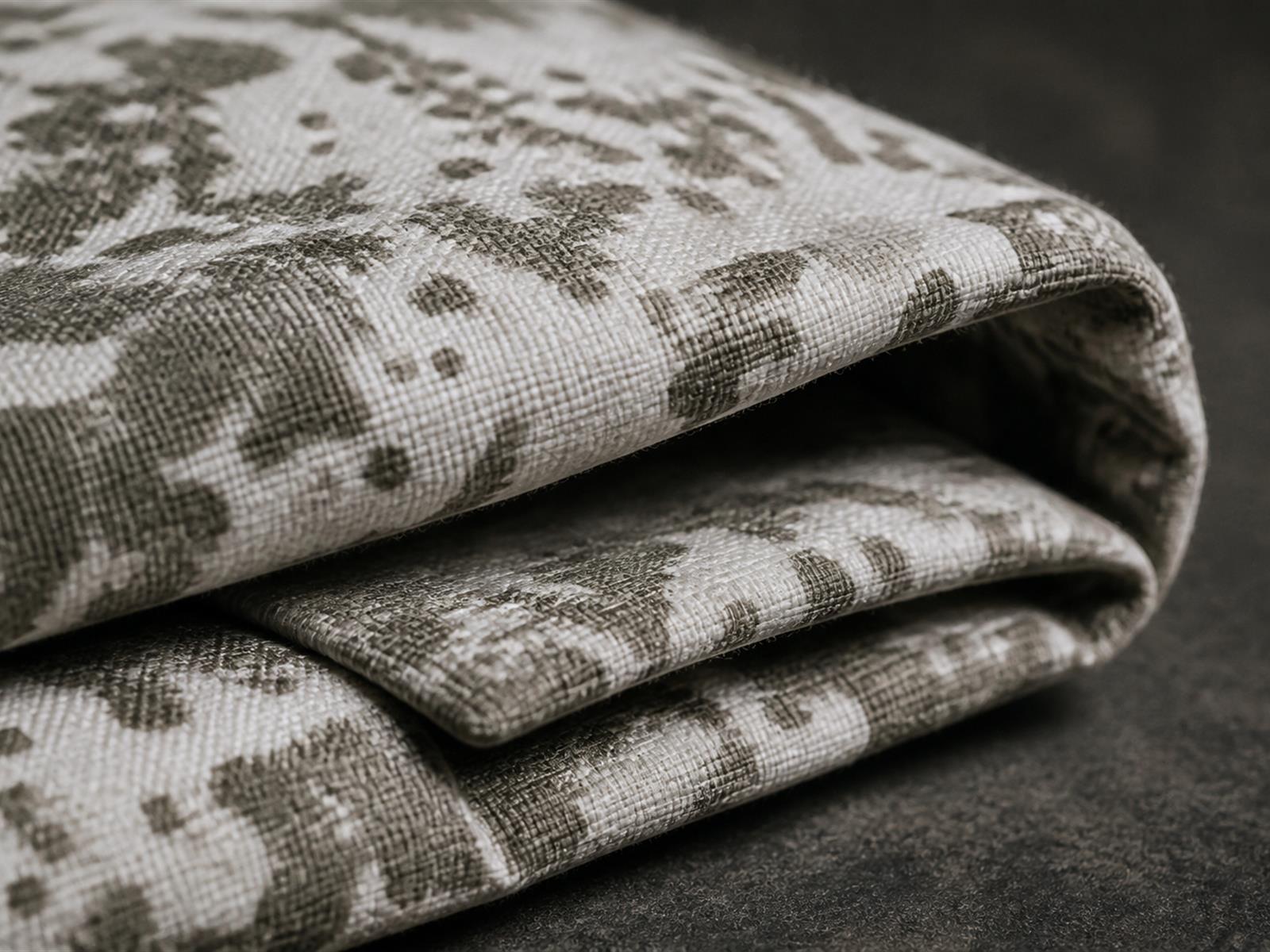
Water resistant fabricWaterproof fabric for wet snow and sleet programmesWind resistant fabricSoftshell for dry coldBuyer-specified woven composition

The shell decides how much weather reaches the insulation and how fast internal moisture leaves. A more protective shell costs breathability, which matters more on a long garment because more of the body is covered.

Insulation

Cold weather insulation materialSynthetic fill selected for damp performanceFleece used as a lofted inner layerBuyer-specified fill type and weightLiner fill and shell fill specified separately

Where a parka has a liner, the fill in the liner and the fill in the shell are separate decisions and should be documented separately. Treating them as one specification is how repeat orders lose warmth.

Lining and Inner Face

Taffeta liningBrushed inner faceFleece-backed liningQuick dry fabric for the inner faceMesh lining at vented areas

On a removable liner the inner face also has to slide over the mid layer and be easy to reattach, which constrains fabric weight and how much grab the surface has.

Reinforcement and Trim

Abrasion-resistant overlay at hem and shoulderStretch fabric at movement panelsRipstop family fabric for reinforcement panelsBuyer-specified zips, tape width and hardware

Trim and hardware usually account for most of the difference between two quotations for the same parka. Writing them into the specification is what makes competing quotations comparable.

Customization

What can be customized

14 specification lines are available for Extreme Cold Weather Parkas, and where an option changes cost, weight or durability the consequence is stated next to it.

Length

Hip length with rear dropMid-thigh lengthKnee lengthHem split at the rearHem drawcord

Liner

Fixed insulationRemovable zip-in linerRemovable loop and snap linerLiner wearable on its ownNo liner, shell only

Fabric

Water resistant shellWaterproof shellWind resistant shellSoftshellBuyer-specified composition and weight

Fill

Fill type to buyer directionFill weight per body zoneLiner and shell fill specified separatelyMapped fill drawing

Color

Solid colourwaysBuyer Pantone targetsBuyer lab dip approvalContrast panel colourways

Camouflage Pattern

Buyer artworkWinter and snow styleWoodland styleDigital styleCustom seasonal pattern

Hood

Fixed insulated hoodRemovable insulated hoodLow-profile hood for headwear compatibilityAdjustable hood with rear drawcord

Closure

Two-way front zip with storm flapFull-length zip with storm flapInternal draft flapBuyer-specified zip brand or tape width

Ventilation

Side ventsUnderarm ventsRear hem ventChest vents

Cuff and Hem

Elasticated cuffHook and loop adjustable cuffThumb loopDrawcord hemSnow or draft skirt

Pocket

Hand warmerChestLower utilityInternal securityRadio pass-through

Reinforcement

Hem edgeShoulder overlaysElbow overlaysStress point bartacks

Logo

Woven labelPrinted labelRubber patchEmbroideryHeat transfer

Label and Packaging

Main, size, care and origin labelsPrinted poly bagHangtag and header cardCustom boxCompression or carry bag

Sizing

Size development

A long parka has more dimensions that can be wrong than a jacket, and length is one of them. Hem position relative to the seat and knee, back length, sleeve length and the width of the hem opening all interact with the layer stack underneath and with how the wearer moves. A parka that is correct over a base layer alone will pull across the back when the wearer bends with a mid layer and a liner in place, and a hem that sits correctly when standing may bind when the wearer sits. Size development therefore starts from the layer stack and from the movements the wearer performs. We need the buyer target size range, plus garment measurements from a reference sample or body measurements, and any sizing system already in use in their market. A full size set is produced so back length, chest, across-shoulder, sleeve length, hem width and hem position can be confirmed across the range. Tolerances and the measuring method for a long lined garment are agreed in writing before bulk.

How size development works

Branding

Private label

Private label on a parka covers branding and the care instruction that decides how the shell, fill and liner behave after laundering, which matters more on a removable liner because the liner may be washed separately. Main label, size label, care label and country of origin label are produced to the buyer artwork and content requirements, and a liner identification label is often requested so a liner can be matched back to its shell after issue. Branding can be applied as woven label, printed label, rubber patch, embroidery or heat transfer, with insignia at agreed chest, sleeve or shoulder positions. Packaging ranges from a plain poly bag to a printed poly bag with hangtag, header card, custom box or a reusable compression and carry bag. All artwork, label content and packaging are confirmed on the pre-production sample.

Customization capability

Development

Sampling process

Sampling for Extreme Cold Weather Parkas runs in 8 stages, each one removing a specific risk before the next stage commits cost.

01

Requirement review

We review the tech pack, reference garment, photo or sketch and list every open specification, including required length, whether a liner is in scope and how the parka is issued, before any material is cut.

02

System and movement brief

The layer stack, the activity pattern and the movements the wearer performs are written down, because they decide length, vent configuration and closure type.

03

Liner and material proposal

Shell, liner, fill, attachment hardware and trim options are proposed against that brief, with alternatives where the liner system is not yet fixed.

04

Pattern development

The pattern is developed or adapted to the buyer reference, including hem length and drop, vent geometry, liner attachment points and hood dimensions.

05

Prototype

A first sample is produced in the proposed materials so the buyer can judge length, drape, stride, sitting comfort and liner attachment in hand.

06

Revision round

Comments on length, vent behaviour, liner attachment, closure operation and fit are consolidated into one revision round so the specification converges.

07

Size set

The full size range is produced so length, hem position and layering allowance can be confirmed at the extremes, where long garments are most often wrong.

08

Pre-production sample

Final shell, liner, fill, attachment system, trims and labelling are locked in a pre-production sample that becomes the bulk reference standard.

Production

Bulk manufacturing

Bulk production of Extreme Cold Weather Parkas runs in 7 stages, which is where an approved specification is either held or lost.

01

Shell, liner and trim approval

Shell fabric, liner, fill, attachment hardware, zips, flaps, thread and labels are approved against the pre-production standard before cutting.

02

Bulk cutting

Cutting runs against the approved pattern, with markers controlled for shade, for long panel handling and for direction-sensitive camouflage prints.

03

Liner and panel preparation

Liner panels, fill and attachment hardware are prepared and matched to the correct shell before assembly, so liners are not interchanged between shells during production.

04

Assembly

Line assembly follows the approved sequence, with vents, hem split, attachment points, storm flap and hem reinforcement built in the order the sample was approved.

05

Inline quality control

Work in progress is inspected during assembly so liner attachment, vent construction, seam integrity and hardware fitting are corrected on the line.

06

Finishing and pressing

Thread trimming, hardware function checks, hood and drawcord checks and suitable low-temperature pressing are completed before final inspection.

07

Final inspection and packing

Measurement, liner attachment function, construction and packing inspection are completed against the agreed standard and documented before shipment.

Quality Control

Quality control for this category

Inspection of Extreme Cold Weather Parkas is measured against an agreed standard, and the 7 checks below are listed with what each one is measured against.

01

Incoming shell, lining and fill inspection

Shell fabric, lining and fill are checked on receipt for shade, width, weight, hand feel and defects before they enter production.

02

Liner and hardware identification control

Liner panels and attachment hardware are kept identified and separated, because similar-looking liners built to different shells are a common source of mixed production.

03

Pre-production approval

The pre-production sample is approved by the buyer and becomes the reference standard for bulk, including length, liner system and fill map.

04

Inline inspection

Work in progress is inspected at defined points, with attention to vent construction, hem split, attachment points and seam quality.

05

Measurement inspection

Critical measurements, including back length and hem width, are checked against the approved size set using the agreed method for a long lined garment.

06

Construction and function inspection

Two-way closure operation, storm flap, liner attachment and removal, hood adjustment, drawcords, cuff closures and symmetry are function checked.

07

Final and packing inspection

Finished goods are inspected before packing, and labels, folding, poly bagging and carton marking are checked against the packing instruction.

Choosing a Extreme Cold Weather Parkas manufacturer

How to choose a extreme cold weather parkas manufacturer

The 6 questions buyers ask about Extreme Cold Weather Parkas before committing to a first order.

Decide the length from the wearer's day

Length is a working decision, not a style one. A wearer who stands or observes benefits from coverage over the seat and upper leg; a wearer who walks, climbs or drives pays for that length in restriction, weight and packed size. Agree the movements first, then the hem position, and ask how the garment is expected to open to allow them.

Ask whether the liner is truly removable in practice

A liner on paper and a liner in the field are different things. Ask how it attaches, how long removal takes with cold hands, whether reattachment can be done wrong, and whether the liner can be dried on its own. A liner system that cannot be reassembled correctly by the wearer is a source of returns rather than a feature.

Require a two-way closure on a long garment

A long parka with a single full-length zip has to be fully opened for the wearer to sit, climb or step up. A two-way closure allows the hem to open while the chest stays sealed. This is one of the few details where the cost is small and the difference in use is large.

Weigh protection against breathability deliberately

A long waterproof shell keeps weather out and moisture in over more of the body than a jacket does. If the wearer is active, that trapped moisture is a real loss and ventilation has to be designed in. Ask a supplier to explain which trade they made and why, rather than presenting one construction as universally better.

Check colour matching across shell, liner and trim

A parka with a removable liner brings several different fabric types into one garment, and they take colour differently. Agree where an exact match is required, where a tolerated difference is acceptable, and how it will be verified, rather than discovering the answer on finished goods.

Agree how a long garment is measured flat

Back length, hem width and hem position have to be measured the same way by everyone. Two suppliers can produce different charts from the same body, particularly on a lined garment where the measuring method changes the numbers. Fix the method and the tolerances in writing before the size set is approved.

Products

Extreme Cold Weather Parkas products

Each product in Extreme Cold Weather Parkas is a developed specification with its own material options, construction detail and customization map.

Extreme Cold Weather Parkas

Expedition Parka

A parka for extreme cold is a system, not a garment with more filling.

Extreme cold and dry continental wintersCold and wet conditions where a waterproof shell over insulation is requiredStatic and low-activity duty where warmth retention matters more than breathability
View product

FAQ

Extreme Cold Weather Parkas FAQ

How is an extreme cold weather parka different from an extreme cold weather jacket?

Length and what follows from it. The parka extends below the hip and covers the seat and upper leg, so it needs a two-way closure or vents so the wearer can still stride and sit, carries more weight, and packs larger. The jacket category covers garments that stop at or near the hip and are configured more for movement. Which is right depends on whether the wearer is mostly standing or mostly moving.

Should the insulation be fixed or in a removable liner?

A removable liner gives one shell a wider working range and lets a wet or damaged liner be dried or replaced on its own, at the cost of attachment hardware, extra weight, an extra set of fit tolerances and colour matching across different fabric types. A fixed build gives more control over where warmth sits and usually a cleaner, lighter garment. Both are developed to order, and the decision is best made on how the garment is issued and maintained.

How long should the parka be?

That is a programme decision rather than a standard. Mid-thigh length is the common working compromise between coverage and stride; knee length adds coverage for a wearer who largely stands but costs movement and weight. What matters is that the length is agreed with the closure and ventilation that make it usable, and that the sample is assessed on a wearer performing the movements the role requires.

Can you give us a temperature figure for a parka?

We do not publish a temperature rating, and we would advise caution about supplier-supplied temperature figures generally. How warm a parka feels depends on activity level, wind, humidity, exposure time, the layer stack underneath and how the garment fits, not only on the fill. What we do instead is specify the build to the coldest condition your programme expects and document it so the specification is repeatable. Any comfort claim should come from your own trials with the actual composition.

How is colour matched between the shell and a removable liner?

This is one of the harder parts of a parka programme, because shell, liner and fill carrier are usually different fabric types that take colour differently. We treat colour matching across the set as a requirement to be agreed and verified, and we will tell you where an exact match is not realistic rather than promise one.

What information do you need for a quotation?

Target quantity, required length and hem position, whether a liner is in scope and how it attaches, the layer stack the garment must cover, shell and fill direction, hood and closure requirements, vent configuration, colour or camouflage direction, size range, and labelling and packaging requirements, together with the target market and climate. Where a figure such as MOQ or lead time has not been confirmed with you, we state that explicitly rather than quote a number we cannot hold.

Request a Manufacturing Assessment

Send us your tech pack, reference sample or product idea. We review your requirement, recommend materials and construction, and come back with a development plan you can act on.