Skip to content
TACTICALOEM / ODM TACTICAL APPAREL
ENEnglish

Products / Tactical Fleece & Mid Layers

Tactical Fleece & Mid Layer Manufacturer

A fleece or mid layer is not simply a warmer shirt. It is the layer that has to hold warmth while the wearer is moving, and to release moisture before that moisture reaches the insulation above it. In a Base / Mid / Insulation / Shell system it sits directly over the base layer and directly under the insulation or shell, which means both of its faces matter: the inner face has to pass vapour and moisture on, and the outer face has to keep air trapped without blocking that path. Buyers come to this category when a base layer and an outer jacket are already specified and the system still underperforms during movement, or when one garment has to cover the largest part of a working day on its own. This page covers what we build here: grid and loft fleece, brushed knit mid layers and light insulated mid layers, plus the construction decisions — collar, closure, cuff, hem, ventilation and pocketing — that decide how each behaves once a shell is worn over it.

custom fleece mid layertactical mid layer OEMwholesale grid fleece jacketmid layer supplier for tactical brands
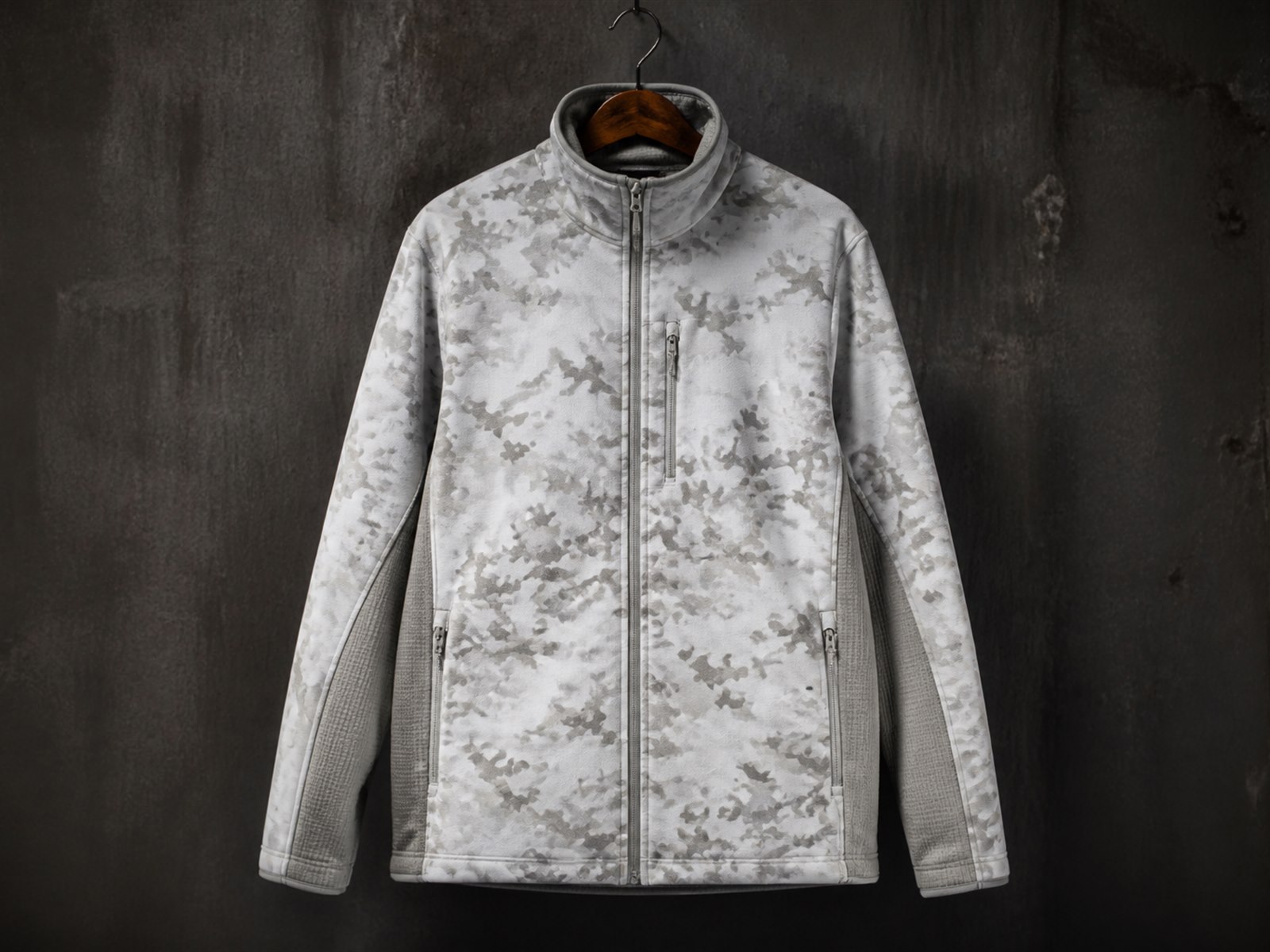
Tactical fleece mid layer with grid inner face and knit side panels manufactured for OEM tactical brands
Primary keyword
tactical fleece mid layer manufacturer
Climate focus
Cold / High activity · Cold / Duty, site and vehicle work · Severe cold / Low output work
Development input
Tech pack · Reference sample · Sketch · Photo
Tactical Fleece & Mid LayersTactical Fleece & Mid LayersTactical Fleece & Mid LayersTactical Fleece & Mid Layers

Buyers

Who buys tactical fleece & mid layers?

Tactical Fleece & Mid Layers is specified by organisations rather than bought as a single garment, so a quotation has to satisfy all 6 buyer profiles listed below.

Tactical Brands

A mid layer that completes a layering range they already sell, in the same size set and colour direction, without a second fit standard appearing in the collection.

Outdoor & Hunting Brands

Quieter, less military mid layers in muted palettes, with their own label and packaging, and a construction that suits active movement rather than static duty use.

Uniform Distributors & Wholesalers

One mid layer stocked across a full size range that can be issued with jackets and base layers they already hold, and reordered against a written specification.

Security Companies

Duty-appropriate mid layers that look presentable on site, take company insignia, and survive frequent laundering across a large staff group.

Procurement Companies & Importers

A documented specification per mid layer, pre-production approval, and inspection records before shipment, so a tender line can be evidenced.

Private Label Brands

Their own artwork, woven labels, hangtags and retail packaging on a mid layer they can brand as their own product rather than a generic fleece.

Types

Tactical Fleece & Mid Layers types

The same category name covers very different garments depending on climate and wear pattern. 3 types of Tactical Fleece & Mid Layers are covered here, and the type is chosen before the fabric.

Cold / High activity

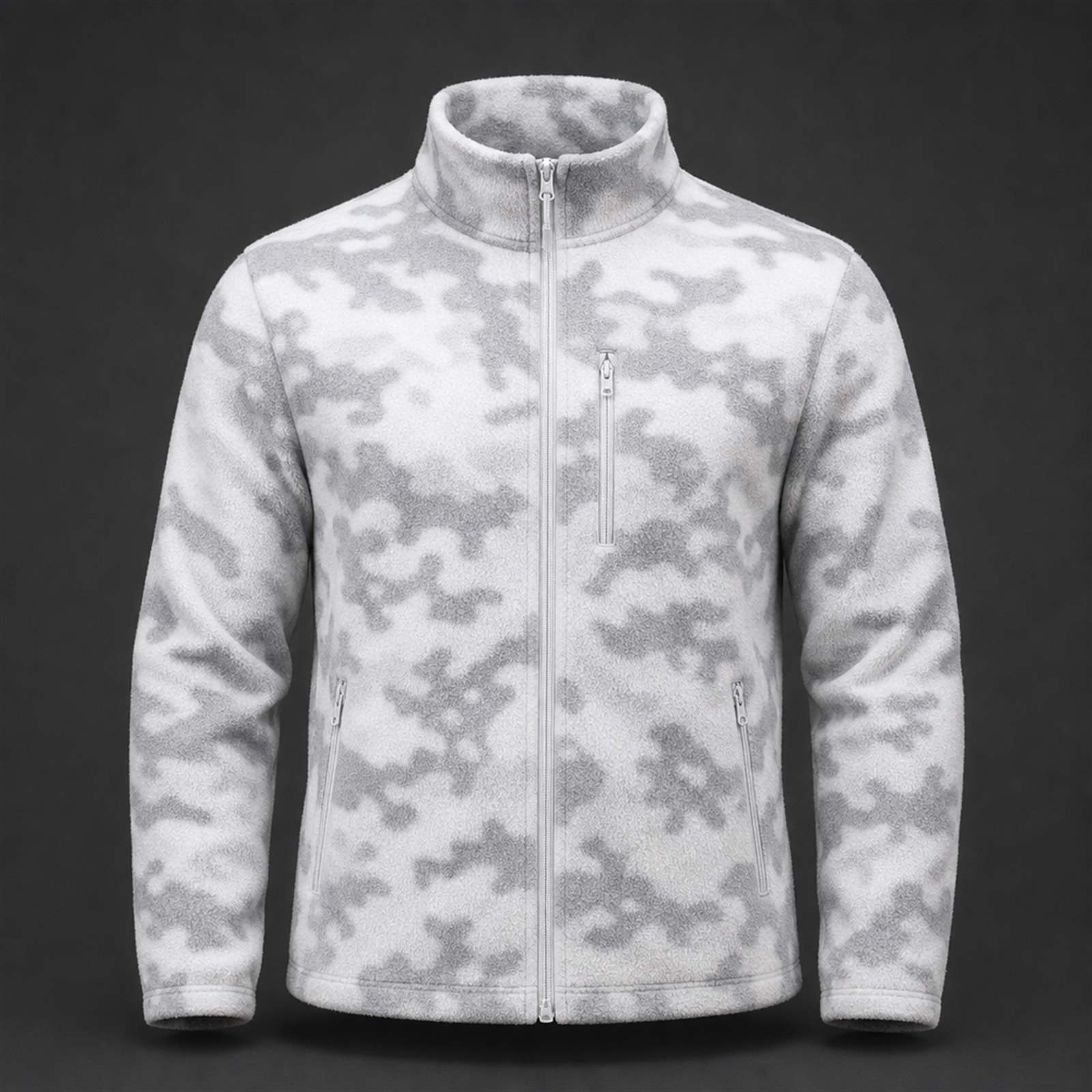
Grid Fleece Mid Layer

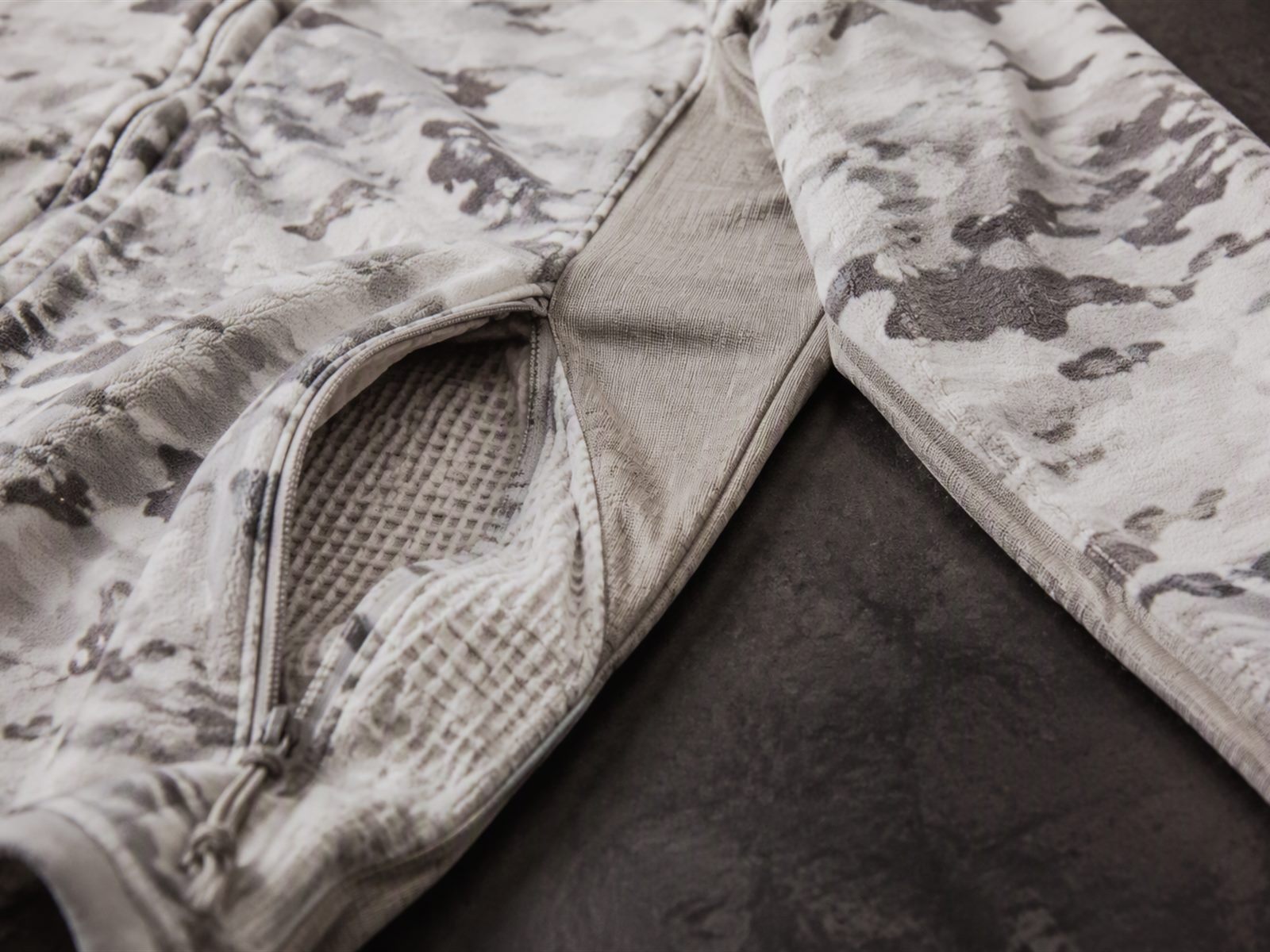
An open grid structure on the inner face moves vapour away from the base layer quickly while the outer face holds still air. It is the version to specify when the wearer generates heat continuously and the shell over it is breathable. The cost is warmth per unit of thickness: a grid build is deliberately less insulating than a solid loft fleece of the same weight, and it will feel cool if the wearer is mostly standing still.

  • Grid inner face for moisture transfer during movement
  • Knit or stretch side panels for movement range
  • Thumb-loop or extended cuffs
  • Full front zip with a chin guard
  • Underarm or side ventilation option
  • Low-profile chest pocket sized for a phone or notebook
Cold / Duty, site and vehicle work

Brushed Knit Mid Layer

A denser brushed knit with a softer outer face, used where the mid layer is frequently worn without a shell and has to look presentable on duty. It resists wind better than an open grid fleece on its own, which makes it easier to live with indoors and in vehicles, but it releases heat more slowly during sustained exertion and dries more slowly after washing.

  • Brushed inner face for next-to-base comfort
  • Denser knit face that takes insignia and embroidery cleanly
  • Stand or zip-through collar with chin guard
  • Hand pockets with protected closures
  • Flatlock or taped seam options at the shoulders
  • Colour-matched trims for uniform programmes

Severe cold / Low output work

Light Insulated Mid Layer

A thin synthetic fill between two lightweight faces, quilted or baffled into the pattern. It is the mid layer for programmes where the wearer alternates between waiting and short bursts of work, because it delivers warmth when they are static without the volume of a full insulation layer. The trade-offs are real: less breathability than fleece, more bulk at the chest and shoulders, and a longer drying time if it takes on moisture.

  • Light synthetic fill mapped by panel
  • Quilted or baffled construction with stitch control
  • Internal chest pocket and zipped hand pockets
  • Adjustable hem to control draught through the waist
  • Articulated sleeves for shoulder rotation
  • Packs into its own pocket where the programme requires it

Engineering

Construction, part by part

8 construction decisions define Tactical Fleece & Mid Layers, and each row below is one decision you control at specification stage.

Inner Face

  • Open grid fleece inner face
  • Low-pile brushed inner face
  • High-loft inner face for static warmth
  • Flat knit inner face for easy layering over base

The inner face is chosen against the base layer the buyer issues. A high-loft inner face over a slick base fabric slides and bunches; an open grid over a heavy base layer does less than the specification assumes.

Outer Face

  • Plain fleece outer face
  • Knitted face fabric with grid backing
  • Light woven face over fill
  • Softshell face for the outer-usable version

Where the mid layer is expected to be worn as an outer layer in mild cold, the outer face has to take abrasion and light precipitation. Where it always sits under a shell, a lighter outer face is the better choice and adds less weight.

Side Panels & Underarm

  • Plain fleece side panels
  • Stretch knit side panels
  • Underarm ventilation panels
  • Gusseted underarm for reach
  • Raglan sleeve construction

Side panels are where a mid layer can lose heat most easily and where movement is most restricted. Stretch or ventilation panels here are usually a better investment than a thicker main body.

Collar

  • Stand collar
  • Low-profile stand collar
  • Zip-through collar with chin guard
  • Collared neck for duty wear

Collar height has to be compatible with the shell collar and the headwear issued. Two high collars stacked under a hood is a common and easily avoided fit problem.

Front Closure

  • Full front zip
  • Half zip with a deep neck opening
  • Button placket for uniform appearance
  • Two-way zip for harness and belt access

A full zip lets the wearer dump heat without removing the layer, which is the main functional reason to specify a zip at all. Slider size matters when gloves are worn.

Cuff

  • Elasticated cuff
  • Flat cuff with stretch binding
  • Extended cuff with thumb loop
  • Hook and loop adjustable cuff

A cuff that closes over the base layer but under the shell glove is the usual requirement. Cuffs are also a wear point, so binding choice affects how long the garment looks new.

Hem

  • Plain hem
  • Elasticated hem
  • Drawcord hem with adjusters
  • Extended back hem

Hem adjustment controls draught where the mid layer is worn without a shell, and becomes less relevant once a properly sealed outer layer is on top.

Pocketing

  • Zipped chest pocket
  • Hand pockets with zip
  • Napoleon pocket for documents
  • Radio or device pocket
  • Sleeve pocket with flap

Pockets added to a mid layer have to stay usable when the layer is worn under a shell or harness. Placement is agreed against what the wearer actually carries.

Available fabrics

Material options by garment area

Main Body Fleece

FleeceMechanical stretch fabricQuick dry fabric

Fleece is the default for active mid layers because it keeps insulating when damp and dries relatively quickly. Where the buyer wants a smoother duty look, a knitted face over a fleece backing covers both requirements.

Side Panels

Mechanical stretch fabricMoisture wicking fabricQuick dry fabric

Stretch panels are selected for recovery rather than warmth. A panel that stretches permanently after a season of use defeats the purpose.

Light Insulated Version

Cold weather insulation materialWind resistant fabricFleece

In the light insulated version, how the fill is held in place matters as much as which fill is used. Quilting or baffle design controls whether warmth stays where it was placed.

Collar and Cuff Trims

Water resistant fabricSoftshellWind resistant fabric

Trims at the collar and cuffs take the most abrasion and the most moisture. Using a different fabric here is a common and inexpensive upgrade.

Customization

What can be customized

14 specification lines are available for Tactical Fleece & Mid Layers, and where an option changes cost, weight or durability the consequence is stated next to it.

Fabric

Grid fleeceLoft fleeceBrushed knitLight insulated buildBuyer-specified composition

Weight & Hand Feel

Lightweight active buildMid weight general buildHeavier build for static use

Colour

Solid colourwaysBuyer Pantone targetsBuyer lab dip approvalColour matching across the layering set

Camouflage

Buyer artworkWoodland styleDigital styleNone (solid duty colourways)

Collar

StandLow profileZip-through with chin guardCollared for duty wear

Closure

Full zipHalf zipButton placketTwo-way zip

Cuff

ElasticatedStretch bindingThumb loopHook and loop adjustable

Hem

PlainElasticatedDrawcordExtended back hem

Pockets

ChestHandNapoleonRadio or deviceSleeve

Ventilation

Underarm panelsSide panelsFront ventNone (static-use builds)

Insignia

Hook and loop panelEmbroidery positionHeat transferNone

Logo & Label

Woven labelPrinted labelRubber patchMain, size, care and origin labels

Sizing Identification

Standard size labelIssue and storage identificationBuyer size coding for stock systems

Packaging

Poly bagPrinted poly bagHangtagHeader cardCustom box

Sizing

Size development

Mid layer sizing has to be developed against the layers it will sit between, not as a stand-alone garment. We start from the buyer's target size range, the base layer and shell measurements the mid layer has to fit inside and over, and any sizing system the buyer already issues against. From there we build a size set so critical measurements — chest, shoulder, sleeve length, back length, cuff opening and hem opening are checked across the range rather than only in the middle size. The most common failure in this category is a mid layer that fits well on its own and binds at the shoulders once the shell is over it, so the size set is assessed in the full stack where the buyer can supply the other layers. Measurement tolerances are agreed in writing before bulk, so inline and final inspection measure against the same numbers.

How size development works

Branding

Private label

Private label covers everything the end user sees on the garment. Main label, size label, care label and country of origin label are produced to the buyer's artwork and content requirements. Branding is applied as woven label, printed label, rubber patch, embroidery or heat transfer, and insignia panels are placed at agreed positions with the reinforcement or backing the fabric requires. Packaging can be a plain poly bag or a printed poly bag with hangtag, header card and custom box. All artwork, label content and packaging is confirmed on the pre-production sample so the bulk order follows an approved reference rather than an instruction given later.

Customization capability

Development

Sampling process

Sampling for Tactical Fleece & Mid Layers runs in 7 stages, each one removing a specific risk before the next stage commits cost.

01

Requirement review

We review the buyer's tech pack, reference sample or photo and list every open point — layer position in the system, base layer to be worn underneath, shell to be worn over, pocket requirements and labelling — before any material is cut.

02

Fabric and structure proposal

Grid fleece, loft fleece, brushed knit or light insulated build is proposed against the activity pattern the buyer describes, with alternatives where the specification is still open.

03

Pattern development

The pattern is developed or adapted to the buyer's reference, including panel layout, stretch or ventilation side panels, sleeve construction and hem shape.

04

Prototype

A first sample is produced in the proposed materials so the buyer can assess warmth in the hand, stretch, weight and how the layer feels over the base layer they issue.

05

Revision round

Buyer comments are consolidated into a single revision round so the specification converges instead of drifting across multiple samples.

06

Size set

The full size range is produced so measurements can be confirmed across the range, and where possible the size set is checked under the shell the buyer intends to pair it with.

07

Pre-production sample

The approved construction, materials, trims and labelling are locked in a pre-production sample that becomes the bulk standard.

Production

Bulk manufacturing

Bulk production of Tactical Fleece & Mid Layers runs in 7 stages, which is where an approved specification is either held or lost.

01

Fabric and trim approval

Bulk fleece, stretch panels, zips, elastics, thread and labels are approved against the pre-production standard before cutting begins.

02

Bulk cutting

Cutting is done against the approved pattern, with markers arranged so that pile direction and shade are consistent between panels of the same garment.

03

Panel preparation

Stretch or ventilation panels, pockets and any printed or embroidered components are prepared and checked before assembly rather than after.

04

Assembly

Line assembly follows the approved construction sequence, with the stitch types and bartacks agreed for the specification used at the seams under load.

05

Inline quality control

Garments are inspected during assembly so a fault is corrected on the line instead of being found after packing.

06

Finishing

Thread trimming, hardware function check, zip run-through and pressing or steaming are completed before final inspection.

07

Final inspection and packing

Measurement, construction and packing checks are completed against the agreed inspection standard and documented before shipment.

Quality Control

Quality control for this category

Inspection of Tactical Fleece & Mid Layers is measured against an agreed standard, and the 7 checks below are listed with what each one is measured against.

01

Incoming fabric inspection

Fleece and knit panels are checked for weight, width, shade, pile condition and defects on receipt, before they enter production.

02

Shade and lot control

Fabric lots are kept separate and compared against the approved standard, because shade variation between fleece lots shows more on a solid mid layer than on a printed garment.

03

Pre-production approval

The pre-production sample is approved by the buyer and becomes the reference standard for the whole order.

04

Inline inspection

Work in progress is inspected at defined points during assembly, including panel alignment and stretch panel symmetry.

05

Measurement inspection

Critical measurements are measured against the approved size set with the tolerances agreed in writing.

06

Construction inspection

Stitching, zip function, cuff and hem finish, pocket security and insignia placement are checked against the approved sample.

07

Final and packing inspection

Finished goods are inspected before packing, and labels, folding, poly bagging and carton marking are checked against the packing instruction.

Choosing a Tactical Fleece & Mid Layers manufacturer

How to choose a tactical fleece & mid layers manufacturer

The 6 questions buyers ask about Tactical Fleece & Mid Layers before committing to a first order.

Start from the activity pattern, not from the fabric weight

A mid layer is selected by how much heat the wearer generates and whether they stop moving in the cold. Continuous movement points to an open grid or lighter loft build; long static periods point to a denser loft or a light insulated build. Buyers who choose a heavier fleece 'to be safe' usually get a mid layer that is too warm during work and then removed during the coldest part of the day.

Check the layer interfaces before the fabric

Ask how the mid layer behaves over the base layer it will be worn with, and whether it fits under the shell without binding at the shoulder or shortening effective arm length. These are pattern questions, and a supplier who only discusses fabric has not begun to answer them.

Decide whether this layer will ever be worn as an outer layer

If it will be worn on its own in mild cold, the outer face needs abrasion resistance, a presentable finish and some wind resistance. If it will always sit under a shell, those features add weight and cost without being used.

Treat moisture release as the specification, not a bonus

A mid layer that cannot pass moisture upward turns the base layer into a wet layer and puts the insulation above it at risk. Ask what the inner and outer faces are designed to do and how the ventilation path works when the shell is closed.

Ask for the size set to be checked in the full stack

The measurement problem with mid layers is not the garment in isolation. Request a size set that the buyer can assess over the base layer and under the shell, because that is the configuration the end user actually wears.

Confirm repeatability in writing

Fleece shade, pile height and stretch panel recovery are the details most likely to drift between orders. Ask how fabric lots are controlled, what the approved standard consists of, and what happens if a lot does not match.

Products

Tactical Fleece & Mid Layers products

Each product in Tactical Fleece & Mid Layers is a developed specification with its own material options, construction detail and customization map.

Tactical Fleece & Mid Layers

Tactical Fleece Mid Layer Jacket

A fleece or mid layer is not simply a warmer shirt.

Cold working days where the wearer alternates between exertion and rest and warmth has to be added and removed through the dayMild to moderate cold where the mid layer is often the outermost garment worn, with or without a shell over itInside a four-layer system, directly over the base layer and directly under an insulated jacket or shell
View product

FAQ

Tactical Fleece & Mid Layers FAQ

How do I know whether a mid layer should be fleece or a light insulated build?

Start with the wearer's day. If they generate heat continuously and the layer sits under a breathable shell, fleece — particularly grid fleece — usually manages moisture better. If they spend long periods waiting or working slowly in the coldest condition your programme expects, a light insulated mid layer holds warmth in that state better, at the cost of breathability and bulk. Many buyers end up issuing both and letting the wearer choose, which we develop as two garments sharing one size set.

Will a mid layer be warm enough on its own?

We do not state a temperature figure or comfort claim for any garment. How warm a mid layer feels depends on activity level, wind, humidity, what is worn underneath, how long the wearer is exposed and how the garment fits. What we can do is specify the build to the conditions your programme expects and document it so it can be reproduced, and we would expect the comfort claim to come from your own field trials with the actual composition.

Can you match a mid layer to a jacket and base layer we already buy elsewhere?

Yes, and it is easier to do at the start than later. Send the measurements and, where possible, physical samples of the layers it must work with, plus the colour references across the set. Colour matching between different fabric types — a knit fleece, a woven shell and a base fabric — is a genuine difficulty, and we will tell you where an exact match is not realistic rather than promise one.

Why do our mid layers stop performing after a season?

The usual causes are pile collapse in the main body, stretch panels that have lost recovery, and pilling at contact points such as cuffs and hem. These are material and construction issues rather than washing issues alone, so they are addressed in selection: pile height and construction for the body, recovery for the panels, and trim choice at the abrasion points.

Do you develop mid layers with removable insulation?

We develop mid layers as independent garments and as liners designed to fit into a shell, including liner attachment systems. Which is right depends on how the buyer issues kit and whether a layer must be replaceable on its own. If you are building the whole system, the decision is best made before pattern development because it changes sizing allowance and interface design.

What do you need from us to quote a mid layer programme?

Product type and intended layer position, expected activity pattern, quantity, material direction, colour or camouflage requirement, features such as ventilation and thumb loops, size range, insignia, labelling and packaging, and the target market. A reference sample, photo or tech pack shortens development considerably. Where a figure such as MOQ or lead time has not been confirmed with you, we will say so rather than quote a number we cannot hold.

Request a Manufacturing Assessment

Send us your tech pack, reference sample or product idea. We review your requirement, recommend materials and construction, and come back with a development plan you can act on.