Skip to content
TACTICALOEM / ODM TACTICAL APPAREL
ENEnglish

Products / Tactical Bags & Packs

Tactical Bags, Packs and Load Carriage — OEM & ODM Manufacturing

Load carriage fails differently from clothing: nobody notices a bag until it tears at the shoulder strap under weight, or until the MOLLE rows stop lining up with the pouches the buyer already owns. This page is the buying side of that problem — what decides a pack's real load rating, which specification points have to be locked before sampling, and what to demand on the fifth production run. We build packs, chest rigs and hydration carriers as OEM and ODM, on your pattern, your webbing layout and your label, alongside the uniforms and boots they are worn with.

military backpack OEMMOLLE pack suppliertactical bags wholesalechest rig manufacturer
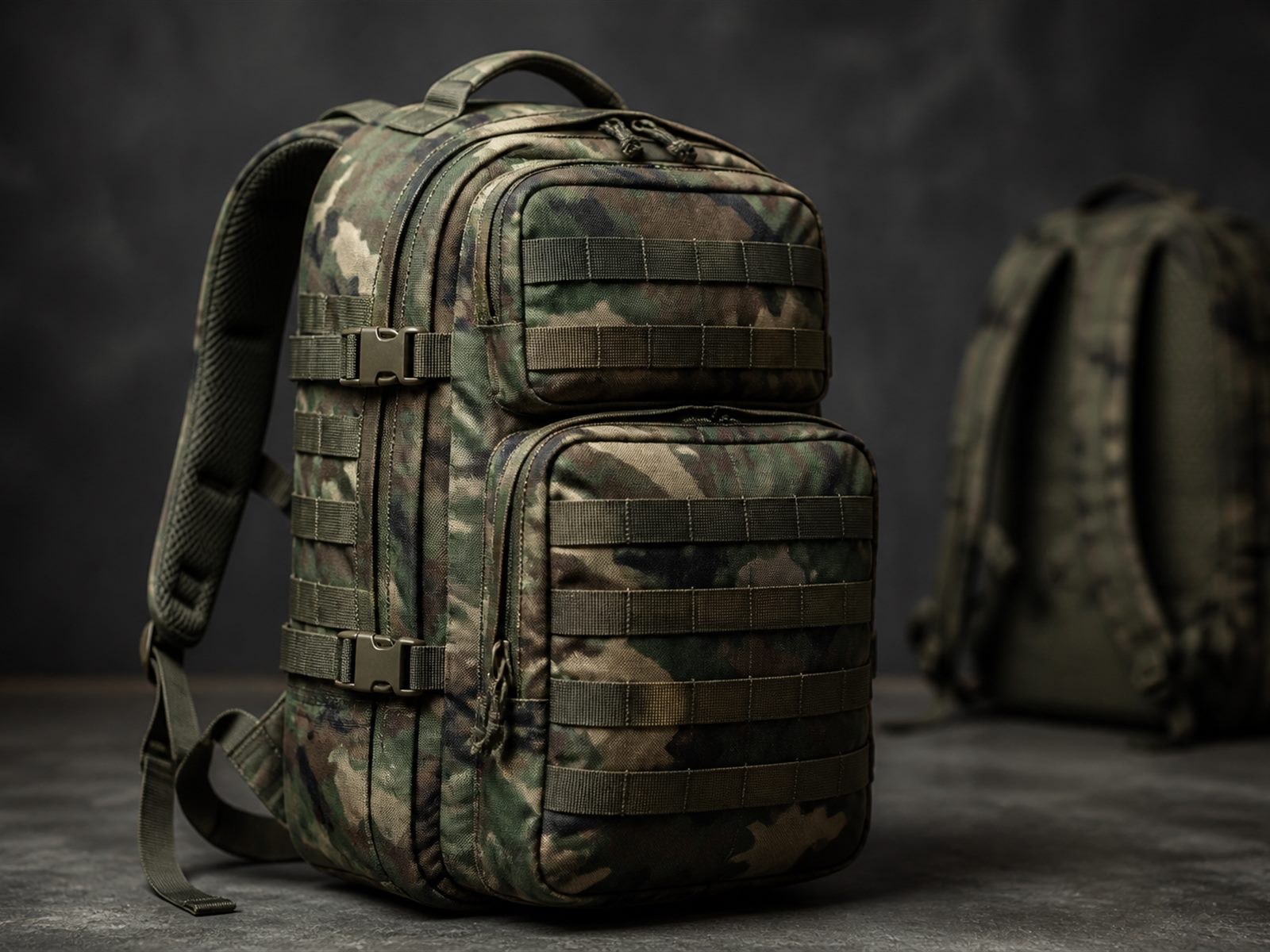
Custom MOLLE tactical backpack with reinforced load-bearing straps manufactured for OEM buyers
Primary keyword
tactical bag manufacturer
Climate focus
Field / Duty / Multi-season · Field / Duty · Urban Duty / Travel
Development input
Tech pack · Reference sample · Sketch · Photo
Tactical Bags & PacksTactical Bags & PacksTactical Bags & PacksTactical Bags & Packs

Buyers

Who buys tactical bags & packs?

Tactical Bags & Packs is specified by organisations rather than bought as a single garment, so a quotation has to satisfy all 6 buyer profiles listed below.

Uniform and duty distributors

Packs and duty bags that ship in the same order as uniforms, in matching colourways, without the webbing layout drifting between runs.

Tactical gear brands

Pouches, chest rigs and packs that accept the modular hardware their customers already own — row spacing and buckle placement have to match, not approximately match.

Outdoor and hunting brands

Camouflage and earth-tone load carriage with quiet hardware and a fit that stays stable on uneven ground.

Institutional and agency procurement

Repeatable specification and documented load testing: same fabric denier, same webbing, same stitching, batch after batch.

Security and event suppliers

Lightweight duty bags and pouches with fast access, durable zips and clear compartment logic for shift work.

E-commerce and marketplace sellers

A compact, photographable range — a few packs and pouches that photograph well and do not break size or colour runs.

Types

Tactical Bags & Packs types

The same category name covers very different garments depending on climate and wear pattern. 3 types of Tactical Bags & Packs are covered here, and the type is chosen before the fabric.

Field / Duty / Multi-season

MOLLE Backpack

The workhorse pack. The design problem is not capacity but load transfer: the weight has to reach the waist belt through the frame or back panel, or the shoulders carry everything and the seams fail early. Row spacing, buckle placement and strap geometry decide whether the pack works with the pouches the buyer already has.

  • MOLLE rows with consistent spacing across the panel
  • Reinforced shoulder straps and load-bearing waist belt
  • Compression straps and a double-stitched drag handle
  • Hydration pocket with tube port
  • Zippers sized for the load, not for the price
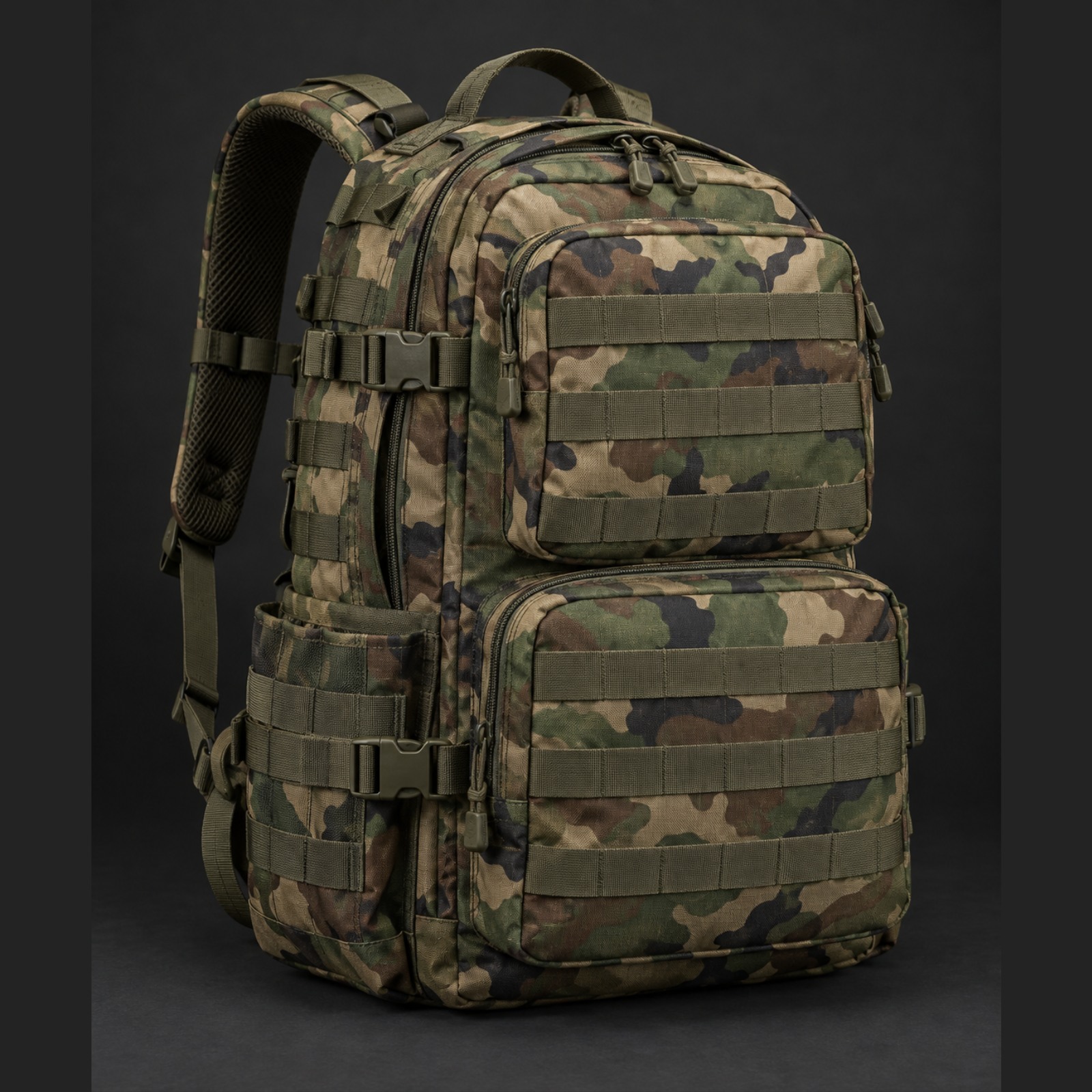
Field / Duty

Chest Rig and Modular Vest

A chest rig is a fit problem before it is a pouch problem: it has to sit flat on the chest, stay put when the wearer runs, and accept the magazine or utility pouches the buyer specifies. Elastic versus hook-and-loop retention, and the exact webbing pitch, are what make a rig compatible instead of nearly compatible.

  • Front panel with MOLLE and hook-and-loop fields
  • Adjustable shoulder straps with stabiliser
  • Quick-release buckles rated for the load
  • Removable or fixed pouch configuration
  • Colourways matched to the uniform range

Urban Duty / Travel

Duty, Hydration and Utility Bags

The fast-access end of the range: duty bags, hydration carriers and utility pouches where access speed and closed-cell protection matter more than volume. Hydration builds live or die on the tube port and reservoir pocket: if the port is wrong the bag leaks or the tube kinks, and both are returned as defects.

  • Dedicated hydration sleeve with insulated tube port
  • Quick-access main opening with lockable pulls
  • Padded laptop or document sleeve for duty use
  • MOLLE or loop panel for added pouches
  • Antibacterial lining options for duty wear

Engineering

Construction, part by part

8 construction decisions define Tactical Bags & Packs, and each row below is one decision you control at specification stage.

Body Fabric

  • 1000D ballistic nylon
  • 500D nylon for lighter packs
  • Ripstop nylon panels
  • Coated and water-repellent fabric
  • Camouflage-printed fabric bodies

Denier is a strength claim only when the weave and coating are named with it. Write the abrasion standard your buyer will accept, not just the denier number.

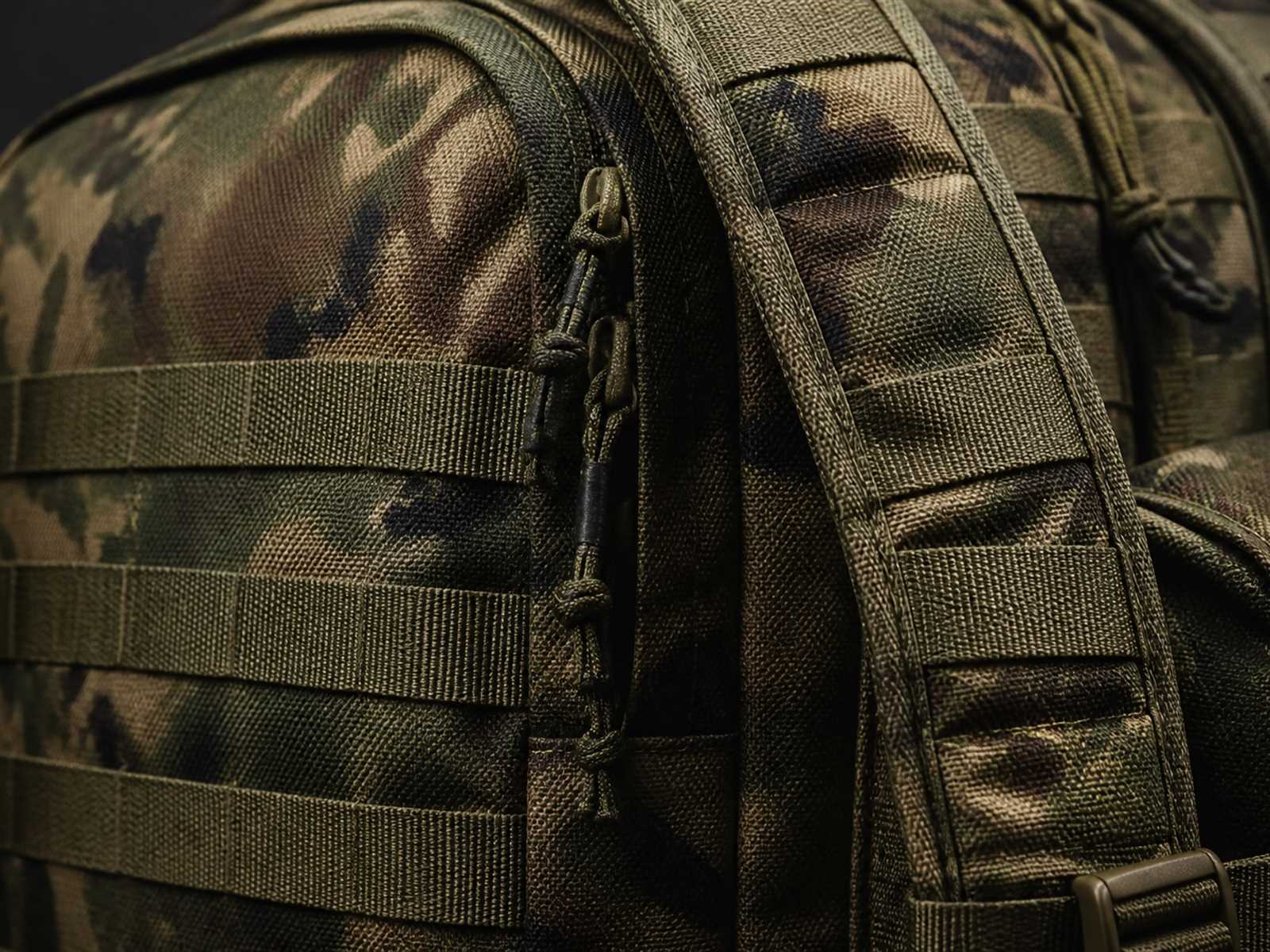
Webbing and MOLLE Layout

  • Type III nylon webbing
  • MOLLE rows at buyer-specified pitch
  • Loop field for patch and pouch mounting
  • Reinforced bar-tacked attachment points
  • Custom row count per panel

Row pitch is the compatibility contract with the buyer's existing pouches. Off by a few millimetres and the pack is unusable with their kit — this is the single most common functional failure in load carriage.

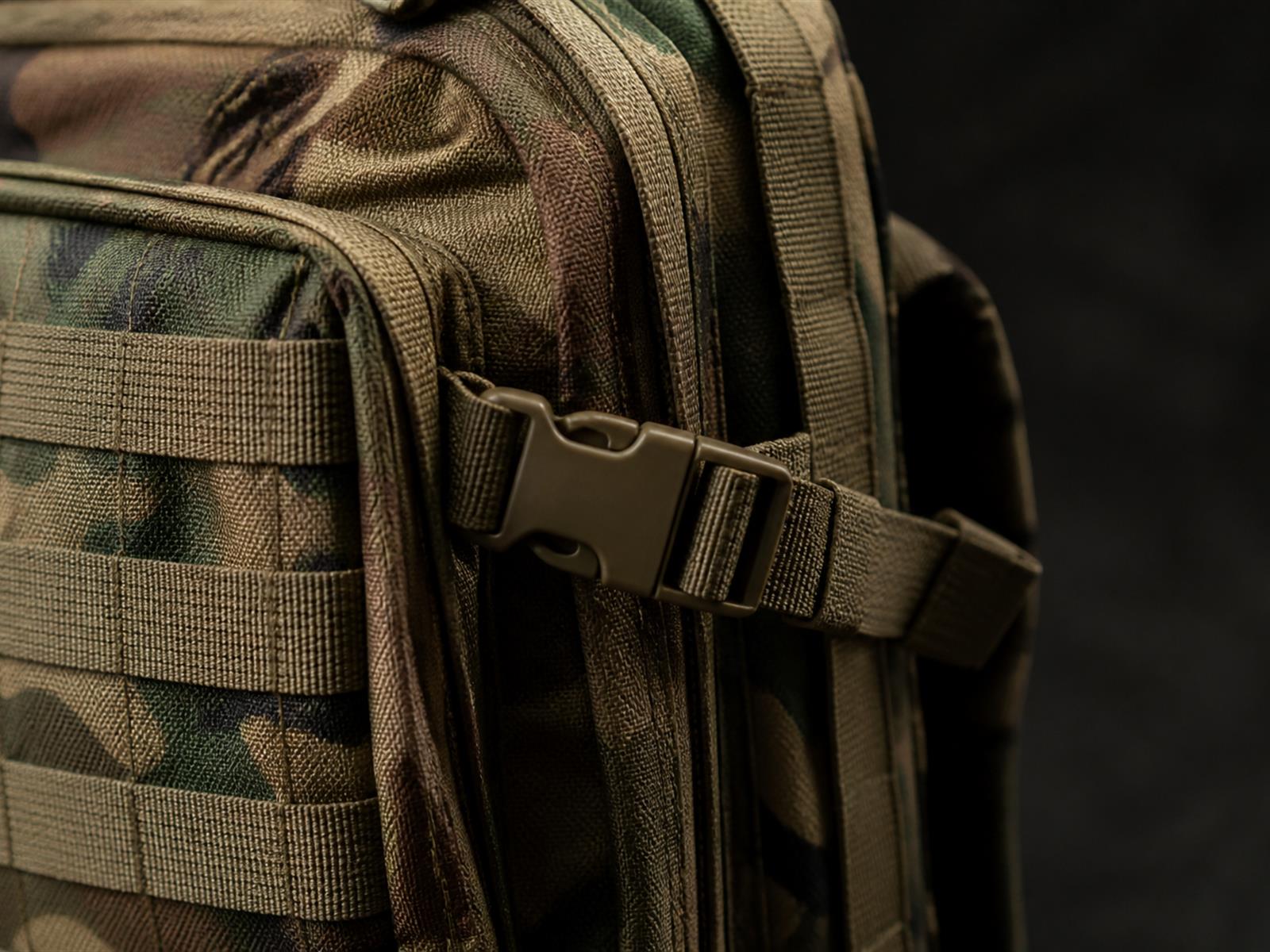
Hardware

  • Acetal and nylon buckles
  • Metal sliders and D-rings
  • YKK or equivalent zippers
  • Side-release buckles rated to load
  • Zipper pulls sized for gloved hands

Name the hardware brand and the load rating. Unnamed hardware is where a load claim of 30 kg quietly becomes a claim of 15 kg.

Load Carriage System

  • Padded shoulder straps with sternum strap
  • Load-bearing waist belt
  • Framesheet or internal frame
  • Ventilated back panel
  • Removable waist belt

This is what separates a bag from a pack. Test it with the actual load and load distribution your buyer uses, not with a light sample fill.

Compartments

  • Hydration sleeve with tube port
  • Document or laptop sleeve
  • Front utility pocket
  • Internal organiser panels
  • Drainage grommets in wet compartments

Compartment logic has to match the user's shift, not a catalogue drawing. Ask the buyer what goes where before the pattern is cut.

Reinforcement and Stitching

  • Double-stitched load points
  • Bar-tacked webbing ends
  • Box-X stitch on strap anchors
  • Bound internal seams
  • Reinforced base panel

Every load path must be double-stitched or bar-tacked. Stitch density and thread type belong in the specification, not in the operator's habit.

Hydration Interface

  • Insulated tube port
  • Reservoir hanger loop
  • Tube routing clips on straps
  • Two- or three-litre reservoir fit
  • No hydration build for duty bags

Specify the reservoir brand and capacity the buyer supplies. A port sized for the wrong reservoir is a return, not a variation.

Branding Surfaces

  • Hook-and-loop patch field
  • Woven label placement
  • Embroidery area
  • Heat-transfer logo panel
  • No visible branding

Confirm whether the buyer wants the branding blank, embroidered or labelled. Blank patch fields are often the requirement, so do not fill them by default.

Available fabrics

Material options by garment area

Fabrics

1000D ballistic nylon500D nylonRipstop nylonPolyester Oxford with coatingCamouflage-printed cordura-type fabric

Fabric choice drives both weight and price more than stitching does. Pick the denier against the load the pack carries, then specify the coating and the abrasion standard.

Webbing, Trims and Lining

Type III nylon webbingBinding tape and edge trimMesh and taffeta liningClosed-cell foam paddingHigh-visibility internal lining

Internal lining colour is a usability decision: a light lining is what makes a black bag usable at night. It costs very little and buyers notice.

Customization

What can be customized

12 specification lines are available for Tactical Bags & Packs, and where an option changes cost, weight or durability the consequence is stated next to it.

Capacity

20 to 30 litre day pack30 to 45 litre patrol pack45 to 65 litre field packPouch and utility sizesCustom dimensions per buyer pattern

Colourways

BlackCoyote brownOlive and green tonesTan and desertWoodland and desert camouflage

MOLLE layout

Row count per panelRow pitch to buyer specificationLaser-cut laminate webbingLoop field instead of webbingNo MOLLE build

Load carriage

Padded straps onlyStraps with sternum strapLoad-bearing waist beltInternal framesheetRemovable belt

Compartments

Hydration sleeveDocument sleeveUtility and organiser pocketsQuick-access front pocketDrainage grommets

Hardware

Acetal bucklesMetal hardwareYKK zippersGlove-friendly pullsZipper lock openings

Hydration build

Two-litre reservoir fitThree-litre reservoir fitInsulated tube portTube routing clipsNo hydration

Padding

Foam density and thicknessVentilated back panelPadded baseHeat-moulded back panel

Branding

Woven labelEmbroideryHeat transferBlank patch fieldFully unbranded

Packing

Individual polybagRetail carton with hangtagMaster carton with size markingCompressed packing for container fill

Accessories

Rain coverRemovable pouchesReplacement strapsCarry handle in matching fabric

Private label

Label and hangtagPrinted internal liningBranded zipper pullsRetail packaging design support

Sizing

Size development

Load carriage is dimensioned, not sized like clothing: the critical numbers are the volume, the back length, the strap span from the shoulder anchor to the waist belt, and the pack width across the wearer's back. We confirm those against your reference sample and against the body size of the market you sell into, and we build a full-size test pack before the range is cut, because a strap span that is wrong by twenty millimetres is invisible in a drawing and obvious to the wearer.

How size development works

Branding

Private label

Your pattern, your webbing layout, your hardware and your packaging. We can also stay invisible: no branding on the bag, no marking on the carton, so the range ships entirely under your name.

Customization capability

Development

Sampling process

Sampling for Tactical Bags & Packs runs in 7 stages, each one removing a specific risk before the next stage commits cost.

01

Specification review

We agree the capacity, body fabric denier, webbing pitch, hardware and load carriage in writing before any pattern is cut.

02

Pattern and panel confirmation

The panel set is checked against your reference bag, including row spacing and the placement of every attachment point.

03

Material and hardware selection

Fabric, webbing, zippers and buckles are confirmed against physical swatches and samples, not catalogue photos.

04

First sample

One bag built to the agreed specification for construction, access and proportion review.

05

Load and fit trial

The sample is packed to the buyer's working load and carried, so strap behaviour and load transfer can be judged in use.

06

Revision

Strap geometry, row pitch, compartment logic or reinforcement are corrected and rebuilt where needed.

07

Sealed golden sample

The approved bag is sealed and kept as the reference for every later production run and inspection.

Production

Bulk manufacturing

Bulk production of Tactical Bags & Packs runs in 7 stages, which is where an approved specification is either held or lost.

01

Material receipt and inspection

Fabric denier and coating, webbing, foam, zippers and buckles are checked against the sealed sample before cutting.

02

Cutting

Panels, straps and lining are cut to the confirmed pattern with grain and stretch direction controlled.

03

Webbing and attachment assembly

MOLLE rows, loop fields and attachment points are stitched and bar-tacked at the specified pitch.

04

Body assembly

Panels, zippers, compartments and lining are assembled with load paths double-stitched.

05

Load carriage assembly

Straps, waist belt, framesheet and padding are attached and their anchors box-stitched.

06

Finishing and thread trimming

Loose threads, excess binding and surface marks are removed; colour and finish are matched to the sealed sample.

07

Packing and count control

Bags are packed by colour and size with the run counted against the order, including any accessory items.

Quality Control

Quality control for this category

Inspection of Tactical Bags & Packs is measured against an agreed standard, and the 7 checks below are listed with what each one is measured against.

01

Incoming material check

Denier, coating, webbing width and hardware batch are recorded against the specification.

02

In-line inspection

Row pitch, stitch density and seam alignment are checked during assembly, not only at final inspection.

03

MOLLE compatibility check

Row spacing is measured against the buyer's specification on sampled panels — this is the check that protects pouch compatibility.

04

Load and anchor test

Sampled bags are loaded to the agreed weight and the strap and handle anchors are inspected for stitch failure.

05

Zipper and hardware test

Repeated open and close cycles plus buckle engagement are tested on samples from each lot.

06

Final inspection

Visual and dimensional inspection against the sealed golden sample, with defects recorded per lot.

07

Record keeping

Inspection results are filed per batch so a later claim can be traced to materials, operator and date.

Choosing a Tactical Bags & Packs manufacturer

How to choose a tactical bags & packs manufacturer

The 6 questions buyers ask about Tactical Bags & Packs before committing to a first order.

Start from the load, not from the litre figure

Capacity tells you volume; it tells you nothing about whether the pack survives the weight. Tell the factory what the pack will carry and how the wearer moves with it — that decides fabric denier, stitch density and whether a framesheet or waist belt is required.

Treat MOLLE pitch as a compatibility contract

If your customers already own pouches, the row spacing and attachment placement must match their kit exactly. This is the specification point most often left to the factory, and the one most often returned as 'does not fit my gear'.

Decide the load carriage system early

Straps only, straps with sternum strap, or a full waist belt system changes the pattern, the cost and the size of the market you can sell into. Deciding it after sampling means rebuilding the pack.

Name the hardware or accept the consequence

Buckles, zippers and sliders are the parts that fail first and the parts most often left unnamed. Specify brand and load rating, or expect the pack's real rating to be decided by whoever supplied the cheapest hardware.

Design the compartments around the user's shift

Hydration port, document sleeve, utility pocket and drainage all answer a real task. Ask what the end user carries and where they reach for it first; a compartment nobody uses is weight and cost added to every unit.

Ask how batch five will be controlled

Ask which sample is sealed, whether row pitch and load anchors are measured each run, and what records come with the shipment. The answer decides whether your range stays compatible with your customers' gear for years or for one order.

Products

Tactical Bags & Packs products

Each product in Tactical Bags & Packs is a developed specification with its own material options, construction detail and customization map.

Tactical Bags & Packs

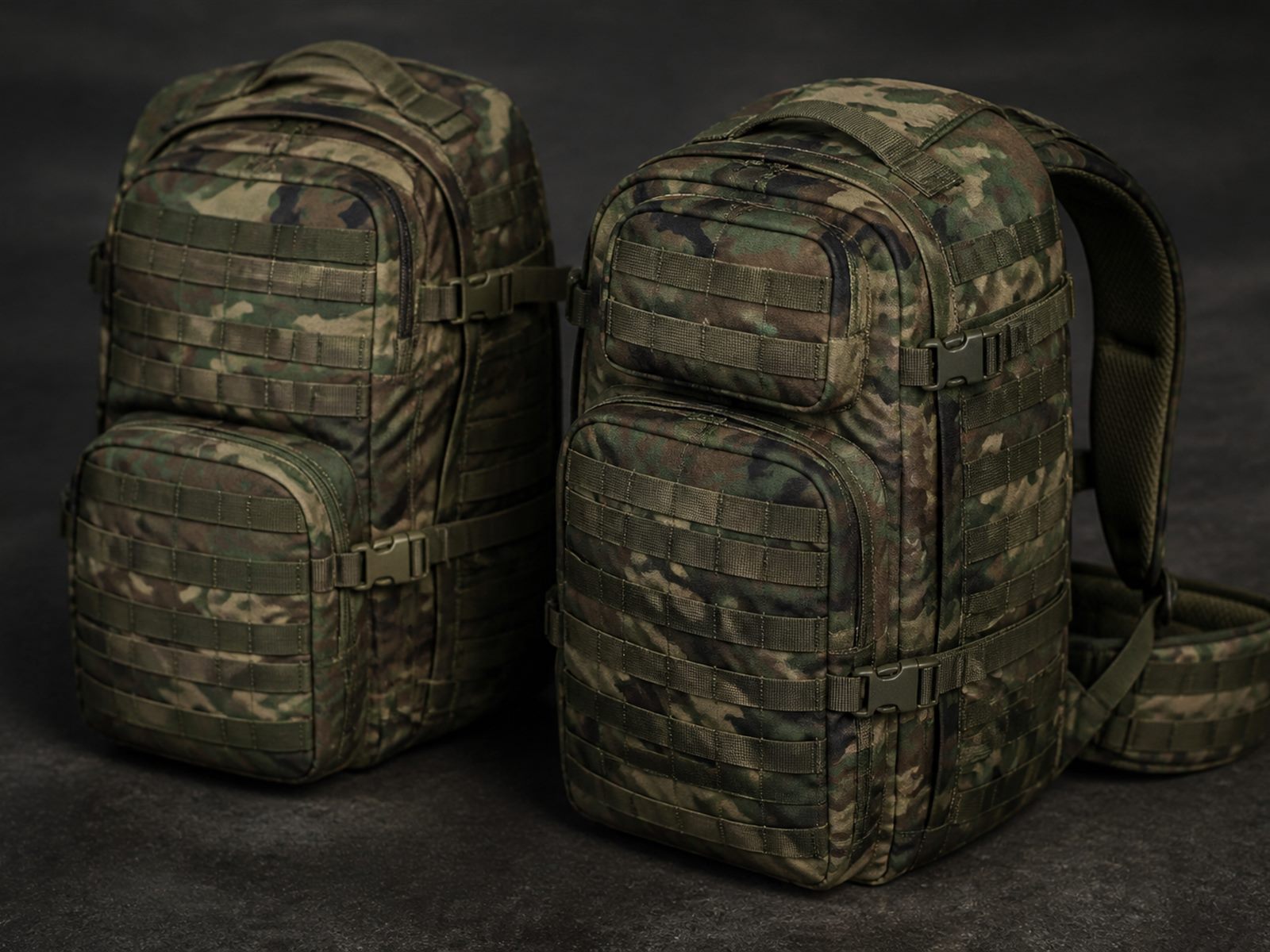
MOLLE Assault Backpack

A pack is judged twice: once when the buyer hangs their own pouches on it, and once at the end of a season when the shoulder straps have carried weight every day.

Field and patrol use in temperate to hot conditionsWet and humid markets with coated or water-repellent fabricCold markets with hardware chosen for cold flexibility
View product

FAQ

Tactical Bags & Packs FAQ

Can you build packs to our existing pattern and MOLLE layout?

Yes, and that is the usual starting point: send a physical reference bag or the pattern and we match the panels, row pitch and attachment placement. Matching an existing bag keeps your customers' pouches compatible.

What is your minimum order quantity for tactical bags?

MOQ is quoted per pattern and per colourway, because cutting and hardware buying drive the cost more than assembly. Mixed sizes within one colourway are normal, and accessories such as rain covers or removable pouches can be included in the same run.

Can you match a specific fabric denier and coating?

Yes — 1000D ballistic, 500D nylon, ripstop and coated Oxford are all regular builds. Send the abrasion standard your market requires and we will confirm the fabric against it before sampling.

How do you make sure hydration builds do not leak or kink the tube?

Tell us the reservoir brand and capacity you supply. The sleeve, hanger loop and insulated port are built around those dimensions, and the tube routing clips are positioned so the tube cannot fold at the shoulder.

How do you keep the webbing layout consistent between production runs?

The approved bag is sealed as the golden sample and stays with us. Row pitch and anchor placement are measured against it in every run, and the inspection record is filed per batch so a compatibility complaint can be traced to a specific run.

Can the bags ship completely unbranded?

Yes. Patch fields can be left blank, labels omitted and cartons unmarked, so the range ships entirely under your name.

Request a Manufacturing Assessment

Send us your tech pack, reference sample or product idea. We review your requirement, recommend materials and construction, and come back with a development plan you can act on.