Skip to content
TACTICALOEM / ODM TACTICAL APPAREL
ENEnglish

Products / Cold Weather Layering Systems

Cold Weather Layering System Manufacturer

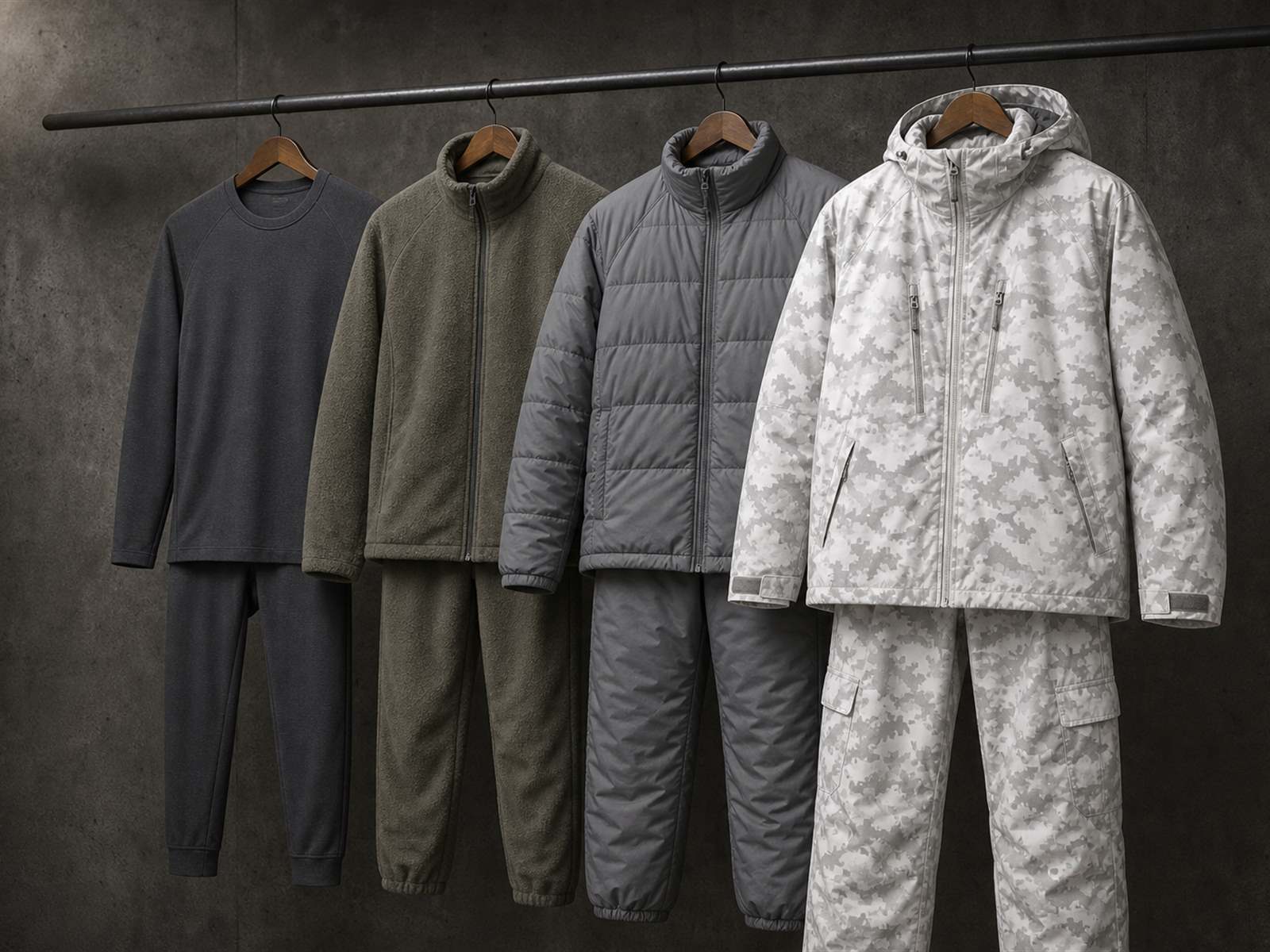
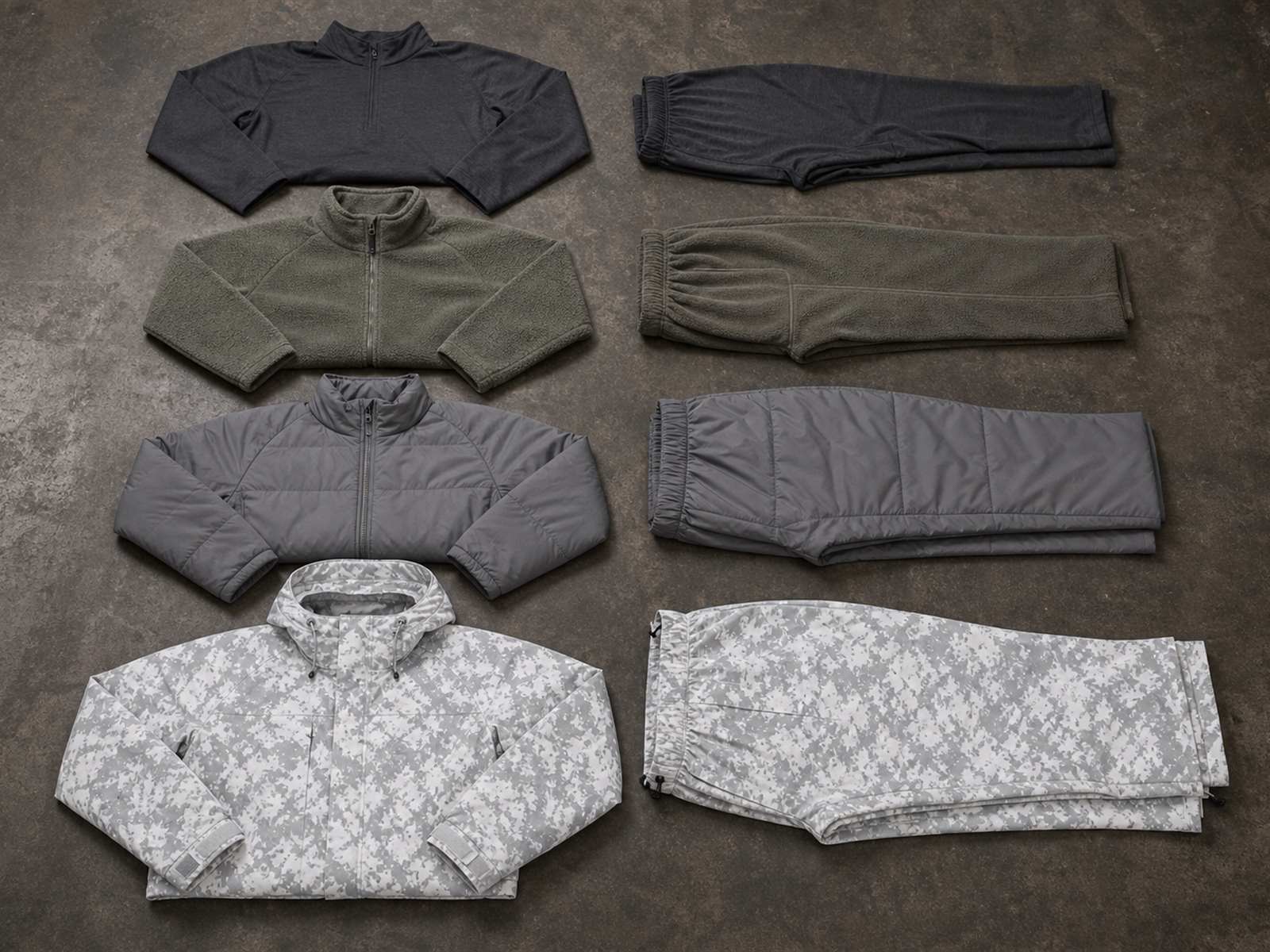
This is not a garment category in the usual sense. A cold weather layering system is the composition a wearer actually uses — what is worn while moving, what is added when they stop, what comes off indoors — and it is bought by buyers who have concluded that specifying garments one at a time produces four good items that do not work together. The system approach defines the Base, Mid, Insulation and Shell layers as one set of decisions: how moisture moves through the whole stack, how much sizing allowance each layer carries over the one beneath it, which interfaces have to agree, and which combinations are worn in which state of activity. This page is for buyers defining a system rather than a product, and it covers the part that is usually neglected — how the composition is written down so the second order matches the first.

custom layering system OEMcold weather clothing system suppliermulti layer tactical clothing systemlayered winter clothing manufacturer
Cold weather layering system with base layer, mid layer, insulation layer and shell arranged in stack order
Primary keyword
cold weather layering system manufacturer
Climate focus
Cold / Intermittent work with shelter available · Severe cold / Alternating movement and waiting · Extreme cold / Extended exposure and remote work
Development input
Tech pack · Reference sample · Sketch · Photo
Cold Weather Layering SystemsCold Weather Layering SystemsCold Weather Layering SystemsCold Weather Layering Systems

Buyers

Who buys cold weather layering systems?

Cold Weather Layering Systems is specified by organisations rather than bought as a single garment, so a quotation has to satisfy all 6 buyer profiles listed below.

Tactical Brands

A coherent layering range they can present as a system, with shared sizing, consistent interfaces and one documented standard behind every layer.

Outdoor & Hunting Brands

A system tuned to their customers' activity pattern, in their own palette and branding, rather than a set of garments assembled from different sources.

Uniform Distributors & Wholesalers

A system they can stock and issue as combinations, reordered layer by layer against the same specification so a replacement matches the kit in service.

Security Companies

One issue standard for staff who work indoors and outdoors in the same shift, with clearly defined combinations for each state rather than a single heavy garment.

Government Contractors & Procurement Companies

A defined composition with documented layer combinations, because a tender for a system is assessed on how the layers work together, not on any single garment.

Private Label Brands

A system built to their specification, with labels, size coding and packaging that make the range readable to their own customers.

Types

Cold Weather Layering Systems types

The same category name covers very different garments depending on climate and wear pattern. 3 types of Cold Weather Layering Systems are covered here, and the type is chosen before the fabric.

Cold / Intermittent work with shelter available

Three-Layer Field System

Base layer, mid layer and shell, with no independent insulation layer. The mid layer carries the active warmth and the shell blocks wind and precipitation, which works for programmes where the wearer moves regularly and can get out of the weather. It is the simplest system to issue and the easiest to keep consistent. The limitation is the static case: once the wearer stops moving, there is no dedicated warmth layer to add, so this composition is the wrong answer for long standing or waiting periods in the coldest conditions a programme expects.

  • Moisture-moving base layer, top and bottom
  • Fleece or knit mid layer as the active warmth layer
  • Wind-resistant or waterproof shell depending on precipitation
  • Sizing allowance in the shell for the layers beneath
  • Defined combination for moving, resting and indoors
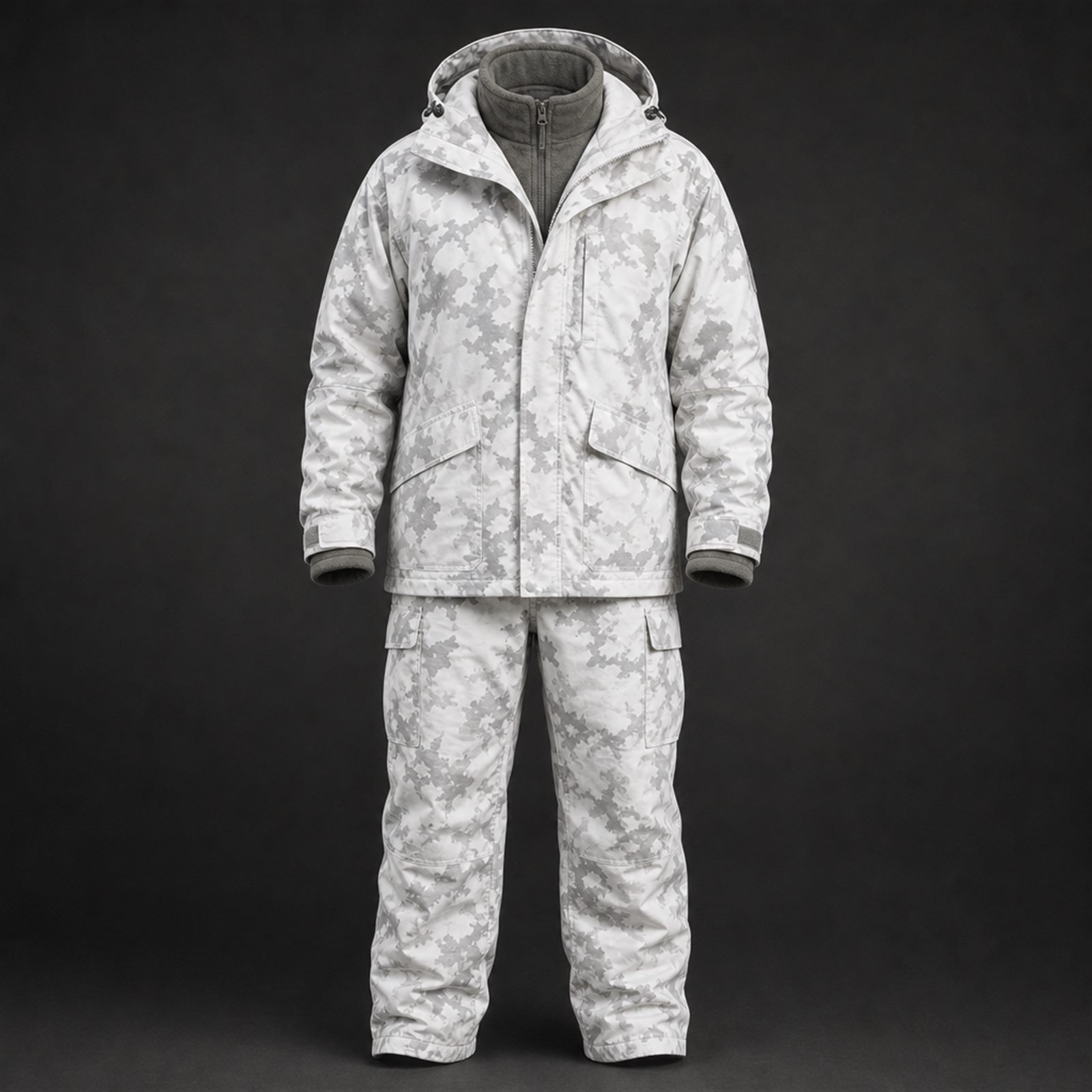
Severe cold / Alternating movement and waiting

Four-Layer Insulated System

Base, mid, insulation and shell, with the insulation layer carrying warmth when the wearer is static and removable when they are not. This is the composition most cold weather programmes arrive at, because it covers both halves of a working day. It costs more, adds volume at the shoulders and needs a sizing allowance worked out across three layers, so the pattern has to be developed with the full stack in mind rather than adjusted afterwards. Layer interfaces — collar, cuff, waist and hem — have to be designed as a group or the bulk creates problems the individual garments do not show.

  • Base, mid and insulation layers with distinct roles
  • Removable insulation layer for a wider working range
  • Shell with allowance for the full stack beneath
  • Ventilation designed so heat can be dumped without removing layers
  • Mapped insulation to control bulk where it restricts movement

Extreme cold / Extended exposure and remote work

Modular Replaceable Component System

The same four layers, specified so that each component can be issued, replaced, dried and stored independently rather than only as a complete set. This suits programmes where the wearer cannot shelter or dry out for extended periods, so the system has to survive individual components being wet, damaged or swapped out. The trade-offs are real: more stock lines per size, more identification work, and a development cycle where every interface must be documented because components may be replaced by items from different production runs.

  • Independently replaceable components with documented interfaces
  • Spare base layer and gloves considered part of the issue
  • Repairability specified at panel and component level
  • Compression and recovery considered for packed components
  • Identification and coding so components are not mixed between issues

Engineering

Construction, part by part

8 construction decisions define Cold Weather Layering Systems, and each row below is one decision you control at specification stage.

Base Layer Definition

  • Moisture-moving top and bottom
  • Lightweight base for high-output activity
  • Base layer with underarm and back ventilation
  • Spare base set issued for changing

The base layer is specified first because every layer above depends on it. If it holds moisture against the skin, the insulation above it loses effectiveness regardless of how well that layer is built.

Mid Layer Definition

  • Grid fleece for movement-heavy use
  • Loft fleece for static-heavy use
  • Brushed knit for duty presentation
  • Light insulated mid layer

The mid layer is the component most often left out of a specification, and its absence is why a system that looks correct on paper feels cold during activity. It is defined by activity pattern rather than by warmth alone.

Insulation Layer Definition

  • Insulated jacket with fixed fill
  • Insulated jacket with removable liner
  • Insulated vest for core warmth with arm mobility
  • No insulation layer (three-layer systems)

Fixed or removable is a system-level decision, not a garment preference: it changes sizing allowance, packing, replacement strategy and how the composition is documented for issue.

Shell Layer Definition

  • Waterproof shell with treated seams
  • Water-resistant breathable shell
  • Wind-resistant shell for dry cold
  • Softshell for dry cold and high activity

The shell is specified against the dominant weather condition. Where wet snow or sleet occurs, a water-resistant shell is the wrong specification for the system, whatever the layers beneath are doing.

Layer Interfaces

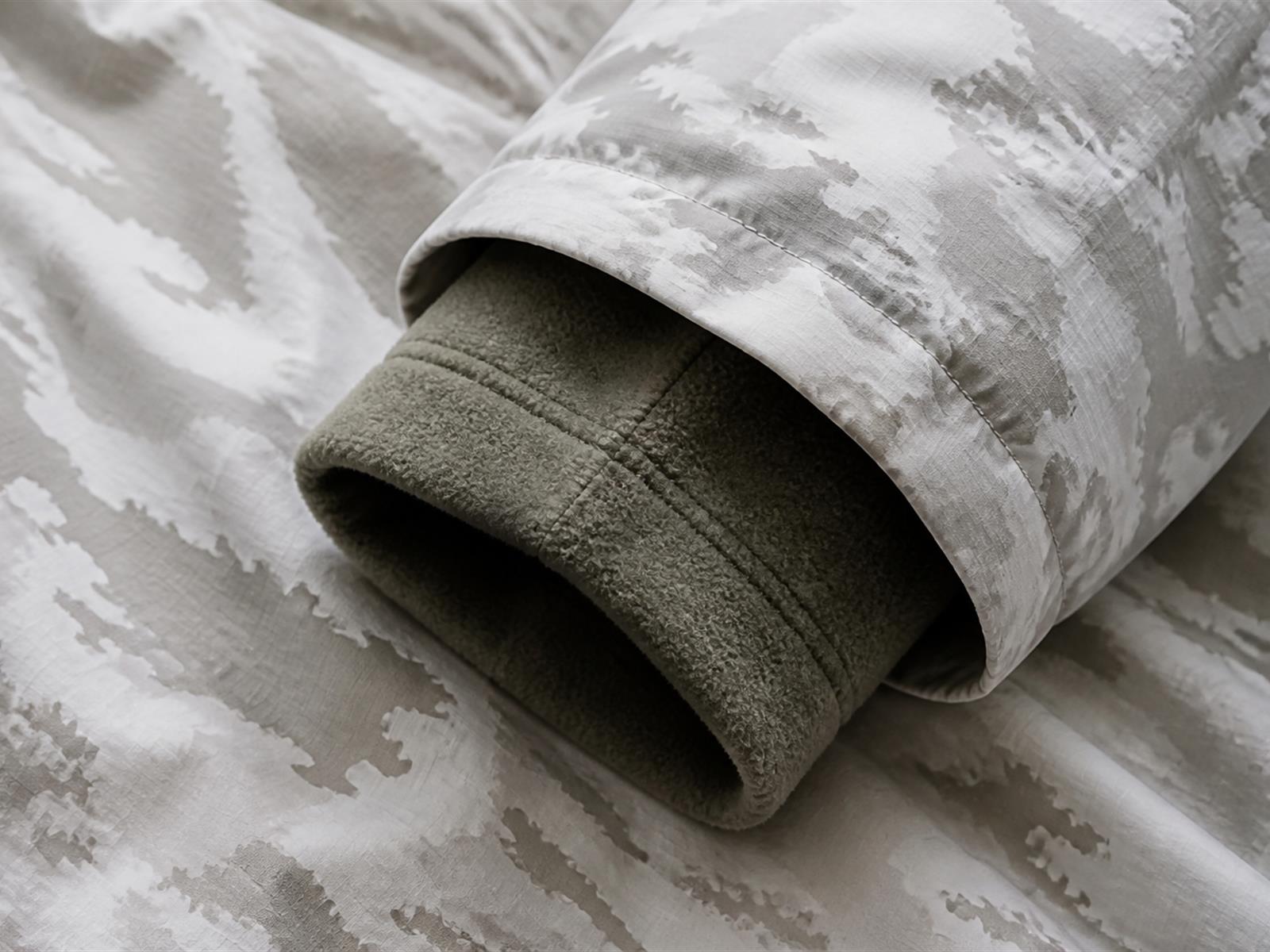
  • Collar and hood interface across mid, insulation and shell
  • Cuff and glove interface
  • Jacket hem and trouser waist overlap
  • Trouser hem and footwear interface
  • Load-bearing equipment and belt interfaces

Interfaces are where a system fails even when each garment is well made: two high collars stacked under a hood, a cuff that will not close over the issued glove, or a jacket hem that rides above the trouser waist when the wearer bends.

Sizing Allowance Across the Stack

  • Allowance per layer defined from the layer beneath
  • Shared size coding across the system
  • National uniform sizing standard where one applies
  • Buyer stock coding for issue and replacement

A size chart written for a single garment cannot be reused for a system. The chest and arm length that fit over two layers are not the same numbers as those that fit over one.

Layer Combinations

  • Combination for movement
  • Combination for low activity and static work
  • Combination for indoors and vehicle use
  • Combination for precipitation
  • Combination for extended exposure

Writing down the combinations is what makes a system usable in the field and inspectable in a contract. It also exposes gaps: a composition with no viable indoor state will be improvised by the wearer.

Documentation and Repeat Order Control

  • System specification covering every component
  • Approved standards held per component and per fabric type
  • Colour standard across the fabric set
  • Component identification and issue coding
  • Retained samples for repeat reference

A system that is not documented cannot be reordered as a system. This part is the difference between a development project and a supply relationship that survives its second order.

Available fabrics

Material options by garment area

Base Layer Fabrics

Moisture wicking fabricQuick dry fabricMechanical stretch fabric

The base layer is selected for moisture movement and drying speed, not for warmth. A cotton-rich base layer in a cold weather system works against every layer above it.

Mid Layer Fabrics

FleeceMechanical stretch fabricQuick dry fabric

Fleece suits the mid layer because it continues to insulate when damp and dries relatively quickly, which matters most during alternating movement and rest.

Insulation Layer Fabrics

Cold weather insulation materialFleeceWind resistant fabric for shells of insulated components

How insulation is quilted or held in place matters as much as which insulation is used, because it decides whether warmth stays distributed after the garment has been compressed and packed.

Shell Layer Fabrics

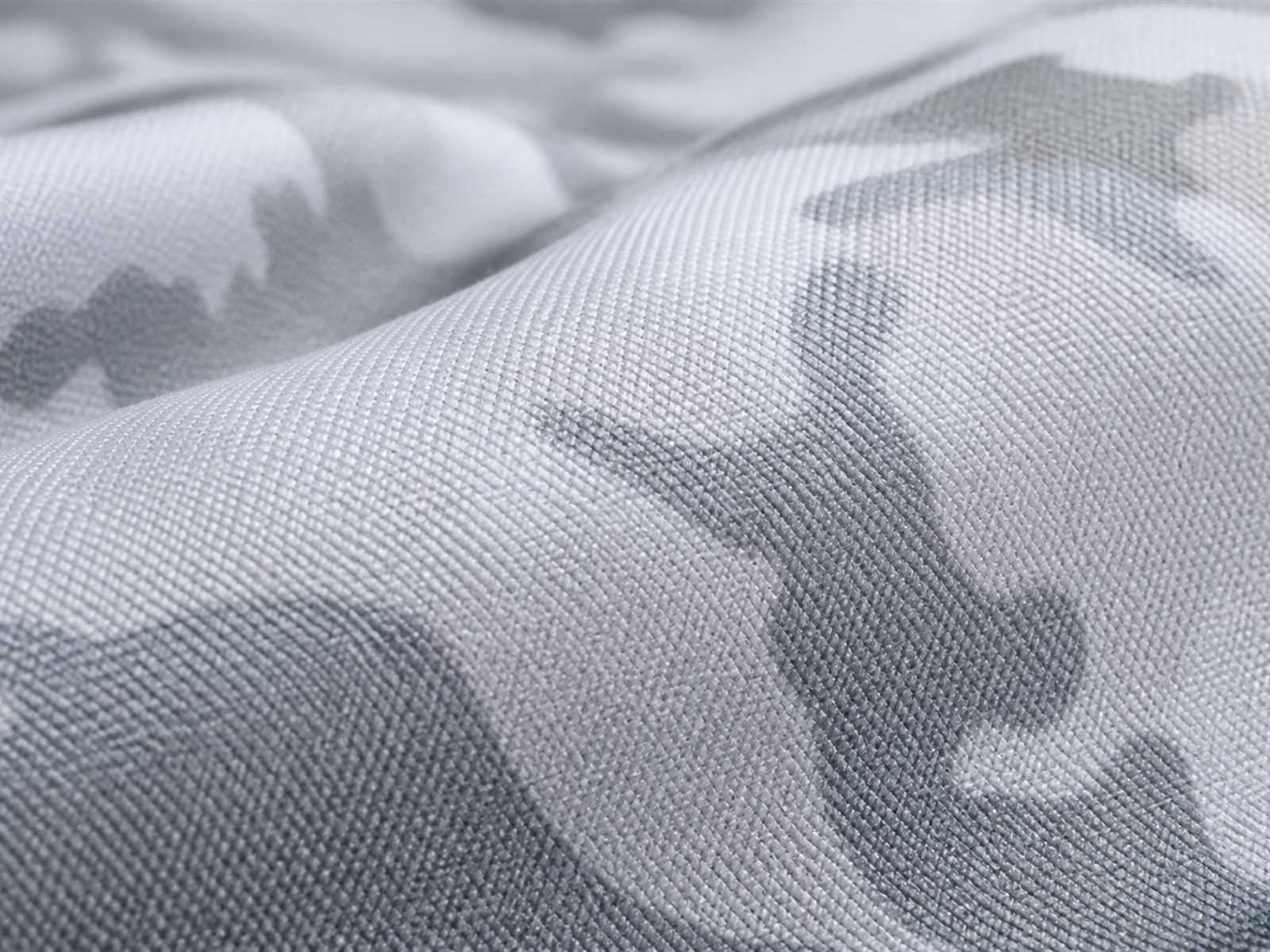
Waterproof fabricWater resistant fabricWind resistant fabricSoftshell

The shell choice follows the dominant weather condition. Waterproof construction for wet snow and sleet; wind-resistant or softshell where breathability matters more than full water protection.

Cross-System Trims and Treatment

Seam treatment matched per component constructionWater-resistant zips at exposed closuresTrim set matched across all componentsCord locks and adjusters usable with gloves

Trims are specified across the whole system rather than per garment, because a system is only as consistent as its least reliable component.

Customization

What can be customized

14 specification lines are available for Cold Weather Layering Systems, and where an option changes cost, weight or durability the consequence is stated next to it.

System Depth

Three-layer systemFour-layer insulated systemModular replaceable component system

Component List

Base layer, top and bottomMid layerInsulation layerShell jacketShell trouserAccessories such as gloves or hat

Colour

Single reference across the systemPer-layer reference with toleranceBuyer Pantone targetsLab dip approval across the fabric set

Camouflage

Buyer artwork coordinated across layersWoodland styleDigital styleWinter or seasonal patternNone (solid duty colourways)

Insulation Strategy

Fixed fillRemovable linerPanel-mapped fillNo insulation layer

Shell Strategy

Waterproof constructionWater-resistant breathable constructionWind-resistant constructionSoftshell constructionMixed specification by component

Ventilation Strategy

Underarm or pit ventsChest or core ventsTwo-way closureMid layer ventilationNone (static-use systems)

Interface Design

Collar and hoodCuff and gloveJacket hem and trouser waistTrouser hem and footwearEquipment and belt interfaces

Sizing

Shared coding across the systemPer-layer grading documentedNational uniform sizing standardBuyer stock coding

Combinations

Documented moving combinationDocumented static combinationDocumented indoor combinationDocumented precipitation combinationDocumented extended exposure combination

Identification & Issue

Component identification within the systemSize coding for stock systemsWearer markingStorage and laundering labels

Packing

Component-listed packingPer-person packing by size combinationCarton sorting by size breakCompression packing for transport and storage

Logo & Label

Woven labelPrinted labelRubber patchMain, size, care and origin labels per component

Documentation Deliverables

System specification documentComponent specification sheetsLayer combination chart for issueColour standard across the fabric set

Sizing

Size development

In a layering system, sizing is a relationship rather than a chart. We start from the buyer's target size range, their existing uniform standard or stocking system, and the composition itself: which layers are worn together and therefore how much allowance each outer layer needs over the one beneath. Each layer is then graded so that a size carries the same meaning across the system, and critical measurements — chest, shoulder, sleeve, back length, waist, hip, inseam and leg opening — are confirmed across the range on a size set rather than only in the middle size. Where the buyer can supply the other components, the size set is assessed as a stack, because a layer that fits well alone can bind at the shoulder once worn under one or two layers above it. Tolerances, grading rules and size coding are agreed in writing before bulk so that inspection, reordering and issue all reference the same numbers.

How size development works

Branding

Private label

Private label on a system covers each component and the way the components present together. Main label, size label, care label and country of origin label are produced per component to the buyer's artwork and content, including any care instruction the construction requires. Branding is applied as woven label, printed label, rubber patch, embroidery or heat transfer, with insignia and identification positions agreed across the system rather than layer by layer. Where the buyer needs it, we also produce the layer combination chart and component identification coding that make the system usable at issue. Packaging can be component-listed or per-person by size combination. All labelling, coding and packing is confirmed on the pre-production samples.

Customization capability

Development

Sampling process

Sampling for Cold Weather Layering Systems runs in 7 stages, each one removing a specific risk before the next stage commits cost.

01

System review

We review the buyer's requirement and list the open points — component list, activity pattern, dominant weather condition, current kit already in service, interfaces and issue method — before any material is cut.

02

Composition definition

The layer composition is agreed first, including which combinations the wearer is expected to use in movement, in static work and indoors, because the composition determines every layer's specification.

03

Layer specification

Each layer is specified against the one beneath it, with fabric, construction and sizing allowance documented as a set of related decisions rather than independent garment choices.

04

Interface design

Collar, hood, cuff, waist and hem interfaces are designed as a group, and the sizing allowance for the stack is set before any pattern is finalised.

05

Component prototypes

Samples of each component are produced so the buyer can assess them individually, and then assembled as a stack so the interfaces and movement can be assessed together.

06

Revision round

Buyer comments across all components are consolidated into a single revision round so changes in one layer do not silently invalidate another.

07

Size set and pre-production standard

The full size range is produced across the required components for measurement confirmation, and the approved construction, materials, trims, labelling and packing method are locked as the system standard for bulk.

Production

Bulk manufacturing

Bulk production of Cold Weather Layering Systems runs in 7 stages, which is where an approved specification is either held or lost.

01

Component-level material approval

Fabric, insulation, reinforcement, zips, elastic, sealant, thread and labels are approved against the pre-production standard for each component before cutting begins.

02

Colour and lot allocation across the system

Fabric and knit lots are allocated so components belonging to the same system and colour reference are produced from controlled lots and compared against the approved standard.

03

Bulk cutting per component

Cutting follows the approved pattern for each component, with markers arranged for shade and direction-sensitive face fabrics and cut pieces identified by size code.

04

Panel preparation

Seam treatment, insulation attachment, reinforcement and any printed or embroidered components are prepared and inspected before assembly.

05

Assembly and inline inspection

Each component is assembled to its documented sequence and inspected during assembly, with the interfaces specified in the system standard checked at the points where they occur.

06

System matching and kitting

Completed components are matched by size code and colour before packing so that the system delivered is internally consistent and correctly identified.

07

Final inspection and packing

Measurement, construction and packing inspection are completed per component against the agreed standard, and components are packed to the agreed method before shipment.

Quality Control

Quality control for this category

Inspection of Cold Weather Layering Systems is measured against an agreed standard, and the 7 checks below are listed with what each one is measured against.

01

Incoming material inspection

Fabrics and insulation are checked for weight, width, shade and defects on receipt, and knit, fleece and woven lots are compared against the approved colour standard for the system.

02

Cross-component colour verification

Components are compared against each other under the same lighting before packing, because layers in different fabric types can read as mismatched even when each was dyed to the same reference.

03

Pre-production approval

The pre-production sample for each component is approved by the buyer and retained as the reference standard for the order.

04

Inline inspection

Work in progress is inspected at defined points per component, including seam treatment, closure protection and reinforcement placement.

05

Measurement inspection

Critical measurements per component are measured against the approved size set with the tolerances agreed in writing, including the measurements that decide the layer interfaces.

06

Interface inspection

At the inspection stage, components from the same size code are checked against each other at the collar, cuff, waist and hem interfaces to confirm they behave as the system standard describes.

07

Final and kitting inspection

Finished goods are inspected before packing, and the contents, size codes and identification of each packed unit are checked against the packing instruction before shipment.

Choosing a Cold Weather Layering Systems manufacturer

How to choose a cold weather layering systems manufacturer

The 6 questions buyers ask about Cold Weather Layering Systems before committing to a first order.

Buy a system when the problem is the interaction, not the garment

If individual garments are already performing acceptably and the complaints are about being cold when standing still, wetting out from the inside, or gaps at the waist, the problem is the composition rather than any one item. That is the point at which specifying layers together is worth the extra development effort. If a single garment is genuinely missing, buy the garment.

Write down the combinations before writing the specification

Define what the wearer has on while moving, what they add when static, what they remove indoors, and what changes in precipitation. The combination list exposes gaps immediately — a system with no indoor state, or with no layer that adds warmth when the wearer stops, is not ready to be specified.

Check the interfaces as a group

Collar against collar and hood, cuff against glove, jacket hem against trouser waist, trouser hem against footwear, and every layer against the load-bearing equipment in use. These interfaces fail in ways that no individual garment inspection will catch, so ask to see them assessed with the components worn together.

Insist the sizing allowance is derived from the stack

Ask how much allowance each layer carries over the one beneath, and where those numbers came from. A supplier who can explain the allowance layer by layer has developed a system; a supplier who quotes the same size chart for every layer has developed four garments.

Decide fixed or removable at the start

Whether insulation is fixed into a shell or issued as an independent layer changes sizing, packing, replacement strategy and cost. Both are valid answers, but the decision belongs at the beginning because it changes the pattern, not at the end when the samples arrive.

Require a system specification, not just samples

A system held together by approved samples drifts as soon as one component is updated. Ask what documentation accompanies the order, whether it covers every component including trims, colour standard and identification, and how a replacement component is produced against it later.

Products

Cold Weather Layering Systems products

Each product in Cold Weather Layering Systems is a developed specification with its own material options, construction detail and customization map.

Cold Weather Layering Systems

Cold Weather Layering System

This is not a garment category in the usual sense.

Sustained cold where the wearer alternates between exertion and waiting, and warmth has to be added and removed through the dayExtreme cold where the margin for error is small and moisture trapped against the body is the fastest route to losing warmthMixed cold and wet conditions where the composition needs a protective outer layer over the warmth layers
View product

FAQ

Cold Weather Layering Systems FAQ

What temperature range does a layering system cover?

We do not publish a temperature figure for a system or for any component, and we would advise caution with a supplier who does. How warm a composition feels depends on activity level, wind, humidity, how long the wearer is exposed, which combination they are using and how the layers fit. What we do instead is define the composition against the coldest condition your programme expects, document the combinations, and leave the comfort claim to your own field trials with the issued configuration.

How do we know whether we need a system rather than individual garments?

Look at the complaints you already have. If they are about individual garments — a jacket that leaks, a trouser that wears at the knee — specify the garment. If they are about interaction — cold after exertion, sweat that never leaves the body, gaps at the waist, layers that bind at the shoulder — the composition is the problem, and defining base, mid, insulation and shell together is what resolves it.

Can you build a system around garments we already have in service?

Yes, provided we can work from real information. We need the measurements and, where possible, physical samples of what you already issue, plus how the components are used together. We then develop the missing pieces to work with them and document the interfaces explicitly, because an interface assumed wrong is normally discovered in the field rather than at the sample stage.

How is sizing handled across four layers?

Each layer is graded so that a size carries the same meaning across the system, and the allowance in each outer layer is derived from the layers it is worn over. We build a size set across the range and, where you can supply the other components, assess it as a stack. A layer that fits well on its own can still bind at the shoulder once one or two layers are worn over it, so the stack is the configuration that matters.

How do you keep the second order consistent with the first?

Through documentation. Fabric, insulation, construction, trims, colour standard, size coding and identification are written into a system specification held with the order, and approved samples and colour standards are retained per component. Interface positions and sizing allowances are part of that document rather than being inferred from samples. If a supplier cannot produce that documentation, repeatability is being assumed rather than managed.

Should insulation be fixed into the shell or issued as a separate layer?

A separate layer gives the widest working range, can be dried and replaced independently, and lets the wearer add warmth when they stop without changing the outer garment. A fixed build gives more control over where warmth sits, usually a cleaner fit under equipment, and fewer components to issue and track. We develop both, and the choice is best made on how the wearer's day and your replacement cycle actually work.

What do you need to quote a layering system programme?

The component list, the dominant weather condition, the activity pattern, quantity per size and per component, the layers already in service, colour and camouflage requirements, interfaces with gloves, headwear, footwear and equipment, sizing standard, identification, packing and issue method, and the target market. A tender document, tech pack or reference samples shorten development considerably. Where a figure such as MOQ or lead time has not been confirmed with you, we will state that explicitly rather than quote a number we cannot hold.

Request a Manufacturing Assessment

Send us your tech pack, reference sample or product idea. We review your requirement, recommend materials and construction, and come back with a development plan you can act on.