Skip to content
TACTICALOEM / ODM TACTICAL APPAREL
ENEnglish

Products / Security / Duty Uniforms

Custom Security & Duty Uniform Manufacturer

A security or duty uniform is bought for two audiences at once, and they pull in opposite directions. The client and the public read the garment as an authority signal, so appearance, colour consistency and a sharp silhouette matter. The officer wears it for long shifts, in all weather, and judges it on comfort, movement and whether it survives constant laundering. Every specification choice sits between those two demands. A stiff, crisp fabric photographs well and holds its shape on a standing post, but it restricts movement and gets uncomfortable on a foot patrol. A soft, lightweight fabric is comfortable and dries quickly, but loses shape and looks tired after a few washes. This page covers shirt and trouser fabric selection, collar and epaulette construction, sleeve and cuff treatment, pocket layout, waistband and reinforcement decisions, insignia and badge application, size set development for mixed body types, private label, sampling and bulk production, and the colour consistency problem that decides whether a roll-out looks like one uniform or several.

custom security uniformssecurity uniform OEMwholesale duty uniformssecurity guard uniform supplier
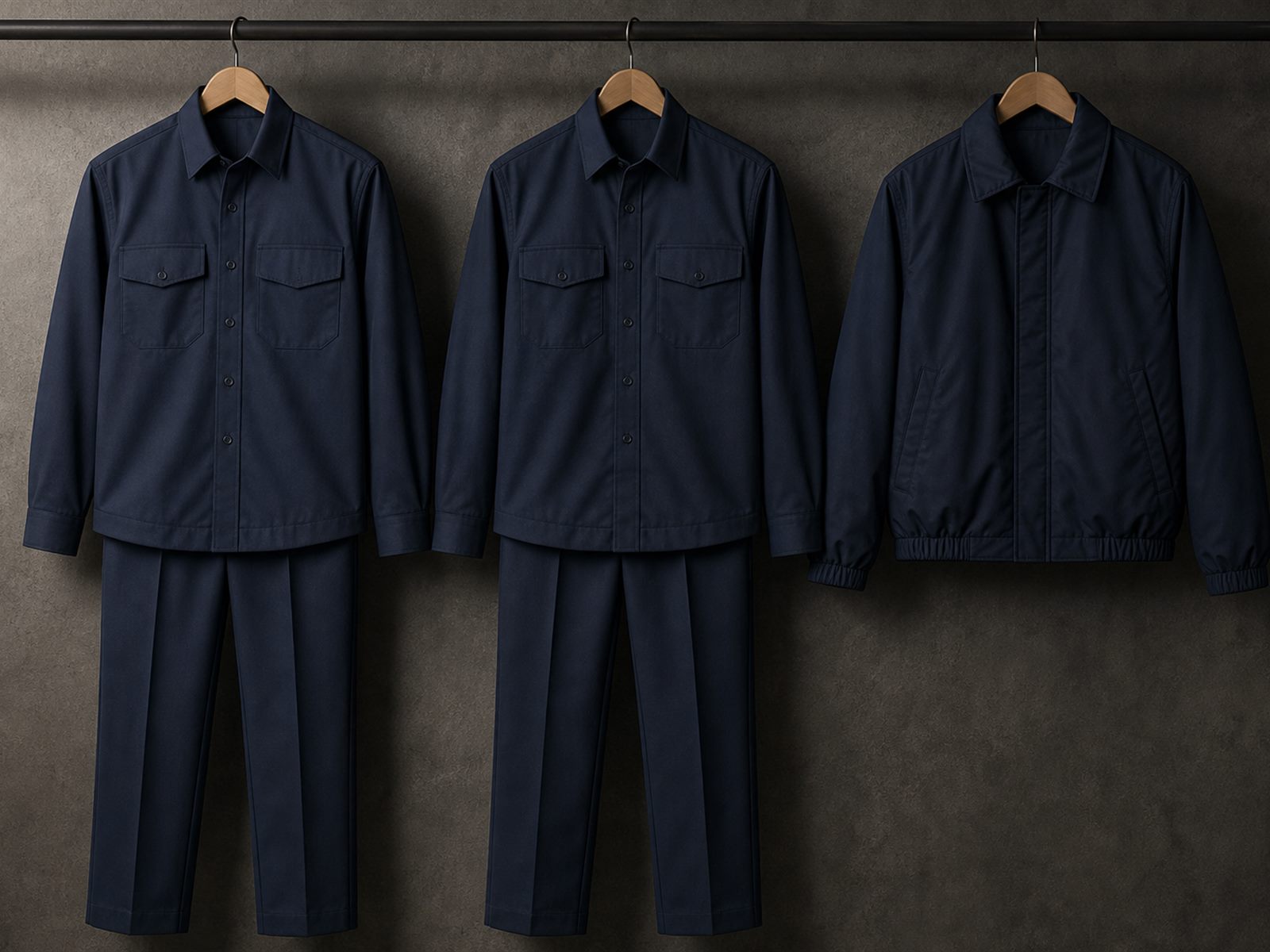
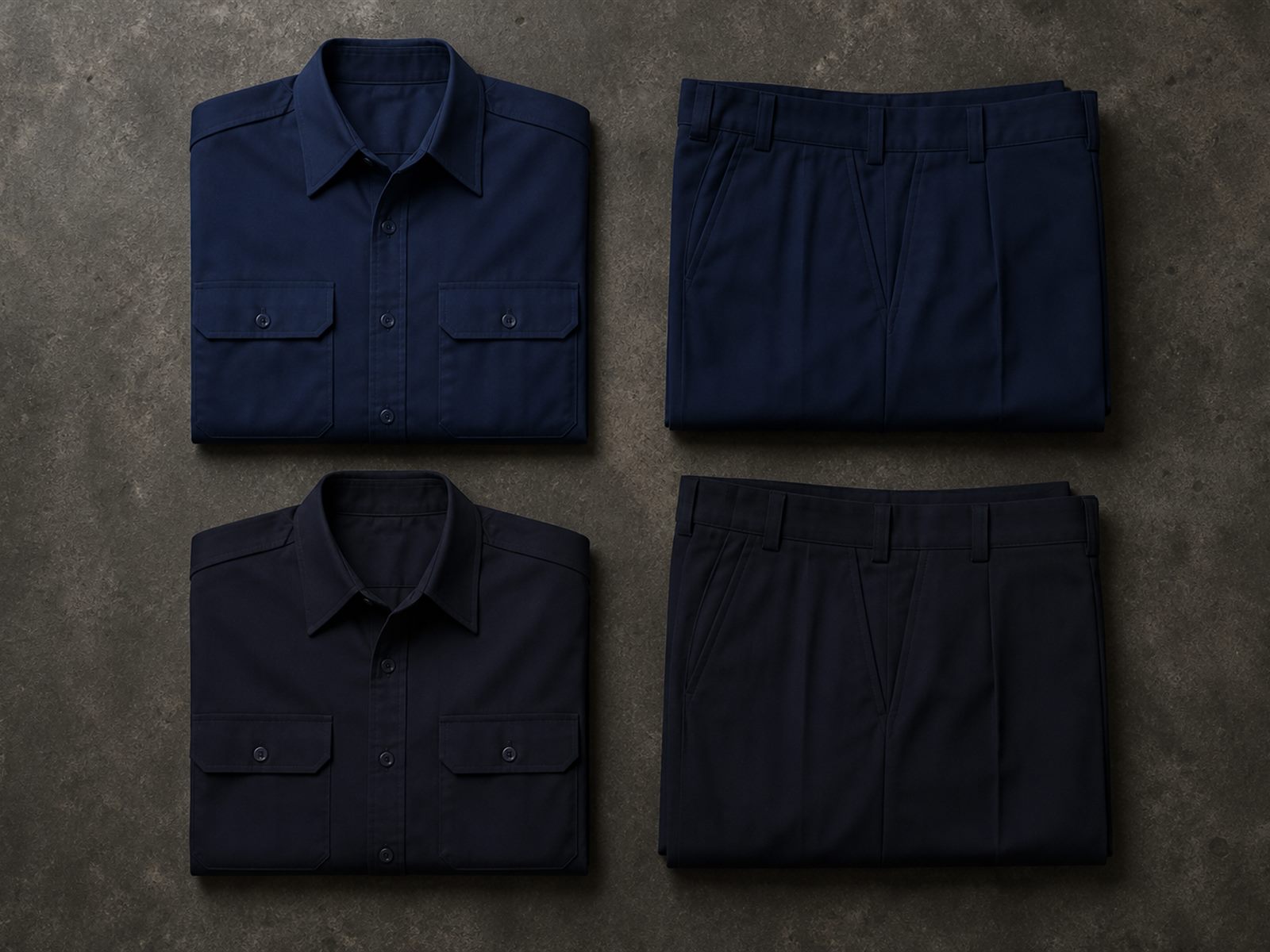
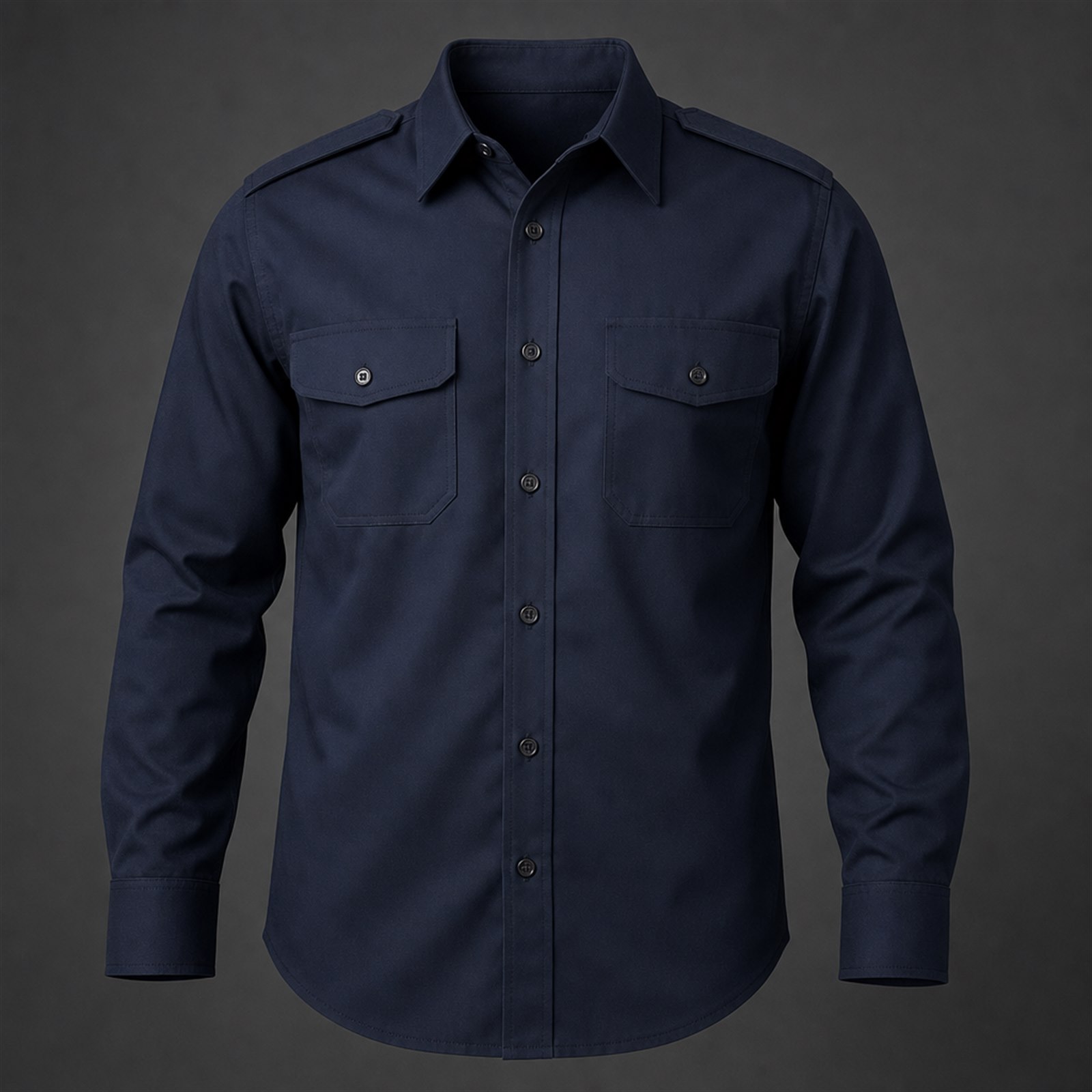
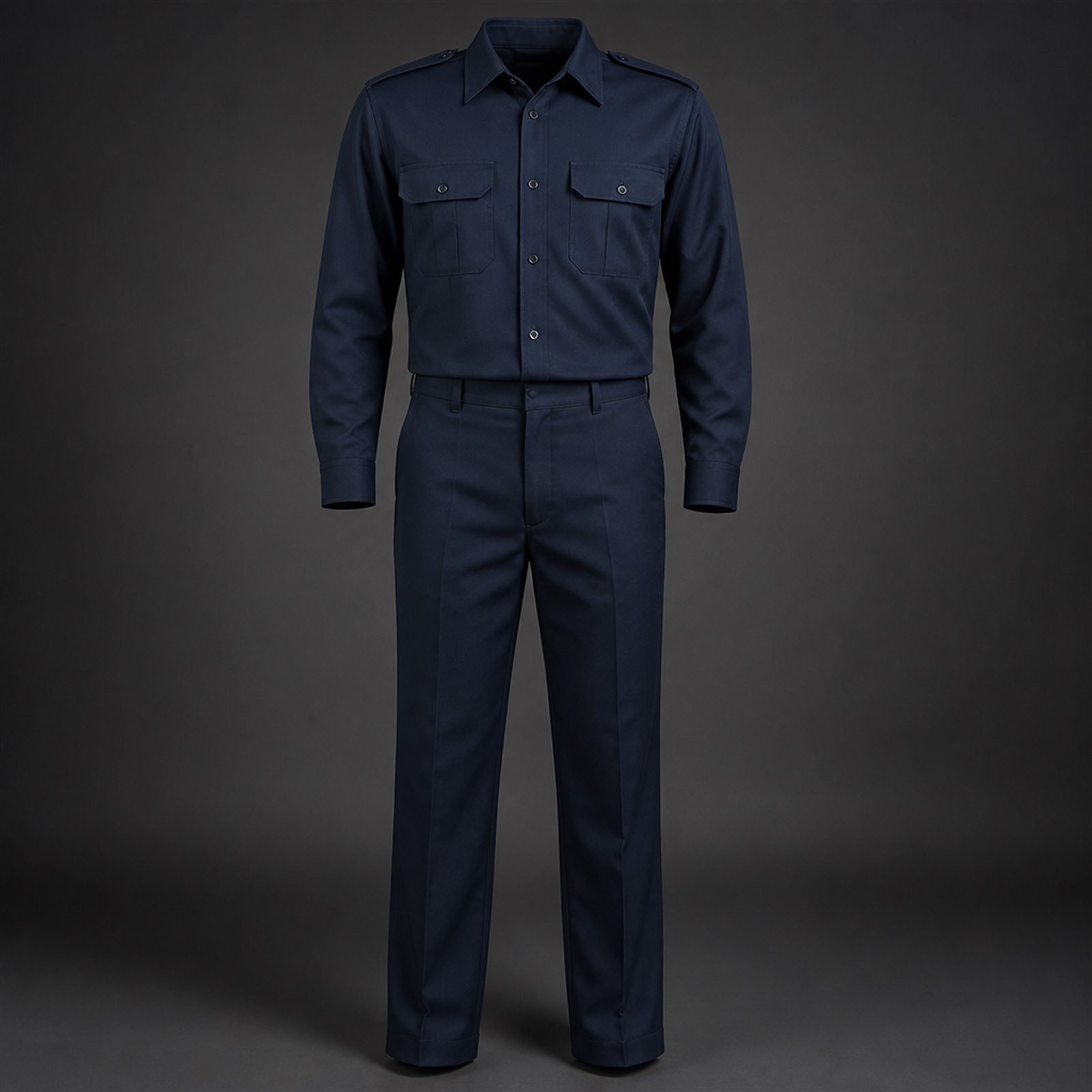
Custom security duty uniform set with epaulettes and badge position manufactured for OEM buyers
Primary keyword
security duty uniform manufacturer
Climate focus
Temperate / Indoor and Outdoor · Hot / Humid / All Season Outdoor · Indoor / Climate Controlled
Development input
Tech pack · Reference sample · Sketch · Photo
Security / Duty UniformsSecurity / Duty UniformsSecurity / Duty UniformsSecurity / Duty Uniforms

Buyers

Who buys security / duty uniforms?

Security / Duty Uniforms is specified by organisations rather than bought as a single garment, so a quotation has to satisfy all 6 buyer profiles listed below.

Security Companies

A uniform roll-out that looks consistent across every officer, in a size range that covers mixed body types, with insignia applied at agreed positions.

Facility Management & Property Groups

A clean, unobtrusive duty appearance that suits a reception post as well as a perimeter patrol, with replacement garments available later in the same specification.

Uniform Distributors & Wholesalers

Stock sizes in volume against a written specification, plus a documented size chart so end clients can order replacements without re-measuring.

Government & Institutional Contractors

A specification they can put out to tender, with material and construction detail they can audit, and inspection documentation supplied with each shipment.

Procurement Companies & Importers

Material transparency, pre-production sample approval and a defined inspection standard so that responsibility for quality is settled before production.

Private Label & Workwear Brands

A duty range carrying their own labels, trims and packaging, developed around their own price positioning and climate requirements.

Types

Security / Duty Uniforms types

The same category name covers very different garments depending on climate and wear pattern. 3 types of Security / Duty Uniforms are covered here, and the type is chosen before the fabric.

Temperate / Indoor and Outdoor

Standard Duty Uniform Set

The general-purpose build for guard posts, reception and regular patrol. Appearance and durability are balanced rather than maximised on either side, which usually means a woven shirt fabric with enough body to hold a pressed edge and a trouser cut for all-day standing and walking. This is the version most companies issue as a base uniform.

  • Woven shirt with a defined press edge
  • Matching trouser with a stable waistband
  • Epaulettes or insignia positions
  • Chest pockets sized for a notebook
  • Reinforced wear points on the trouser

Hot / Humid / All Season Outdoor

Patrol / Field Duty Uniform

Built for officers who walk, stand in the sun and get rained on. Fabric weight drops and moisture handling improves, so the garment dries faster and is cooler in heat. The cost is a softer hand and less crisp appearance, which is an acceptable trade for a post where comfort and drying matter more than a pressed look.

  • Lightweight breathable shirt fabric
  • Moisture-wicking and quick-dry construction
  • Ventilated back or underarm panels
  • Reinforced knee and seat areas
  • Utility pockets for duty equipment

Indoor / Climate Controlled

Ceremonial / Front-of-House Duty Uniform

For lobbies, events and ceremonial posts where the garment is judged almost entirely on appearance. Fabric is chosen for drape, colour depth and how well it holds a crease, and the construction emphasises clean lines over ventilation and pocketing. Durability to abrasion matters less because the garment is worn less hard, but colour consistency across the set matters more than in any other build.

  • Fabric selected for drape and colour depth
  • Crisp collar and placket construction
  • Covered or concealed closure options
  • Minimal visible pocketing
  • Carefully matched shirt and trouser shade

Engineering

Construction, part by part

8 construction decisions define Security / Duty Uniforms, and each row below is one decision you control at specification stage.

Collar

  • Firm interlined collar
  • Soft unlined collar
  • Button-down collar
  • Mandarin or stand collar
  • Collar stays or removable stiffeners

The collar decides how formal the uniform reads. Firm interlining holds a pressed shape for the front-of-house look but adds stiffness at the neck during long shifts; a soft collar is more comfortable and considerably less crisp in appearance.

Shoulder & Epaulette

  • Removable epaulette with button
  • Fixed epaulette
  • Hook and loop rank patch position
  • Plain shoulder
  • Prepared badge or name plate position

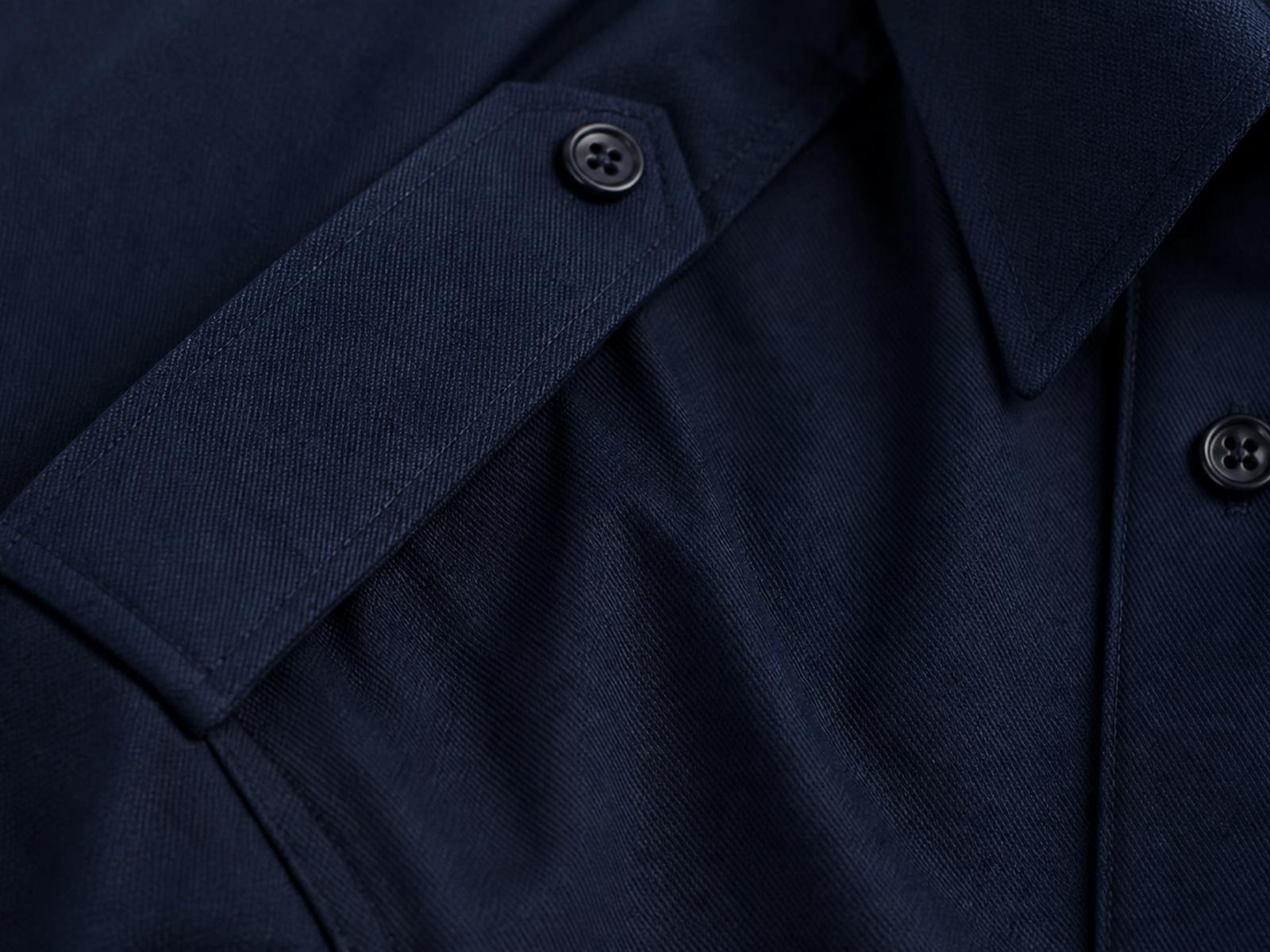
Epaulette and badge positions must be agreed as coordinates, not as descriptions. A rank slide that is sewn a few millimetres out of position is immediately visible across a staff roll-out, and it is expensive to correct after the garments are made.

Sleeve

  • Long sleeve with cuff
  • Short sleeve with hem band
  • Roll-up tab with button
  • Sleeve pen pocket
  • Reinforced elbow on field builds

Short sleeves are cooler but expose the arm and can look less formal; roll-up tabs give the officer a choice at the cost of an extra trim component. Where the uniform must present identically in all conditions, fixing the sleeve length removes a variable.

Cuff

  • Buttoned cuff
  • Single-button barrel cuff
  • Adjustable hook and loop cuff
  • Elasticated cuff
  • Plain hemmed cuff

Cuff construction is a durability point rather than a visual one. Cuffs fray first, so how the edge is finished matters more than the closure type, especially where the garment is laundered frequently and often industrially.

Front Placket

  • Full button placket
  • Concealed button placket
  • Zip front with placket
  • Hook and loop placket
  • Press stud closure

A concealed placket gives the cleanest front, which suits front-of-house use, but buttons are slower to fasten than a zip for an officer dressing before a shift. Button choice and stitch reinforcement should be specified because loose buttons are the most common after-sales complaint on buttoned uniforms.

Pockets

  • Chest pockets with flaps
  • Notebook and pen pockets
  • Cargo thigh pockets
  • Radio or device pocket
  • Badge and microphone tabs

Pocket layout must follow what the officer actually carries. Chest pockets sized for a notebook, a radio and a body camera are three different requirements, and guessing the wrong one produces a uniform that looks correct but is not used the way it was designed.

Trouser Waistband

  • Fixed waistband with belt loops
  • Elasticated side inserts
  • Partially elasticated waistband
  • Internal drawcord
  • Adjustable waist tab

Waistband design decides how well one size fits a range of body types, which matters in a workforce where officers are issued stock sizes rather than tailored garments. Elasticated inserts improve fit tolerance at some cost to the clean look of the waist.

Knee & Seat Reinforcement

  • Double-layer knee panel
  • Internal knee pad pocket
  • Reinforced seat panel
  • Abrasion-resistant overlay at pocket corners
  • Bar-tacked stress points only

Trousers fail at the crotch, the seat and the knee, not at the hem. Reinforcement at those points is the single most effective durability decision in a duty uniform, but it must be placed where the wearer actually loads the fabric, not where it looks strongest on a drawing.

Available fabrics

Material options by garment area

Shirt Fabric

Poly cotton ripstopCotton ripstopNYCO ripstopMechanical stretch fabricQuick dry fabricMoisture wicking fabricLightweight hot weather fabric

Shirt fabric sets the formality and the comfort level. Heavier woven constructions hold a press and read as formal but are warmer and slower to dry; lighter quick-dry constructions are cooler and easier to wear through a long shift but look softer. The two cannot be fully combined in one fabric.

Trouser Fabric

Poly cotton ripstopStretch ripstopMechanical stretch fabricPoly cotton twillReinforced woven for knee and seat panels

Trousers wear harder than shirts. Where a waistband needs to tolerate a range of body types and the wearer kneels or climbs, some mechanical stretch greatly improves movement and reduces the chance of tearing at the crotch, at the cost of a slightly softer look.

Reinforcement & Trim

Abrasion-resistant woven overlayRipstop reinforcement panelsEdge binding at cuffs and hemsBar-tack and box-X stitching at stress pointsInsignia backing material matched to the garment

Trim decides how the uniform ages. Reinforcement and bar-tacking at stress points extend service life in a laundering-heavy environment, while badge backing material must match the garment closely enough that applied insignia do not visibly pull the surrounding fabric.

Customization

What can be customized

14 specification lines are available for Security / Duty Uniforms, and where an option changes cost, weight or durability the consequence is stated next to it.

Fabric

Shirt fabric familyTrouser fabric familyReinforcement optionsBuyer-specified composition

Color

Solid colourwaysBuyer Pantone targetsBuyer lab dip approval

Insignia & Badge

Embroidered badgeWoven badgeHeat transfer badgeEmbroidered name plateRemovable patch position

Rank & Epaulette

Buttoned epauletteHook and loop rank panelFixed rank embroideryPlain shoulder

Collar

Firm interlined collarSoft collarButton-downStand collar

Sleeve

Long sleeveShort sleeveRoll-up tabSleeve pen pocket

Closure

Full button placketConcealed placketZip frontPress stud

Pocket

Chest with flapNotebook and penCargo thighRadio or deviceBadge tab

Reflective & Visibility

Reflective pipingReflective transfer bandHigh-visibility panel insertNone

Waistband

Fixed with belt loopsElasticated side insertsAdjustable tabInternal drawcord

Reinforcement

Knee panelsSeat panelCuff and hem edgesStress point bartacks

Logo

Woven labelPrinted labelRubber patchEmbroideryHeat transfer

Label

Main labelSize labelCare labelCountry of origin label

Packaging

Poly bagPrinted poly bagHangtagHeader cardSet-folded with size sticker

Sizing

Size development

Duty uniforms are usually issued from stock rather than tailored, so the size set has to cover a wide range of body types without every officer needing alterations. Before a size set is built we need the buyer's size range, the measurements of a reference shirt and trouser they are satisfied with, and any sizing system the buyer already issues against, whether that is a national sizing standard or their own chart. A size set is then produced and checked across the range for shirt chest and shoulder, sleeve length, back length, trouser waist, rise, inseam and thigh opening. Because a workforce includes different builds at the same nominal size, waist and seat ease are reviewed carefully, and elasticated or adjustable waistband options can be specified where a single size has to fit more than one body type. Tolerances are agreed in writing before bulk so that the buyer, the inspector and any later reorder all measure against the same numbers.

How size development works

Branding

Private label

Private label on a duty uniform usually means the client's identity on the garment and the supplier's identity off it. Main label, size label, care label and country of origin label are produced to the buyer's artwork and content requirements. Branding can be applied as woven label, printed label, rubber patch, embroidery or heat transfer, and insignia such as badges, name plates and rank panels are produced and positioned to the buyer's own specification. Insignia can be supplied as fixed applications or as removable patch positions using hook and loop, which allows a distributor to stock one garment and configure it per client. Packaging can be a plain poly bag or a printed bag with hangtag, header card and set folding with a size sticker, so the uniform can be issued or shelved directly.

Customization capability

Development

Sampling process

Sampling for Security / Duty Uniforms runs in 8 stages, each one removing a specific risk before the next stage commits cost.

01

Requirement review

We review the buyer's tech pack, reference garment, photograph or sketch and list every open specification before any material is cut.

02

Use case and climate definition

We record whether the uniform is for a fixed post, a foot patrol or ceremonial use, and in which climate, because appearance and comfort requirements differ sharply between them.

03

Material selection

Shirt, trouser and reinforcement fabrics are proposed against that use case, with alternatives where a specification is not yet fixed.

04

Pattern development

The pattern is developed or adapted to the buyer's reference, including waistband design, pocket layout, sleeve treatment and epaulette positions.

05

Insignia position agreement

Badge, name plate and rank positions are agreed as measurements on the pattern so that applied insignia land in the same place on every garment.

06

Prototype

A first sample is produced in the proposed materials so the buyer can assess appearance, fit, fabric hand and how insignia sit on the finished garment.

07

Revision and size set

Buyer comments are consolidated into one revision round, and the full size range is then produced for measurement confirmation across all sizes.

08

Pre-production sample

The approved construction, materials, insignia and labelling are locked in a pre-production sample that becomes the bulk standard.

Production

Bulk manufacturing

Bulk production of Security / Duty Uniforms runs in 8 stages, which is where an approved specification is either held or lost.

01

Fabric and trim approval

Bulk shirt and trouser fabric, buttons, zips, thread, interlining and labels are approved against the pre-production standard before cutting.

02

Shade verification across the set

Shirt and trouser fabric lots are compared against each other and against the approved standard, because a set that does not match as a set is rejected by the end client even if each piece is individually acceptable.

03

Bulk cutting

Cutting is done against the approved pattern with markers controlled for shade so that panels within one garment and one size set match.

04

Panel preparation

Collar interlining, pocket parts, reinforcement panels and waistband components are prepared and checked before assembly.

05

Assembly

Line assembly follows the approved construction sequence, with bar-tacking and reinforcement at the stress points defined in the specification.

06

Insignia application

Badges, name plates, rank panels and labels are applied against the agreed positions and checked for alignment and backing appearance.

07

Inline quality control

Garments are inspected during assembly so a fault is corrected on the line instead of being discovered after packing.

08

Finishing, final inspection and packing

Thread trimming and pressing are completed, then measurement, construction and packing inspections are carried out and documented against the agreed standard.

Quality Control

Quality control for this category

Inspection of Security / Duty Uniforms is measured against an agreed standard, and the 7 checks below are listed with what each one is measured against.

01

Incoming fabric inspection

Fabric is checked on receipt for shade, width, weight and defects before it enters production, with shirt and trouser lots compared for compatibility.

02

Accessory and insignia inspection

Buttons, zips, interlining, threads, badges and labels are checked for function, colour and dimensional accuracy against the approved standard.

03

Pre-production approval

The pre-production sample is approved by the buyer and becomes the reference standard for bulk.

04

Inline inspection

Work in progress is inspected at defined points, including collar construction, placket assembly, waistband attachment and reinforcement placement.

05

Measurement inspection

Critical measurements are measured against the approved size set with the tolerances agreed in writing, including waist and seat ease.

06

Construction, symmetry and insignia inspection

Stitching, button attachment, bar-tacks, edge finishing and left-right symmetry are checked, and insignia positions are verified against the agreed coordinates.

07

Final and packing inspection

Finished sets are inspected before packing, and folding, set matching, labels, bagging and carton marking are checked against the packing instruction.

Choosing a Security / Duty Uniforms manufacturer

How to choose a security / duty uniforms manufacturer

The 6 questions buyers ask about Security / Duty Uniforms before committing to a first order.

Decide whether the uniform is bought for the client or for the officer

A front-of-house uniform and a patrol uniform look similar in a catalogue and behave very differently in use. Buyers who succeed state which audience comes first and accept the resulting cost. A uniform optimised for appearance will be warmer and stiffer on a long foot patrol, and a uniform optimised for comfort will look softer than a ceremonial standard. Trying to satisfy both equally usually produces a garment that satisfies neither.

Treat colour consistency as a specification, not a finishing detail

On a roll-out of hundreds of garments, shade differences between production lots are the most visible quality failure there is, because officers stand next to each other. Ask how shirt and trouser shade is checked against each other, how incoming lots are compared to the approved standard, and what happens when a lot does not match. This is a process question, and the answer matters more than the fabric name.

Agree insignia positions as measurements

Badge and rank positions should be defined on the pattern as dimensions from a fixed reference, not as a description. Ask how this is recorded, and confirm it on the pre-production sample. Insignia placed inconsistently across a roll-out is one of the few defects that cannot be corrected by the end client.

Check how the trouser is cut for movement and for sitting

Duty trousers are worn seated in vehicles, crouching, climbing stairs and kneeling. Ask how the crotch construction, seat depth and knee shaping were developed for those movements, and whether any stretch is built into the fabric or the cut. A trouser that looks correct on a standing mannequin can fail the first week of real duty.

Confirm that size range and one-size fits many were both considered

A single nominal size has to fit officers with different builds. Ask how waist and seat ease were set, whether adjustable or elasticated waistband options are available, and whether the size set was reviewed across the full range rather than in the middle size only.

Put the inspection standard and packing instruction in writing

Measurement tolerances, defect definitions, inspection level, set matching and packing format should be agreed before bulk. Uniform programs are usually repeated annually, and a written standard is what makes year two match year one.

Products

Security / Duty Uniforms products

Each product in Security / Duty Uniforms is a developed specification with its own material options, construction detail and customization map.

Security / Duty Uniforms

Security Duty Shirt

The shirt is the part of a security uniform the public actually reads, and it is also the part washed most often.

TemperateHotTropical / Humid
View product

Security / Duty Uniforms

Security Duty Uniform Set

A security uniform is worn every working day, in front of the client's customers, and is expected to look formal on the last shift of the month exactly as it did on the first.

TemperateHotTropical / Humid
View product

Security / Duty Uniforms

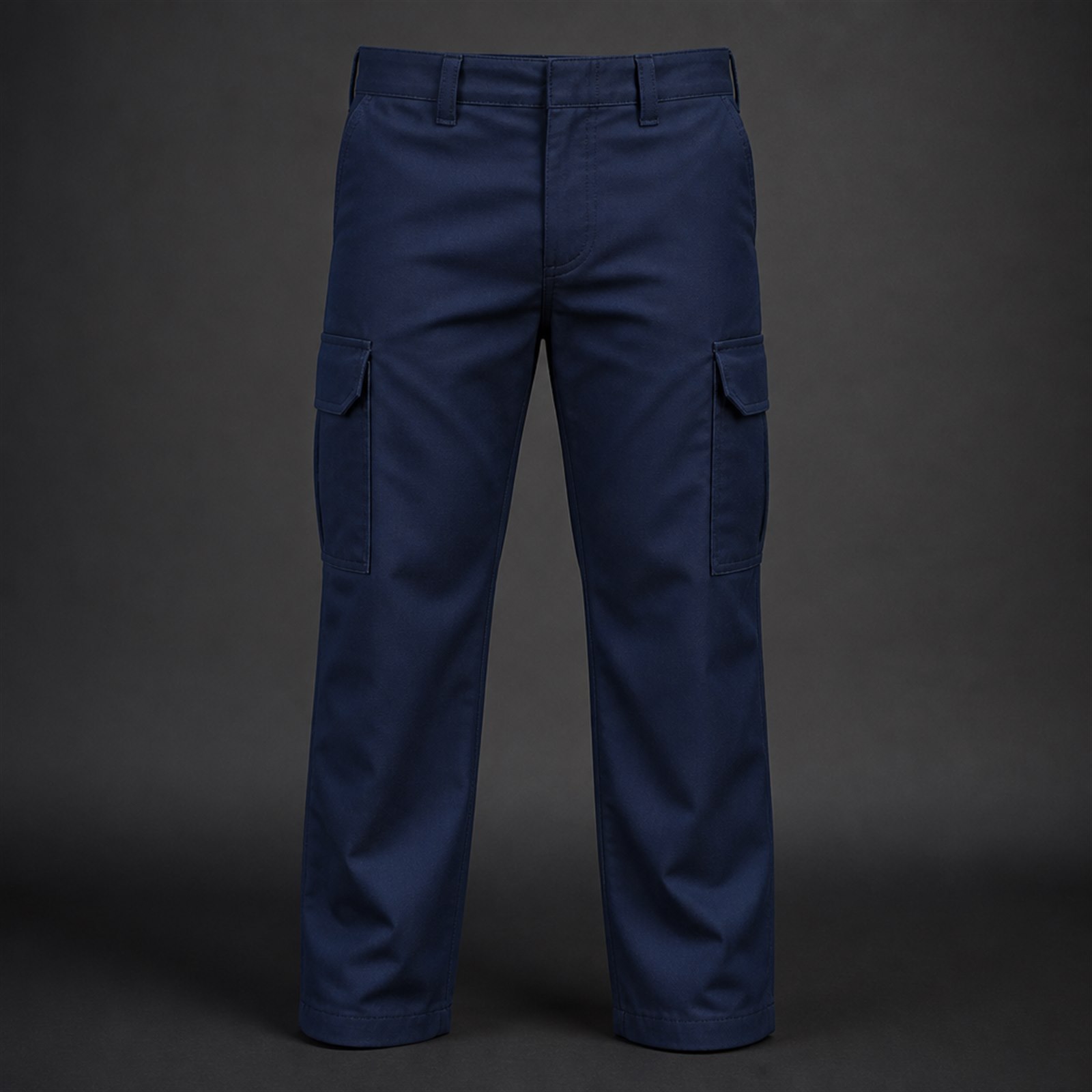
Tactical Duty Pants

Duty pants are worn longer than any other garment in a uniform, usually with a belt loaded with equipment, and they are judged by whether they still look presentable at the end of a shift as much as by whether they survived it.

TemperateHotTropical / Humid
View product

FAQ

Security / Duty Uniforms FAQ

Can you apply our own badges, name plates and rank insignia?

Yes. Insignia can be produced and applied as embroidery, woven badge, heat transfer or a removable patch position on hook and loop. What we need are the artwork, the required position expressed as a measurement on the garment, and confirmation of how the insignia should be attached. Positions are verified on the pre-production sample so that bulk garments match each other.

Should we choose a buttoned front or a zip front?

A buttoned placket, particularly a concealed one, presents the cleanest front and suits front-of-house and ceremonial use. A zip is faster to fasten and easier with gloves, which suits patrol use. Button attachment quality is the deciding factor on buttoned builds, because loose buttons are the most common after-sales complaint.

How do you handle shirt and trouser shade matching?

Shirt and trouser fabrics are ordered and checked as a pair rather than separately. Incoming lots are compared against each other and against the approved standard before cutting, and garments are cut from controlled markers so panels within a set match. Where shade differences are unavoidable, they are raised with the buyer before production rather than after.

Can one uniform serve both hot and cool climates?

Partly. A lightweight quick-dry fabric works across a wider range than a heavy formal fabric, and layering covers the cold end. But a fabric chosen for heat will look softer and less formal, so ranges operating across very different climates often carry two fabric specifications inside one design rather than compromise both.

Do you offer high-visibility or reflective options?

Yes. Reflective piping, reflective transfer bands and high-visibility panel inserts can be specified, and their placement should be agreed against the relevant local requirement the buyer is working to. We build to the buyer's stated standard rather than assuming one.

What information do you need to quote a duty uniform programme?

Product type, target quantity, shirt and trouser fabric direction, colour reference, insignia requirements, size range, labelling and packaging, and the intended use and climate. A reference garment, photograph or tech pack helps most. Any figure such as MOQ or lead time is confirmed with you rather than quoted as an assumption.

Request a Manufacturing Assessment

Send us your tech pack, reference sample or product idea. We review your requirement, recommend materials and construction, and come back with a development plan you can act on.