Capability
Tactical Apparel Quality Control and Inspection
Quality control only works as a sequence. If the fabric is not verified on arrival, the inline check is inspecting material that was never approved. If pre-production approval is skipped, inline has no standard to inspect against. If final inspection carries the whole burden, defects are found when they can only be reworked at full cost. The control programme here follows one order: incoming fabric inspection, pre-production approval, inline inspection, measurement inspection, construction inspection, final inspection, packing inspection and pre-shipment documentation. At every step the standard being checked against is named in writing, and the result is recorded. The purpose of the record is not paperwork. It is that any non-conformance can be traced to the step that should have caught it, so it can be corrected at that step next time.
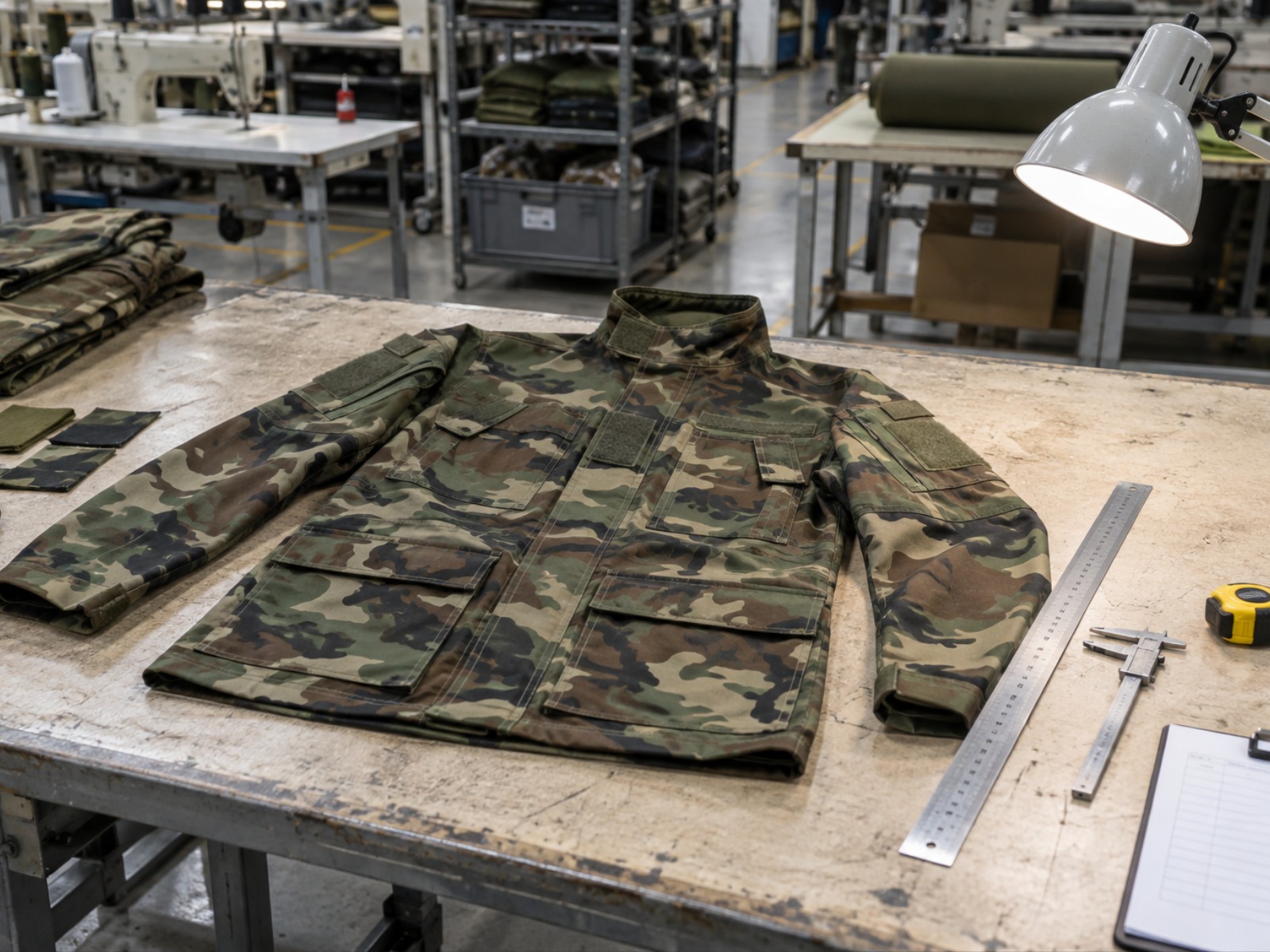
- Process steps
- 8 defined stages
- Deliverables
- 8 documented outputs
- Inputs required
- 8 from the buyer
Gallery
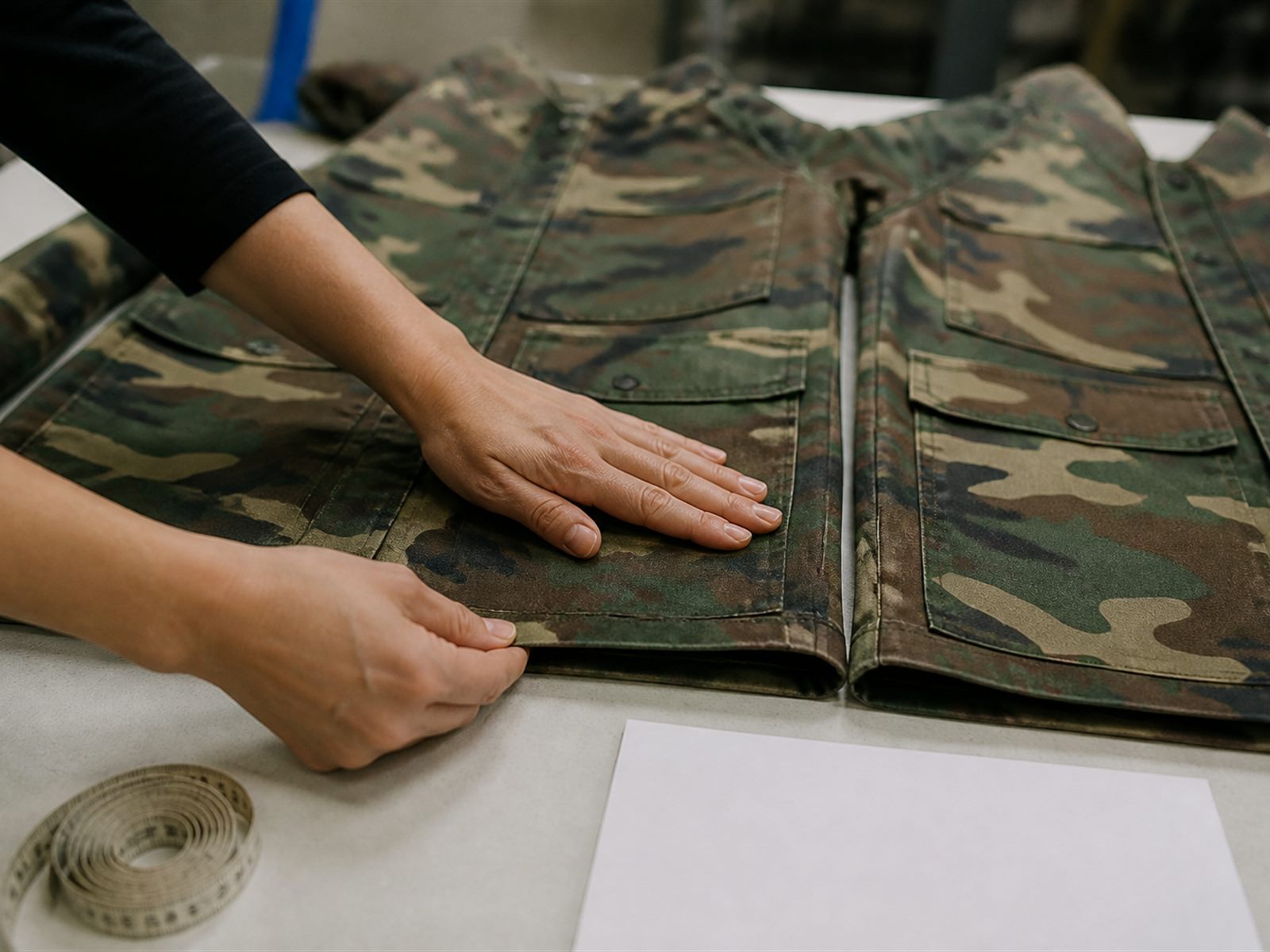
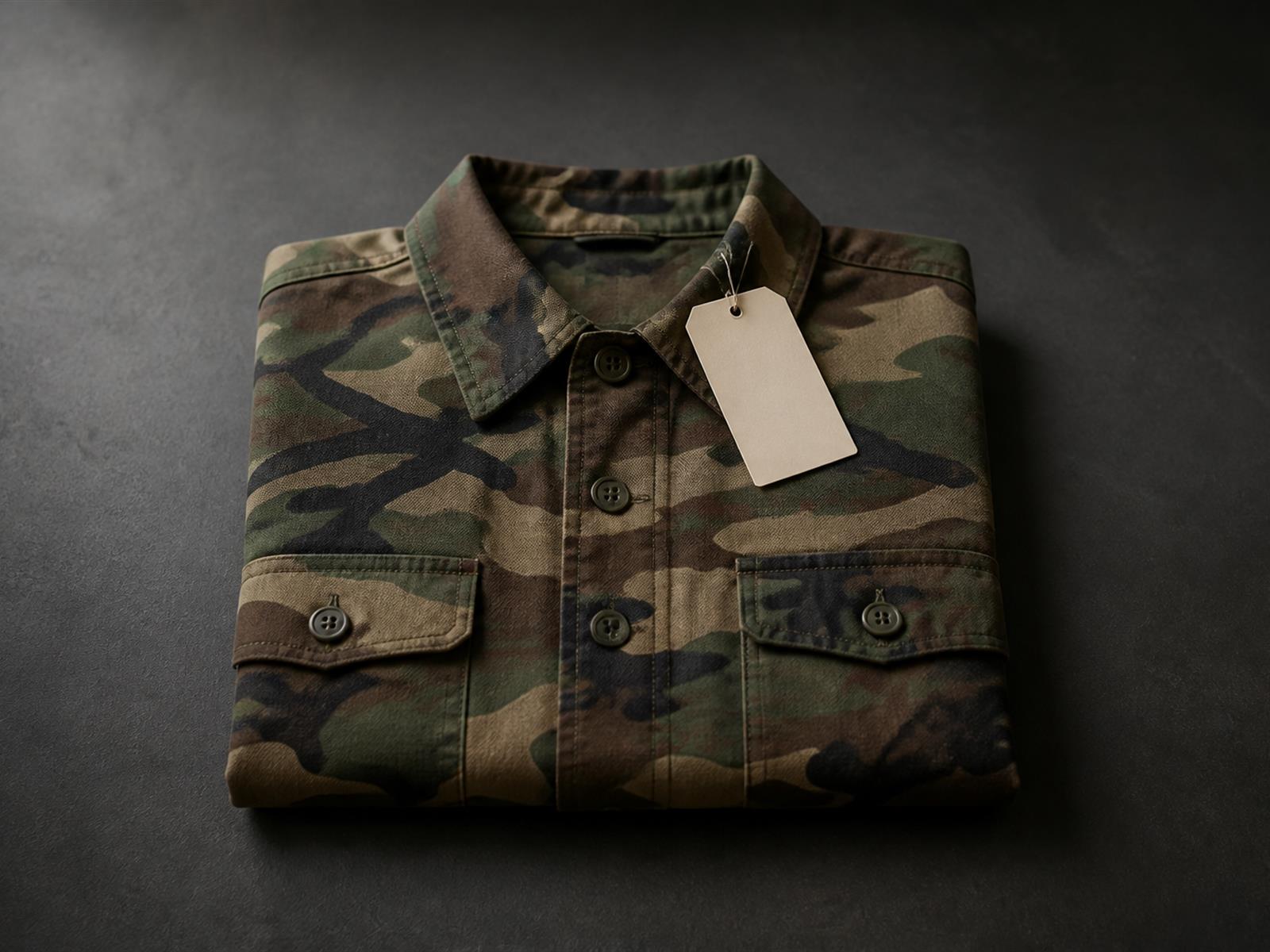
Quality Control in practice
Inputs
What we need from you
The 8 inputs development of Quality Control needs from you, and where one is missing we will tell you it is missing rather than assume it.
- Sealed approval sample or approved pre-production sample as the construction and appearance standard
- Locked measurement chart with written tolerance per critical dimension
- Approved fabric, trim and colour standards, including the retained swatch
- Approved customization list covering labels, logo, hardware and packaging
- Inspection level and acceptance criteria the buyer requires, stated in writing
- Care label content and wash procedure that the finished garment must satisfy
- Packing specification including polybag, size sticker, hangtag and carton marking
- Shipment structure and documentation set the buyer needs at destination
Deliverables
What you receive
The 8 tangible outputs you receive from Quality Control — not assurances.
- Incoming fabric inspection record per roll, with roll lot and defects noted
- Written pre-production approval covering sample, pattern version, trims, labels and packing
- Inline inspection record with defects found and correction noted
- Measurement record showing actual values against the locked chart and tolerance
- Construction inspection record covering each specified feature
- Final inspection record per lot with defect, quantity affected and disposition
- Packing inspection record against the approved packing sample
- Pre-shipment document set stated in your specification
Process
The process, step by step
Quality Control runs as 8 steps, and the sequence is not administrative: each step removes a specific risk before the next one commits cost.
Incoming Fabric Inspection
Every roll is inspected on arrival against the approved fabric standard and the retained colour swatch: construction and weave or knit, weight and width, colour under a stated lighting condition, and visible defects such as slubs, holes, mispicks, shading bands or patching. Roll lot is recorded and any roll outside the written tolerance is held before cutting rather than issued to the cutting room. The standard is the approved physical swatch, not the supplier's description.
Pre-production Approval
Before bulk cutting starts, the pre-production sample, pattern version, marker, fabric lot, trims, labels, logo and packing sample are approved in writing against the approved specification. The standard is the sealed approval sample plus the locked measurement chart. Nothing is cut against an unapproved component, because approval after cutting converts a cheap correction into a re-cut.
Inline Inspection
Garments are pulled from the sewing line during production and checked at defined stages, at minimum after the main body assembly and after closure and trim attachment. The standard is the sealed approval sample and the construction specification: stitch type and density, seam alignment, pocket and reinforcement placement, panel shade, and trim function. Defects are corrected on the line, where the cost is minutes rather than finished goods.
Measurement Inspection
Completed garments are measured at the critical dimensions of the locked chart and compared against the written tolerance, with actual values recorded. The standard is the locked measurement chart and the agreed tolerance per dimension, checked after the specified wash where shrinkage affects the final measurement. Dimensions outside tolerance are reported as measured, not summarised.
Construction Inspection
Each specified feature is checked against the approval sample and the construction specification: collar stand and symmetry, pocket depth, position and closure, zipper function and alignment, hook and loop engagement, sleeve and cuff construction, elbow and knee reinforcement, bartack and box-X positions, and overall symmetry and balance. The standard is the sealed approval sample feature by feature, not the general appearance of the garment.
Final Inspection
Finished goods are inspected as a lot against the inspection level and acceptance criteria agreed in writing, covering workmanship, appearance, symmetry, colour against the retained swatch, hardware function, label placement and fit of closures. The standard is the sealed approval sample plus the agreed acceptance criteria, and the result is recorded per lot with the defect found, the quantity affected and the disposition.
Packing Inspection
Packing is inspected against the packing specification and the approved physical packing sample: garment folded to the specified method, size sticker correct and matched to the garment inside, polybag closed, hangtag present, carton count, carton weight and carton marking. The standard is the approved packing sample, because a correct garment in a mislabelled carton still fails at the buyer's warehouse.
Pre-shipment Documentation
Before dispatch, the documentation set is assembled and checked against the buyer's stated requirement: the inspection record for each step, measurement records, batch traceability record, packing list and carton marking list, plus any document the buyer's market requires. The standard is the document list stated in your specification, so the paperwork that clears the goods exists with the shipment rather than being produced after it.
Buyer value
Why this matters to a buyer
Why Quality Control matters to a buyer, framed as the 7 commercial consequences rather than as quality adjectives.
A defect found at incoming fabric inspection costs a roll, the same defect found after cutting and sewing costs the finished goods it was cut into
A defect found inline costs minutes of rework, the same defect found at final inspection costs the unit plus the rework of the whole lot
Pre-production approval gives every later inspection step an objective standard, which removes rejection arguments about what the specification actually meant
Measurement results are recorded as measured values, so a tolerance decision is made on data instead of on a verbal summary
Construction is inspected feature by feature, which catches the functional failure - a pad pocket, a knee reinforcement, a closure - that a visual pass or fail would miss
Packing and documentation are inspected before dispatch, so goods are not held at destination for a carton marking or certificate problem
Recorded findings show which step should have caught a defect, which is what turns a complaint into a correction for the next order
FAQ
Quality Control FAQ
Can we use our own inspection criteria?
Yes. Send the inspection level, the acceptance criteria and the defect classification you require, and they will be applied and referenced in the inspection records. Where a criterion is not usable as written, that will be stated in advance rather than resolved by interpretation at the inspection table.
Is final inspection alone enough?
No. Final inspection can only reject; it cannot prevent. By that stage the fabric, the cutting and the sewing are already complete, so every defect found there has already been paid for at full cost. The earlier steps are what make final inspection a confirmation rather than a repair station.
Can a third-party inspector attend the final inspection?
Yes. Third-party or buyer-nominated inspection can be arranged at final inspection, and the same records and standards are used. If the buyer's inspector applies different acceptance criteria from those agreed in writing, that difference is worth clarifying before the inspection rather than during it.
What happens when the inspection finds a non-conformance?
The non-conformance is recorded with the defect, the quantity affected and the proposed disposition: rework, sort, re-make or reject. The buyer is informed before shipment rather than after, so the decision is the buyer's and the delivery plan can be adjusted with facts.
Do you test the finished garment, and what test values can you quote?
Testing is carried out against the properties named in the specification, and results are reported for the specific test method and the specific sample tested. Test values are not quoted in general, because a figure is only meaningful when attached to the method, the laboratory and the sample it came from. Where no verified test result exists for a property, it is reported as unverified.
How does quality control handle a split order or a repeat order?
Each batch is inspected against the same retained standards and the same locked chart, and the batch record ties each shipment to its material lots and cutting. A repeat order is inspected against the retained approval sample and standards, which is what keeps a second order comparable to the first.
Related
Related content
Related Products
Related Applications
Related Capabilities
Related Articles
Request a Manufacturing Assessment
Send us your tech pack, reference sample or product idea. We review your requirement, recommend materials and construction, and come back with a development plan you can act on.