Field Lab
Color Retention Test
This Field Lab page states test intent before any result exists. The question is how the colour and the camouflage print on our fabrics behave over the life of a garment: whether shade shifts after laundering and light exposure, whether colours migrate onto adjacent panels or onto other garments in the wash, and how the fabrics we offer compare when evaluated side by side under the same conditions. The test structure, the fabric set, the exposure conditions and the limits of the method are published here now. Observations and results will be added only when the test has actually been run on real fabric and every reading has been recorded. Until then this page describes what we intend to measure, not what any fabric does.
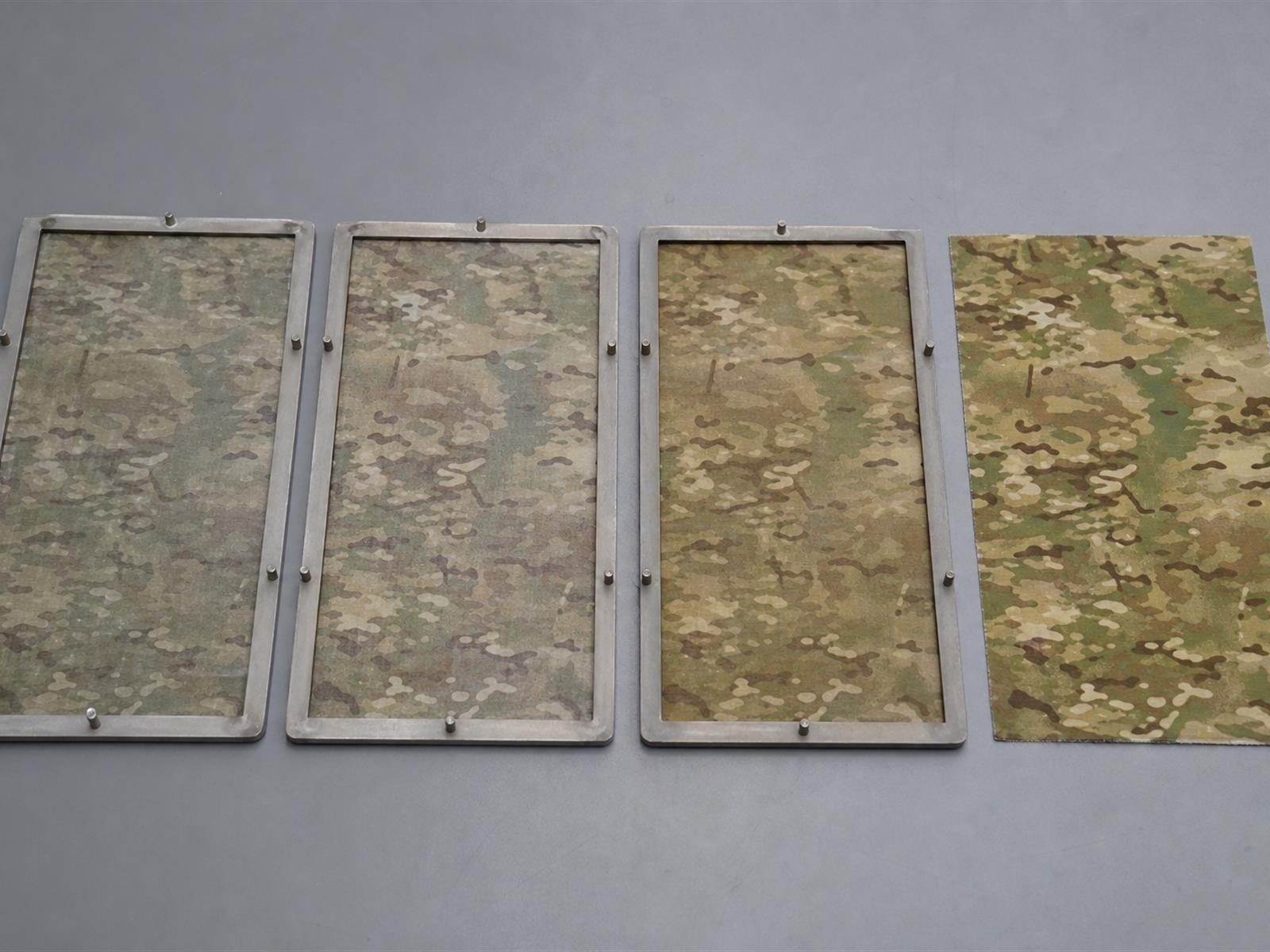
- Status
- Awaiting test data
- Materials compared
- 4
Gallery
Test bench
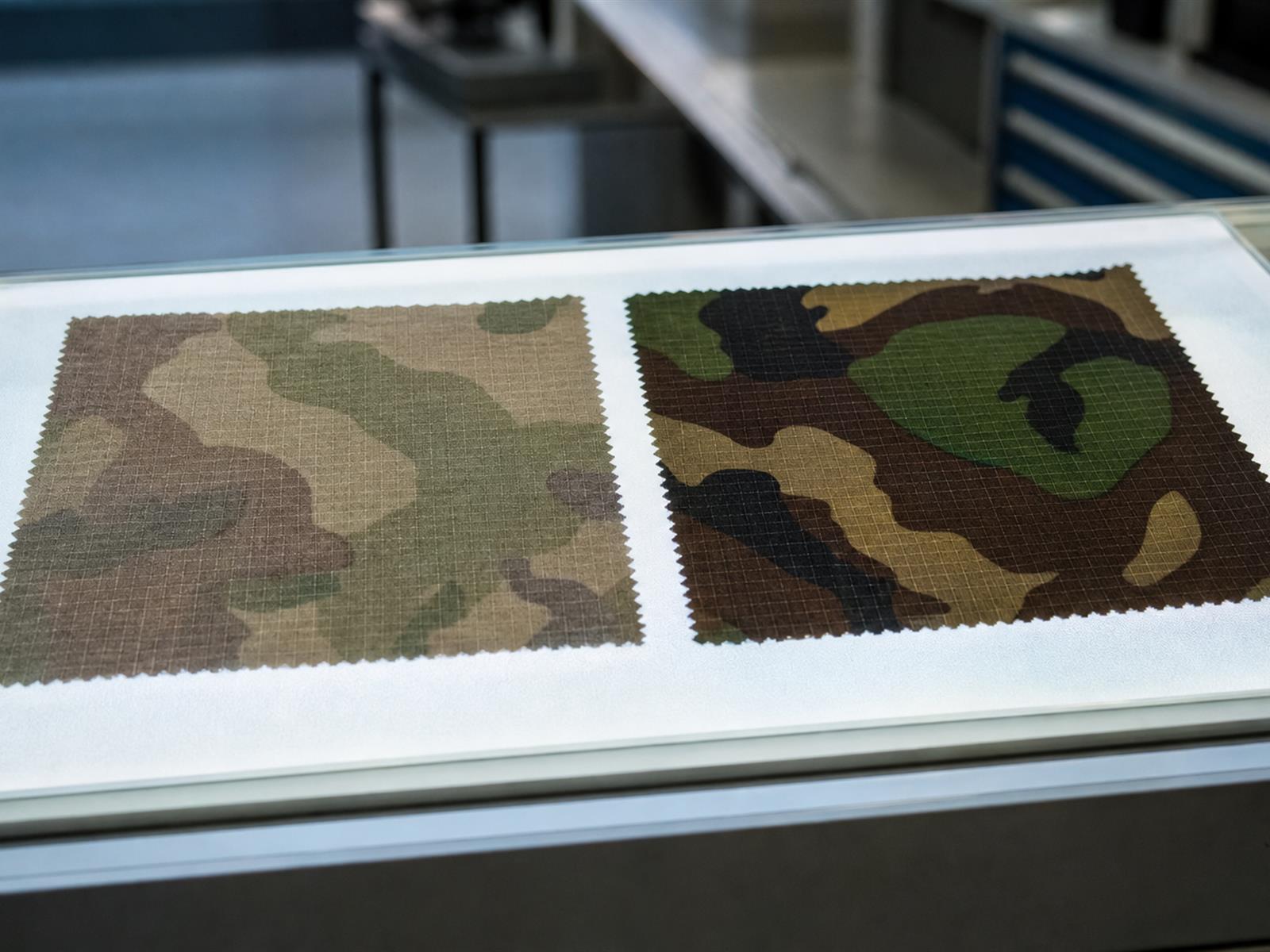
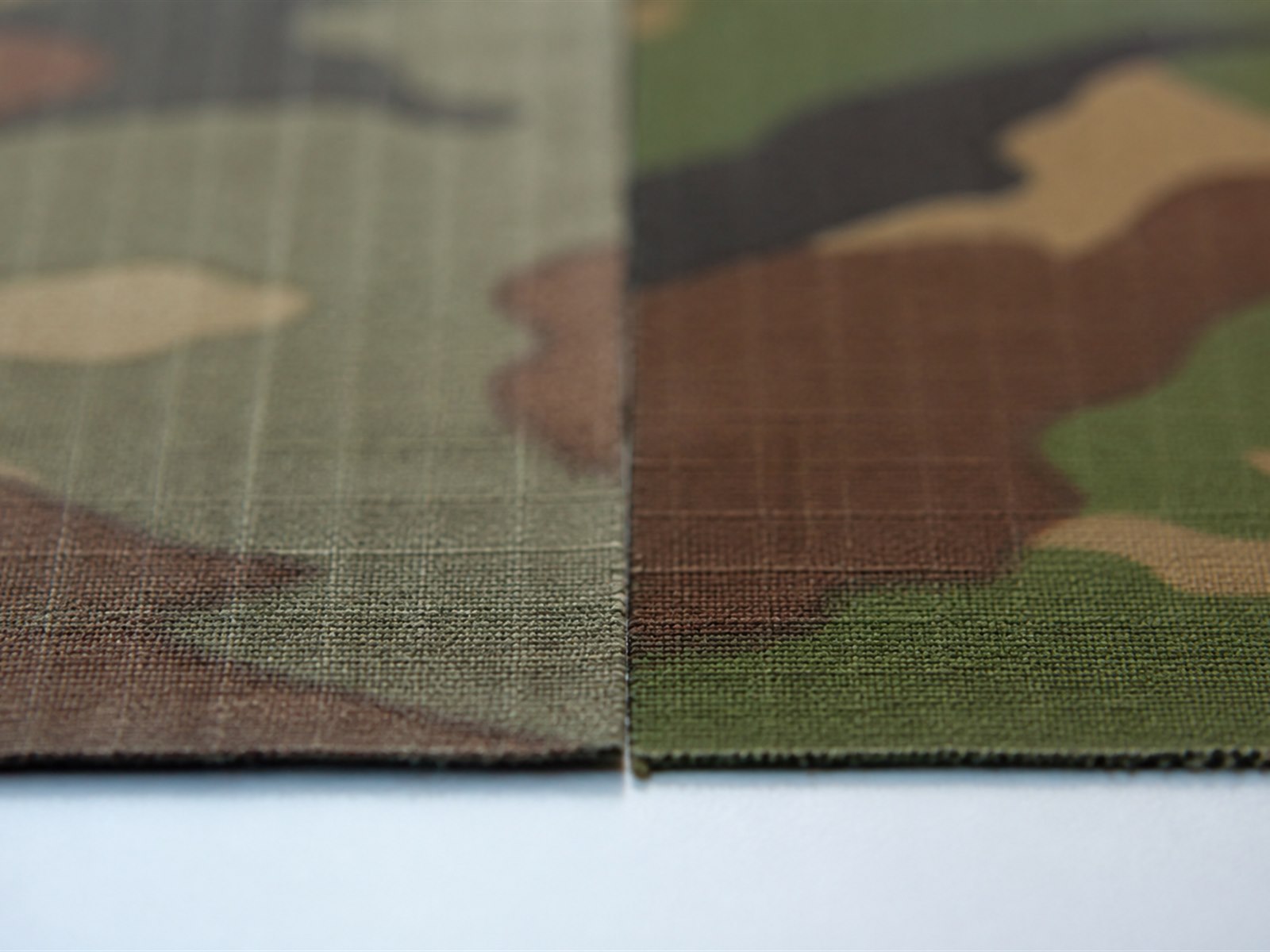
Status: AWAITING TEST DATA — Color Retention Test has not yet been run on real material. Method, observations and result will be published once the test has been completed and the output recorded.
Question
What are we testing?
Whether the dyed and camouflage-printed fabrics we supply hold their shade differently when laundered and exposed under identical conditions, and whether any gap is large enough to matter for a uniform programme where panels from different lots or different suppliers must match. The comparison is between fabrics we use, tested against each other under one method; it is not a certification of any fabric against an external standard. It is intended to make shade risk visible before a buyer commits to a bulk order.
Relevance
Why does it matter?
Colour is the specification a buyer's end user notices first and forgives last. A uniform programme that delivers trousers and shirts that no longer match, or a camouflage print whose contrast has flattened after a season of wear, is judged as poor quality regardless of how well the garment is built. Colour failure also creates real cost: mixed lots cannot be issued as sets, replacement items ordered later will not match the items already in service, and a programme can be forced into re-dyeing or re-cutting decisions it did not budget for. Where a buyer accepts a shade by visual approval of a sample and never tracks it through laundering and exposure, the risk sits entirely on the buyer's side of the order, and it surfaces only after the garments are already in the field.
Materials
Materials in this test
Material
Cotton Ripstop
Cotton ripstop is a woven fabric made entirely from cotton, reinforced with a grid of heavier yarns woven at regular intervals.
Material
Poly Cotton Ripstop
Poly cotton ripstop is a woven fabric built from a blend of polyester and cotton, reinforced with a grid of thicker yarns woven at intervals.
Material
NYCO Ripstop
NYCO ripstop is a woven fabric that blends nylon with cotton and reinforces the structure with a grid of heavier yarns woven at regular intervals.
Material
Mechanical Stretch Fabric
Mechanical stretch fabric obtains its extension from yarn and weave geometry rather than from elastic fibre.
Method & result
Method, observations and result
Color Retention Test is published only when the underlying work has been carried out, so an empty field means the test has not yet produced that value.
Testing method
Awaiting test data — to be published when the test is complete.
Observations
Awaiting test data — to be published when the test is complete.
Result
Awaiting test data — to be published when the test is complete.
Limitations
What this test cannot tell you
A result published here will apply only to the specific fabric lots and shade recipes tested, under the exposure and laundering conditions recorded at the time. Colour behaviour depends on fibre type, dye class, print method and finishing route, and it differs between a solid-dyed fabric and a printed camouflage pattern even when the base cloth is identical. Shade perception is also affected by the light under which a sample is viewed, so a bench comparison does not reproduce every field condition. This test is not a certification against any external standard, and it does not tell a buyer that a delivered lot will match a previously approved shade; that must be written into the specification as a tolerance and verified on the production lot.
Related
Related content
Related Applications
Related Capabilities
Related Categories
Request a sample to evaluate yourself
Send the product type and the application. We will propose the material options for that application and state the trade-offs, so the comparison you run is against the right candidates.