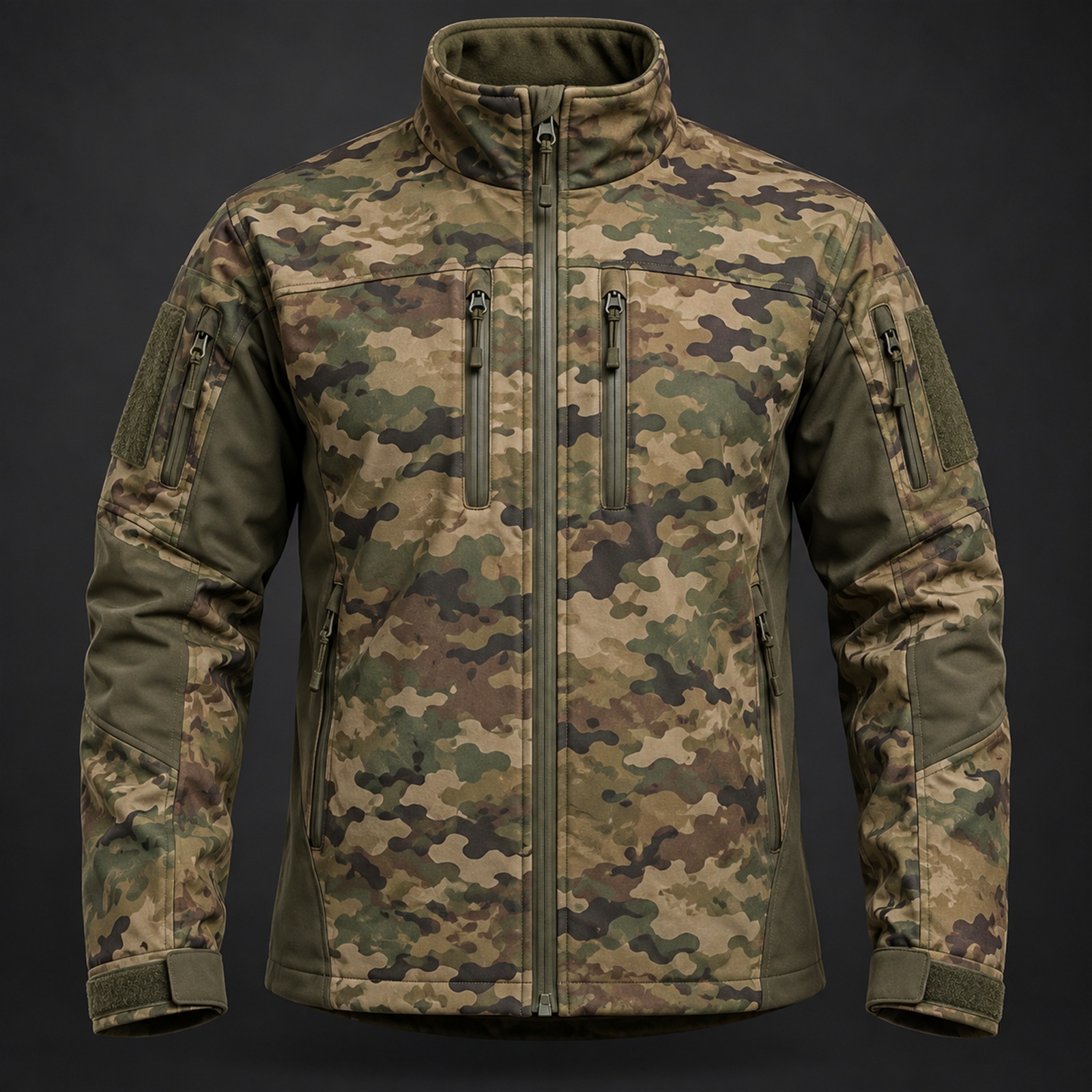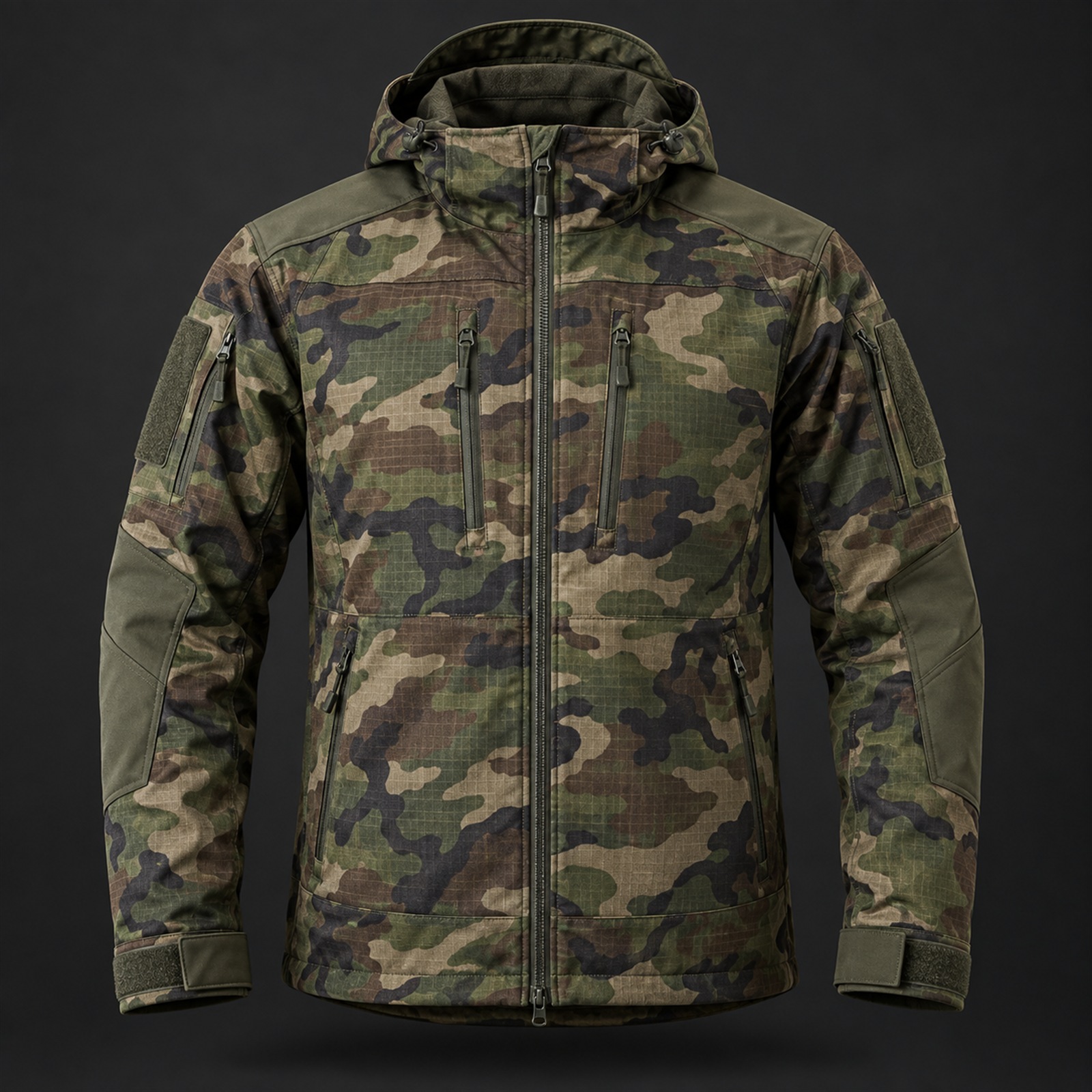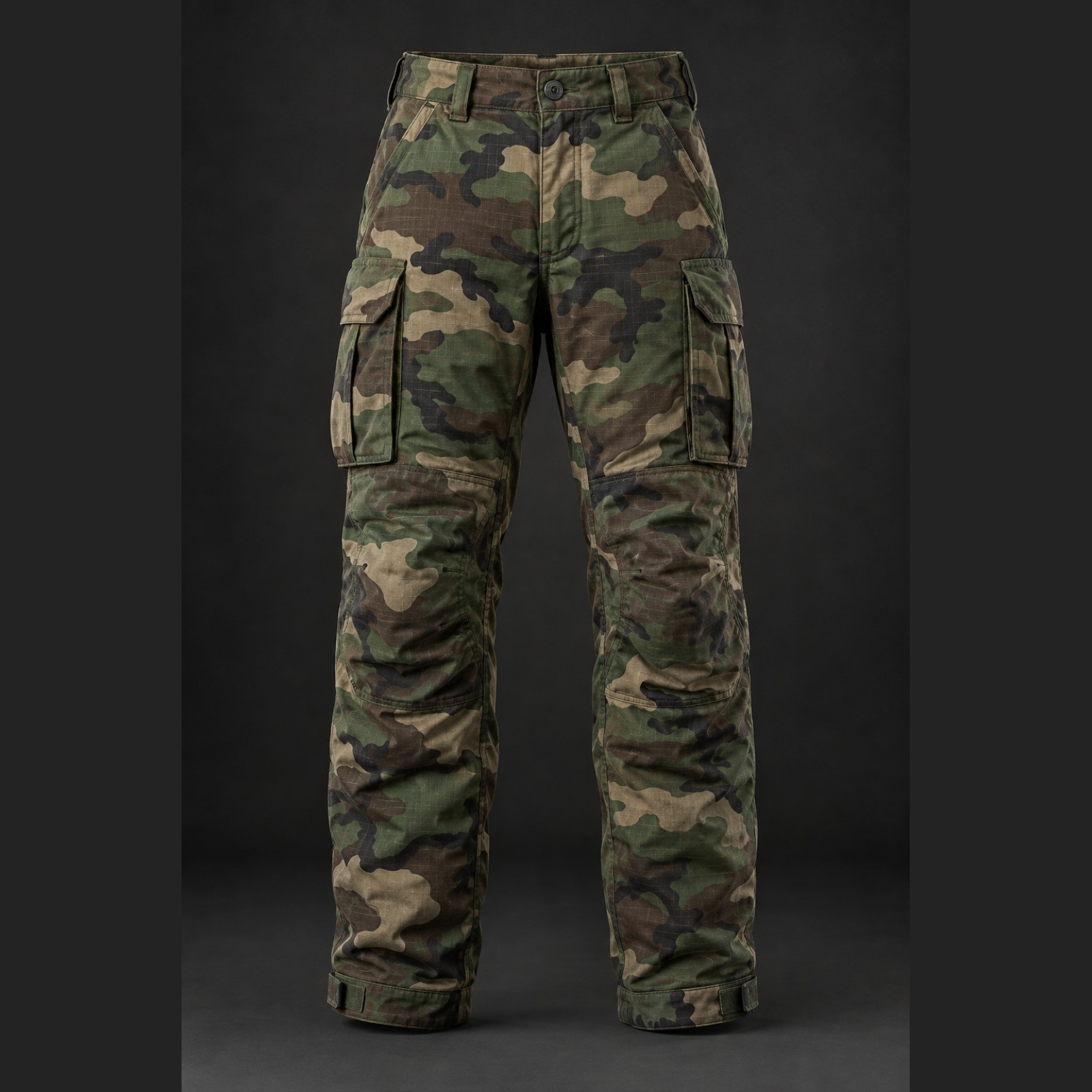
Tactical Pants
Cold Weather Tactical Pants
Cold weather changes what a tactical pant has to do.
Cool / ColdCold / DryTemperate — Cold Season
View productProducts / Cold Weather Tactical Clothing
A cold weather jacket has to hold warmth, allow movement and get rid of moisture, and those three requirements pull against each other. Every programme starts by fixing which one the buyer is optimising for, because that decision drives the whole build. A jacket for a user who stands static in cold can carry insulation through the body; a jacket worn while moving has to be zoned, vented and lighter, or the wearer overheats and then freezes when they stop. Layering is designed in rather than added: the jacket is cut to fit over an agreed mid layer, with the armhole and sleeve shaped so the extra layer does not cost reach. Mobility, insulation zoning and moisture management are settled together, and the trade-off the buyer is accepting is written into the specification.
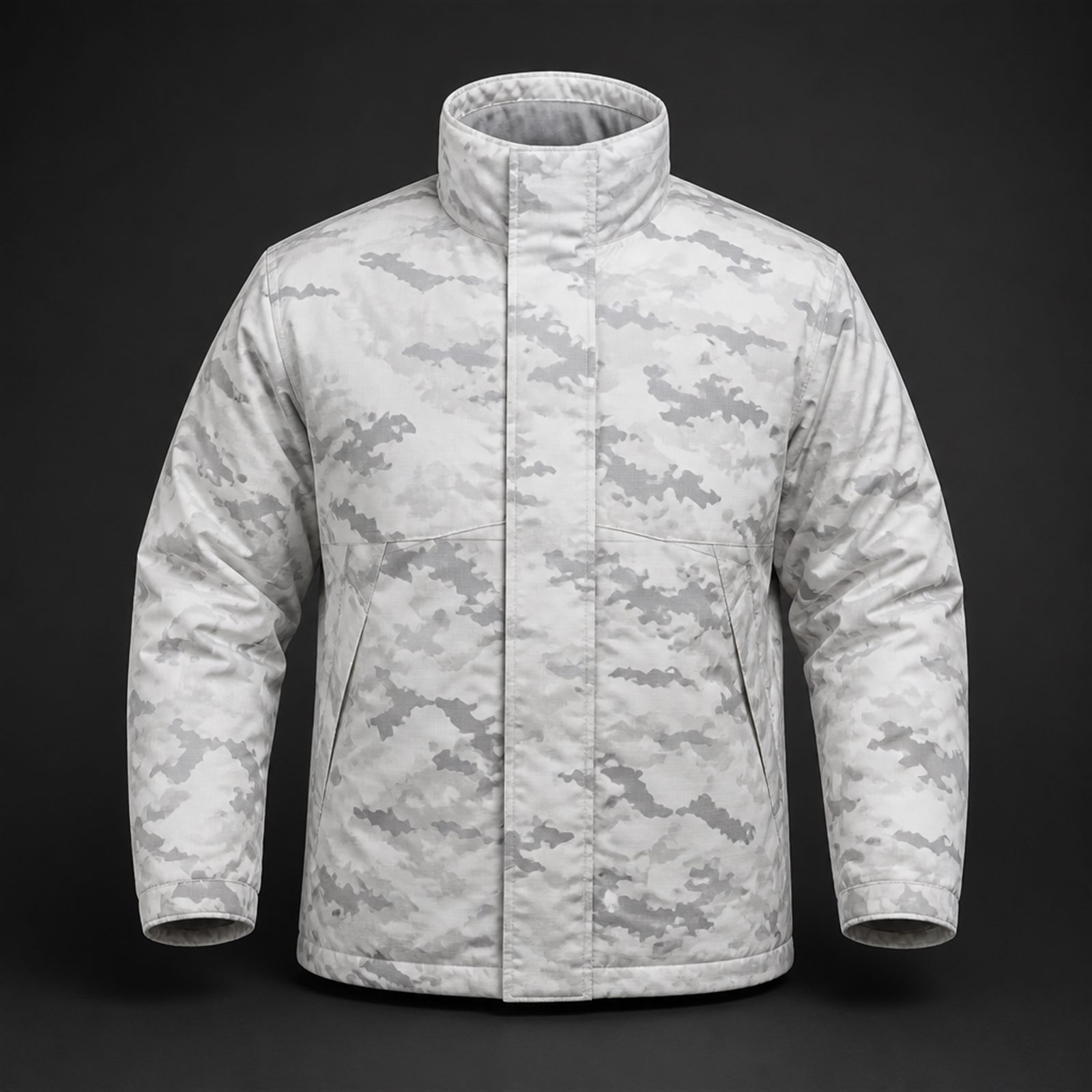
Gallery
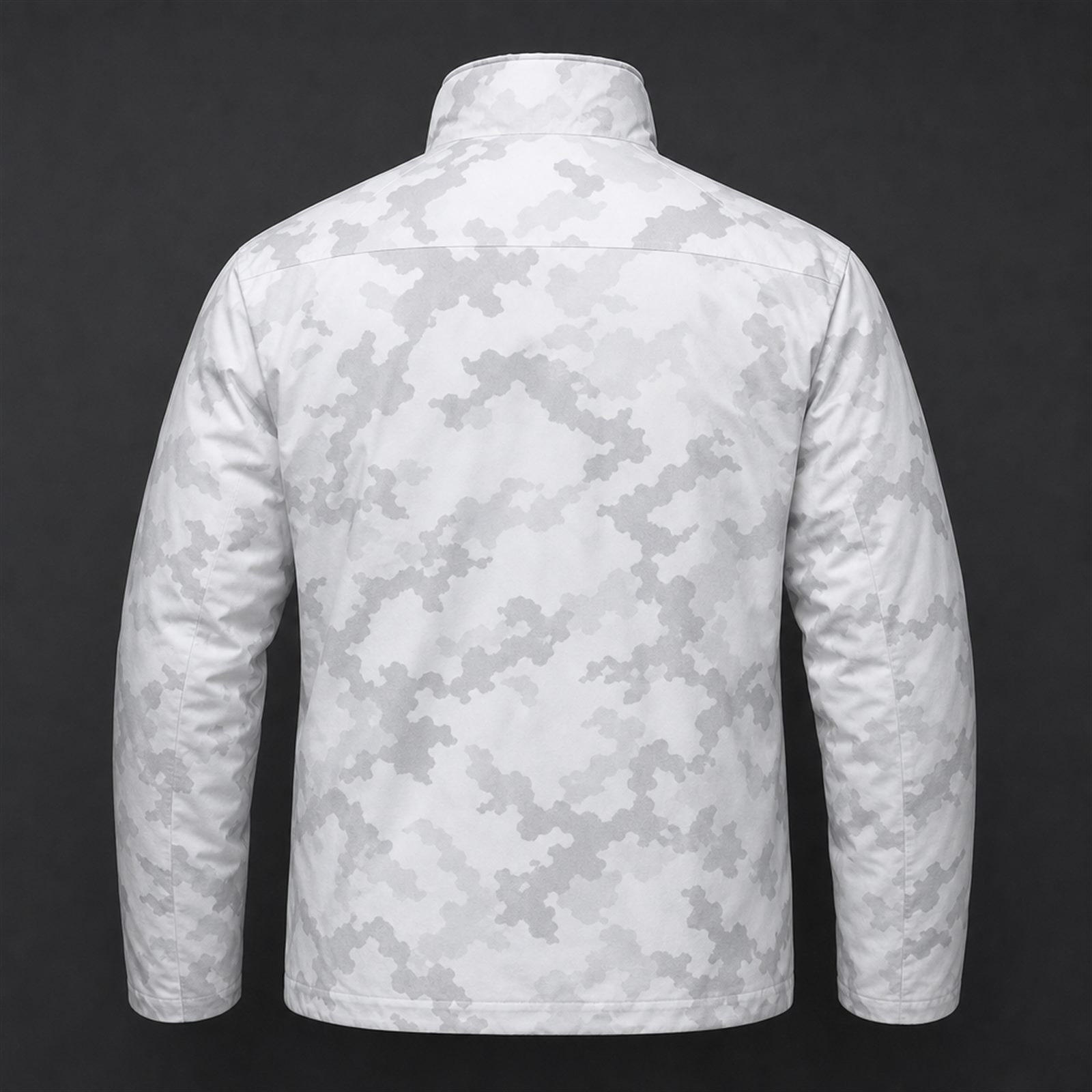
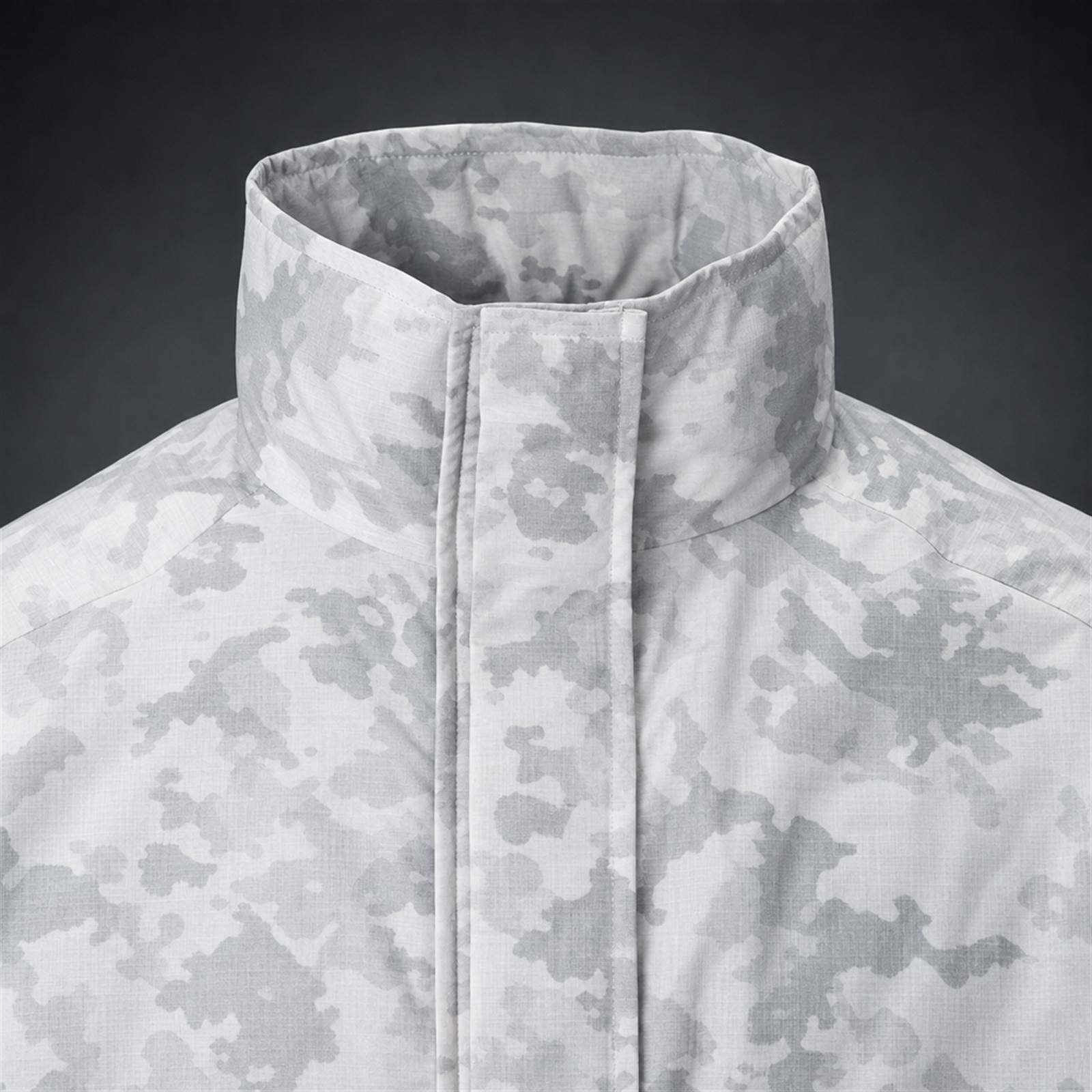
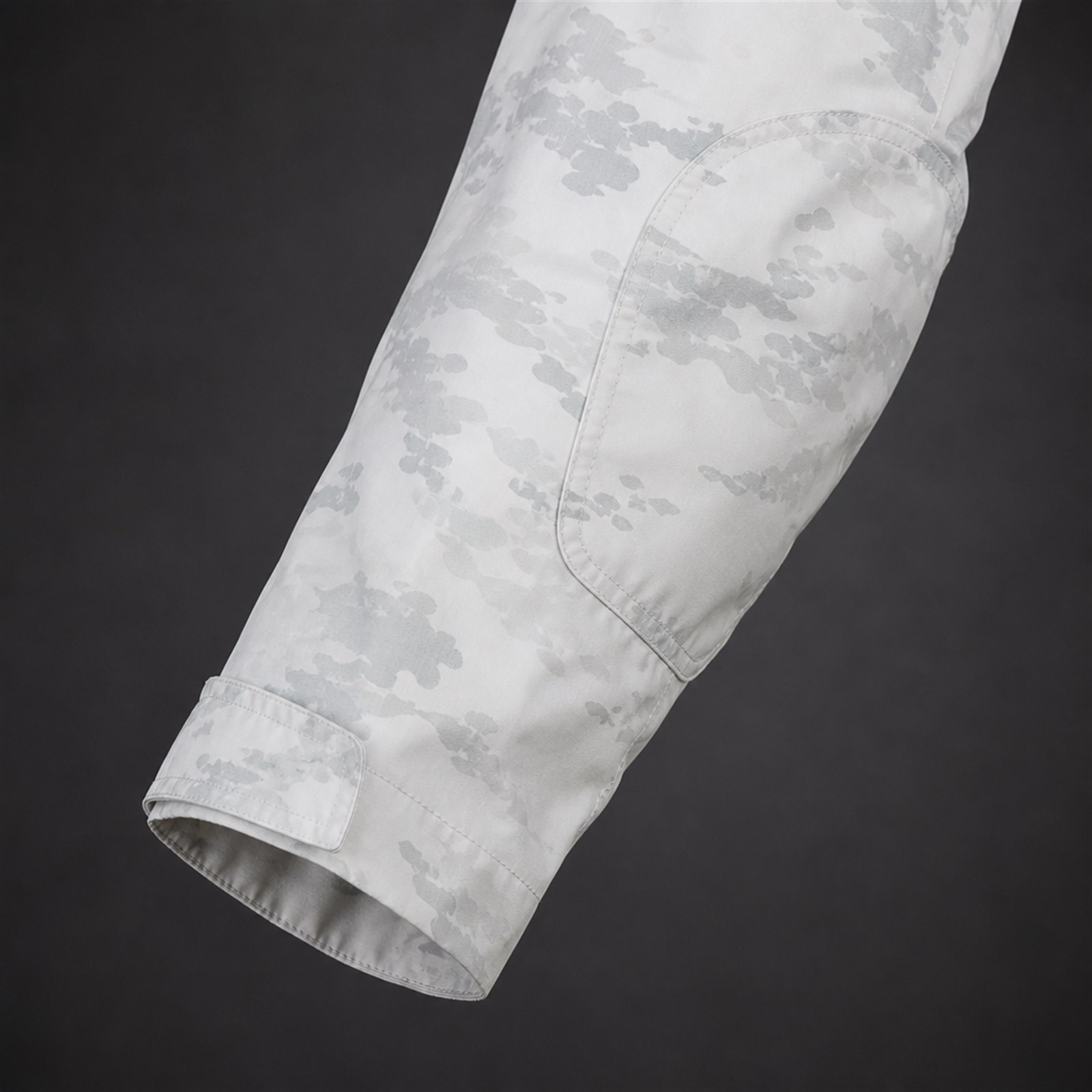
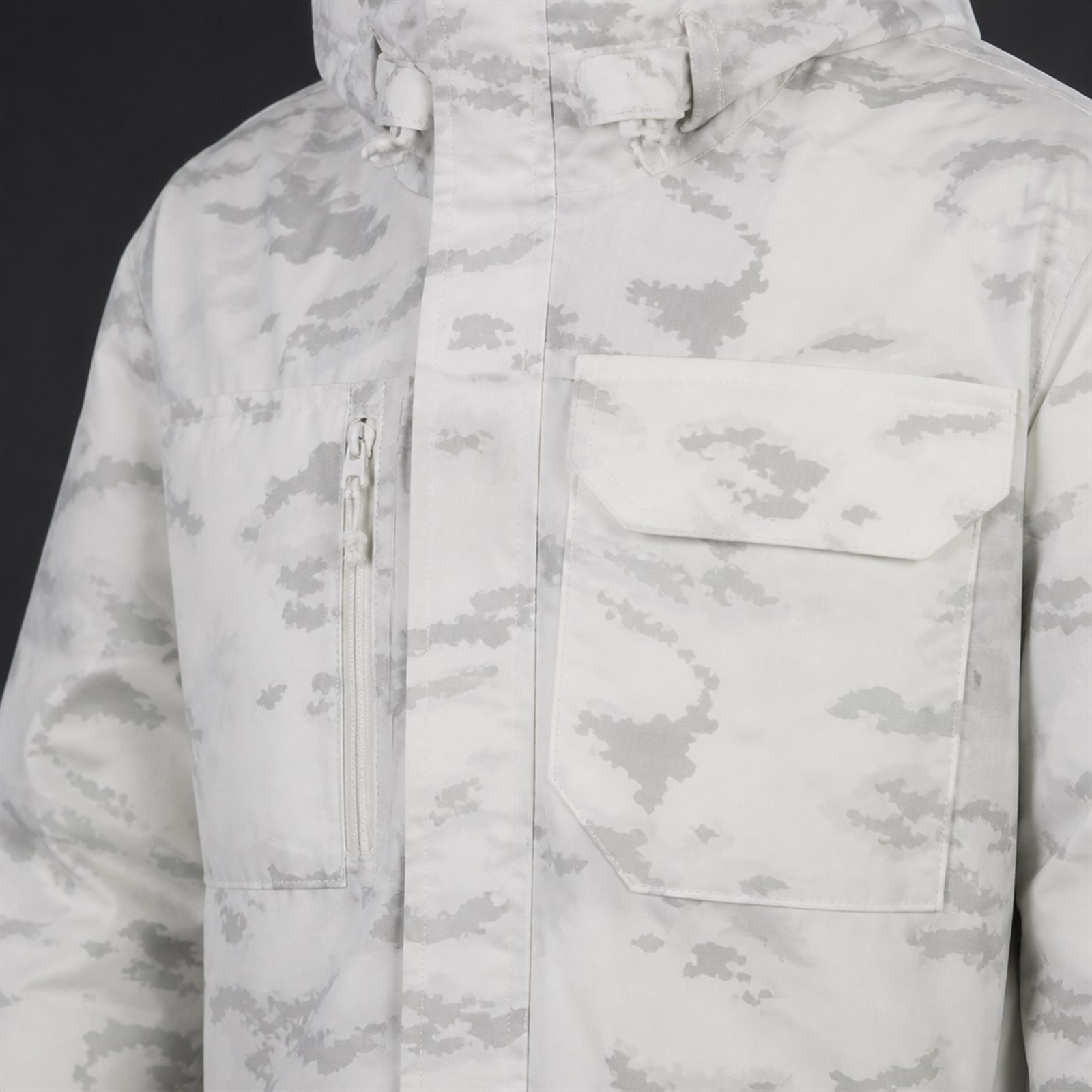
Design purpose
Deliver warmth where the wearer actually loses heat — torso, shoulders and head — without turning the jacket into a garment that restricts movement, and without trapping the moisture that makes a cold wearer colder once activity stops.
Applications
Interactive map
Cold Weather Tactical Jacket: select a marker to see what can be specified at that part of the garment — all 10 mapped areas are also listed in full below the map, so nothing is hidden behind an interaction.
Customization by garment part
Select a marker to see the customization options available at that part of the garment. Every option below is a manufacturing decision you control.
Materials
4 material options for Cold Weather Tactical Jacket, specified per garment area — a single fabric cannot serve heat management and abrasion resistance at the same time.
Shell
The outer layer has to stop wind before it can hold warmth. A more weather-resistant shell normally costs breathability, which matters most when the jacket is worn during movement.
Insulation
Insulation quantity and placement are the central trade-off. Zoned insulation keeps the body warm while leaving the arms light enough to work, and a removable liner extends the jacket across more of the season.
Lining
The inner face decides how the jacket feels against a base layer and how well moisture moves away from the skin before it condenses.
Reinforcement
Applied at contact points so outermost layers survive pack straps, webbing and rough surfaces without adding weight across the whole garment.
Construction
How each of the 8 parts of Cold Weather Tactical Jacket is assembled, and why that choice was made.
Insulation zoning
Insulation weight and placement are mapped across the garment — denser at the torso and shoulders, lighter at the sleeves and underarm — so warmth is retained where heat is lost without padding the arms into immobility.
Layering geometry
The jacket is cut to fit over an agreed mid layer, with the armhole deepened and the sleeve head shaped so the additional layer does not restrict forward reach or lift the hem.
Shoulder and sleeve
Articulated or gusseted construction at the shoulder and elbow, since thick insulation plus a straight sleeve is the main reason insulated jackets bind when the wearer works.
Moisture management
Vent zips, a breathable back panel or an open lining route give moisture a path out, so perspiration does not condense inside the jacket and chill the wearer when activity stops.
Front closure
Full-length zip with an insulated storm flap and chin guard, faced and bar-tacked, so the front does not leak heat along the closure line.
Collar and hood
High stand collar with a brushed or fleece-faced inner surface, optionally hooded or hood-compatible, with collar height agreed so it does not foul helmets or headsets.
Cuff, hem and draught control
Adjustable cuffs with inner storm cuffs where specified, plus a drawcord hem, so heat is not lost at the openings and snow or wind does not enter from below.
Pockets and access
Hand warmer pockets and chest pockets positioned for gloved, one-handed access, with insulated pocket bags where the buyer wants batteries or items protected from cold.
Features
The 6 functional features of Cold Weather Tactical Jacket each exist to solve a specific problem in use, and where a feature is a trade-off rather than a pure gain that is stated.
Warmth is concentrated at the torso and shoulders while the sleeves and underarm stay lighter, which keeps the wearer warm without paying for it in restricted arm movement.
The jacket is patterned around a nominated mid layer, so the armhole, sleeve and body allowance support the full system rather than assuming a single garment.
Articulated shoulders and elbows compensate for the stiffness that insulation inevitably adds, so the jacket stays usable when the wearer reaches, lifts or climbs.
Vents, breathable panels or an open lining path allow vapour to escape, which is the difference between a jacket that is warm while moving and one that is only warm while still.
Insulated storm flap, high collar, adjustable cuffs and drawcord hem close the openings where most heat is lost and most wind enters.
Shoulder, forearm, hem and pocket corners are reinforced where the outermost layer takes the most abrasion, without adding weight to the whole jacket.
Customization
15 customization lines for Cold Weather Tactical Jacket: branding, colour, camouflage and packaging are all part of the specification, and every item is confirmed on the pre-production sample.
Shell Fabric
Insulation
Lining
Color
Camouflage Pattern
Front Closure
Collar and Hood
Ventilation
Chest Pocket
Lower Pocket
Cuff
Hem
Liner System
Logo
Packaging
Colour
Camouflage
Sizing
Sizes are developed from the buyer's size chart or uniform sizing standard, with the size range assessed in the layered configuration the jacket is designed for rather than on a body form alone. Chest, shoulder, sleeve length, back length, hem opening and armhole depth are confirmed on a size set sample. Because insulation stiffens a garment, mobility checks are carried out on the sample in the layered state, and measurement tolerances are agreed in writing before bulk.
Branding
Main label, size label, care label and country of origin label are produced to the buyer's artwork and content, with care instructions written for the actual shell, insulation and lining combination — an instruction set borrowed from a different construction is a common cause of customer returns. Branding can be applied as woven label, printed label, rubber patch, embroidery or heat transfer, including insignia and name tape panels. Packaging ranges from poly bag to printed poly bag with hangtag, header card or custom box, with compression packing available where shipping volume matters. All labelling and packaging is confirmed on the pre-production sample.
Logistics
Sample development
Development of Cold Weather Tactical Jacket runs in 7 stages, each risk removed before the next step commits cost.
Requirement review
Buyer brief reviewed and the balance between warmth, mobility and moisture management fixed in writing, along with the mid layer the jacket must fit over.
Material proposal
Shell, insulation and lining options proposed against that balance, with the warmth, weight and mobility consequences of each option stated.
Insulation zoning plan
Insulation placement mapped across the garment so the buyer can see where warmth is concentrated and where it is deliberately reduced for movement.
Pattern development
Pattern developed against the approved measurements with layering allowance, articulated shoulders and sleeves built in from the first draft.
Prototype
First jacket produced for fit, layered movement, insulation distribution and hardware function assessment.
Revision and size set
Consolidated buyer comments applied in one revision round, then the full size range produced for measurement confirmation in the layered configuration.
Pre-production sample
Final approved construction, materials, insulation zoning and trims locked as the bulk standard.
Bulk production
7 stages of bulk production for Cold Weather Tactical Jacket — where the approved specification is either held or lost.
Fabric and trim approval
Bulk shell, insulation, lining, zips, cord locks, hook and loop, thread and labels approved against the pre-production standard.
Cutting
Cutting performed against the approved pattern, with markers controlled for shade and, where printed, for panel alignment across shell panels and hood.
Insulation cutting and pairing
Insulation panels cut to the zoning plan and paired to the corresponding shell panels, so zoning is not lost during assembly.
Assembly
Line assembly to the approved construction sequence, with the storm flap, storm cuffs and adjusters installed and function-checked on the line.
Inline inspection
In-process inspection at defined points, including insulation distribution, quilt or stitch lines and vent placement.
Finishing
Thread trimming, hardware function check and pressing within the heat limits of the shell and insulation.
Final inspection and packing
Measurement, construction, insulation and packing inspection against the agreed standard, documented per lot.
Quality control
The 7 checks applied to Cold Weather Tactical Jacket, each measured against an agreed standard rather than against opinion.
Incoming fabric and insulation inspection
Shell shade, weight, width and finish checked, and insulation weight, loft and lining shade verified against the approved standard.
Pre-production approval
The buyer-approved pre-production sample becomes the reference standard for construction, fit and insulation distribution.
Zoning verification
Insulation placement checked against the zoning plan during and after assembly, so heat is retained where the specification says it should be.
Inline inspection
Work in progress inspected at defined points during assembly.
Measurement inspection
Critical measurements checked against the approved size set with agreed tolerances, in the layered configuration.
Construction and hardware inspection
Stitching, storm flap, storm cuffs, adjusters, pocket construction and symmetry checked against the approved sample, with all closures operated.
Packing inspection
Labels, folding, compression packing where specified, poly bagging and carton marking checked against the packing instruction.
Specifications
22 specification rows for Cold Weather Tactical Jacket: only confirmed items are listed, so a row that depends on your programme is omitted rather than filled with an estimate.
| Product type | Cold weather tactical jacket |
|---|---|
| Shell material | Ripstop, wind resistant or water resistant fabric — confirmed at specification stage |
| Insulation | Zoned, even, fleece-based or removable liner system — warmth level to buyer specification |
| Lining | Taffeta, brushed, grid fleece or moisture wicking to buyer specification |
| Insulation zoning | Placement mapped per programme — body and shoulders against sleeves and underarm |
| Front closure | Full-length zip with insulated storm flap and chin guard |
| Draught control | High collar, adjustable cuffs, optional inner storm cuffs, drawcord hem |
| Ventilation | Underarm vents, breathable back panel or two-way front zip to buyer specification |
| Climate | Cold, cold and dry, cold and wet / mixed |
| Size range | Developed to buyer size chart or uniform sizing standard with layering allowance |
| Labelling | Private label to buyer artwork |
| Packaging | To buyer packing instruction, compression packing optional |
FAQ
From the temperature range, the activity level and the layer the jacket sits over. A jacket for a user who is mostly static carries more insulation through the body. A jacket for a user who moves under load carries less, or carries it only where it is needed, because excess warmth during activity produces sweat that makes the wearer colder once they stop. We map insulation placement with you at specification stage rather than quoting a single warmth figure, because the number alone does not describe how the jacket behaves.
Zoning means insulation is not distributed evenly. More is placed at the torso and shoulders, where heat loss and cold contact matter most, and less at the sleeves and underarm, where bulk restricts movement and where heat builds up during activity. The result is a jacket that keeps the core warm without padding the arms into immobility. Zoning has to be planned before cutting, because it changes both the pattern and the assembly sequence.
It does if the pattern is not changed to compensate, which is the most common fault in insulated outerwear. Thick insulation stiffens a garment and effectively shortens the reach of a straight sleeve, so the wearer feels the jacket pull across the back when they raise their arms. We compensate with an articulated shoulder, a deeper armhole and a shaped sleeve head, so mobility is bought back through pattern rather than by removing insulation.
It depends on how much of the year the jacket has to cover. A removable liner lets the same shell work as a lighter jacket in shoulder seasons and as a full cold-weather system in winter, and the liner can be worn on its own. The cost is added weight in the shell, a more complex zip-in system and more assembly work. If the jacket only has to perform in genuinely cold conditions, a fixed insulation build is simpler and lighter.
By giving moisture a route out. That means vents, a breathable panel at the back, or a lining sequence that moves vapour away from the base layer rather than holding it against the skin. It also means not over-insulating, because a jacket that is too warm for the activity level produces the moisture problem in the first place. Vent options are agreed at specification stage, since they change the panel layout.
They depend on the shell, the insulation and lining combination, whether a removable liner is required, the number of colourways and the order quantity. We do not publish figures we have not confirmed for a specific programme. Send us the specification, the temperature range and the target quantity, and we will state the MOQ and timeline that apply.
Related Applications
Related Capabilities
Related Articles
Related Categories
Referenced By
More products
Tactical Pants
Cold weather changes what a tactical pant has to do.
Tactical Softshell Jackets
A softshell is a compromise, and buyers who know which compromise they are buying get a better jacket.
Tactical Jackets
A field jacket is bought for a specific job: it carries what the wearer needs to reach without opening a pack, stays out of the way when the wearer kneels, climbs or drives, and can be worn over a shirt or a fleece without becoming a straightjacket.
Send us your tech pack, reference sample or product idea. We review your requirement, recommend materials and construction, and come back with a development plan you can act on.