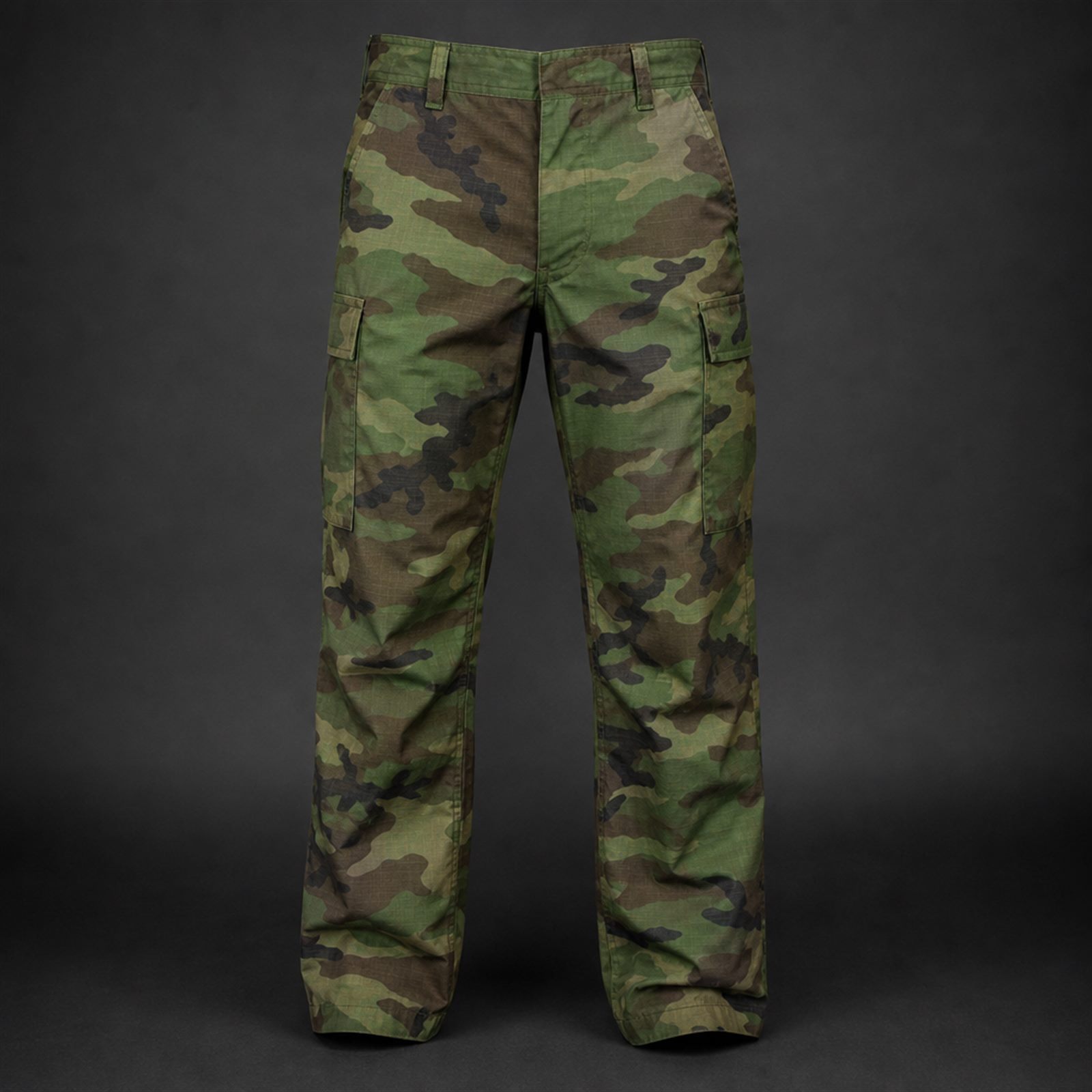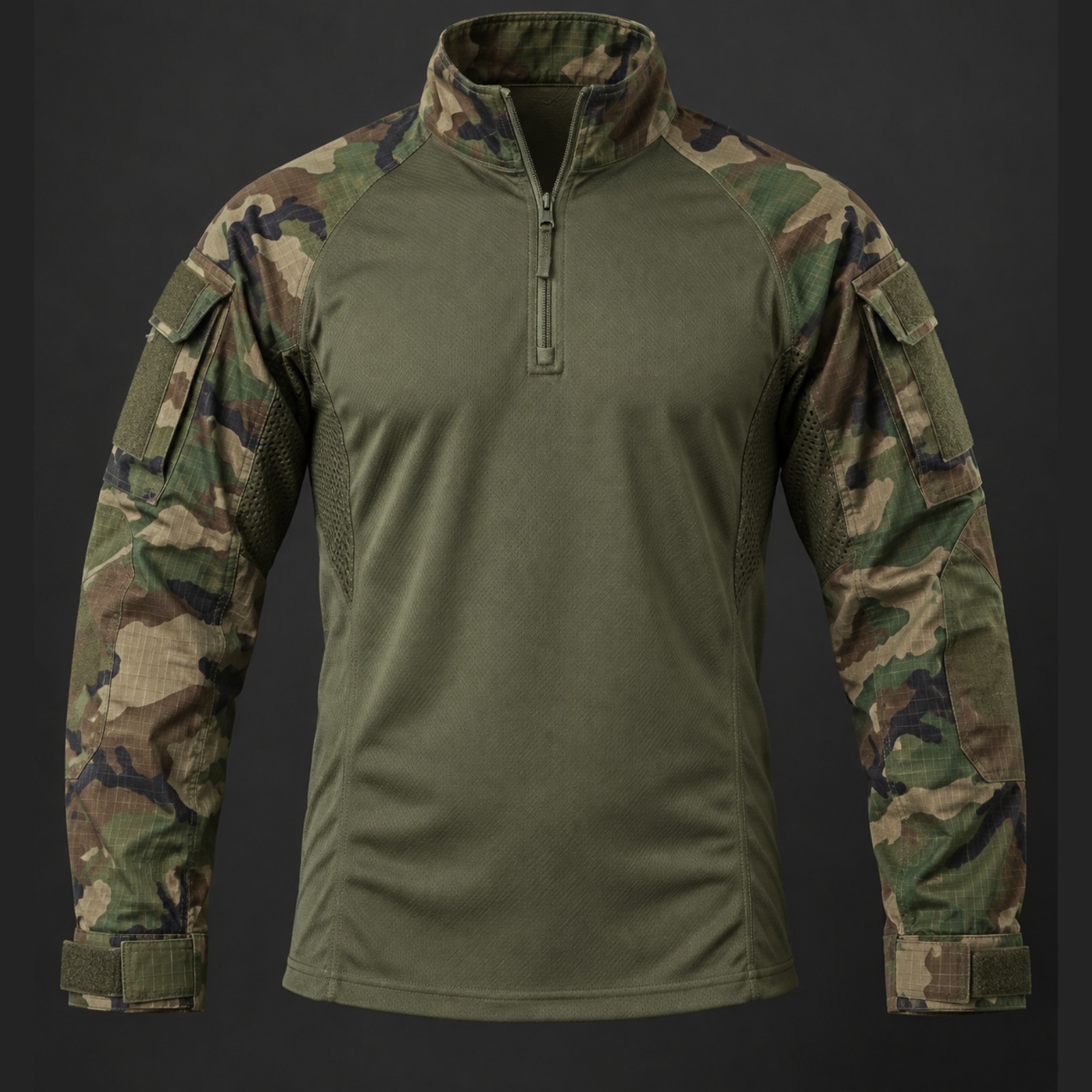
Combat Shirts
Hot Weather Combat Shirt
This garment exists to solve one problem: a combat shirt that can be worn through a full day of heat without becoming saturated and unusable.
HotTropical / HumidDesert
View productProducts / Tactical Uniform Sets
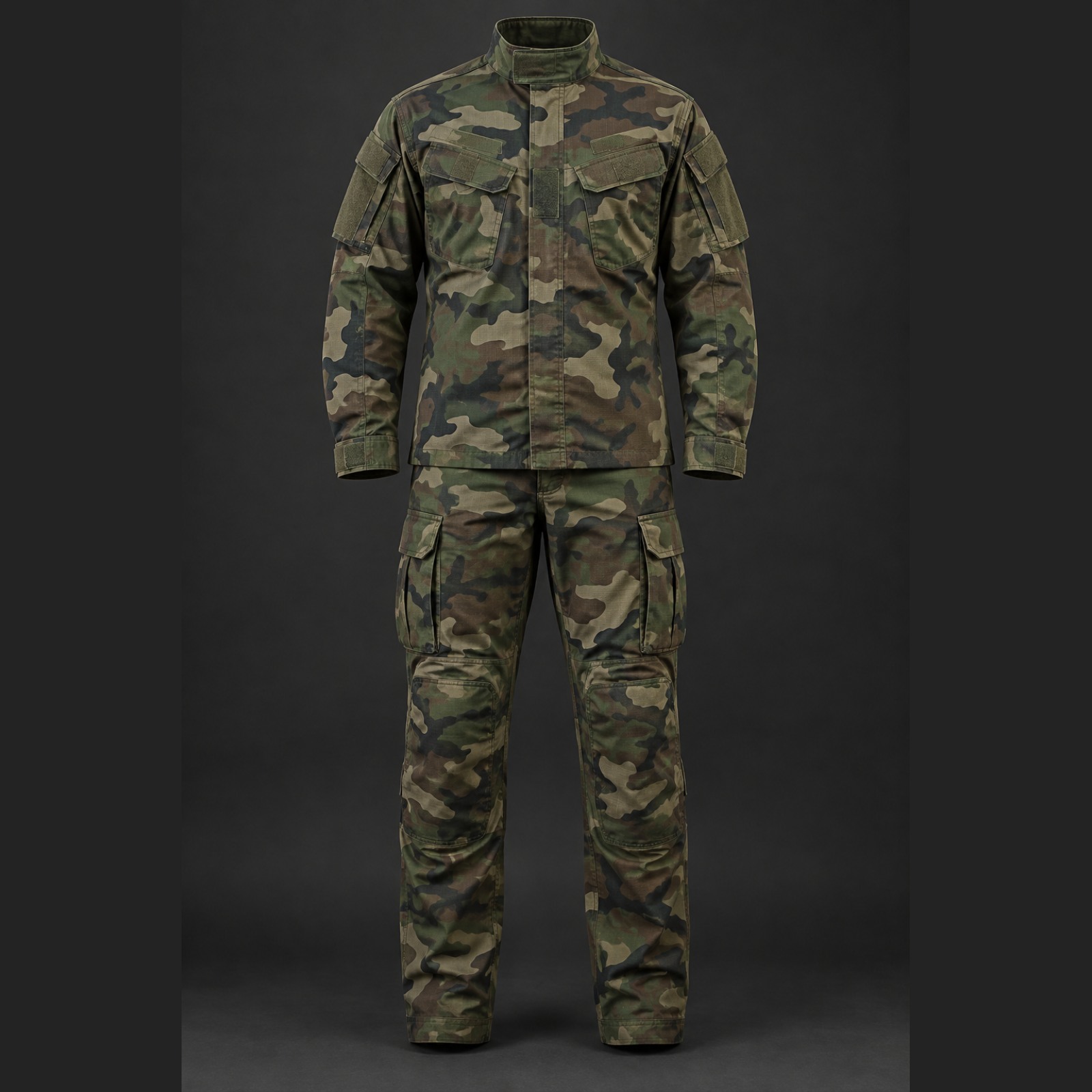
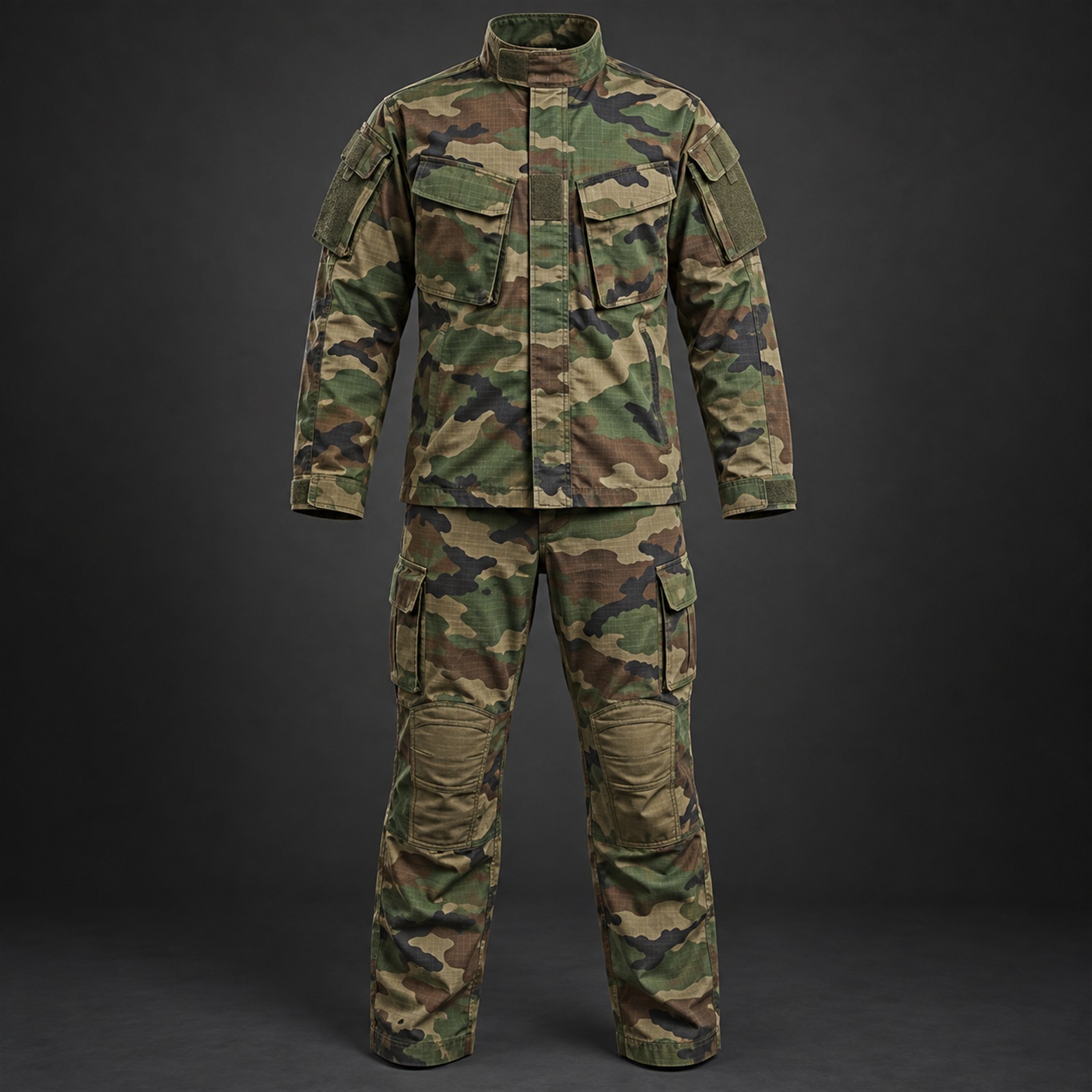
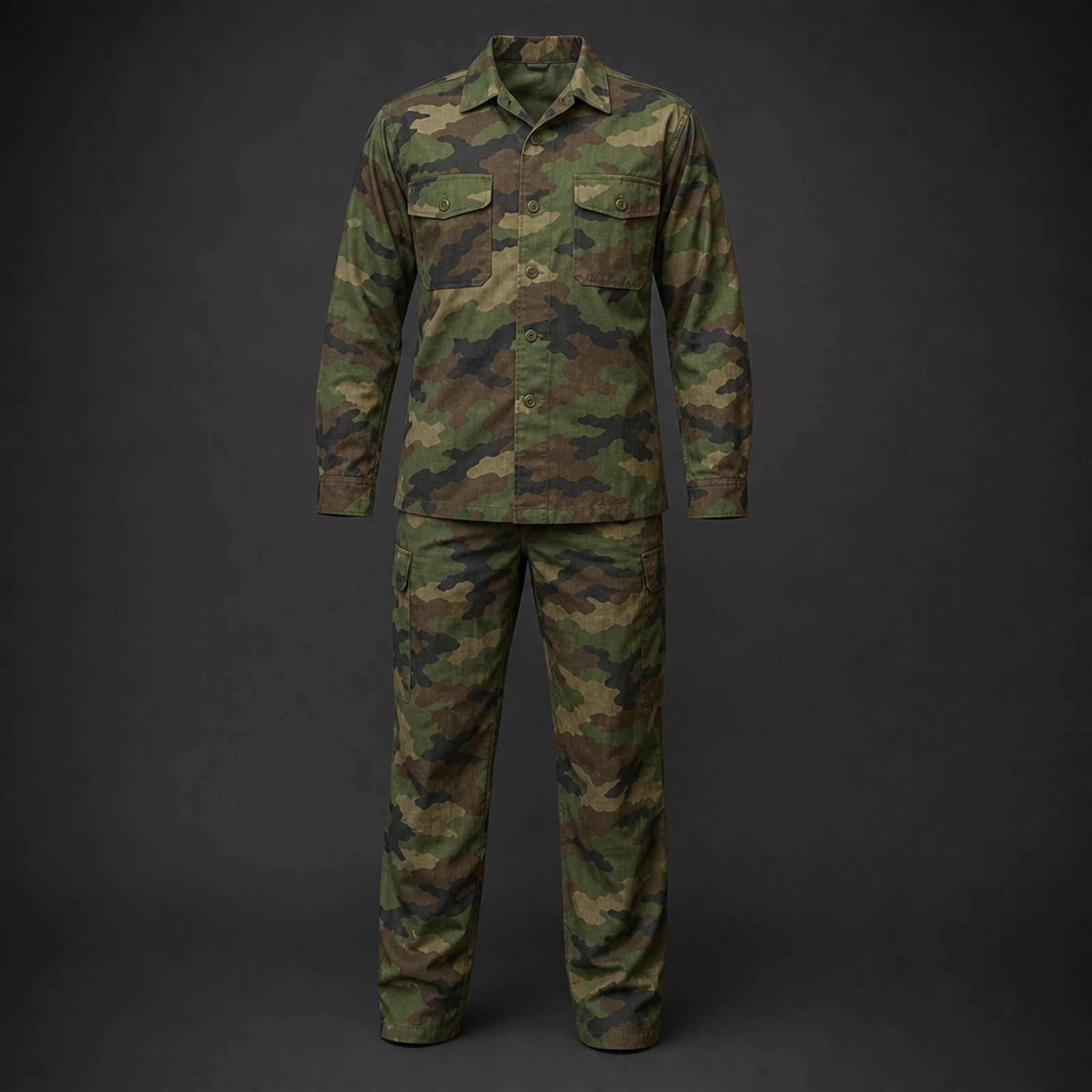
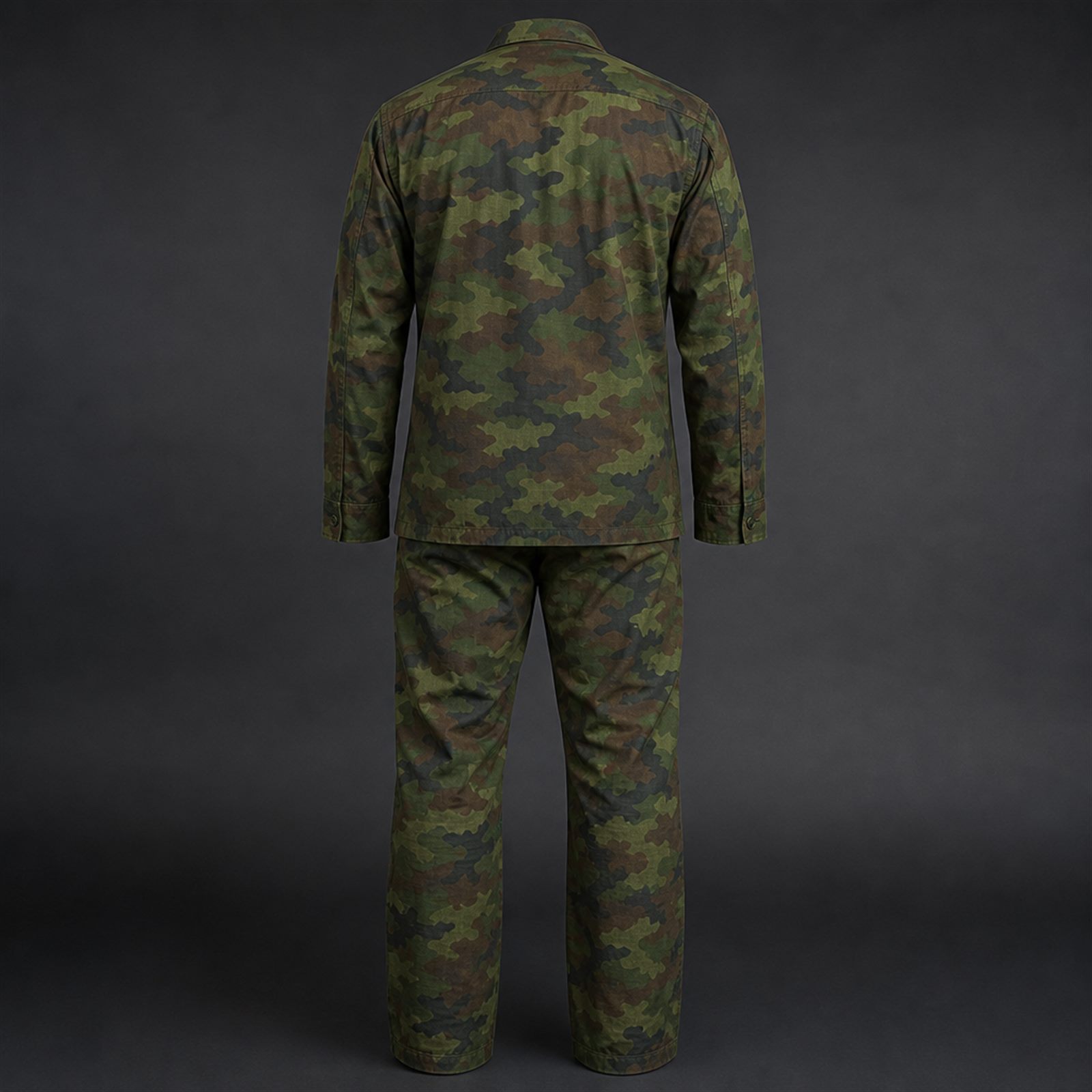
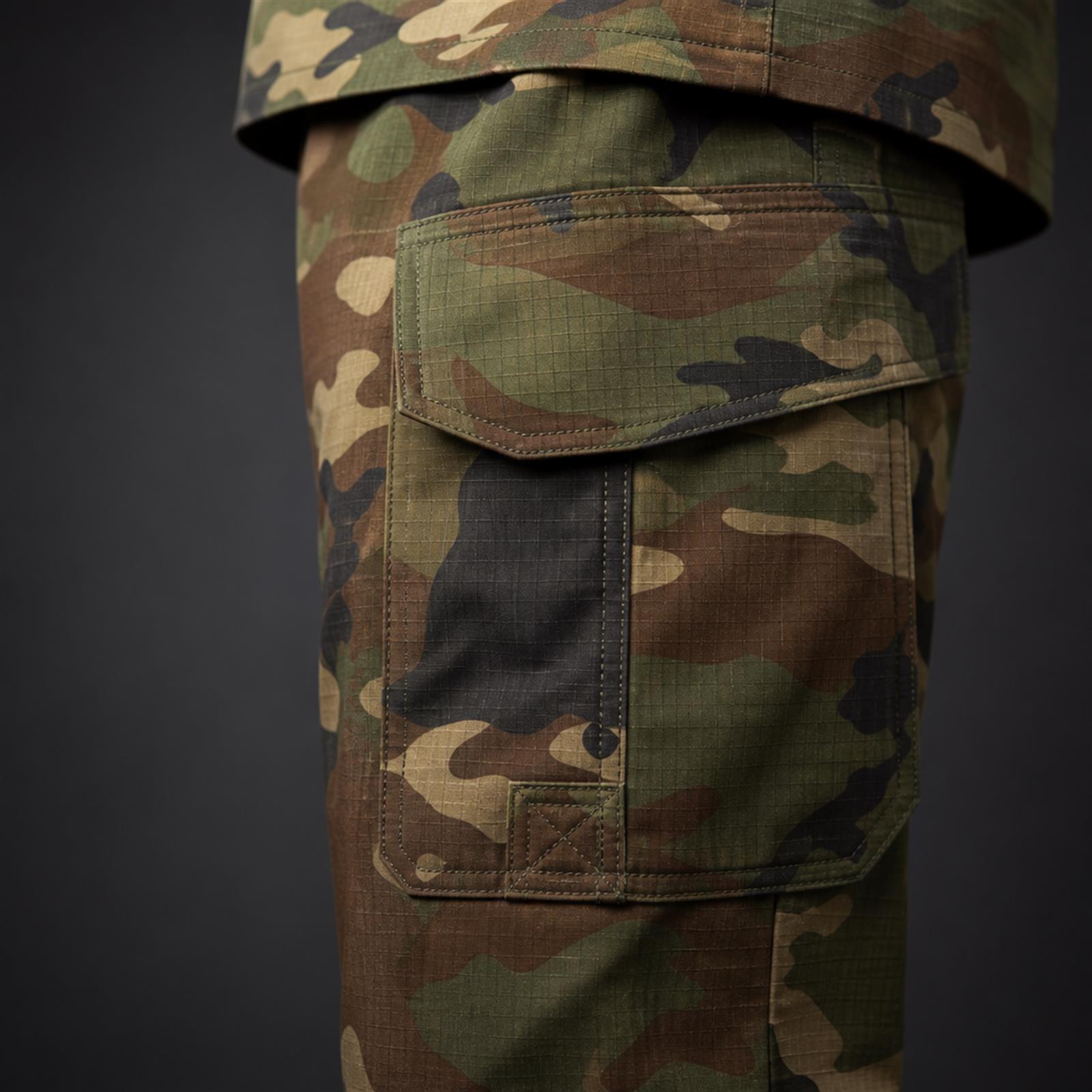
A uniform set is a specification problem that two separate garments do not have: the shirt and the pant have to behave as one system. They must dry at a compatible rate so the wearer is not swapping one wet half, they must hold the same shade and the same camouflage print orientation across a garment boundary that is visible on the wearer, and they have to be sized against each other so that a size that fits on top also fits on the bottom. This set is specified as one programme rather than two, including the shared fabric family, the print standard, the colour approval and the ventilation strategy for both halves. The gain is a garment that performs predictably and a single reorder point. The cost is that changes to one half have to be assessed against the other.
Gallery
Design purpose
Deliver a shirt and pant that work as one system in sustained heat: compatible drying behaviour, a single colour and print standard across both garments, ventilation designed into both halves, and a size range developed so that top and bottom fit the same wearer. Durability is bought back at the wear points of both garments rather than across the whole set.
Applications
Interactive map
Hot Weather Tactical Uniform Set: select a marker to see what can be specified at that part of the garment — all 10 mapped areas are also listed in full below the map, so nothing is hidden behind an interaction.
Customization by garment part
Select a marker to see the customization options available at that part of the garment. Every option below is a manufacturing decision you control.
Materials
4 material options for Hot Weather Tactical Uniform Set, specified per garment area — a single fabric cannot serve heat management and abrasion resistance at the same time.
Shirt torso
Using the same fabric family for the shirt torso and the pant shell removes the risk of the two halves weathering and fading at different rates, which is the most visible failure of a set. It costs some freedom in optimising each garment separately.
Shirt sleeves
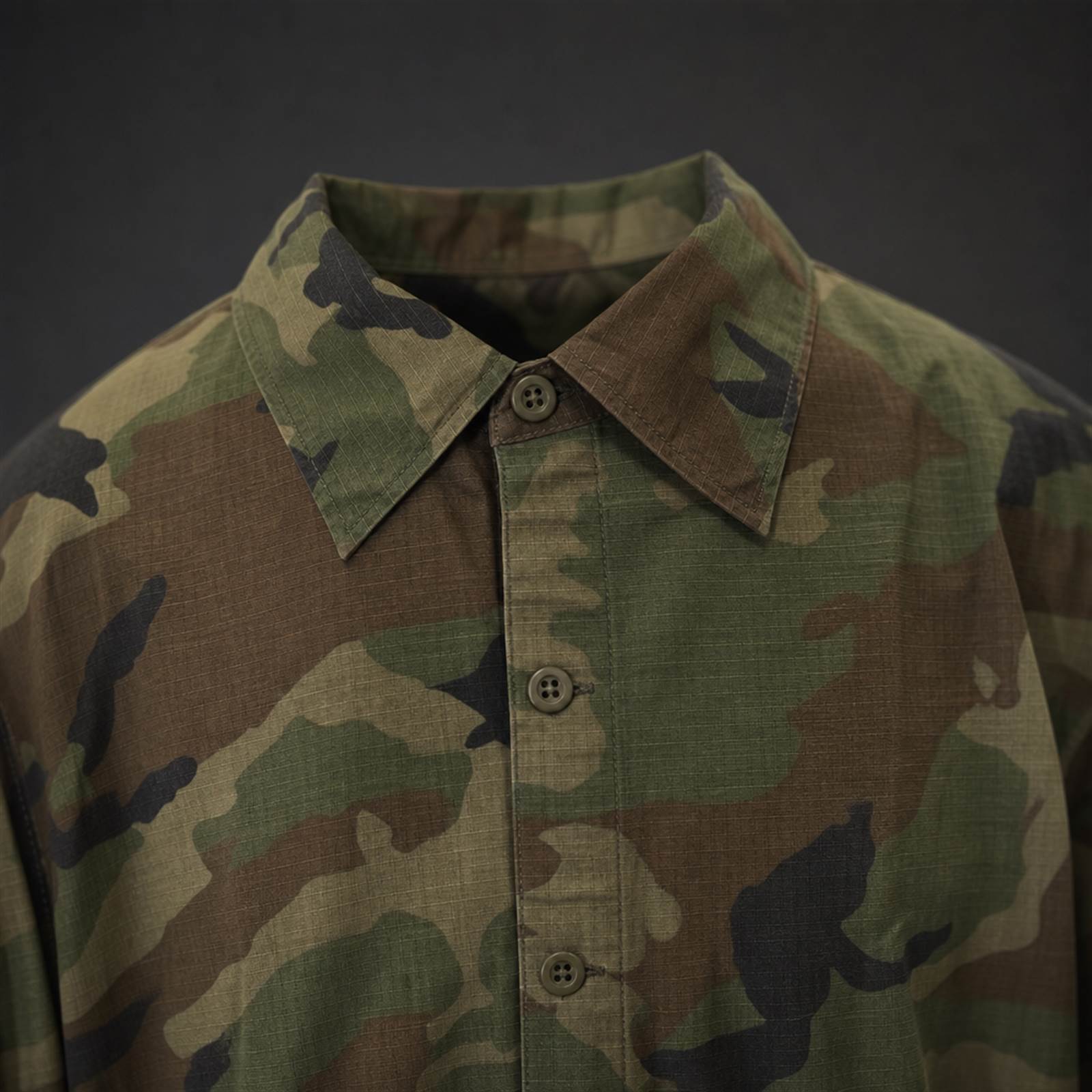
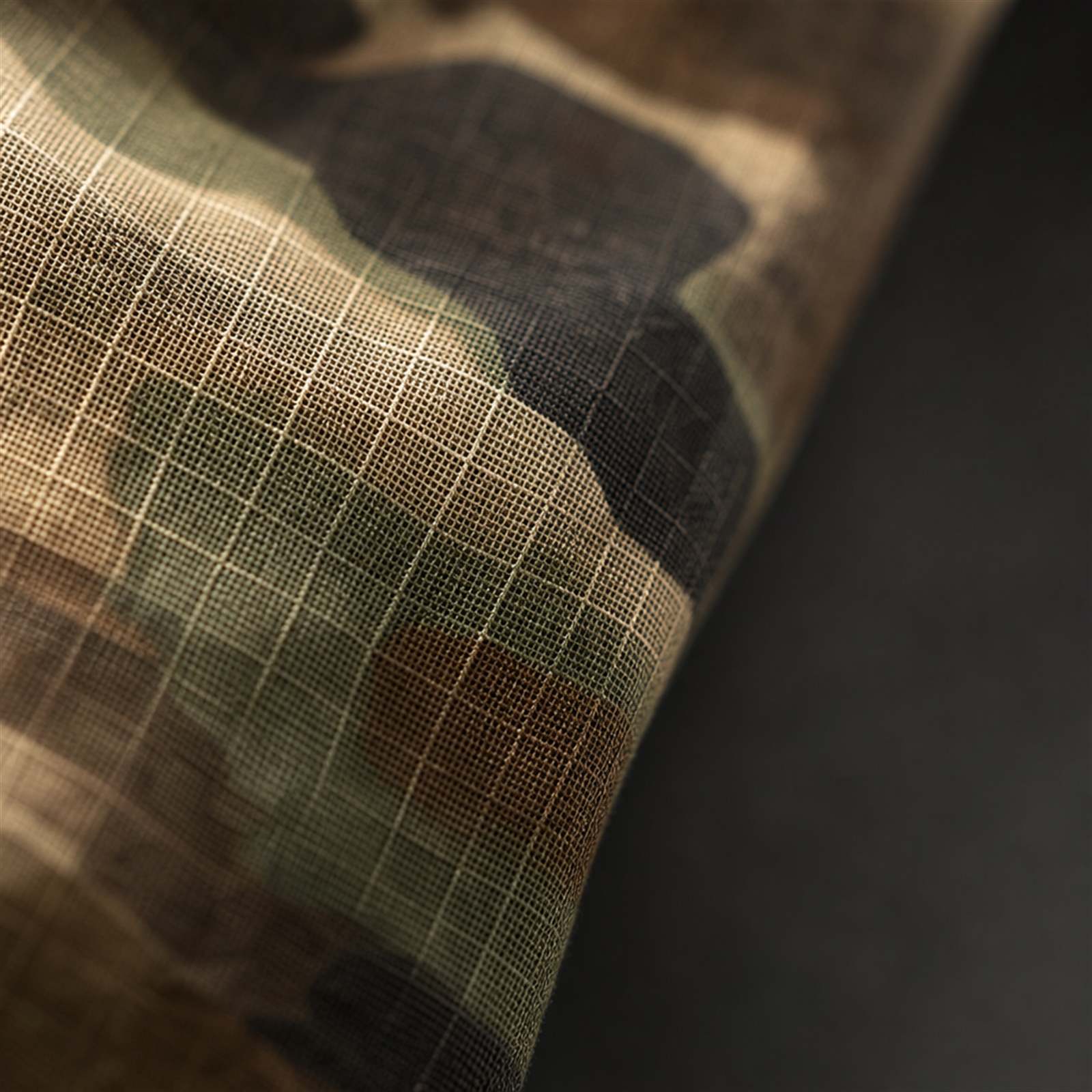
Sleeves stay ripstop in every configuration because they are the panel that contacts ground, structure and equipment. This is also the panel where the shirt print has to align with the collar and body panels.
Pant shell
The pant shell is selected for drying and airflow first, with abrasion bought back at the knee and seat. If the set is worn as a working garment rather than an under-layer combination, a slightly heavier pant shell than shirt torso is normal.
Reinforcement across the set
Reinforcement is specified per wear point across both garments. Matching reinforcement fabric across the set keeps a single drying behaviour and a single shade, which matters when both halves are laundered together.
Construction
How each of the 8 parts of Hot Weather Tactical Uniform Set is assembled, and why that choice was made.
Torso
Reduced panel count with flat-felled or low-bulk seams so the shirt does not create pressure points under load-bearing equipment. Torso fabric is specified to dry at a rate compatible with the pant shell, since a set is normally laundered and dried as one bundle.
Sleeve
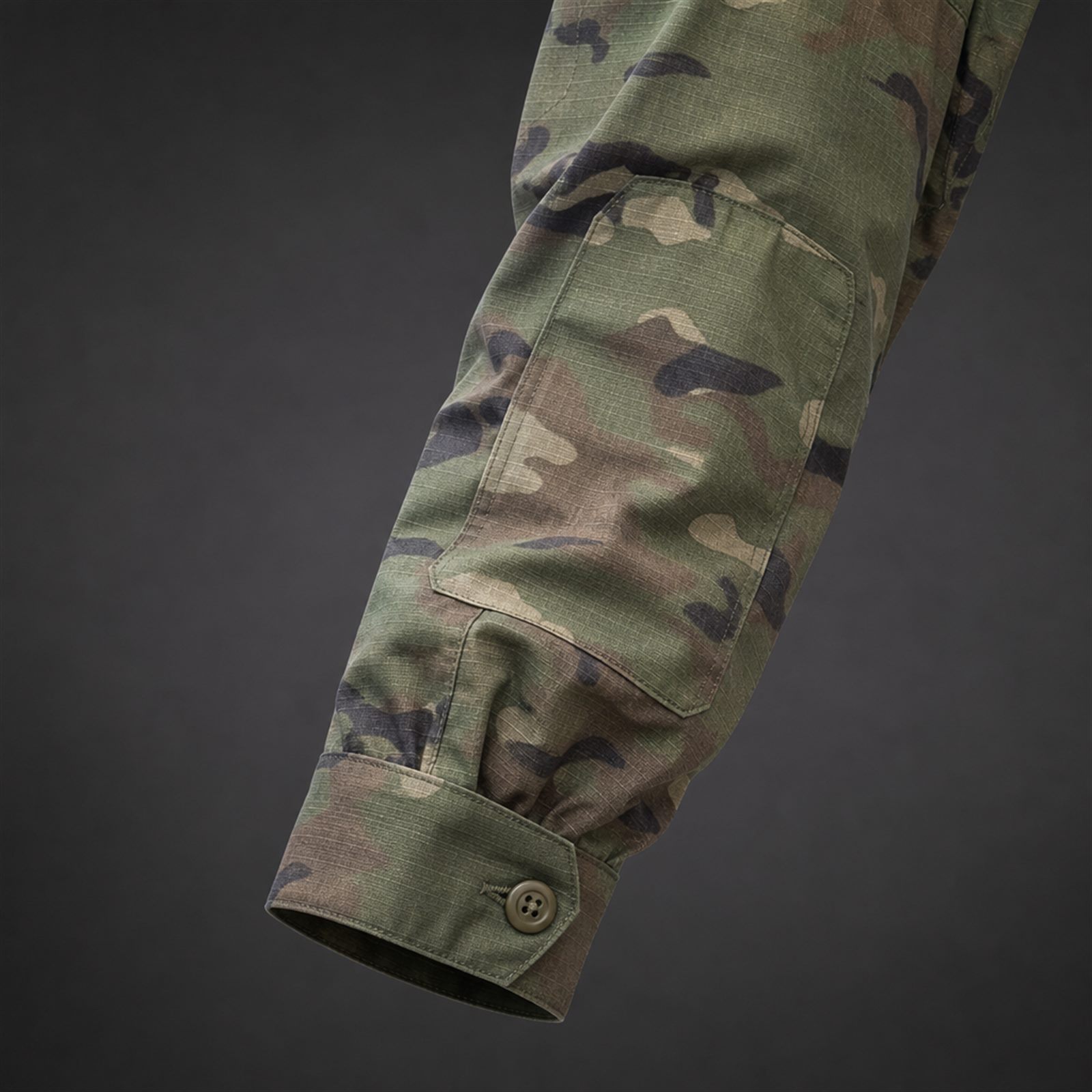
Ripstop sleeves with reinforcement positioned to the wearer's contact height. Sleeve length, cuff opening and print alignment at the sleeve seam are confirmed on a size set, because a mismatch between the sleeve print and the body print is visible on the wearer.
Collar
Low-profile stand collar or zip-through collar with chin guard, kept modest in height to reduce heat retention at the neck. Collar interlining is specified so the collar holds its shape after repeated washing, which is where a set looks inconsistent first.
Waist
Lightweight waistband with a defined rise and optional elasticated side inserts so the waist adapts without a heavy structure that holds heat. The pant waist is developed against the shirt length so the shirt hem does not ride above the waistband when the wearer reaches.
Crotch
Gusseted crotch with a low-bulk seam, built in shell fabric rather than a heavier reinforcement because the crotch is a movement zone and an added layer there is felt immediately in heat.
Knee
Articulated knee with lightweight reinforcement. Articulation reduces the tension that accelerates abrasion, so it is a durability measure as well as a comfort one, and it is what allows a light shell to survive ground contact.
Hem
Pant hem with a straight finish or a lightweight cuff adjustment over the boot. Shirt hem length is set against the pant rise so the two garments do not bunch at the waist when the wearer moves.
Reinforcement
Reinforcement at the shirt elbow and pocket corners and at the pant knee, seat and pocket corners. Each layer is justified against a wear point; reinforcement added for appearance only adds weight, stiffness and a slower drying panel to the set.
Features
The 6 functional features of Hot Weather Tactical Uniform Set each exist to solve a specific problem in use, and where a feature is a trade-off rather than a pure gain that is stated.
Shirt and pant are developed together, with fabric, colour, print standard and ventilation strategy agreed as a single programme rather than as two separate orders.
A single lab dip and print standard covers both halves, so the shirt and pant do not diverge in shade or print scale after the set has been worn and laundered.
Fabric selection aims for the two halves to dry at comparable rates, because a set that dries unevenly forces the wearer to break it up.
Shirt placket or underarm ventilation and pant thigh or seat ventilation are planned together so airflow at the waist is not blocked by the shirt hem or a belt line.
The shirt length, pant rise and size grading are developed so that a size that fits on top fits on the bottom, which removes a common cause of returns and reissues.
Elbows, pocket corners, knees and seat are reinforced individually, with the cost in weight and drying time stated rather than hidden.
Customization
15 customization lines for Hot Weather Tactical Uniform Set: branding, colour, camouflage and packaging are all part of the specification, and every item is confirmed on the pre-production sample.
Fabric
Color
Camouflage Pattern
Collar
Placket
Sleeve
Elbow
Waist
Knee
Hem
Logo
Label
Size
Packaging
Colour
Camouflage
Sizing
Sizes are developed from the buyer's size chart, a matched top and bottom size grid, or the buyer's uniform sizing standard. The set is graded so that a shirt size and a pant size intended for the same wearer are confirmed together, which means the size set sample covers both garments and the relationship between them — shirt length against pant rise, chest against waist, sleeve length against inseam. Critical measurements for each garment are listed separately, and the cross-garment relationship is confirmed in writing. Tolerances are agreed before bulk so that inline and final inspection measure against the same numbers for both halves.
Branding
Main label, size label, care label and country of origin label are produced to the buyer's artwork and content for both garments in the set, with the care instruction matched to the fabrics actually used in each half. Branding can be applied as woven label, printed label, rubber patch, embroidery or heat transfer, with placement confirmed on the approved samples for the shirt and the pant. Where the buyer requires set or batch identification, that content is added in agreement with the buyer. Packaging ranges from poly bag per garment to set packing as one unit, printed poly bag, hangtag, header card or custom retail box.
Logistics
Sample development
Development of Hot Weather Tactical Uniform Set runs in 7 stages, each risk removed before the next step commits cost.
Requirement review
Specification, size chart, target climate and layering requirement reviewed for both garments, with open points returned in writing before material is cut.
Set material plan
Shirt and pant fabrics and reinforcement proposed as one plan, with the shared colour and print standard and the drying behaviour of each half stated.
Pattern development
Both patterns developed to the approved measurements, including shirt sleeve and hem length, pant rise, gusset, articulation and reinforcement placement.
Prototype set
Shirt and pant prototypes produced together so the set can be assessed as a system rather than as two independent garments.
Wear assessment
The set is checked on the intended wearer in a reach, a crouch and a stride so that shirt hem against pant rise, pocket interference and ventilation at the waist are assessed before bulk.
Revision and size set
Buyer comments consolidated into one revision round, then the agreed size range produced for both garments so measurement and cross-garment fit are confirmed.
Pre-production sample
Approved construction, materials, print standard and trim locked for both garments as the bulk standard and retained as the inspection reference.
Bulk production
7 stages of bulk production for Hot Weather Tactical Uniform Set — where the approved specification is either held or lost.
Fabric and trim approval
Bulk fabric, mesh, reinforcement, zips, cord and labels approved against the pre-production standard for both garments of the set.
Colour and print standard control
Cutting and printing scheduled so that both halves of the set are produced against the same approved shade and print standard, with shade banding checked at the fabric stage.
Cutting
Cutting performed against both approved patterns with markers controlled for shade and print alignment across the shirt and the pant.
Panel preparation
Printed, embroidered and reinforcement panels for both garments prepared and checked before assembly.
Assembly
Line assembly to the approved sequences, with ventilation openings, gusset and reinforcement attachment defined as critical operations.
Inline inspection
In-process inspection on both garments so faults are corrected on the line rather than at finishing.
Finishing, final inspection and packing
Thread trimming, hardware function checks and pressing on both halves, then measurement, construction and packing inspected against the agreed standard, including set packing where specified.
Quality control
The 7 checks applied to Hot Weather Tactical Uniform Set, each measured against an agreed standard rather than against opinion.
Incoming fabric inspection
Shade, weight, width and weave integrity checked for the shirt and pant fabrics against one approved shade standard, with shade banding recorded.
Print standard control
Printed fabric checked against the approved print standard for shade, scale and repeat direction before cutting, for both garments.
Pre-production approval
The buyer-approved pre-production samples become the reference standard for both garments in the order.
Inline inspection
Work in progress inspected at defined points, with seams, ventilation, gusset and reinforcement attachment checked as critical items.
Measurement inspection
Critical measurements for the shirt and the pant checked against the approved size set, including the cross-garment relationship, using the tolerances agreed in writing.
Construction and hardware inspection
Stitching, reinforcement placement, hardware function and symmetry checked against the approved samples for both halves.
Final, set-matching and packing inspection
Finished garments checked before packing, with shade and print consistency between shirt and pant confirmed where the set is packed or issued as a unit, then labels, folding, poly bagging and carton marking checked against the packing instruction.
Specifications
22 specification rows for Hot Weather Tactical Uniform Set: only confirmed items are listed, so a row that depends on your programme is omitted rather than filled with an estimate.
| Product type | Hot weather tactical uniform set — combat shirt and tactical pants |
|---|---|
| Set contents | One combat shirt and one pair of tactical pants, specified and produced as one programme |
| Shirt torso material | Lightweight hot weather, quick dry or moisture wicking fabric — confirmed per programme |
| Shirt sleeve material | Ripstop family — confirmed at specification stage |
| Pant shell material | Lightweight fabric selected to match the shirt shade standard — confirmed per programme |
| Ventilation | Shirt placket or underarm ventilation and pant thigh or seat ventilation, positions agreed |
| Crotch construction | Gusseted crotch with low-bulk seam |
| Knee construction | Articulated knee with lightweight reinforcement, optional pad pocket |
| Collar options | Low-profile stand, zip-through with chin guard |
| Cuff options | Hook and loop, elasticated, plain |
| Colour control | Single approved shade and print standard covering both garments |
| Climate | Hot, tropical / humid, desert |
| Size range | Developed to buyer size chart, matched top and bottom grid, or uniform sizing standard |
| Labelling | Private label to buyer artwork and content for both garments |
| Packaging | To buyer packing instruction, including set packing where specified |
FAQ
Because the two garments are judged together on the wearer. A set that shares one fabric family, one shade standard and one print standard will not diverge in colour or print scale after washing and exposure, and it will dry at a comparable rate. Two separately specified garments often fit and match acceptably on arrival but look like mismatched kit after a season of use. If you already have one half in service, we can still work to it, with the standard for the new half matched to the existing garment.
Yes, and it is common, because the pant often needs more abrasion resistance than the shirt. The two fabrics are then matched to a single approved shade standard and their drying behaviour is compared before the specification is locked. Matching shade across two fabrics produced at different times is the main risk, which is why the shade is approved once for the whole set and recorded against both.
The size set sample covers both garments, and the cross-garment measurements are confirmed explicitly: chest against waist, sleeve length against inseam, and shirt hem length against pant rise. The relationship is confirmed in writing before bulk so that a buyer issuing a set does not have to correct one half after the fact.
MOQ depends on the fabrics selected, the reinforcement package, the number of colourways and whether the set is produced in matched shirt and pant quantities or in separate ratios. We do not publish a figure that has not been confirmed against your specification. Send the construction, colourways and quantities of each half and we will state the MOQ that applies.
A set requires two patterns, a shared material plan and a combined wear assessment, so development time depends on which parts are new and which are based on an existing approved garment or reference sample. We will state a timeline against your actual specification rather than a general figure, and we return open points in writing before cutting.
Yes. Printed camouflage is produced to buyer artwork with a print standard approved before bulk, which fixes shade, scale and repeat direction. For a set, the print scale and orientation are agreed across both garments so the pattern reads continuously on the wearer, and panel alignment is controlled at the cutting stage rather than left to the sewing lines.
Related Products
Related Materials
Related Applications
Related Capabilities
Related Articles
More products
Combat Shirts
This garment exists to solve one problem: a combat shirt that can be worn through a full day of heat without becoming saturated and unusable.
Tactical Pants
In sustained heat the limiting factor is not durability, it is whether the wearer can keep working.
Tactical Uniform Sets
A uniform set only performs as a set if the shirt and the trousers behave as one garment.
Camouflage Uniforms
A camouflage uniform set is judged on the print before it is judged on anything else.
Send us your tech pack, reference sample or product idea. We review your requirement, recommend materials and construction, and come back with a development plan you can act on.