Skip to content
TACTICALOEM / ODM TACTICAL APPAREL
ENEnglish

Products / Cold Weather Layering Systems

Cold Weather Layering System — OEM & ODM Manufacturing

This is not a garment category in the usual sense. A layering system is the composition a wearer actually uses — what is worn while moving, what is added when they stop, what comes off indoors — and it is bought by programme managers who have concluded that specifying garments one at a time produces a wardrobe of individually reasonable pieces that do not work together. The system is therefore developed the other way round: the composition is decided first, then each garment is patterned, sized and colour-matched against the others. Moisture movement, warmth when static, movement range under bulk and weather protection are treated as one problem with four answers rather than four products.

Sustained cold where the wearer alternates between exertion and waiting, and warmth has to be added and removed through the dayExtreme cold where the margin for error is small and moisture trapped against the body is the fastest route to losing warmthMixed cold and wet conditions where the composition needs a protective outer layer over the warmth layers
Cold weather layering system shown as an exploded stack of base layer, mid layer, insulation and outer shell
Climate
Sustained cold where the wearer alternates between exertion and waiting, and warmth has to be added and removed through the day · Extreme cold where the margin for error is small and moisture trapped against the body is the fastest route to losing warmth · Mixed cold and wet conditions where the composition needs a protective outer layer over the warmth layers
Applications
Cold Weather · Extreme Cold Weather · Heavy Duty / Field
Customization
12 customizable parts
Cold Weather Layering SystemCold Weather Layering SystemCold Weather Layering SystemCold Weather Layering SystemCold Weather Layering SystemCold Weather Layering System

Design purpose

Why this garment exists

Develop the layer stack as a single specified composition — base, mid, insulation and shell — with each garment patterned against the others, interfaces agreed, and the whole system documented so it can be reproduced and extended as one programme.

Applications

Best applications

  • Cold Weather — Ambient temperature is low enough that the body loses heat faster than it produces it at rest, and wind increases that loss substantially.
  • Extreme Cold Weather — Low ambient temperature is only part of the exposure.
  • Heavy Duty / Field — The garment is worn continuously and loaded with equipment, so it is subject to sustained abrasion from straps, webbing and ground contact.
Sustained cold where the wearer alternates between exertion and waiting, and warmth has to be added and removed through the dayExtreme cold where the margin for error is small and moisture trapped against the body is the fastest route to losing warmthMixed cold and wet conditions where the composition needs a protective outer layer over the warmth layers

Interactive map

Customize every part

Cold Weather Layering System: select a marker to see what can be specified at that part of the garment — all 10 mapped areas are also listed in full below the map, so nothing is hidden behind an interaction.

Customization by garment part

Select a marker to see the customization options available at that part of the garment. Every option below is a manufacturing decision you control.

Layer 1 — base topLightweight knit · Midweight thermal knit · Grid knit · Underarm ventilation · Flatlock seams
Layer 1 — base bottomLightweight knit · Midweight thermal knit · Grid knit · Ankle length · Buyer-specified
Layer 2 — mid layerGrid fleece · Brushed knit · Light insulated mid layer · Full front vent · Zipped hand pockets
Layer 3 — insulationMapped insulation jacket · Insulated liner · Removable liner · Insulated vest · Reduced fill at inner arms
Layer 4 — shell hood and collarFixed hood · Detachable hood · Volume adjustment · Compatible with issued headwear · High collar
Layer 4 — shell closure and ventingTwo-way zip with storm flap · Underarm vents · Chest vents · Chin guard
Cuff and glove interfaceAdjustable cuff · Sized over the glove · Sized under the glove · Inner storm cuff
Waist and jacket hem interfaceHem below the waist · Hem above the waist · Drawcord adjuster · Developed against the trouser rise
Lower body warmth layerInsulated field trouser · Lined duty trouser · Mapped insulation · Articulated knee
Leg opening and boot interfaceOver the boot · Inside the boot · Cuff adjuster · Internal gaiter

Materials

Material options

4 material options for Cold Weather Layering System, specified per garment area — a single fabric cannot serve heat management and abrasion resistance at the same time.

Layer 1 — base

  • Moisture-moving knit worn against the skin, top and bottom
  • Lightweight base layer for high-output activity
  • Midweight thermal base layer for static cold
  • Base layer with underarm and back ventilation

The base layer decides whether every layer above it works. A cotton-rich base layer holds moisture against the skin and undermines the rest of the system regardless of how good the shell is.

Layer 2 — mid

  • Grid fleece for active warmth and fast moisture release
  • Brushed knit mid layer for cold static use
  • Light insulated mid layer where more warmth is needed
  • Mid layer with full front and underarm ventilation

This is the layer most often left out of a specification and the one that decides whether the system works while the wearer is moving.

Layer 3 — insulation

  • Insulated jacket with mapped fill
  • Insulated liner designed to be worn under a shell
  • Removable insulated liner inside a shell
  • Insulated vest for core warmth with free arms

How the insulation is quilted or baffled matters as much as which insulation is used, because it controls whether warmth stays distributed or migrates away from the body.

Layer 4 — shell

  • Waterproof shell with sealed exposed seams
  • Water-resistant or breathable wind-resistant shell for dry cold
  • Softshell for high output in dry cold
  • Shell with removable insulation for a wider working range

Wind and precipitation are stopped here, not below. A shell specified for the wrong precipitation condition can make a correct system feel cold and damp.

Construction

Construction details

How each of the 8 parts of Cold Weather Layering System is assembled, and why that choice was made.

Composition agreed before patterns

The first deliverable is not a garment but a written composition: which layers exist, what is worn while moving, what is added when static, what is removed indoors, and who removes it. Every pattern decision follows from that document.

Pattern developed across the stack

Each garment is patterned with the layers beneath and above it in mind, so chest, shoulder, sleeve and back length are set against the stack rather than against a single garment. The stack is fitted on a wearer before approval.

Moisture path treated as one route

Moisture has to leave the skin through the base layer and leave the system through the shell. Base and shell are therefore specified as a pair, since a gap at either end breaks the path and puts more demand on the other.

Warmth mapped by layer and zone

Insulation amount and construction are specified per layer and per body zone — more at chest and back, less at inner arms and shoulders where bulk costs movement, and reduced behind the knee on insulated trousers.

Ventilation planned across layers

Where ventilation sits in each layer is decided together, so the wearer can dump heat through the stack without removing pieces in the cold, and so vents are not blocked by the layer above.

Interfaces fixed as specification points

Cuff-to-glove, leg opening-to-boot, hood-to-headwear, waist-to-trouser and layer-to-layer volumes are recorded as system interfaces. Interfaces that cannot be fixed yet are logged as open points rather than assumed.

Removability designed, not improvised

Which layers are independent, which are attached and which are issued together changes pattern, sizing allowance and documentation. It is decided at the start, because it is not reversible later without re-cutting.

One specification for the whole system

Every element carrying visual or functional identity — fabric, insulation, construction, colour, trims, labelling — is written into a single manufacturing specification so a repeat order reproduces the composition.
Features

Functional features

The 6 functional features of Cold Weather Layering System each exist to solve a specific problem in use, and where a feature is a trade-off rather than a pure gain that is stated.

Composition before garments

The layer stack is agreed and documented before anything is cut, which is what prevents the common outcome of four good garments that do not work together.

Movement preserved through the stack

Bulk is reduced or redistributed at the shoulders and inner arms, and articulation is added at elbow and knee, because range of motion is a specification requirement rather than a comfort preference.

Warmth that changes with the working day

The system is designed around the transition between moving and resting, which is the moment a garment that performs on paper stops performing in the field.

Interfaces documented, including the open ones

Where the buyer's glove, boot or headwear is not yet fixed, the interface is recorded as an open point rather than guessed, because an interface assumed wrong is discovered in the field.

Extendable rather than replaceable

A system is usually built over more than one order. It is developed so further layers can be added later against the same specification, instead of forcing a re-specification of everything already issued.

One document a repeat order can be built from

The whole composition, its interfaces and its colour decisions sit in a single specification held with the order, which is what makes a second delivery match the first.

Customization

Customization options

12 customization lines for Cold Weather Layering System: branding, colour, camouflage and packaging are all part of the specification, and every item is confirmed on the pre-production sample.

System size

Three-layer field systemFour-layer insulated systemFour-layer extreme cold systemModular system with replaceable componentsBuyer-specified composition

Base layer

Lightweight moisture-moving knitMidweight thermal knitGrid knit with ventilationTop and bottom or top onlyNot included in the system

Mid layer

Grid fleeceBrushed knitLight insulated mid layerMid layer with full ventingNot included

Insulation layer

Insulated jacket with mapped fillInsulated linerRemovable liner inside the shellInsulated vestNot included

Shell

Waterproof shellWater-resistant shellBreathable softshellShell with removable insulationBuyer-specified

Lower body

Insulated field trouserWaterproof winter over-pantTrouser and over-pant togetherBase layer bottom onlyNot included

Removability

All layers independentLiner attached to the shellMid layer attachable to the shellLayers issued as a fixed kit

Ventilation plan

Base layer underarm ventsMid layer full front ventShell underarm and chest ventsTwo-way front openingsBuyer-specified plan

Interfaces

Cuff sized to the issued gloveLeg opening over the bootLeg opening inside the bootHood compatible with issued headwearRecorded as open points

Colour and camouflage

Single colour across the systemTwo-tone systemBuyer artwork camouflageShade band agreed per fabric typePanelled blocking

Labelling

Woven main labelCare labelLayer identification markingSize and issue markingBlank and neutral

Documentation

Single system specificationPer-garment specificationInterface scheduleMeasurement chart per layerCare instruction sheet

Colour

Colour options

  • System colours matched against a shade band agreed per fabric type, with lab dip approval before bulk
  • Buyer Pantone or colour standard applied consistently across every layer in the system
  • Where the system mixes a laminated shell, a fleece mid layer and a knit base layer, the realistic match is agreed rather than assumed, because the three take colour differently

Camouflage

Camouflage options

  • Buyer artwork camouflage with a print standard approved before bulk and applied across the system
  • Woodland style
  • Desert style
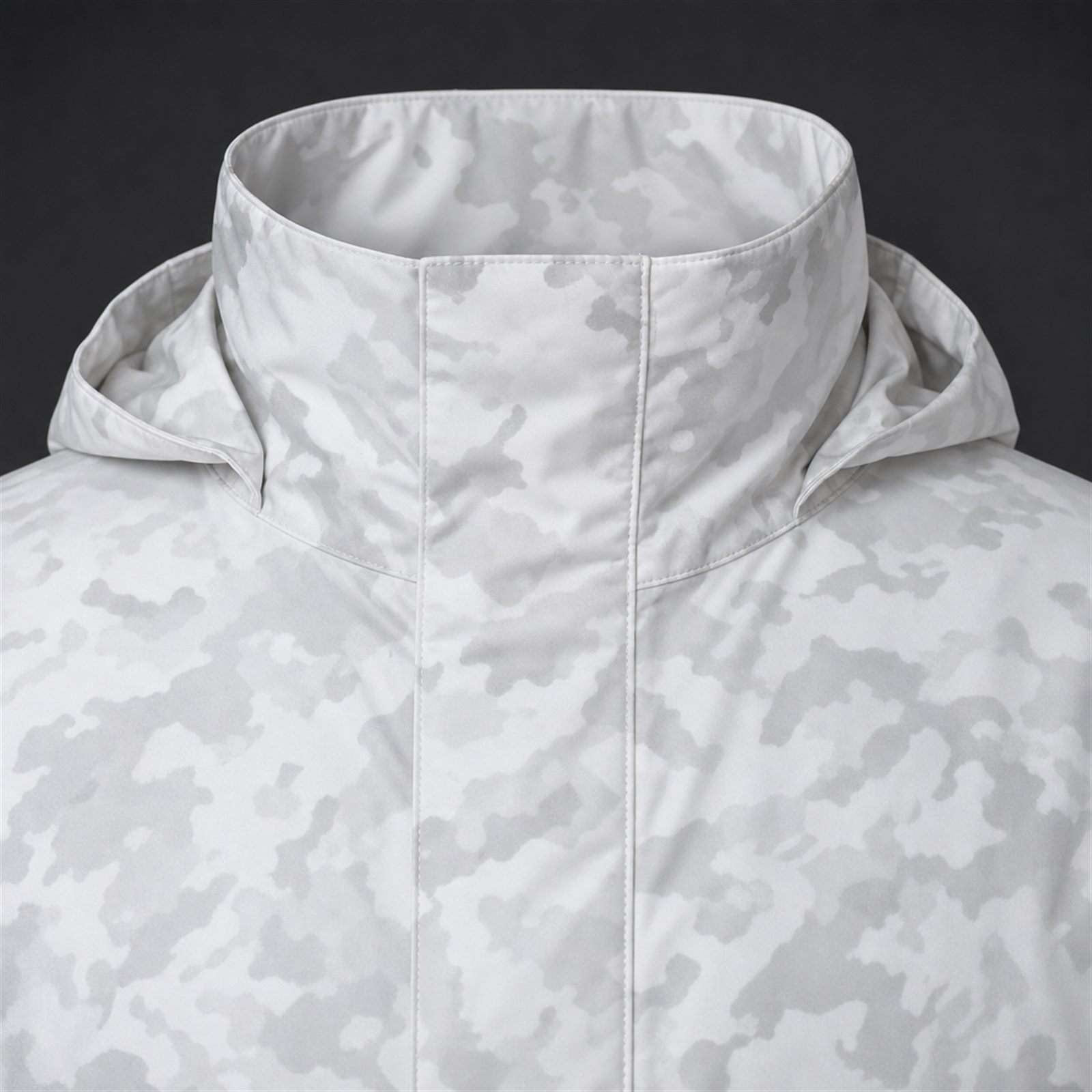
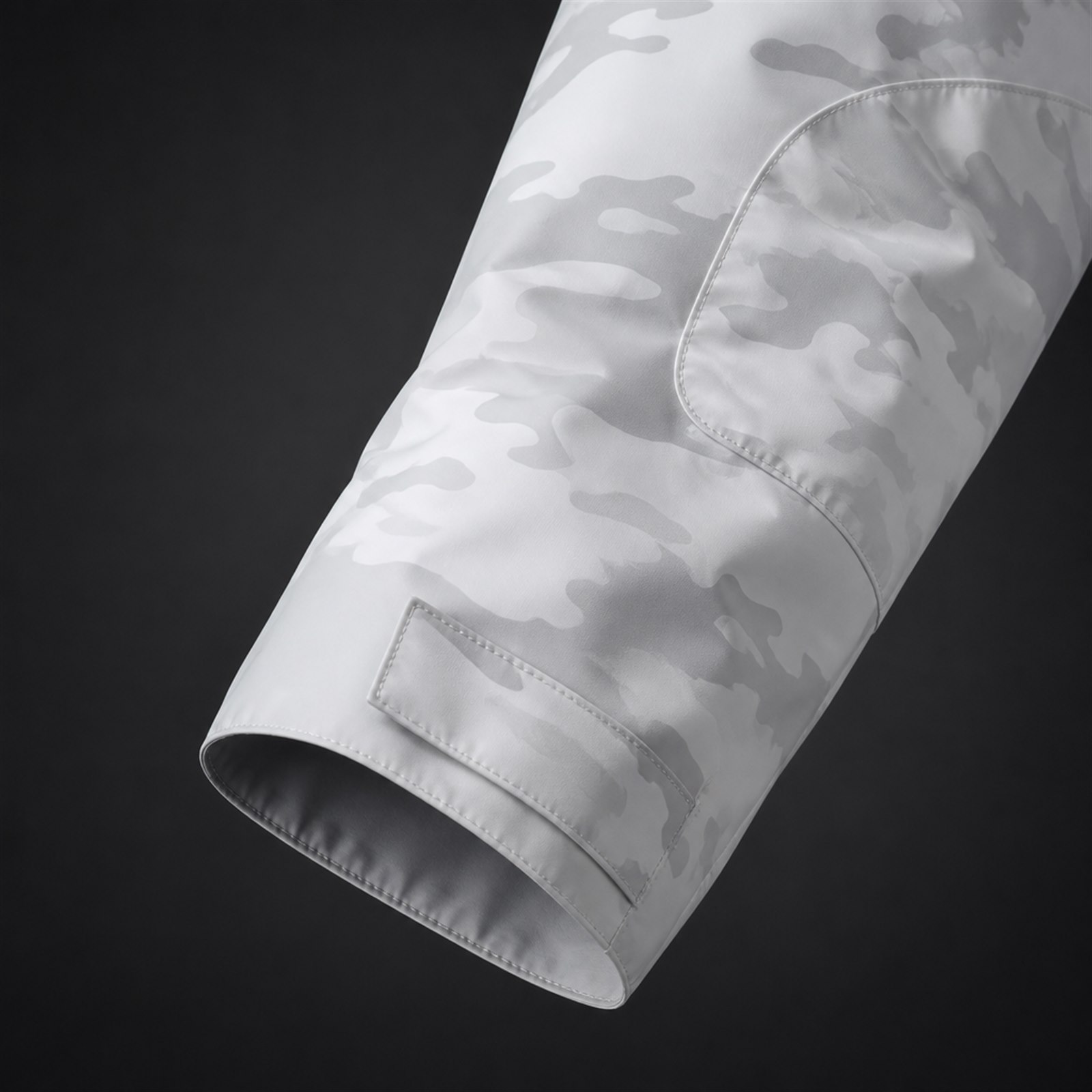
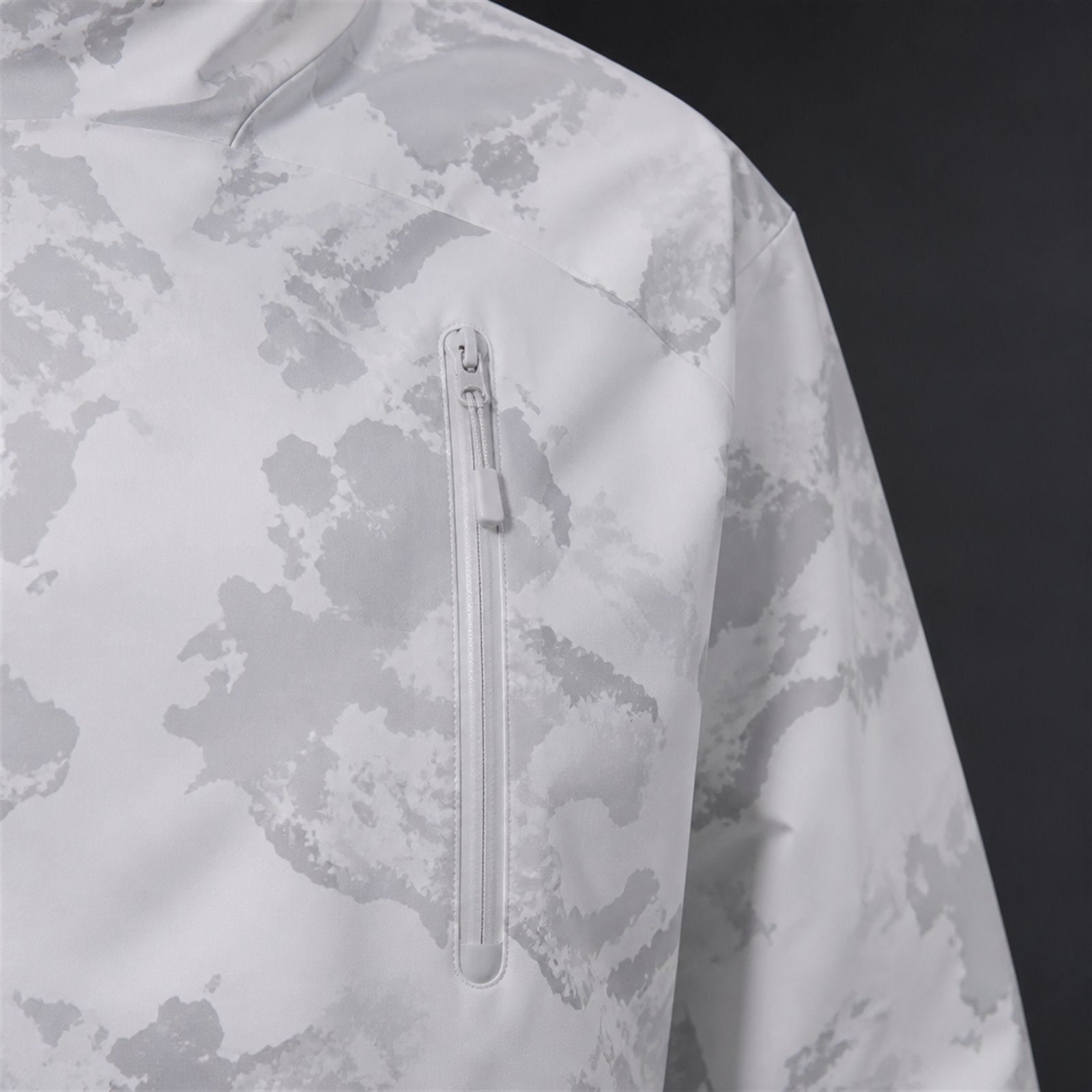
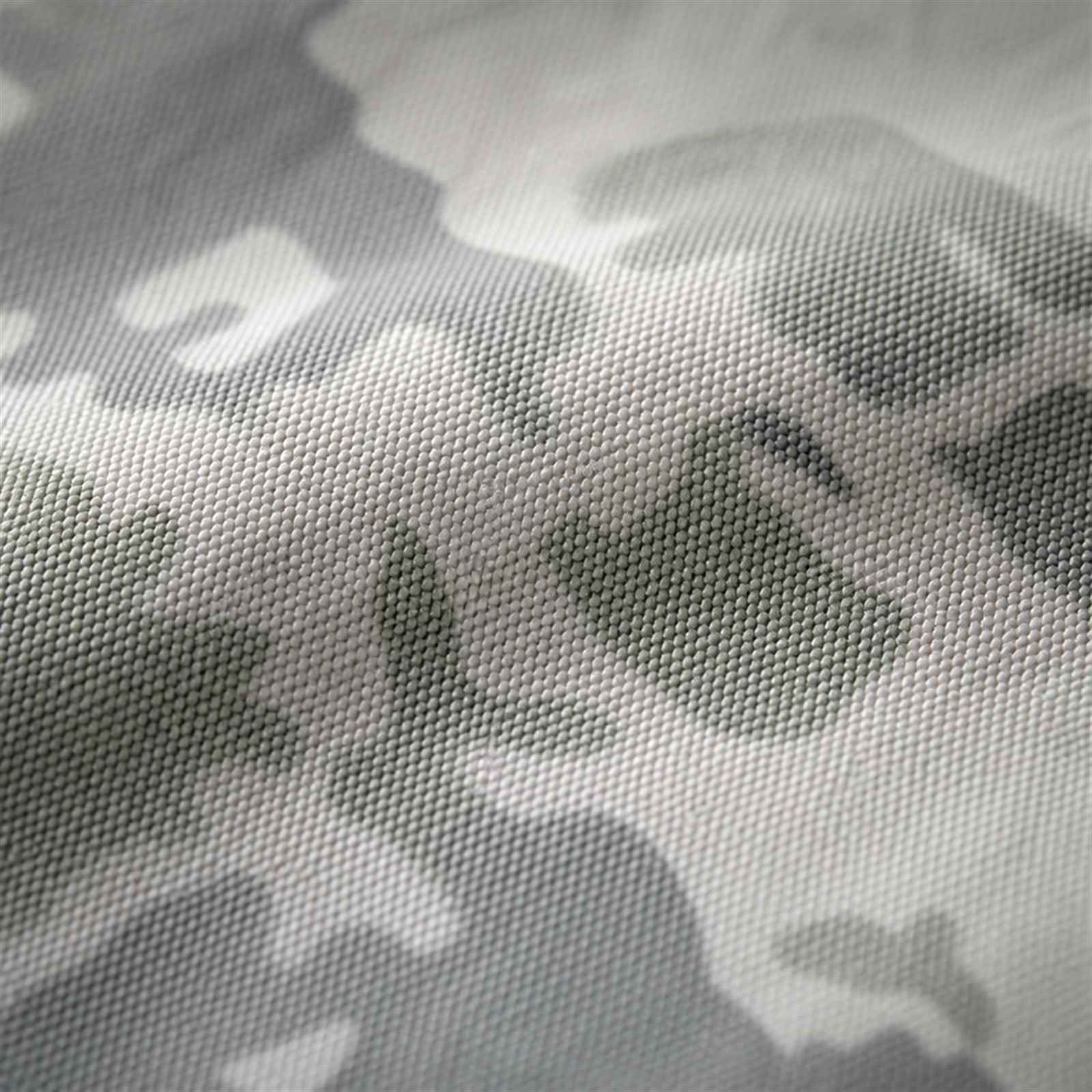
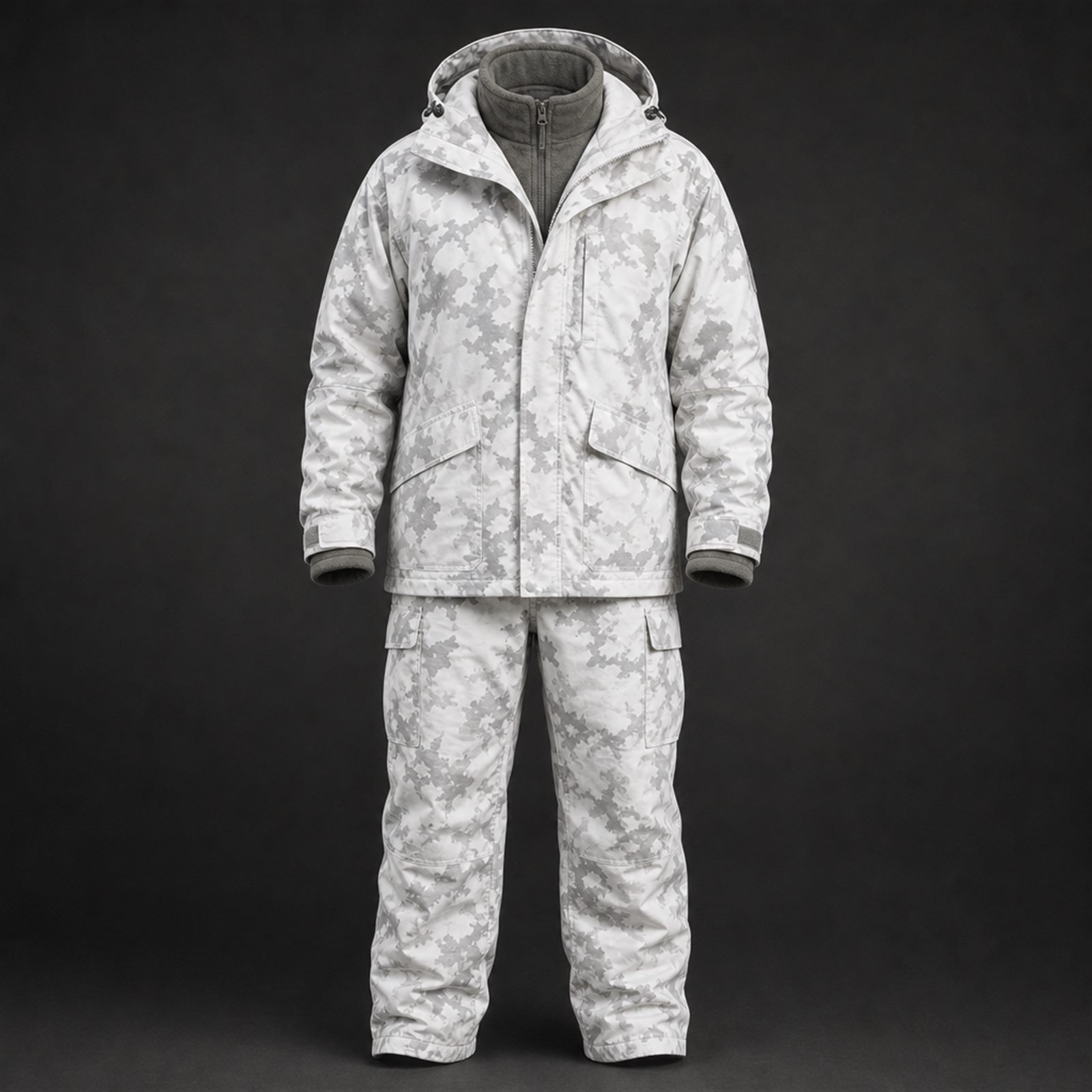
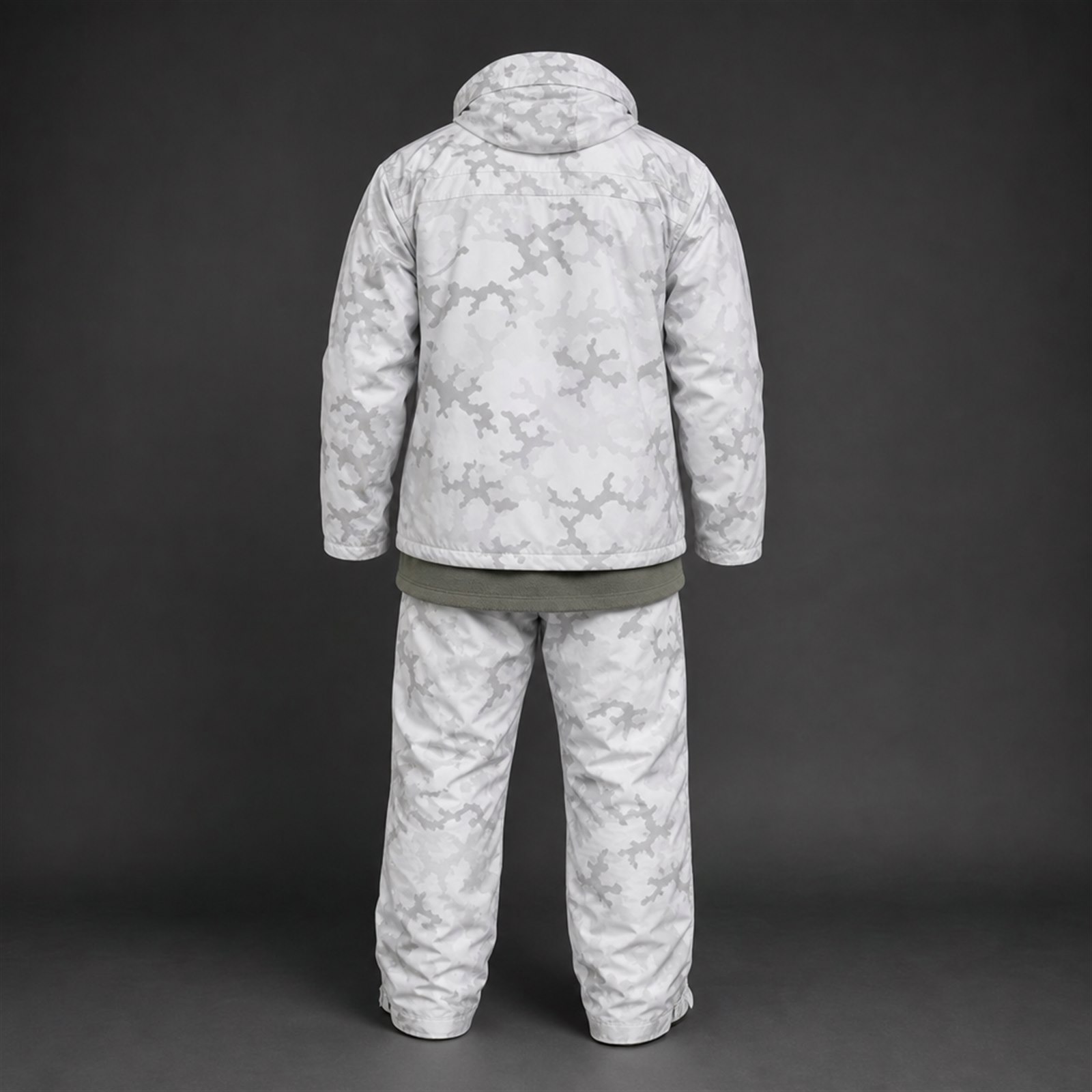
  • Snow and winter style
  • Pattern repeat and panel placement agreed per layer so the system reads as one issue rather than as mixed prints

Sizing

Size options

System sizing is developed as a stack rather than as a set of independent garments. The layers the wearer will use are written down first, then each garment is sized against what sits beneath and above it, and the whole composition is fitted on a wearer while walking, kneeling, sitting and reaching. Arm length is especially sensitive, because two or three insulating layers together reduce effective reach. Where the buyer has an existing uniform sizing standard, the system is developed against it so the winter issue stays consistent with the rest of the clothing programme.

Branding

Private label

Your patterns, your composition, your specification document, your hardware family and your packaging. Labels, trims and cartons can be left blank, so the system ships as your own product with one specification held on file against every repeat order.

Logistics

Packaging

  • Poly bag per garment
  • Individual carton
  • Packed by system where the buyer issues a complete kit
  • Master carton with size marking and count
  • Buyer-specific carton and packing list

Sample development

From specification to approved sample

Development of Cold Weather Layering System runs in 7 stages, each risk removed before the next step commits cost.

01

Composition workshop

We write down the layer stack the wearer will use, layer by layer, including the transition points between moving and resting and what is removed indoors. This document drives every later decision.

02

Material selection per layer

Fabric and insulation options are presented layer by layer against the buyer's environment and activity pattern, with the trade-off between moving warmth and standing warmth stated rather than averaged.

03

Pattern development across the stack

Each garment is patterned on the buyer's size range with layering allowance, and the layer-to-layer volume is set deliberately so no garment compresses the insulation beneath it.

04

Proto samples across layers

First samples of each layer are produced and reviewed together so interfaces and volumes can be assessed in the combination the wearer will actually use.

05

System fit session

Revised samples are fitted as a complete stack on a wearer while walking, kneeling, sitting and reaching, which is the only stage at which a composition can be judged.

06

Size set across the range

A set across the size range is produced so grading and interface behaviour are confirmed at the extremes of the range, not at the base size only.

07

Sealed samples and system specification

Each approved layer is sealed and retained, and a single specification document covering the whole system is issued with the order as the reference for repeat production.

Bulk production

Bulk production process

7 stages of bulk production for Cold Weather Layering System — where the approved specification is either held or lost.

01

Material receipt and inspection

Face fabrics, insulation lots, linings, closures and trims are checked for every layer against the sealed samples, and colour is verified per fabric against the approved shade band.

02

Cutting across the system

Panels for all layers are cut to approved patterns with print or camouflage placement controlled on the marker, so the system matches across layers as well as within each one.

03

Layer assembly

Each layer is assembled to its own approved construction, with insulation mapped to the approved zone plan and vents constructed in the agreed positions.

04

Interface verification

Garments from the same size are checked against each other during the run, so cuff, waist, leg opening and layer volume are confirmed in production rather than assumed from the sample stage.

05

Inline inspection

Garments are measured against approved tolerances at defined points through the run, layer by layer, so a drift in one component is caught before the system ships.

06

Finishing and labelling

Main labels, care labels, size and issue marking and any layer identification are applied consistently, and finish is completed to the sealed samples.

07

Final inspection and system packing

Final inspection follows the approved specification and the AQL agreed with the buyer, and approved goods are packed by garment size or by complete system to the buyer's instructions.

Quality control

Quality control

The 7 checks applied to Cold Weather Layering System, each measured against an agreed standard rather than against opinion.

01

Incoming material check

Every fabric, insulation lot, lining, closure and trim used across the system is recorded against its specification, and lots are retained so a repeat order can be matched.

02

Colour verification per fabric

Each fabric type is compared with its approved shade band under agreed lighting, because a single reference cannot represent a laminated shell, a fleece and a knit at once.

03

Insulation mapping check

Sampled garments across the system are opened or sectioned to confirm insulation is present in the specified zones at the specified amounts, since this is the specification most easily lost in production.

04

Measurement check per layer

Critical dimensions are measured against approved tolerances for each layer during the run, including graded sizes rather than the base size alone.

05

Interface and stack check

Garments from the same size are assembled into a stack and checked for layering allowance, cuff and leg opening seals and waist interface, repeated at more than one point in the size range.

06

Function testing of closures and vents

Zips, flaps, adjusters and vent closures are operated repeatedly on sampled garments to confirm they open, close and stay closed under the conditions of use.

07

Final inspection and records

Final inspection results, inspection records and retained samples for the whole system stay with the order, so a repeat is produced against evidence rather than against memory.

Specifications

Specifications

19 specification rows for Cold Weather Layering System: only confirmed items are listed, so a row that depends on your programme is omitted rather than filled with an estimate.

Product typeCold weather layering system specified as one composition
Layer 1Moisture-moving base layer, top and bottom, to specification
Layer 2Grid fleece, brushed knit or light insulated mid layer, to specification
Layer 3Insulated jacket, insulated liner or removable liner, to specification
Layer 4Waterproof, water-resistant or breathable softshell outer layer, to specification
Lower bodyInsulated field trouser and optional waterproof over-pant, to specification
InsulationMapped by layer and body zone; fixed, removable or a combination
VentilationPlanned across layers so heat can be dumped without removing a garment in the cold
Layering allowanceEach layer sized against the layers beneath and above it, confirmed as a stack
InterfacesCuff-to-glove, leg opening-to-boot, hood-to-headwear, waist-to-trouser, recorded as specification points
RemovabilityLayers independent, liner attached, or mid layer attachable, to specification
ColourShade band agreed per fabric type, with lab dip approval before bulk
CamouflageBuyer artwork camouflage with a print standard approved before bulk
LabellingMain label, care label, size marking and optional layer identification
Size rangeEU or US runs including extended sizes, developed against the buyer's uniform standard where one exists
DocumentationSingle system specification covering every layer, plus an interface schedule
PackingBy garment size or by complete system, with master carton marking to specification

FAQ

Cold Weather Layering System FAQ

What exactly do we receive if we order a layering system rather than garments?

The same physical goods, specified differently. You receive each layer as a garment, plus a single specification document that covers the whole composition: which layers exist, how each is sized against the others, which interfaces are fixed, how colour was agreed across fabric types, and how the system is labelled. The document is the part that makes a second order match the first, and it is the reason a system is bought as a system.

Can you publish a temperature range for the system?

No, and a number would be misleading rather than helpful. How warm a composition feels depends on activity level, wind, humidity, exposure time, which layers are worn and how they fit — not only on the insulation. What we do instead is specify the stack to the coldest condition your programme expects, document the composition, and let your own field trial with the actual system produce any comfort figure you want to publish.

We already have some layers in use. Can you build around them?

Yes, and it is a common starting point. We develop the missing piece to work with what you already issue, and the interfaces are recorded as specification points either way. The important detail is that we ask for the actual measurements of the existing garments rather than assuming them from a nominal size, because layering allowance is where an otherwise correct system fails.

Which layer should we fix first if the budget only allows one?

The base layer, in most programmes. If moisture cannot leave the skin, every layer above it gradually loses effectiveness, and buyers who have only ever specified the outer jacket usually see the largest improvement when the inner layer and the moisture path through the system are corrected first.

How do you keep the system consistent if we order it in stages?

Through the specification document and retained samples. Fabric, insulation, construction, trims, colour and labelling are written into a specification held with the order, and physical or approved samples are retained alongside it. When a later order adds a layer, it is developed against that document rather than from a fresh brief, which is what keeps the pieces working together.

Does the system have to be one colour, and can you match a shell to a fleece?

It does not have to be one colour, and matching across fabric types is where most programmes get into difficulty. A laminated shell, a fleece and a knit take colour differently, so we agree a shade band per fabric, verify it on lab dips, and tell you where an exact cross-fabric match is not realistic rather than promising it and correcting it at bulk.

More products

Related products

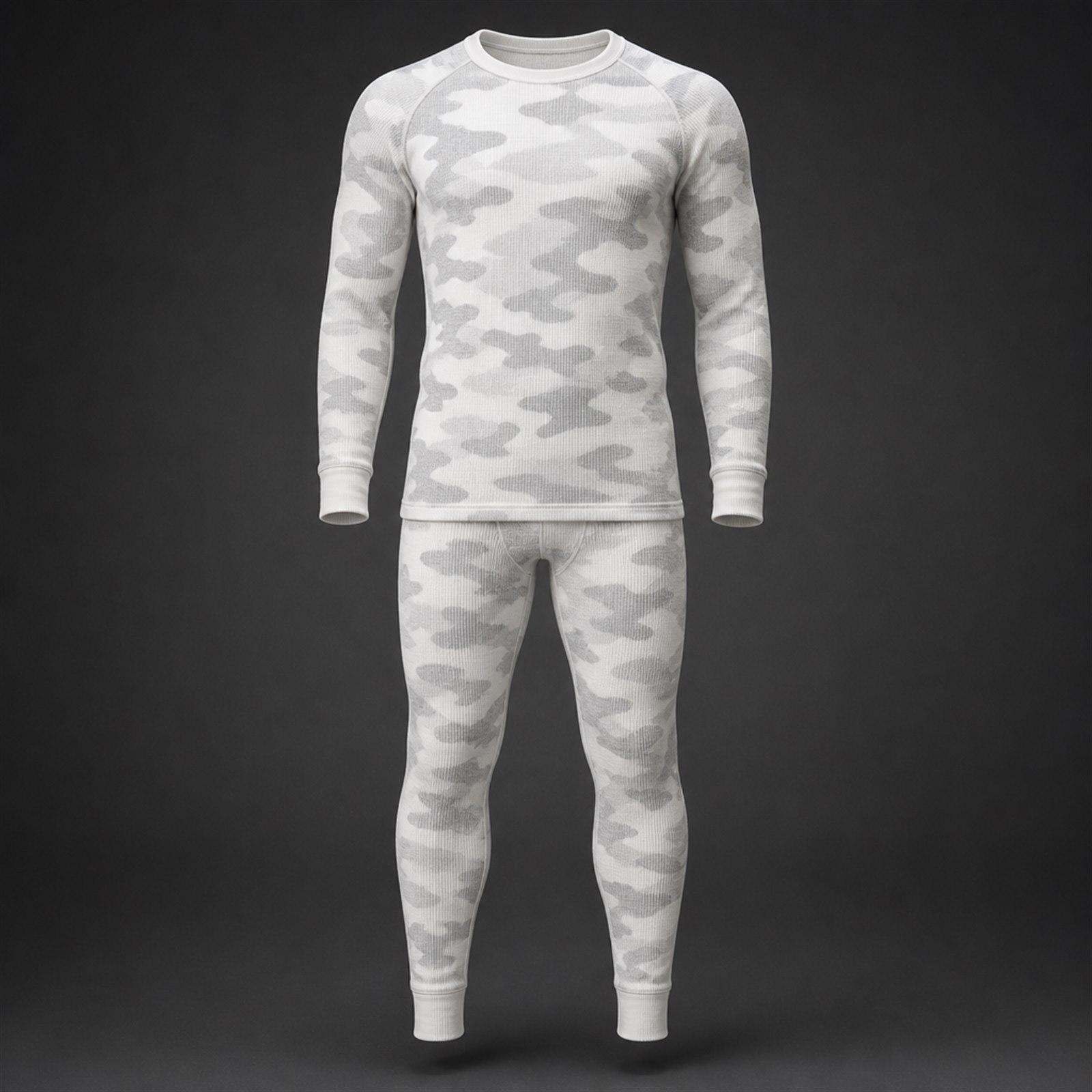
Thermal Base Layers

Thermal Base Layer Set

A base layer is the cheapest garment in a layering system and the one that decides whether the rest of it works.

Cold and extreme cold under an insulated layerCool and wet conditions where moisture management matters more than warmthHot markets as a wicking layer under a uniform shirt
View product

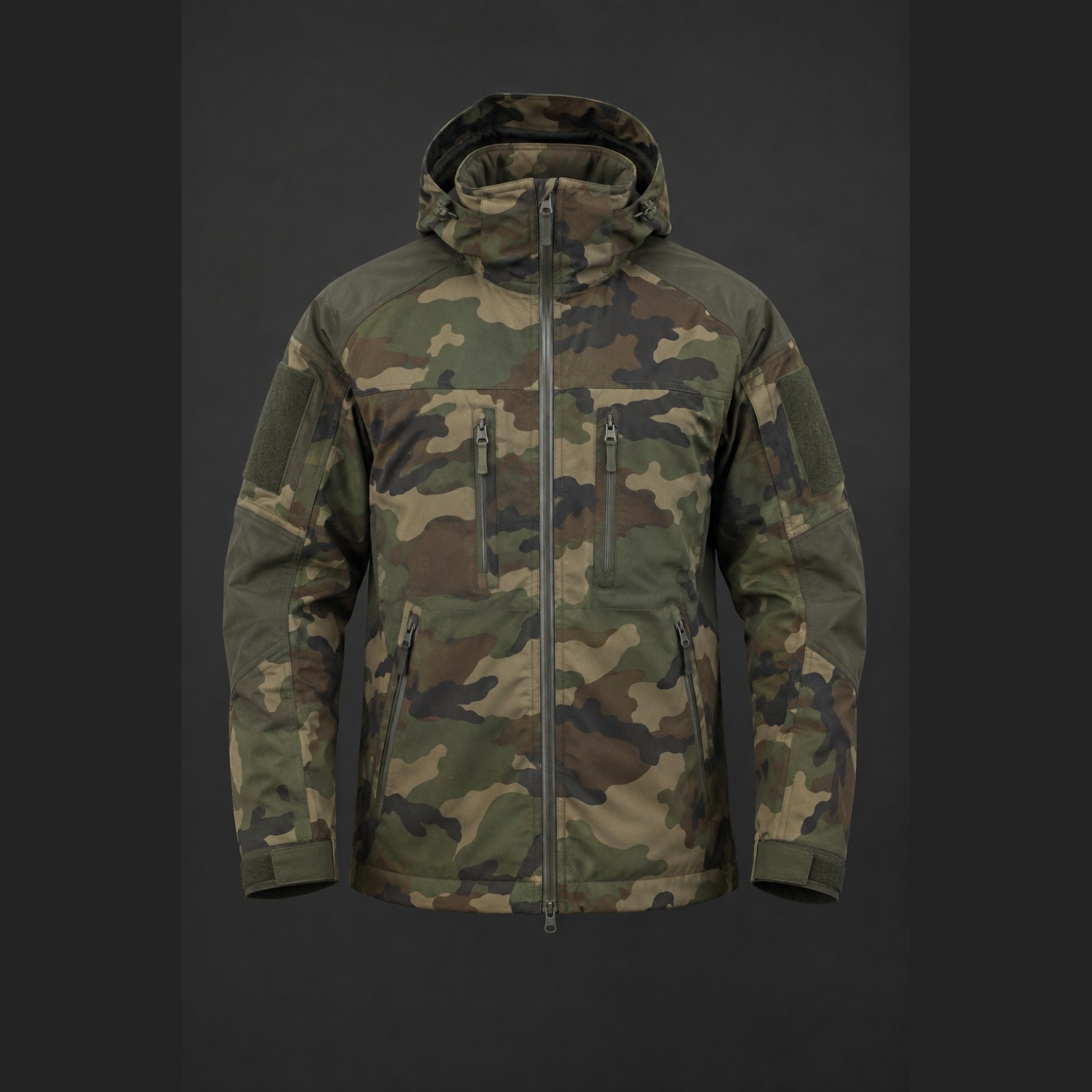
Cold Weather Shell Jackets

Cold Weather Shell Jacket

The shell carries no warmth of its own, and that is the point of it.

Wet cold where snow, sleet or freezing rain is expected and the shell must be waterproof with sealed exposed seamsDry cold where wind is the dominant heat loss and a breathable wind-resistant shell is the better specificationAlternating activity where the wearer generates sweat while moving and needs to vent without removing the shell
View product

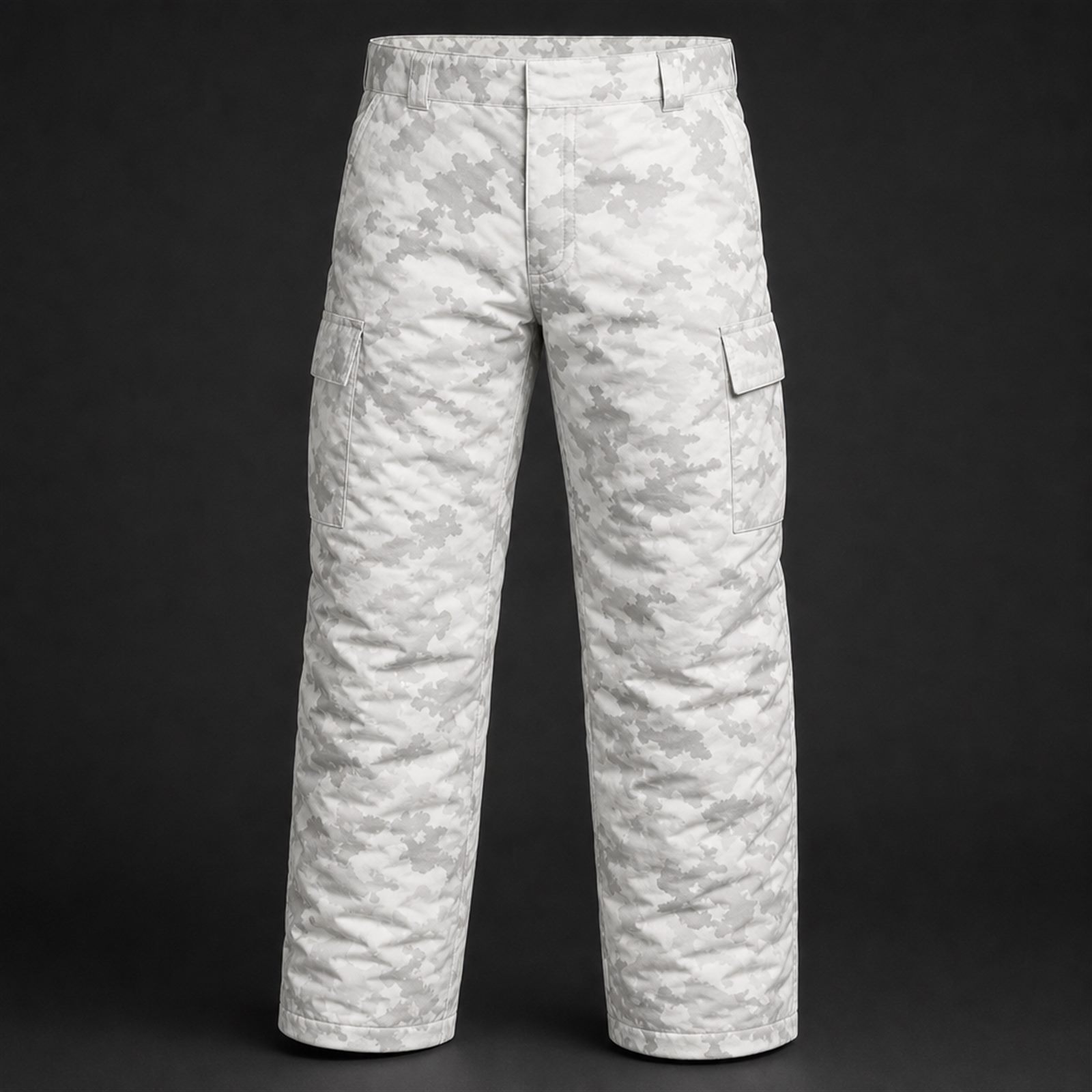
Cold Weather Tactical Pants

Insulated Cold Weather Field Pants

A cold weather pant is not a jacket for the legs.

Cold working days with intermittent activity where the wearer alternates between moving and waitingDry cold where wind rather than precipitation is the dominant exposure and the pant does not need to be waterproofInside a layer stack under a waterproof over-pant, where the insulated pant supplies warmth and the shell supplies protection
View product

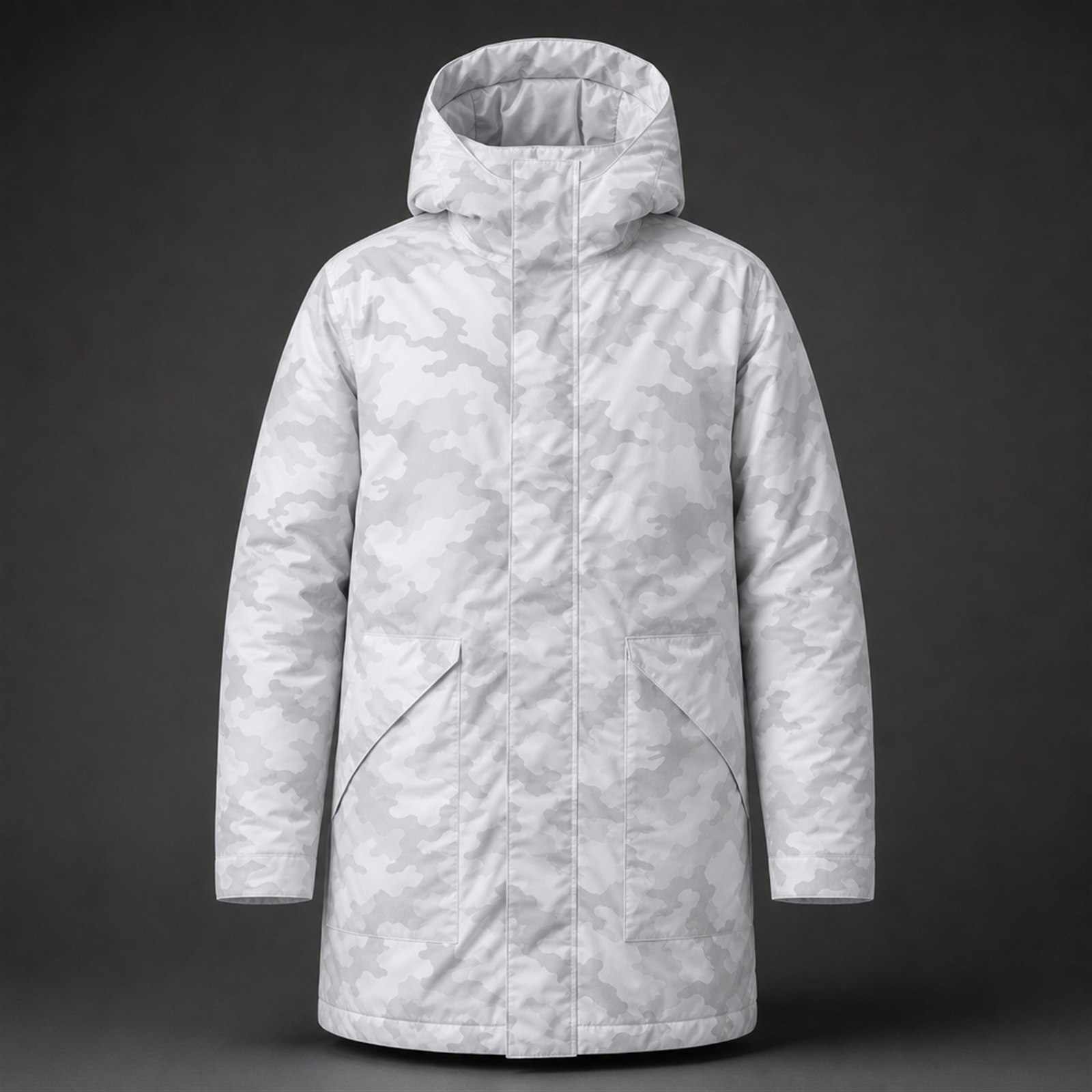
Extreme Cold Weather Parkas

Expedition Parka

A parka for extreme cold is a system, not a garment with more filling.

Extreme cold and dry continental wintersCold and wet conditions where a waterproof shell over insulation is requiredStatic and low-activity duty where warmth retention matters more than breathability
View product

Request a Manufacturing Assessment

Send us your tech pack, reference sample or product idea. We review your requirement, recommend materials and construction, and come back with a development plan you can act on.