Skip to content
TACTICALOEM / ODM TACTICAL APPAREL
ENEnglish

Products / Extreme Cold Weather Jackets

Extreme Cold Weather Jacket — OEM & ODM Manufacturing

An extreme cold weather jacket is specified for the coldest condition a programme expects, and it is defined less by what it is filled with than by where it sits in a layering system. In a base, mid, insulation and shell composition this jacket usually occupies the insulation layer: heavy mapped fill, protected openings, and a volume that has to sit under a shell without compressing the layers beneath it. At this level the margin for error disappears. Moisture trapped near the body becomes the fastest route to losing warmth once activity stops, so the jacket is developed together with the moisture path through the stack, not as a standalone garment that happens to be very warm.

Sustained low temperature where the wearer is exposed for long periods and the conditions change during the working dayWet cold with sleet, wet snow or freezing rain where precipitation reaches the shell and the insulation must stay dryWind-affected cold where the outermost layer has to stop wind reaching the insulation, particularly at the chest, shoulders and closures
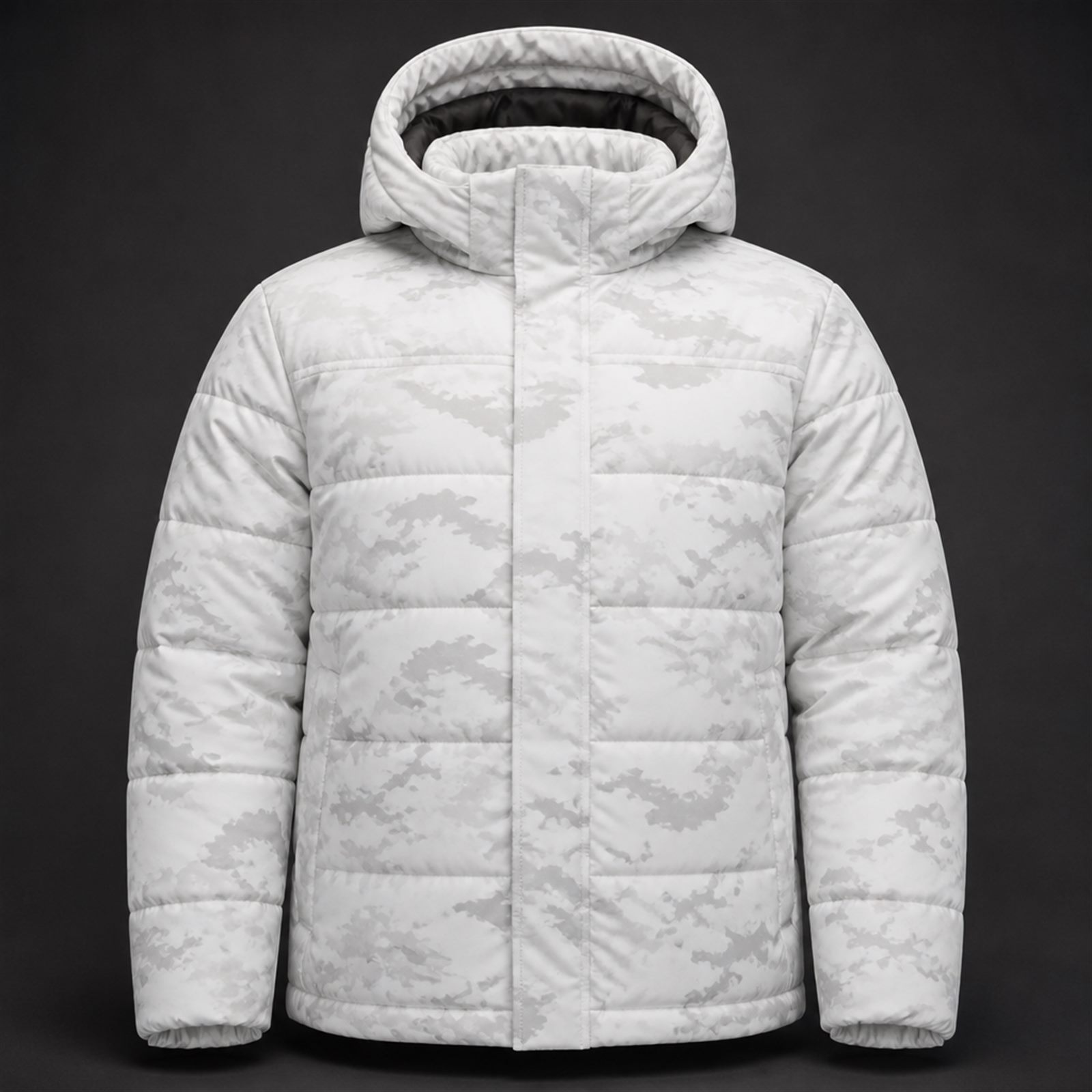
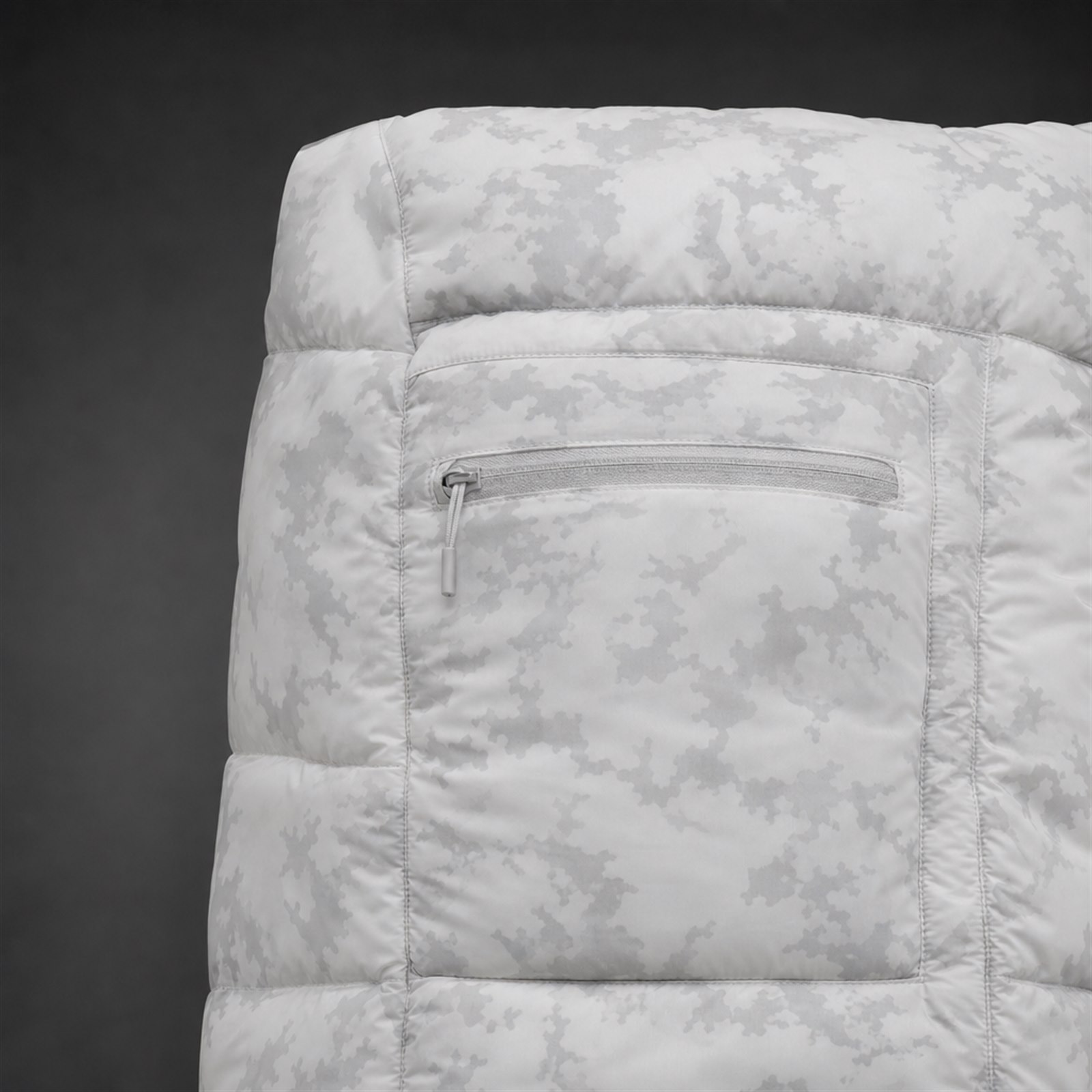
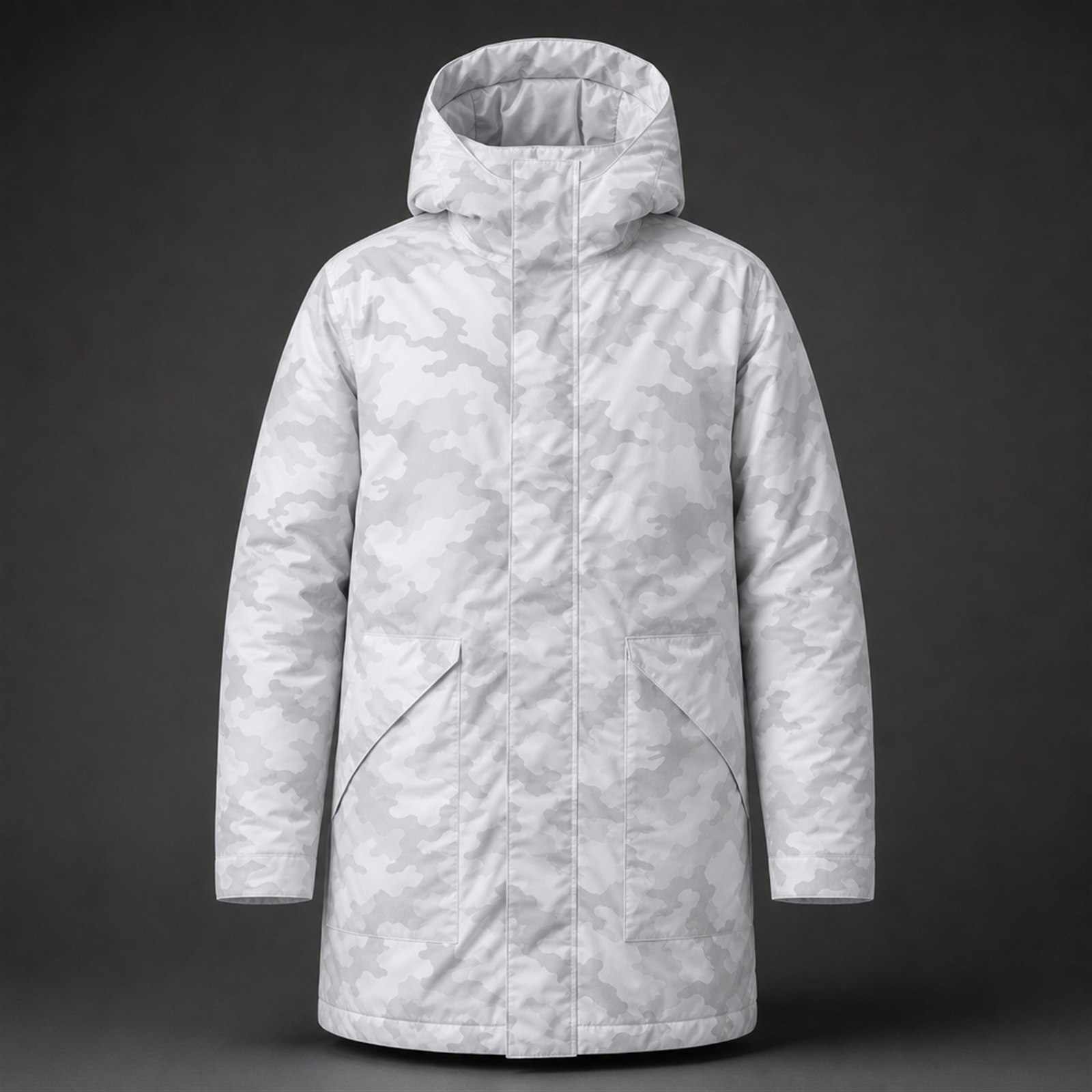
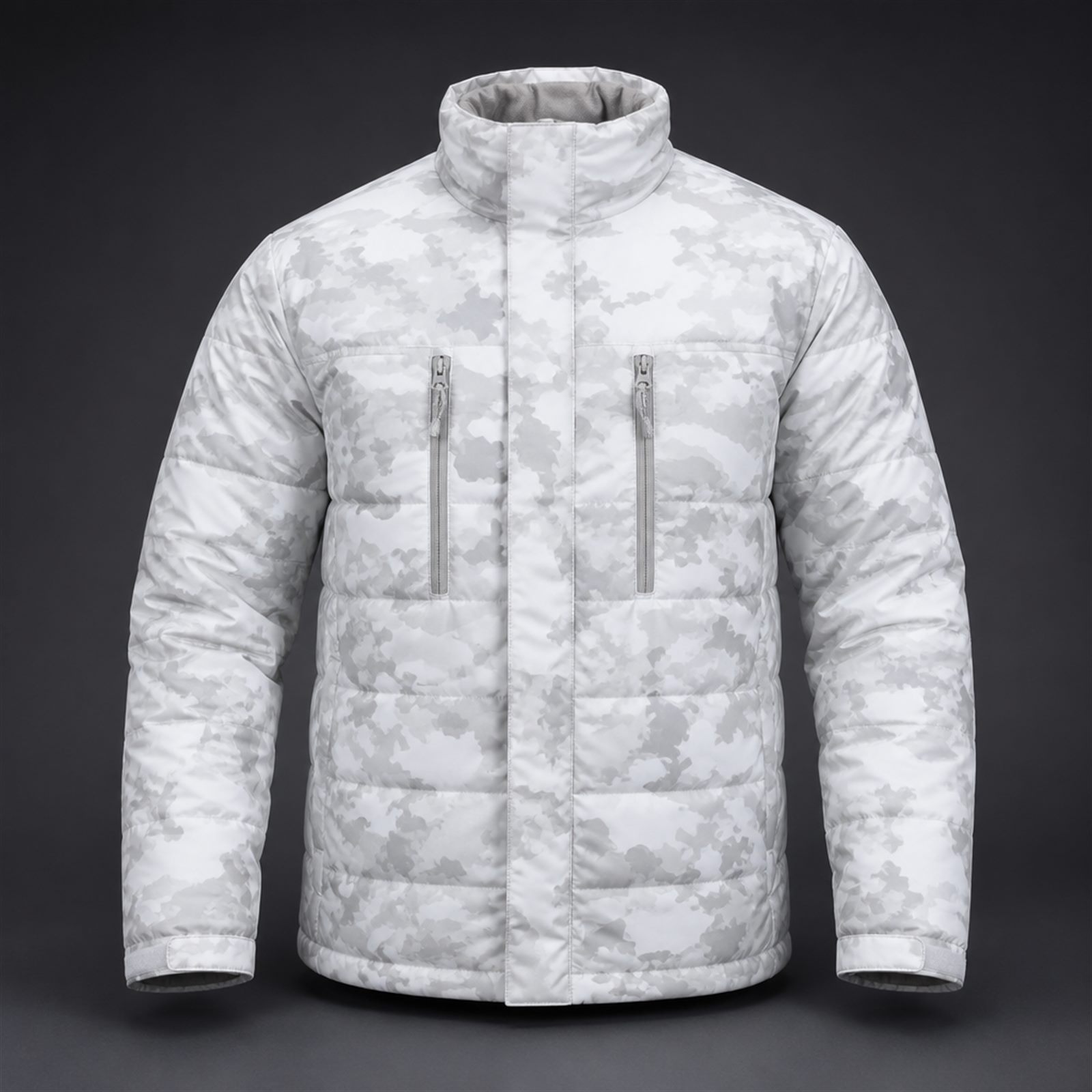
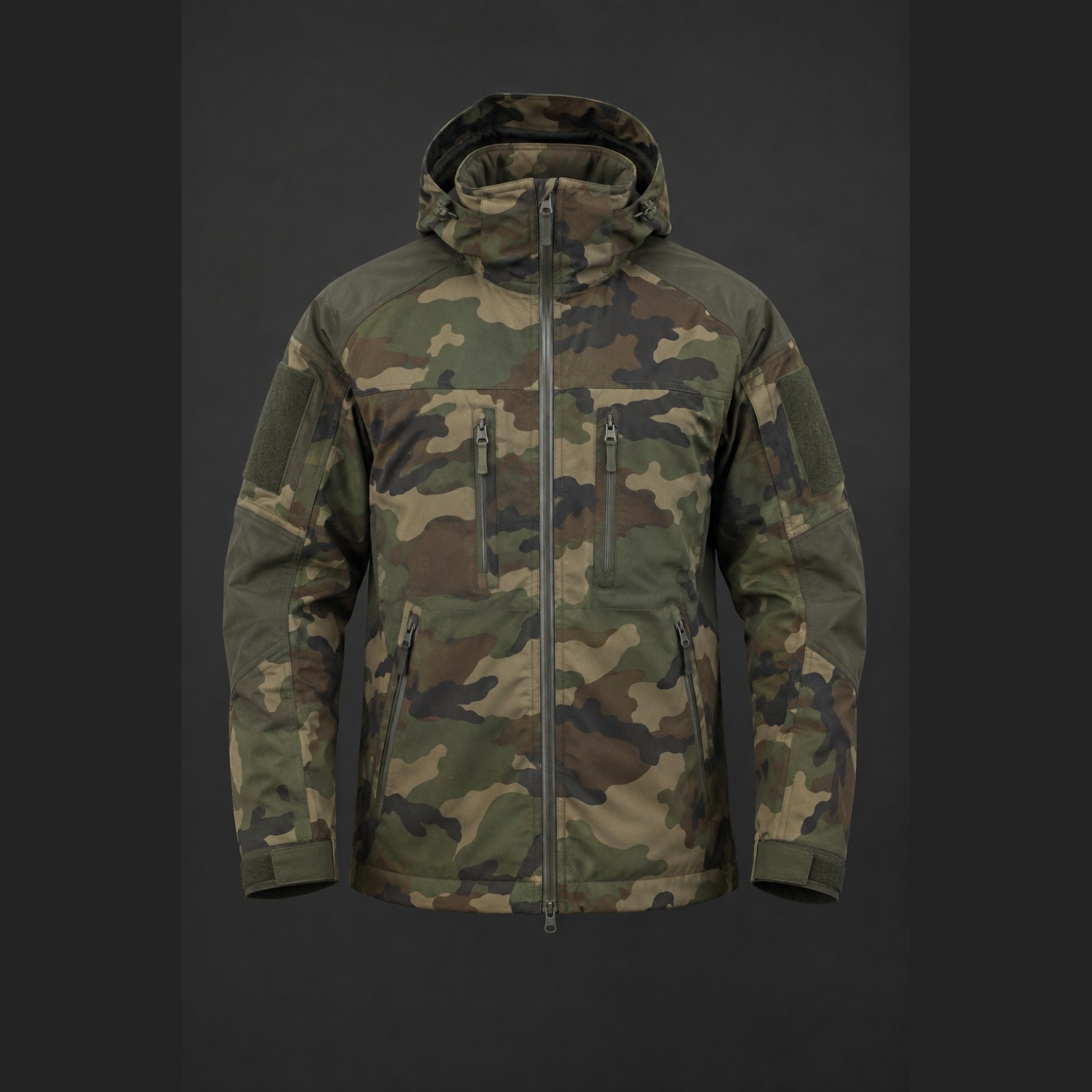
Extreme cold weather jacket with heavy mapped insulation, storm-flapped closure and adjustable volume hood
Climate
Sustained low temperature where the wearer is exposed for long periods and the conditions change during the working day · Wet cold with sleet, wet snow or freezing rain where precipitation reaches the shell and the insulation must stay dry · Wind-affected cold where the outermost layer has to stop wind reaching the insulation, particularly at the chest, shoulders and closures
Applications
Extreme Cold Weather · Cold Weather · Heavy Duty / Field
Customization
12 customizable parts
Extreme Cold Weather JacketExtreme Cold Weather JacketExtreme Cold Weather JacketExtreme Cold Weather JacketExtreme Cold Weather JacketExtreme Cold Weather Jacket

Design purpose

Why this garment exists

Build a heavily insulated jacket on the buyer's pattern that holds warmth when the wearer is static after exertion, keeps its loft through a season of packing and wear, and still allows the shoulder rotation and hip flexion the role requires.

Applications

Best applications

  • Extreme Cold Weather — Low ambient temperature is only part of the exposure.
  • Cold Weather — Ambient temperature is low enough that the body loses heat faster than it produces it at rest, and wind increases that loss substantially.
  • Heavy Duty / Field — The garment is worn continuously and loaded with equipment, so it is subject to sustained abrasion from straps, webbing and ground contact.
Sustained low temperature where the wearer is exposed for long periods and the conditions change during the working dayWet cold with sleet, wet snow or freezing rain where precipitation reaches the shell and the insulation must stay dryWind-affected cold where the outermost layer has to stop wind reaching the insulation, particularly at the chest, shoulders and closures

Interactive map

Customize every part

Extreme Cold Weather Jacket: select a marker to see what can be specified at that part of the garment — all 10 mapped areas are also listed in full below the map, so nothing is hidden behind an interaction.

Customization by garment part

Select a marker to see the customization options available at that part of the garment. Every option below is a manufacturing decision you control.

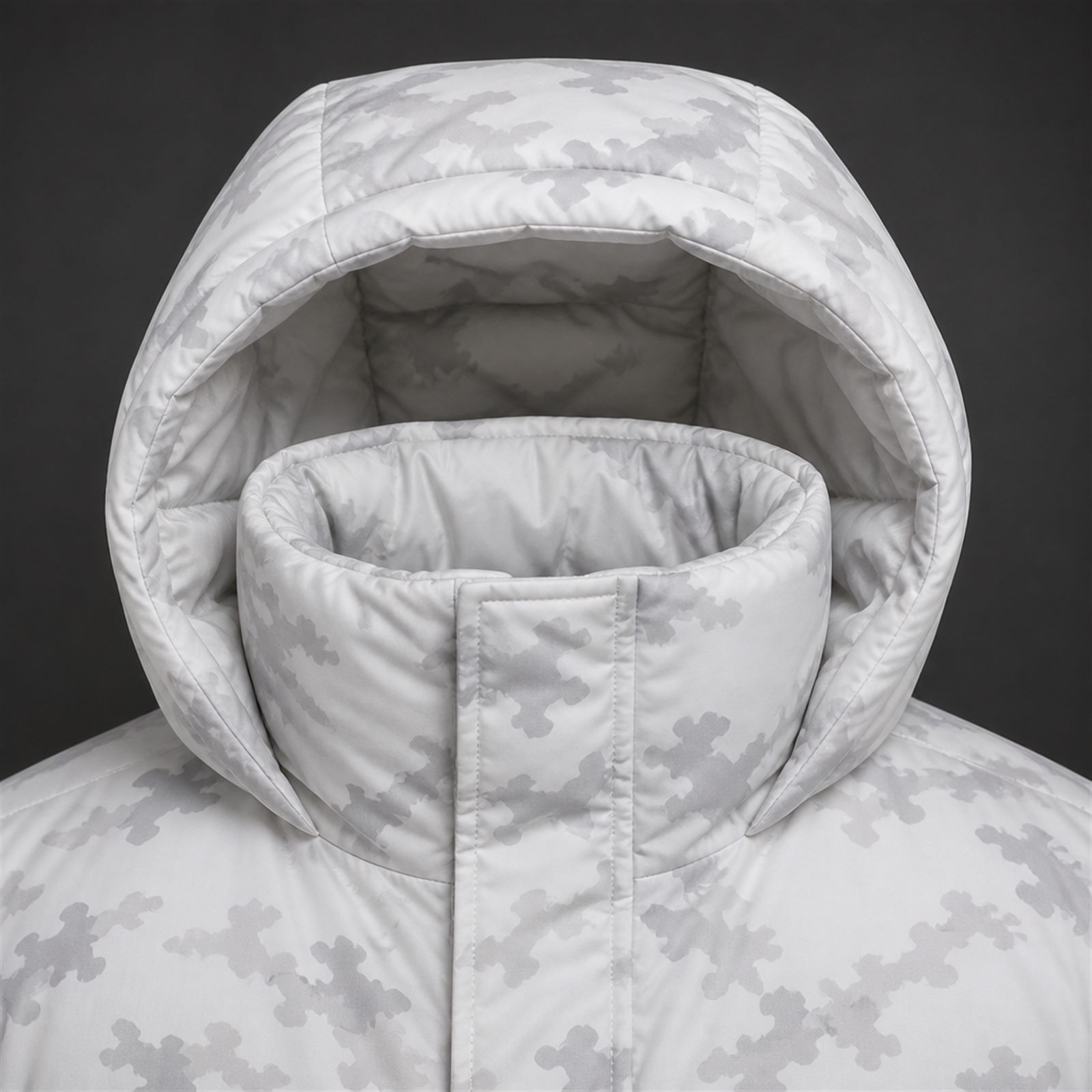
Hood and collarFixed hood · Detachable hood · Volume adjustment · Shaped brim · Developed around issued headwear · High collar without hood
Shoulder fill zoneReduced fill · Damp-tolerant fill hybrid · Standard heavy fill · Articulated shoulder · Reinforced for strap contact
Chest and back fill zoneIncreased fill · Baffled construction · Panel quilting · Buyer-specified zoning
Front closureMulti-flap closure · Two-way zip · Internal storm flap · Chin guard · Zip garage
Chest ventilationChest vent · Covered zip vent · Placed clear of equipment · No chest vent
Inner arm fill zoneReduced fill · Standard fill · Stretch panel · Buyer-specified
Underarm ventilationUnderarm vent · Covered zip closure · No underarm vent · Vent depth to specification
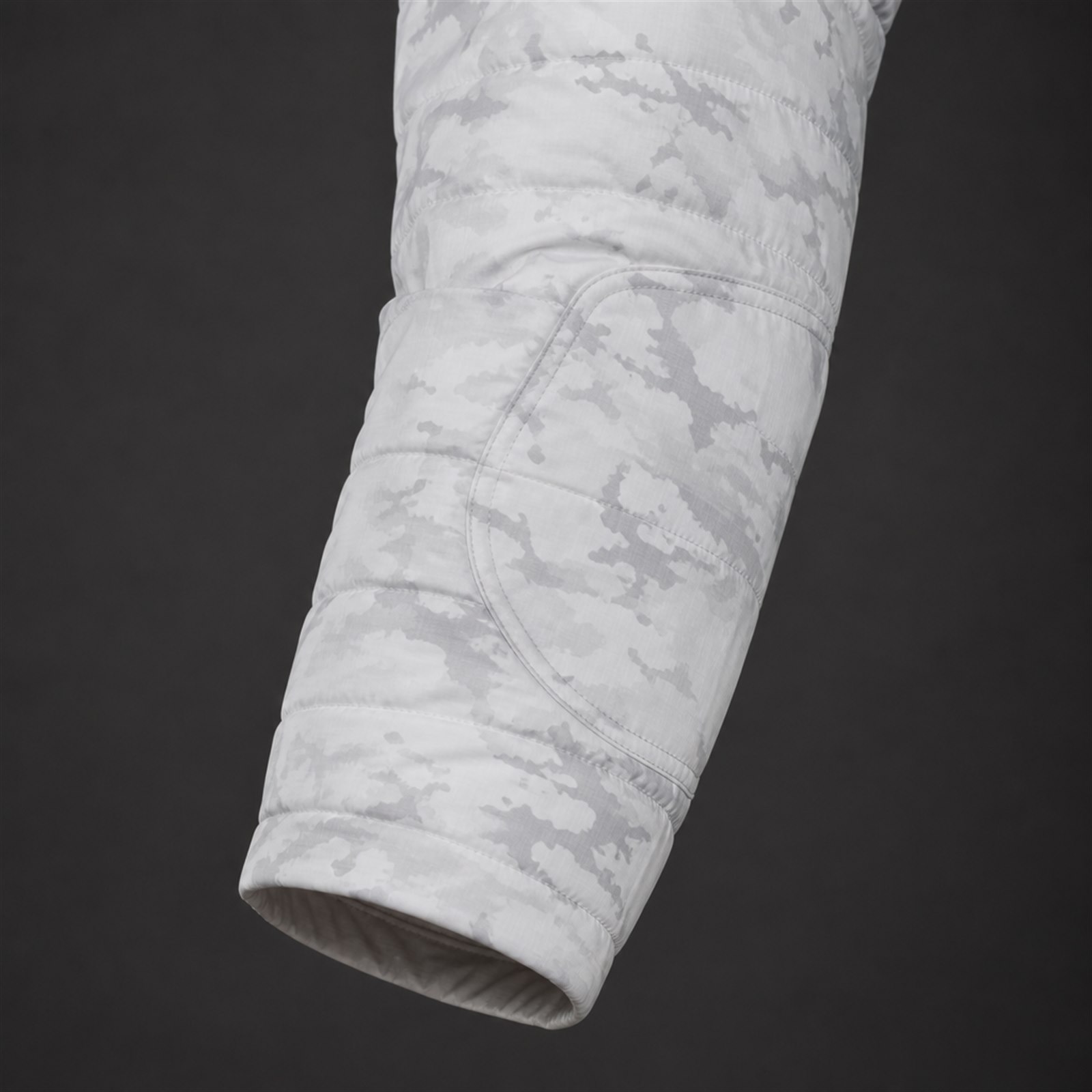
Articulated elbowArticulated elbow · Reinforced elbow panel · Mapped fill around the joint · Standard sleeve
Cuff and glove interfaceOver the glove · Under the glove · Inner storm cuff · Adjustable hook-and-loop
Hem and adjustmentInternal drawcord · External adjuster · Snow skirt interface · Drop tail · No adjustment

Materials

Material options

4 material options for Extreme Cold Weather Jacket, specified per garment area — a single fabric cannot serve heat management and abrasion resistance at the same time.

Fill and carrier

  • Heavy lofted fill in baffled construction to preserve warmth across the channels
  • Layered synthetic fill where damp tolerance matters more than pack size
  • Hybrid build: damp-tolerant fill at the shoulders over a lighter fill at the torso
  • Removable insulated liner that can be taken out and dried separately

At this level the carrier matters as much as the fill. How the loft is held decides whether warmth is distributed or migrates away from the body, and whether the jacket recovers after being packed.

Shell and face

  • Wind-resistant ripstop face where the jacket is worn under a separate shell
  • Water-repellent woven face for light snow and dry cold
  • Laminated waterproof shell built as one garment with the insulation
  • Abrasion-resistant poly-cotton face for hard field use

Where the jacket is worn as the insulation layer under a shell, the face only has to resist wind and abrasion. Where it is worn as the outermost garment, it has to take the weather as well, which changes the specification entirely.

Hood, collar and opening protection

  • Multiple-storm-flap front closure with chin guard
  • Fixed hood with volume adjustment and a shaped brim
  • Compatible hood developed around issued headwear and hearing protection
  • High collar without a hood for wear under a separate shell hood

Openings lose more heat than the fabric does. Front closure, collar and cuffs are specified as protection details rather than as finishes.

Ventilation

  • Underarm vents with covered zip closures
  • Chest vents positioned clear of load-bearing equipment
  • Two-way front opening for seated wearers
  • No vents where the jacket is worn in mostly static conditions

Ventilation is what keeps the wearer from wetting out from the inside during exertion. Without it, moisture accumulates in the layers and the insulation stops working exactly when the wearer stops moving.

Construction

Construction details

How each of the 8 parts of Extreme Cold Weather Jacket is assembled, and why that choice was made.

Fill mapped by zone

Fill weight and construction are specified per zone: more at chest and back, less at inner arms and shoulders where bulk costs movement, and handled differently where the wearer compresses the garment against equipment.

Carrier geometry

Channel or baffle width, wall height and stitch spacing are written into the tech pack, because they decide where cold lines fall and how the fill stays distributed through a season of wear.

Layering volume under a shell

Where the jacket is worn as the insulation layer, its volume is developed against the shell so neither garment compresses the other at the shoulders, and so the wearer does not lose arm movement with the whole stack on.

Opening protection

Front closure, chin guard, storm flap depth, cuff closure and hem adjustment are built as one sealing system, so the wearer can seal for standing and vent for movement without removing the jacket in the cold.

Articulation and gusseting

Articulated elbows, underarm gussets and a pattern allowance at the shoulders are used to preserve shoulder rotation and reach, because at this fill weight the pattern has to carry the movement rather than the fabric.

Collar, hood and headwear interface

The hood and collar are developed as a unit and against the headwear and hearing protection the buyer issues, so the interface is a specification decision rather than something the wearer works around.

Reinforcement at wear points

Elbows, shoulders, cuffs and hem edges take the abrasion and the equipment contact. Reinforcement follows the wear points the buyer reports rather than the seams that are easiest to reach.

Repairability

Where the buyer's programme allows it, panels and liners are developed so a damaged piece can be replaced in isolation, because retreating a whole jacket from service is the expensive failure at this level.

Features

Functional features

The 6 functional features of Extreme Cold Weather Jacket each exist to solve a specific problem in use, and where a feature is a trade-off rather than a pure gain that is stated.

Specified as the insulation layer of a system

The jacket is developed against the base, mid and shell layers it works with, so it delivers warmth without compressing what is beneath it or restricting the wearer once the stack is on.

Warmth that survives compression

Carrier geometry and fill type are chosen so the jacket recovers its loft after being packed and stored, because a garment that insulates when new and stops doing so after a season has a construction problem.

Moisture path treated as part of the jacket

At this level the fastest route to losing warmth is moisture trapped near the body. Ventilation, the base layer interface and the shell breathability are specified together rather than assumed.

Openings designed to seal and to vent

Front closure, hood, cuffs and hem are specified so the wearer can seal the jacket when static and vent it when moving, with hardware operable in the cold and with gloves.

Movement preserved at high fill weight

Bulk is reduced where it constrains shoulder and arm movement, and articulation is added where warmth cannot be reduced, so the jacket does not lock the wearer's arms forward.

Interfaces recorded as specification points

Cuff-to-glove, hood-to-headwear and jacket-to-shell interfaces are documented. Where an interface cannot be fixed yet, it is logged as an open point rather than guessed, because an interface assumed wrong is discovered in the field.

Customization

Customization options

12 customization lines for Extreme Cold Weather Jacket: branding, colour, camouflage and packaging are all part of the specification, and every item is confirmed on the pre-production sample.

Fill and carrier

Baffled heavy loftLayered synthetic fillHybrid shoulder and torso buildRemovable linerBuyer-specified fill and carrier

Shell and face

Wind-resistant ripstopWater-repellent wovenLaminated waterproof built inAbrasion-resistant poly-cottonBuyer-specified face

Fill mapping

Uniform heavy fillMapped with reduced inner arm fillPanel-specific buildCompression zones treated separatelyBuyer-specified zone plan

Front closure

Multiple-storm-flap closureTwo-way zip with internal flapChin guardSnap-down external flapBuyer-specified hardware

Hood and collar

Fixed hood with volume adjustmentDetachable hoodShaped brimHigh collar without hoodDeveloped around issued headwear

Cuff and hem

Adjustable cuff over the gloveAdjustable cuff under the gloveInner storm cuffHem drawcordSnow skirt interface

Ventilation

Underarm ventsChest ventsTwo-way front openingNo ventsBuyer-specified placement

Reinforcement

Elbow panelsShoulder panelsCuff and hem edgeBuyer-specified wear points

Pockets

Zipped hand pocketsChest pocketsInternal security pocketSleeve pocketRadio or tool loopsBuyer-specified layout

Repairability

Replaceable panelsReplaceable linerSingle closed constructionBuyer-specified repair strategy

Colour and camouflage

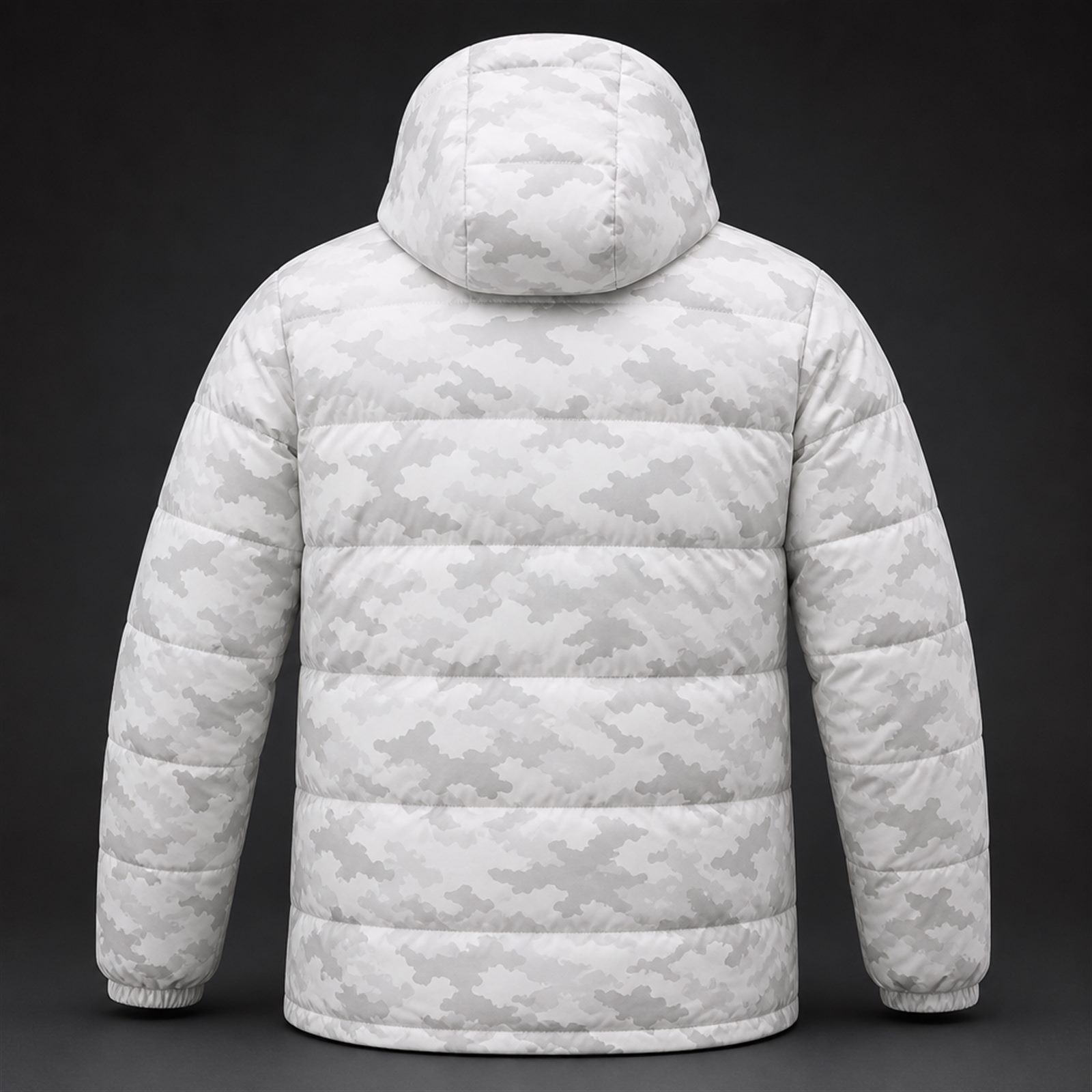
Solid colourwaysSnow and winter style camouflageBuyer artwork camouflageTone matched to the shellBuyer-specified

Labelling and packing

Woven main labelPrinted care labelSize and issue markingCompressed packingIndividual cartonBuyer-specific carton

Colour

Colour options

  • Solid colourways matched to buyer targets with lab dip approval before bulk
  • Buyer Pantone or colour standard matched against a shade band agreed in writing
  • Tone matching across jacket, shell and trouser treated as a separate requirement, because shell, insulation and knit fabrics take colour differently

Camouflage

Camouflage options

  • Buyer artwork camouflage with a print standard approved before bulk
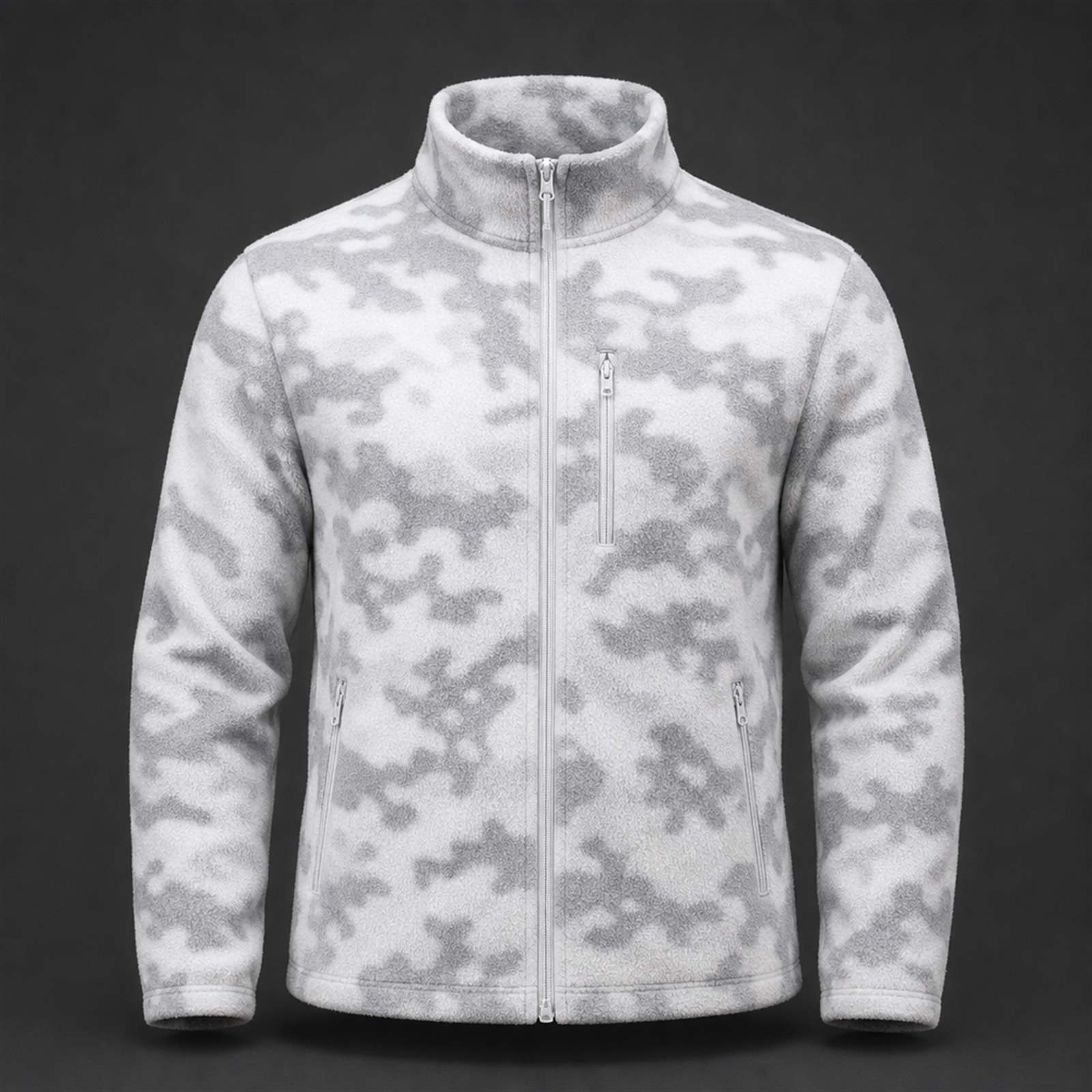
  • Snow and winter style
  • Woodland style
  • Desert style
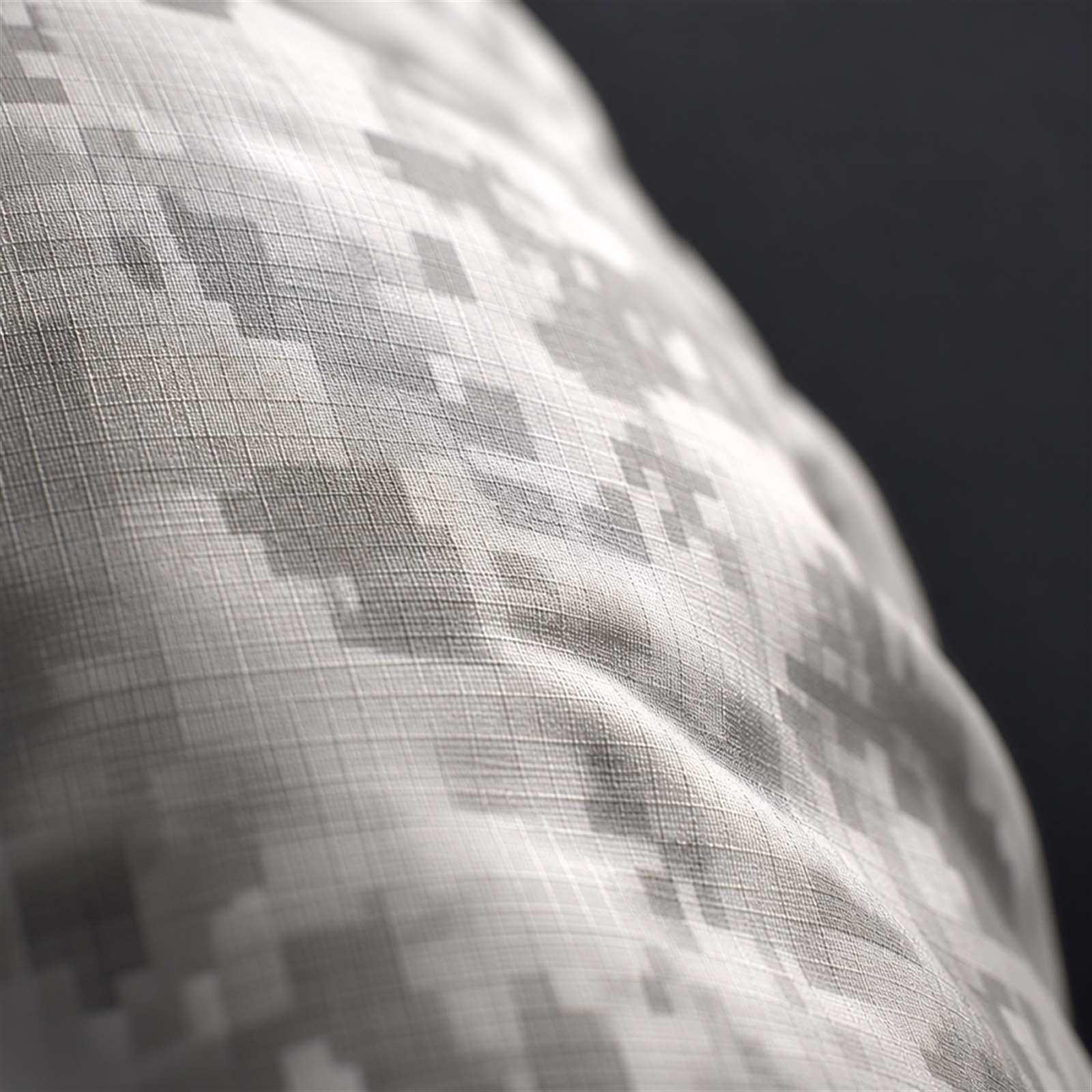
  • Pattern repeat and panel placement agreed across the mapped fill panels so the print breaks consistently

Sizing

Size options

Extreme cold sizing is developed with the fill volume and the whole layer stack present, not for a single garment. Chest, shoulder width, back length and sleeve length are set against the base and mid layers the wearer puts underneath, and arm length is developed with the bulk of two or three layers accounted for, since together they reduce effective reach. Where the buyer has an existing uniform sizing standard, the jacket is developed against that standard with the layering allowance added as a documented grade, and the size set is fitted as a complete stack on a wearer before bulk.

Branding

Private label

Your pattern, your fill and carrier specification, your zone map, your hood and closure geometry and your packaging. Labels, trims and cartons can be left blank, so the range ships as your own product with the specification held on file against every repeat order.

Logistics

Packaging

  • Poly bag
  • Individual carton
  • Compressed packing for container efficiency
  • Master carton with size marking and count
  • Buyer-specific carton and packing list

Sample development

From specification to approved sample

Development of Extreme Cold Weather Jacket runs in 7 stages, each risk removed before the next step commits cost.

01

Specification review

We agree the fill and carrier, the zone map, the face and shell approach, closure and hood geometry, and the whole layer stack the jacket has to work inside, in writing before anything is cut.

02

Fill and carrier selection

Fill and carrier options are presented with the warmth, damp behaviour, packability and cold-line trade-offs each one buys and gives up, so the buyer chooses deliberately rather than by weight alone.

03

Pattern development

The pattern is developed on the buyer's size range with fill volume, articulation, reduced-fill zones and the shell volume allowed for from the start.

04

Proto sample

A first sample proves fit over the intended base and mid layers, tests shoulder rotation and reach at full fill weight, and checks hood behaviour with the issued headwear.

05

Fit sample under the shell

A revised sample is assessed on a wearer with the shell on top, because the interaction between the jacket and shell volume is what decides whether arm movement survives the stack.

06

Size set

A set across the size range is produced with the fill volume present, so grading of chest, shoulder, sleeve and back length is confirmed at more than the base size.

07

Sealed sample

The approved sample is sealed and retained as the reference for inline and final inspection, including the fill zone map, carrier geometry and closure assembly.

Bulk production

Bulk production process

7 stages of bulk production for Extreme Cold Weather Jacket — where the approved specification is either held or lost.

01

Material receipt and inspection

Face fabric, fill lot and fill weight, lining, zip, hood hardware and trims are checked against the sealed sample before cutting, and colour is verified against the approved standard in daylight.

02

Cutting and zone marking

Panels are cut to the approved pattern with fill zone boundaries marked, so the mapping agreed at sample stage survives production instead of being averaged out.

03

Fill and carrier assembly

Fill is laid to the approved zone plan and baffled, quilted or bonded to the specified geometry, with channel width, wall height and stitch spacing checked against the tech pack.

04

Closure, hood and opening assembly

Multi-flap front closure, chin guard, two-way zip, hood, vents, cuffs and hem adjustment are assembled and function-checked, including operation with gloves.

05

Inline inspection

Garments are measured against approved tolerances at defined points through the run, so a drift in fill distribution, hood geometry or body length is caught while it can still be corrected.

06

Finishing and labelling

Care labels, size marking and issue identification are applied to agreed positions, and loose threads, zip function, baffle appearance and loft recovery are finished to the sealed sample.

07

Final inspection and packing

Final inspection follows the approved specification and the AQL agreed with the buyer, and approved goods are packed and marked to the buyer's carton instructions.

Quality control

Quality control

The 7 checks applied to Extreme Cold Weather Jacket, each measured against an agreed standard rather than against opinion.

01

Incoming material check

Face fabric, fill lot and fill weight, lining, zip, hood hardware and trims are recorded against the specification, and material lots are retained for reference and repeat matching.

02

Colour verification

Production colour is compared with the approved standard and the sealed sample under agreed lighting, and shade variation across rolls is recorded before cutting.

03

Fill mapping and distribution check

Sampled garments are weighed and sectioned to confirm fill is present in the specified zones at the specified amounts, because at this fill weight an error is both invisible and expensive.

04

Measurement check

Chest, shoulder, sleeve length, back length, collar and hem are measured against approved tolerances during the run, including graded sizes rather than the base size alone.

05

Loft recovery check

Sampled garments are compressed, held and allowed to recover, and the recovered loft is compared with the sealed sample, because a jacket that has permanently lost loft has stopped doing its job.

06

Opening and closure function testing

Multi-flap closure, two-way zip, chin guard, hood adjustment, vents, cuffs and hem adjusters are operated repeatedly on sampled garments to confirm they seal and vent as specified.

07

Final inspection and records

Final inspection results, inspection records and retained samples stay with the order, so a repeat order is produced against evidence rather than against memory.

Specifications

Specifications

19 specification rows for Extreme Cold Weather Jacket: only confirmed items are listed, so a row that depends on your programme is omitted rather than filled with an estimate.

Product typeExtreme cold weather insulated jacket, usually the insulation layer of a four-layer system
Layer positionInsulation layer under a protective shell, or outer layer in dry cold where no shell is issued
Fill and carrierBaffled heavy loft, layered synthetic fill, hybrid build or removable liner, to specification
Fill mappingMapped by body zone with reduced fill at inner arms and shoulders, or uniform heavy fill, to specification
Face fabricWind-resistant ripstop, water-repellent woven, laminated waterproof built in or abrasion-resistant poly-cotton, to specification
Front closureMultiple-storm-flap closure or two-way zip with internal flap, chin guard and garage, to specification
Hood and collarFixed or detachable hood with volume adjustment and shaped brim, or high collar without hood
Cuff and hemAdjustable cuff sized over or under the issued glove, hem drawcord, optional snow skirt interface
VentilationUnderarm vents, chest vents or two-way front opening, placed clear of load-bearing equipment
ArticulationArticulated elbows, underarm gussets and shoulder allowance to preserve reach at full fill weight
ReinforcementElbow, shoulder, cuff and hem edge, placed against reported wear points
PocketsZipped hand, chest, sleeve or internal security pockets, radio or tool loops, to specification
InterfacesCuff-to-glove, hood-to-headwear and jacket-to-shell volumes recorded as specification points
Size rangeEU or US runs including extended sizes, cut to layer over the buyer's base and mid layers
Colour and camouflageSolid colourways or buyer artwork camouflage, matched to an approved standard
LabellingWoven main label, printed care label, size and issue marking as required
PackingPoly bag, individual carton, compressed packing and buyer-specific cartons

FAQ

Extreme Cold Weather Jacket FAQ

Can you publish a temperature rating for this jacket?

No, and at this level a single figure would be actively misleading. Warmth depends on the fill and carrier, what is worn underneath, wind, humidity, exposure time and how the wearer moves between exertion and rest. What we do instead is specify the build to the coldest condition your programme expects, map the fill to the activity pattern, and document the construction so it is repeatable. Any comfort claim should come from your own field trial with the actual jacket and the actual layer stack.

Is this jacket a replacement for a parka?

They solve different halves of the same problem. A parka is defined by length: it extends below the hip so the seat and upper leg are covered, which matters most for a wearer who is stationary. This jacket is defined by how it works inside a layer stack, and it can be paired with a mid layer and a shell or worn over a mid layer in dry cold. If seat coverage is the requirement, the parka is the right starting point and we will say so.

How do we keep the moisture from ruining the insulation?

By treating the moisture path as part of the jacket specification rather than as a property of the base layer. Moisture has to leave the skin through the base layer and leave the system through the shell; a gap at either end puts the insulation at risk. That is why ventilation placement, the base layer interface and the shell breathability are agreed together, and it is why we do not treat ventilation as an optional extra at this fill weight.

Will the jacket still loft after a season of packing?

That is decided by the carrier construction rather than by the fill alone. Channel or baffle width, wall height and stitch spacing control whether the fill stays distributed and returns to its loft, and they are written into the tech pack. Sampled garments are compressed, allowed to recover and compared with the sealed sample, because a jacket that has permanently lost loft has stopped doing the job it was bought for.

Can the jacket be repaired rather than replaced?

Where your programme allows it, yes. At this fill weight, retiring a whole jacket because one panel or the liner is damaged is the expensive failure, so replaceable panels and a replaceable liner are developed where the buyer wants them. That has to be designed in at the pattern stage, since it cannot be retrofitted to a garment built as a single closed unit.

How do you stop the jacket from locking the arms forward under a shell?

By reducing fill at the inner arms and shoulders, adding articulation at the elbow, and developing the jacket volume against the shell rather than in isolation. Two heavy garments that each fit correctly on their own can still be unwearable together. We confirm the stack on a wearer while reaching and lifting, with the shell on, before the specification is frozen.

More products

Related products

Extreme Cold Weather Parkas

Expedition Parka

A parka for extreme cold is a system, not a garment with more filling.

Extreme cold and dry continental wintersCold and wet conditions where a waterproof shell over insulation is requiredStatic and low-activity duty where warmth retention matters more than breathability
View product
Insulated Tactical Jackets

Insulated Tactical Jacket

An insulated tactical jacket is defined by its fill: a layer of lofted material carried inside the garment to hold the warmth the wearer generates.

Cold conditions below freezing where the wearer alternates between moving and waiting and needs warmth that can be removedExtreme cold where the jacket forms the insulation layer of a four-layer composition, worn under a protective shellDry cold where an insulated jacket is worn as the outermost garment over a base layer and a mid layer
View product

Cold Weather Shell Jackets

Cold Weather Shell Jacket

The shell carries no warmth of its own, and that is the point of it.

Wet cold where snow, sleet or freezing rain is expected and the shell must be waterproof with sealed exposed seamsDry cold where wind is the dominant heat loss and a breathable wind-resistant shell is the better specificationAlternating activity where the wearer generates sweat while moving and needs to vent without removing the shell
View product

Tactical Fleece & Mid Layers

Tactical Fleece Mid Layer Jacket

A fleece or mid layer is not simply a warmer shirt.

Cold working days where the wearer alternates between exertion and rest and warmth has to be added and removed through the dayMild to moderate cold where the mid layer is often the outermost garment worn, with or without a shell over itInside a four-layer system, directly over the base layer and directly under an insulated jacket or shell
View product

Request a Manufacturing Assessment

Send us your tech pack, reference sample or product idea. We review your requirement, recommend materials and construction, and come back with a development plan you can act on.