Tactical Pants
Cold Weather Tactical Pants
Cold weather changes what a tactical pant has to do.
Cool / ColdCold / DryTemperate — Cold Season
View productProducts / Waterproof Winter Tactical Pants
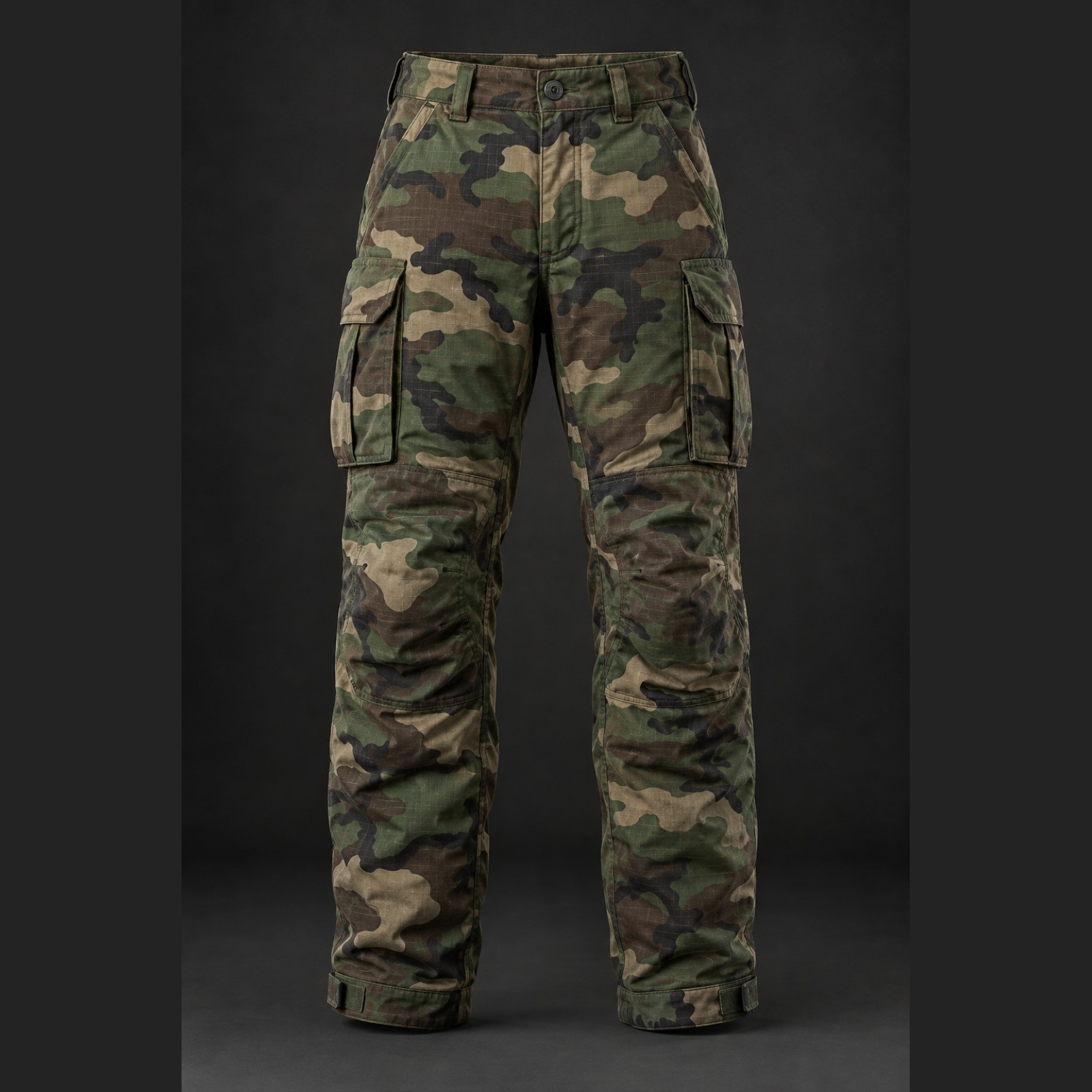
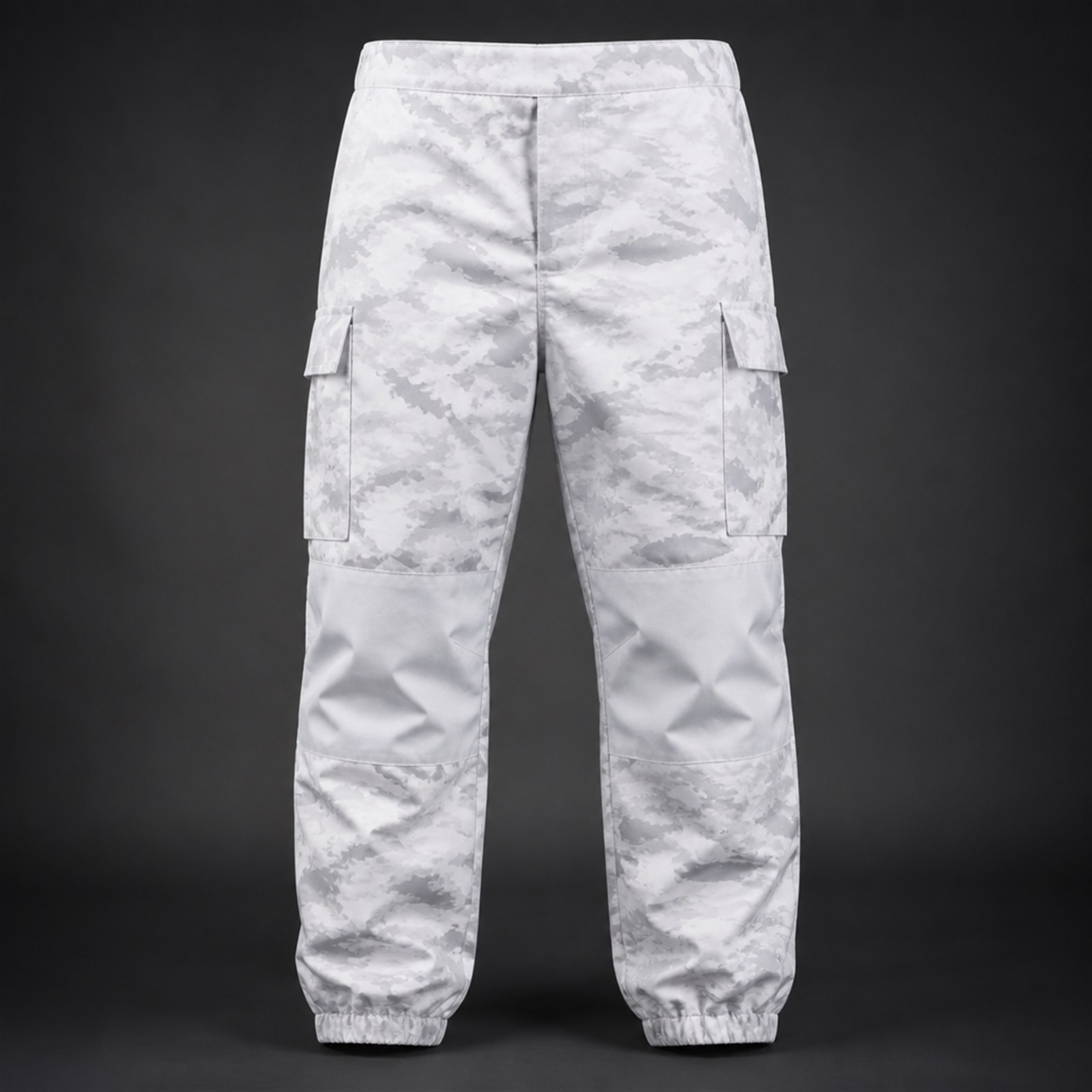
Winter pants do not fail because the fabric on the order sheet was wrong. They fail low on the body. Water and snow enter at the leg opening, through the fly and waist, along seams that sit under compression when the wearer kneels or sits, and at the seat where wet ground contacts the garment. A pant can carry a waterproof fabric and still put the wearer in wet trousers by mid-morning. So this product is specified from the boot upwards: how the leg opening closes over or under the boot, how far the back rises when the wearer bends, which seams sit under load, and how much articulation the knee needs before the fabric is asked to do anything.
Gallery
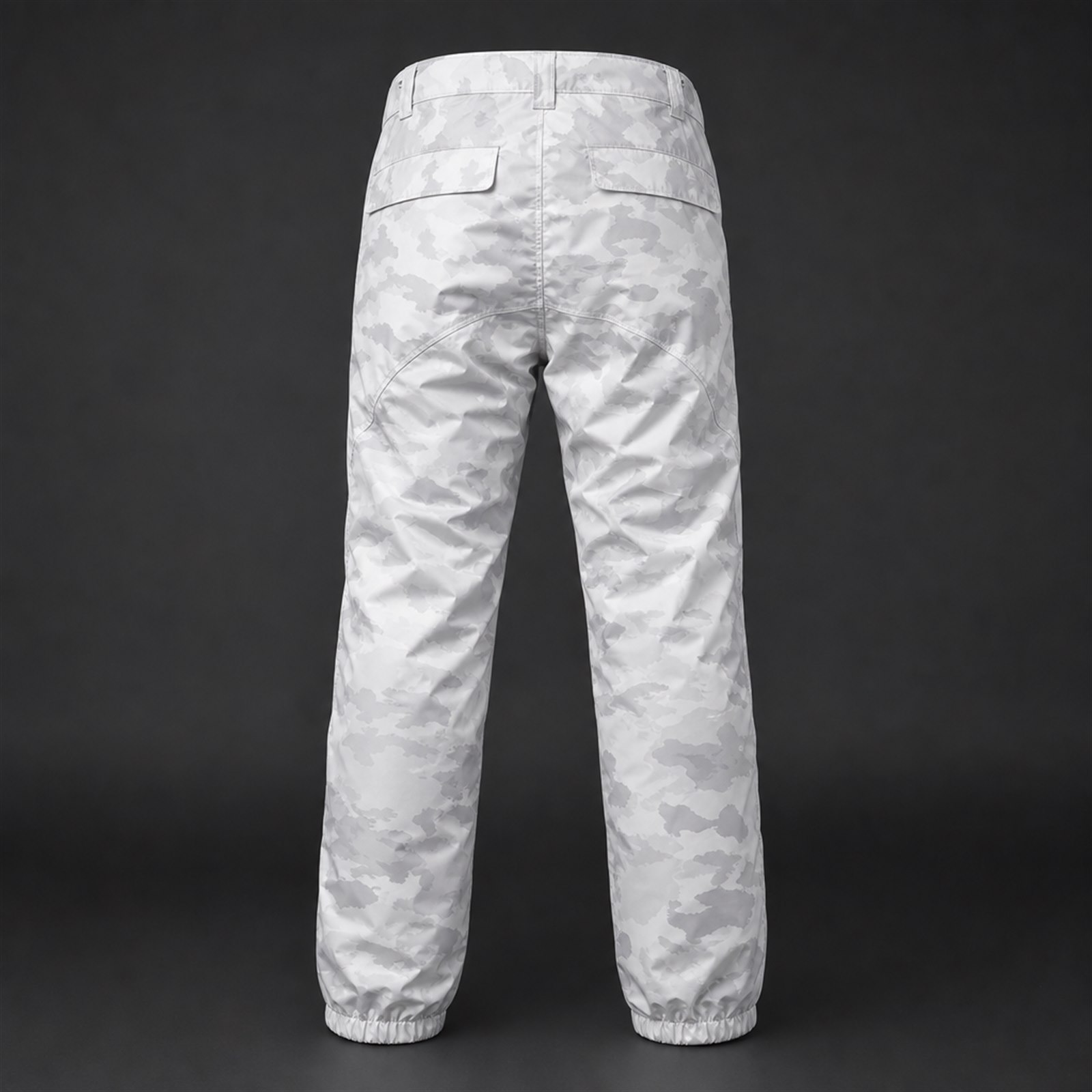
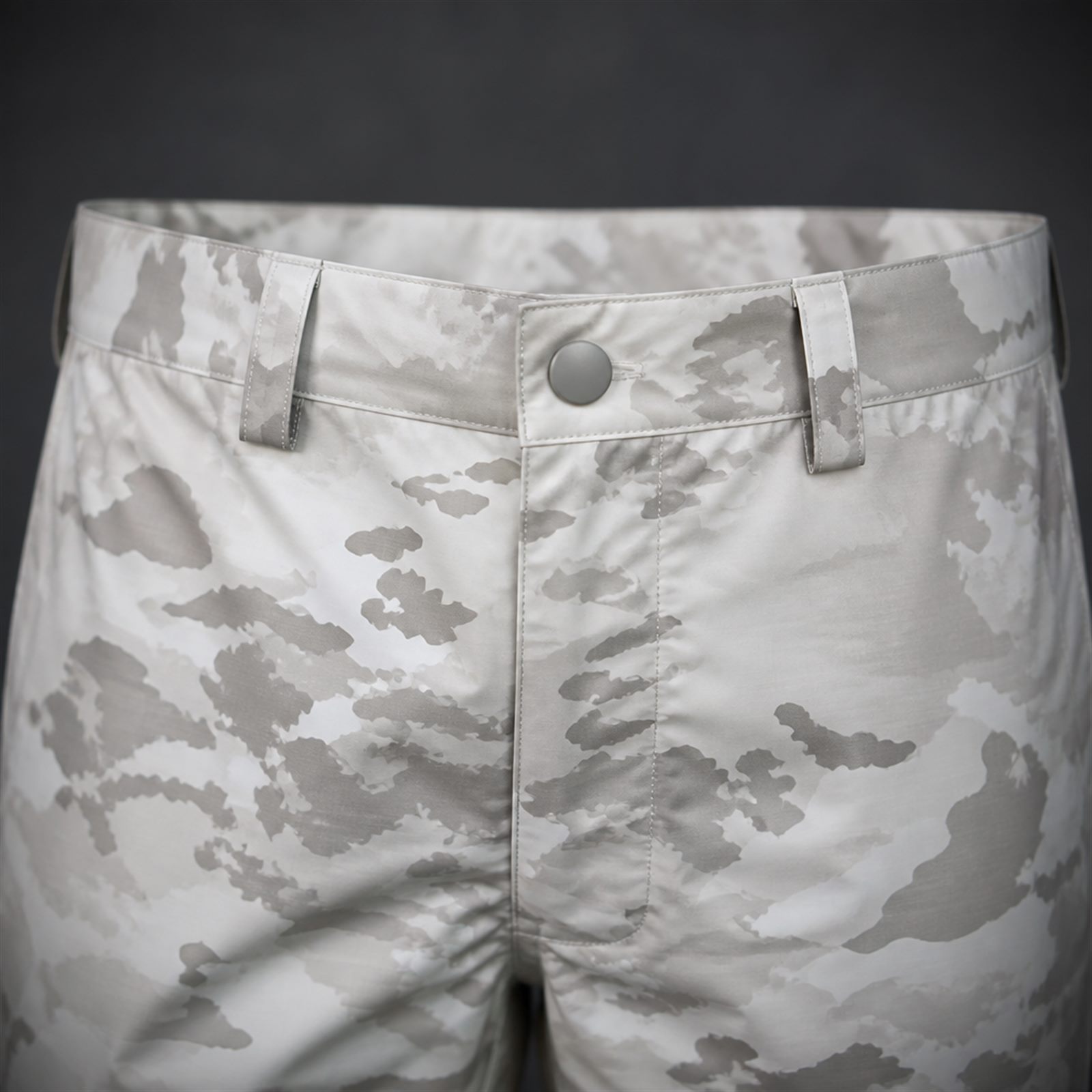
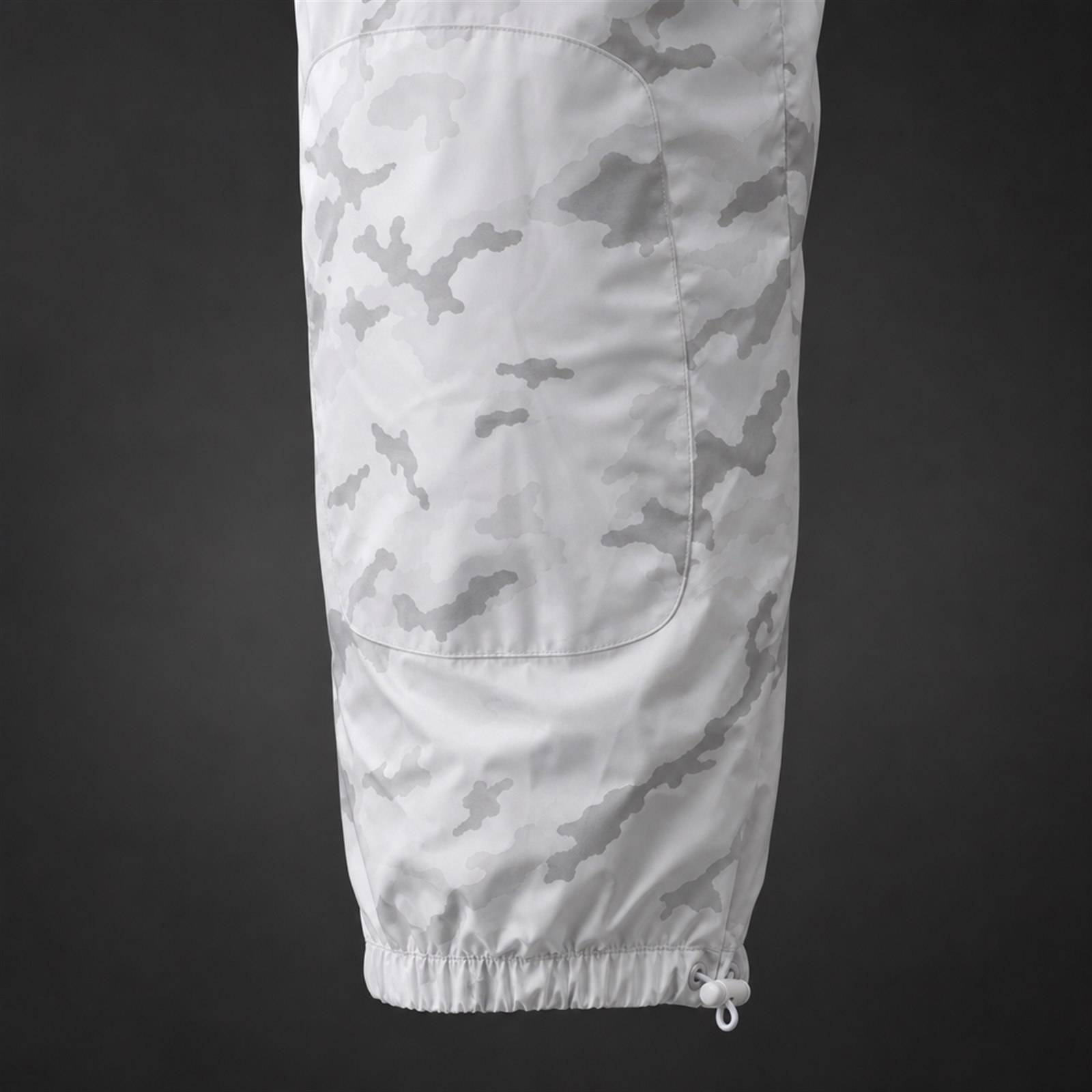
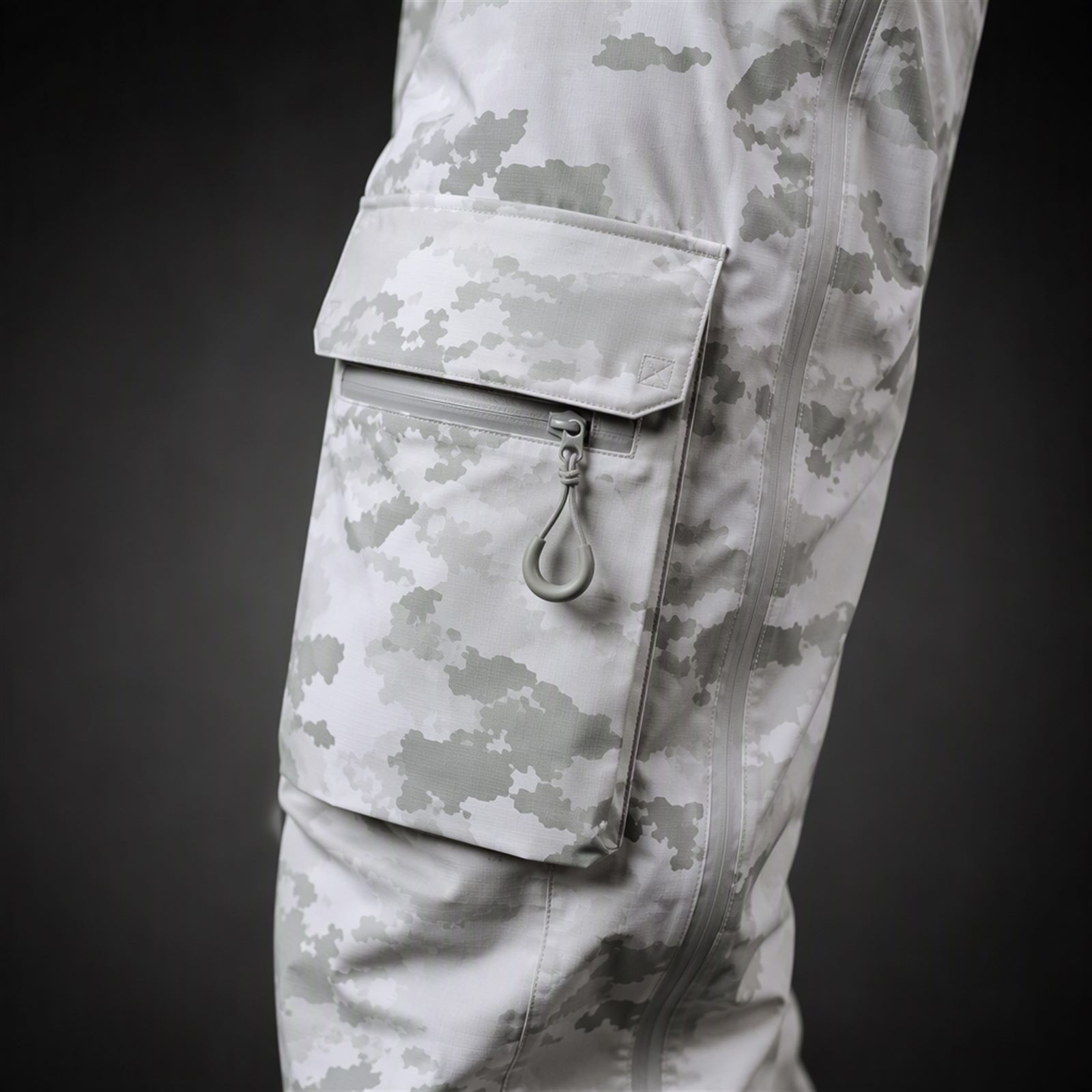
Design purpose
Build a winter pant on the buyer's pattern that keeps water out at the points where it actually enters — leg opening, fly and waist, compression seams and seat — while keeping the knee and hip range the wearer needs to work in.
Applications
Interactive map
Waterproof Winter Tactical Pants: select a marker to see what can be specified at that part of the garment — all 10 mapped areas are also listed in full below the map, so nothing is hidden behind an interaction.
Customization by garment part
Select a marker to see the customization options available at that part of the garment. Every option below is a manufacturing decision you control.
Materials
4 material options for Waterproof Winter Tactical Pants, specified per garment area — a single fabric cannot serve heat management and abrasion resistance at the same time.
Shell fabric
Waist, seat and knee are the positions that decide whether the shell specification holds up in use. A lighter shell is often the better choice at the knee if it is reinforced there.
Insulation
Legs generate heat while moving and need less insulation than the torso. Uniform insulation through the pant is a common reason a winter pant is too warm to work in and too cold to stand in.
Seam and pressure-point treatment
A seam that sits under compression when the wearer kneels is the seam that leaks, regardless of the fabric. Seam placement is treated as a pattern decision rather than an assembly detail.
Waist, fly and back rise
The gap that opens at the lower back when the wearer bends is one of the most common water and cold entry points on a winter pant, and it is solved by the back rise rather than by the waistband.
Construction
How each of the 8 parts of Waterproof Winter Tactical Pants is assembled, and why that choice was made.
Leg opening and boot interface
The leg opening is specified against the boot height the buyer issues, with the choice of closing over the boot or tucking inside it settled before the pattern is cut. Gaiter, cuff adjuster, snap tab and internal elastic options are developed to that decision.
Knee construction and articulation
The knee is darted or articulated so it bends without pulling the fabric tight across the front of the leg, because a pant that tightens at the knee both restricts movement and opens the seams under load.
Seat and back rise
The seat panel and back rise are extended so that bending, kneeling and sitting do not open a gap between the pant and the jacket, and so the seat surface that contacts wet ground is not the weakest part of the garment.
Fly and waist
Fly construction includes an internal storm flap where the buyer requires it, and the waistband is developed with the belt or suspender interface the wearer actually uses so it does not ride down under load.
Crotch and gusset
The crotch is the most frequent failure point on any working pant. Gusseting, seam placement and stitch specification are decided here against the movement the role requires, not after a field failure.
Reinforcement at wear points
Knees, seat, inner leg and hem take the abrasion. Reinforcement is placed against the wear points the buyer reports and matched to whether the wearer kneels, sits or works against equipment.
Pocket placement and closures
Pocket positions are set around the equipment the wearer carries, with flap or zip closures selected so they can be operated with gloves and do not collect snow.
Cuff and hem finishing
Hem edges are finished so snow does not pack into the opening and ice does not build at the lower hem, and adjusters are specified so they remain operable when wet and cold.
Features
The 6 functional features of Waterproof Winter Tactical Pants each exist to solve a specific problem in use, and where a feature is a trade-off rather than a pure gain that is stated.
The boot interface, leg opening and hem are agreed first, because that is where most water enters a winter pant. The rest of the pattern is then developed to suit them.
The lower back gap that opens when the wearer bends is addressed with an extended seat panel rather than with a tighter waistband, so the seal does not depend on the wearer standing still.
Seams under compression leak. The knee and seat seams are placed and treated for the loaded condition, which is the condition these garments are actually used in.
Where the pant is insulated, warmth is concentrated at the seat and thigh and reduced behind the knee, so the wearer is not too warm while moving and too cold when standing.
As an over-pant, the garment is developed and confirmed over the trousers the buyer issues, including how the two waistbands interact and whether the outer pant fits over a reinforced knee.
Knees and hems are where a winter pant wears out first. Where the buyer's programme allows it, those panels are developed so they can be replaced rather than retiring the garment.
Customization
12 customization lines for Waterproof Winter Tactical Pants: branding, colour, camouflage and packaging are all part of the specification, and every item is confirmed on the pre-production sample.
Shell specification
Insulation
Boot interface
Back rise
Fly and waist
Knee construction
Reinforcement
Pockets
Ventilation
Colour and camouflage
Labelling
Packaging
Colour
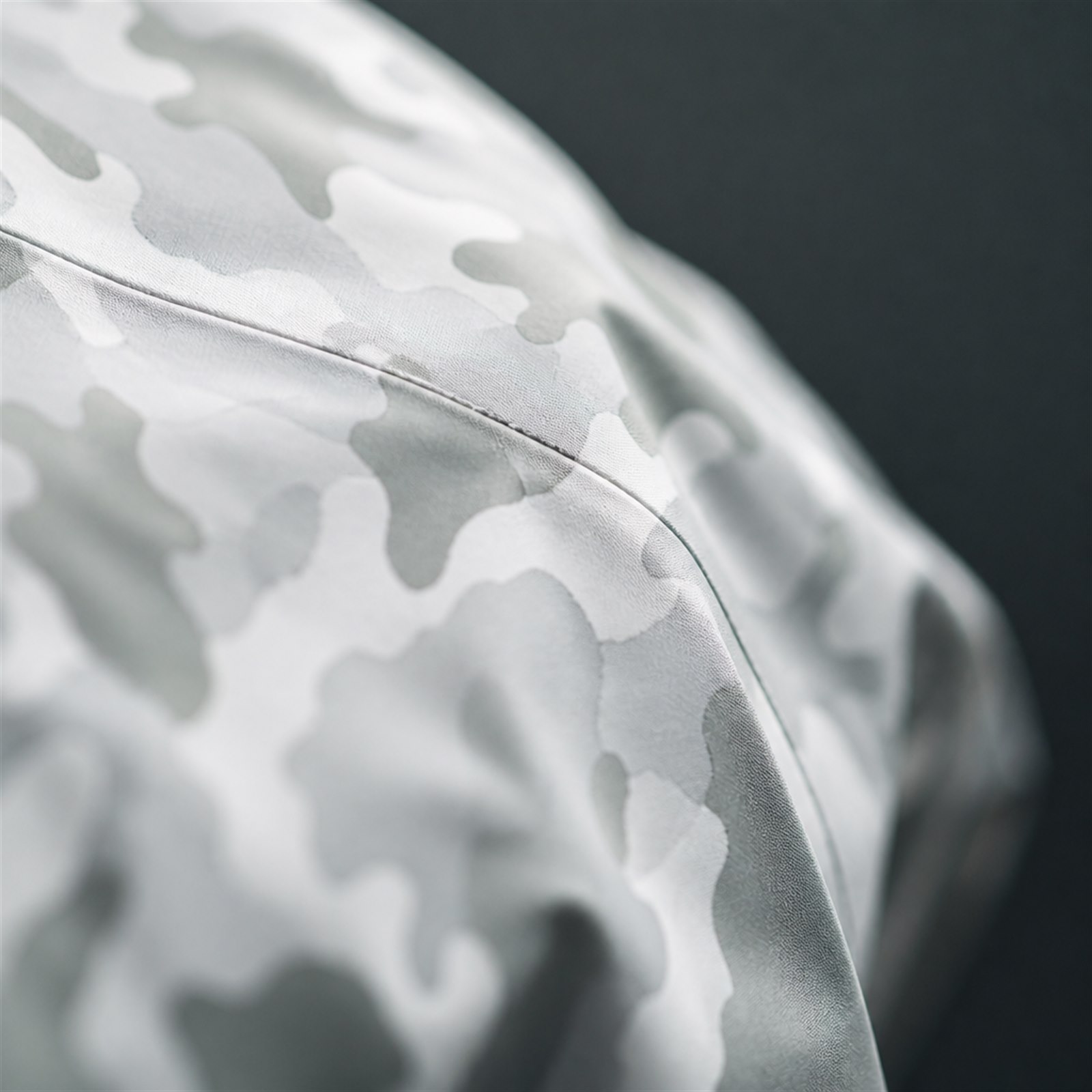
Camouflage
Sizing
Winter pant sizing is developed against the layer stack the wearer uses underneath and against the boot height on issue, because both change the numbers that matter. Inseam, knee position, seat depth, waist and leg opening are all affected: a pant cut for a bare leg will bind at the knee over an insulated trouser, and a leg opening sized for one boot will not seal over another. Where the buyer has an existing uniform sizing standard, we develop against that standard rather than replacing it, so the winter pant stays consistent with everything else issued.
Branding
Your pattern, your shell and insulation specification, your seam map, your boot interface and your packaging. Labels, trims and cartons can be left blank, so the range ships as your own product with the specification held on file against every repeat order.
Logistics
Sample development
Development of Waterproof Winter Tactical Pants runs in 7 stages, each risk removed before the next step commits cost.
Specification review
We agree the shell, insulation build, boot interface, back rise, fly construction and reinforcement points in writing, together with the trousers the pant has to go over and the boot it has to seal against.
Fabric and trim selection
Shell options are presented against the buyer's environment with the trade-offs stated, and seam sealing, closure hardware, adjusters and gaiter materials are proposed to match.
Pattern development
The pattern is developed on the buyer's size range with layering allowance, back rise, knee articulation and leg opening built in from the start rather than patched in after a fit failure.
Proto sample
A first sample proves fit over the intended trousers, confirms the boot interface, and tests knee and seat behaviour in a kneeling position rather than on a standing form.
Fit sample
A revised sample is produced with the agreed corrections and assessed on a wearer, including kneeling, squatting and stepping up onto a surface.
Size set
A set across the size range is produced so that grading of knee position, back rise and leg opening is confirmed, not only the base size.
Sealed sample
The approved sample is sealed and retained as the reference for inline and final inspection, including the seam map and boot-interface hardware.
Bulk production
7 stages of bulk production for Waterproof Winter Tactical Pants — where the approved specification is either held or lost.
Material receipt and inspection
Shell lot, finish, seam tape, insulation, lining and closure hardware are checked against the sealed sample before cutting, and colour is verified against the approved standard in daylight.
Cutting
Panels are cut to the approved pattern with camouflage or print placement controlled on the marker so left and right legs match and the pattern breaks consistently across the run.
Seam and seal construction
Sealed runs are completed and inspected before the leg is closed. Knee and seat assemblies are built with articulation and reinforcement in place, not added afterwards.
Boot interface and closure assembly
Leg openings, gaiters, cuff adjusters, fly flaps and pocket closures are assembled and function-checked, including operation with gloves where the buyer requires it.
Inline inspection
Garments are measured against the approved tolerances at defined points through the run, including knee position and inseam, so drift is caught while it can still be corrected.
Finishing and labelling
Care labels, size marking and issue identification are applied to agreed positions, and loose threads, hardware function and hem finish are completed to the sealed sample.
Final inspection and packing
Final inspection follows the approved specification and the AQL agreed with the buyer, and approved goods are packed and marked to the buyer's carton instructions.
Quality control
The 7 checks applied to Waterproof Winter Tactical Pants, each measured against an agreed standard rather than against opinion.
Incoming material check
Shell construction and finish, seam tape, insulation lot, lining, closures and adjusters are recorded against the specification, and fabric lots are retained for reference.
Colour verification
Production colour is compared with the approved standard and the sealed sample under agreed lighting, and shade variation across rolls is recorded before cutting.
Seam and seal inspection
Sealed seams are inspected for continuity and adhesion before the leg is closed, with particular attention to the seat and inner leg runs that sit under compression in use.
Measurement check
Waist, seat depth, inseam, knee position, leg opening and thigh are measured against approved tolerances during the run rather than only at the end.
Function testing of closures and boot interface
Zips, flaps, gaiters and cuff adjusters are operated repeatedly on sampled garments to confirm they close, seal and stay closed under the conditions of use.
Movement check
Sampled pants are assessed in a kneeling and squatting position over the intended trousers to confirm that the knee articulation works and no seam is pulled open under load.
Final inspection and records
Final inspection results, inspection records and retained samples stay with the order, so a repeat order is produced against evidence rather than against memory.
Specifications
20 specification rows for Waterproof Winter Tactical Pants: only confirmed items are listed, so a row that depends on your programme is omitted rather than filled with an estimate.
| Product type | Waterproof winter tactical pant or shell over-pant |
|---|---|
| Layer position | Lower body outer layer, over the buyer's own trousers or over an insulated liner |
| Shell | Laminated waterproof, water-resistant coated ripstop, stretch waterproof or reinforced abrasion shell to specification |
| Insulation | Uninsulated, light mapped insulation, insulated with reduced knee fill, or removable liner, to specification |
| Seam treatment | Sealed, critically sealed or bound to the buyer's seam map |
| Back rise | Standard or high rise with an extended seat panel |
| Fly | Zip fly with or without an internal storm flap, to specification |
| Waist | Fixed waistband, elasticated side panels or suspender interface, with belt loop layout to specification |
| Knee | Articulated or darted knee, with optional reinforcement panel and pad interface |
| Crotch | Gusseted where the role requires it, with seam placement agreed against movement |
| Leg opening | Closing over or inside the issued boot, with optional internal gaiter, cuff adjuster and snap tab |
| Reinforcement | Knee, seat, inner leg and hem edge, placed against reported wear points |
| Pockets | Cargo, rear, internal security and tool loops with flap or zip closures to specification |
| Ventilation | Side leg or thigh vents, or none, to specification |
| Size range | EU or US runs including extended sizes, cut to layer over the buyer's trousers |
| Colour and camouflage | Solid colourways, panelled blocking or buyer artwork camouflage, matched to an approved standard |
| Labelling | Woven main label, printed care label, size and issue marking as required |
| Packing | Poly bag, individual carton and buyer-specific cartons |
FAQ
Because water enters at the openings and the seams, not through the fabric. The leg opening, the fly and waist, the seams that sit under compression when the wearer kneels or sits, and the seat where the garment contacts wet ground are the points that matter. A waterproof fabric with an open leg hem and an unprotected seat will wet the wearer out anyway. That is why this product is specified boot-upwards and seam by seam.
That is the buyer's decision and it changes the pattern, so we settle it before cutting. Closing over the boot keeps snow out but needs the opening sized to the boot; tucking inside needs an internal gaiter or a close fit at the calf. What we will not do is pick one for you and then discover the mismatch on the first delivery.
We do not quote water column figures. Where a tender requires a rating, the correct sequence is to agree the test method first and have the result produced on the actual construction — the shell, the seam treatment and the reinforcement as built. A number taken from a fabric datasheet does not describe a finished garment.
Both are common and the answer depends on how the garment is issued. A shell over-pant is more flexible, because the wearer controls warmth with the trousers underneath, and it is easier to dry. An insulated pant is simpler to issue and better where the wearer cannot change layers. Insulated builds are usually mapped rather than uniform, with less fill behind the knee so the pant is not too warm to work in.
With back rise and a seat panel, not with a tighter waistband. The gap appears because a standard rise does not cover the lower back once the wearer bends or kneels. We develop an extended rise and seat panel so the seal holds in the working position, and confirm it on a wearer rather than on a standing form.
Where the buyer's programme allows it, yes. Knees, hems and seats are where a winter pant wears out first, so those panels are developed so they can be replaced in isolation. That is a construction decision made at the pattern stage — it cannot be retrofitted to a pant that was built as a single closed unit.
Related Materials
Related Applications
Related Capabilities
Related Articles
Related Categories
More products
Tactical Pants
Cold weather changes what a tactical pant has to do.
Cold Weather Shell Jackets
The shell carries no warmth of its own, and that is the point of it.
Extreme Cold Weather Parkas
A parka for extreme cold is a system, not a garment with more filling.
Send us your tech pack, reference sample or product idea. We review your requirement, recommend materials and construction, and come back with a development plan you can act on.